REVIEW · TOKYO
Mt.Fuji Arakurayama Sengen Park,Oshino Hakkai,Kawaguchi Lake Tour
Book on Viator →Operated by Hotel Takitei · Bookable on Viator
Mt. Fuji in one day, without stress. This tour strings together the classic Fuji-photo stops around Kawaguchiko—so you spend less time figuring out trains and more time enjoying panoramic views.
I love the air-conditioned vehicle between stops. It’s a simple, comfortable way to move around the Fuji area, especially on a long day that’s about 11 hours.
One thing to plan around: Mt. Fuji visibility isn’t guaranteed and weekend traffic can push timing, which may shorten time at a stop.
In This Review
- Key things worth knowing before you go
- A Ready-Made Mt. Fuji Day Without the Transfer Headache
- Price and Value: What $51.60 Buys You in the Fuji Area
- The Vehicle, the Guide, and the Group Feel (Max 45)
- Stop 1: Arakurayama Sengen Park and the Chureito Pagoda View
- Hikawa Clock Shop Street: A Quick Walk Toward Mt. Fuji
- Oshino Hakkai’s Eight Ponds: Snowmelt Water at Fuji’s Foot
- The Lawson Fujikawaguchiko Town Hall Stop: A Weirdly Effective Photo Moment
- Kawaguchi Lake: Seasonal Views and Oishi Park Timing
- Weather, Crowds, and the 11-Hour Reality Check
- What to Bring and How to Handle the Small Stuff
- Who This Tour Suits Best (and Who Might Want a Different Plan)
- Should You Book This Mt. Fuji Day Trip?
- FAQ
- What does the tour include?
- How long is the tour?
- Is Mt. Fuji visibility guaranteed?
- What stops are included in the day?
- Do I need cash?
- How much luggage can I bring?
Key things worth knowing before you go
- Photo-first itinerary: Arakurayama, Oshino Hakkai, and Lake Kawaguchi are built for Mt. Fuji views from multiple angles
- Comfort during transfers: You ride in an air-conditioned vehicle with a guide covering the story behind each place
- Short walks, not big hikes: You’ll do some walking (including steps at Arakurayama), but you’re not committing to a full trek
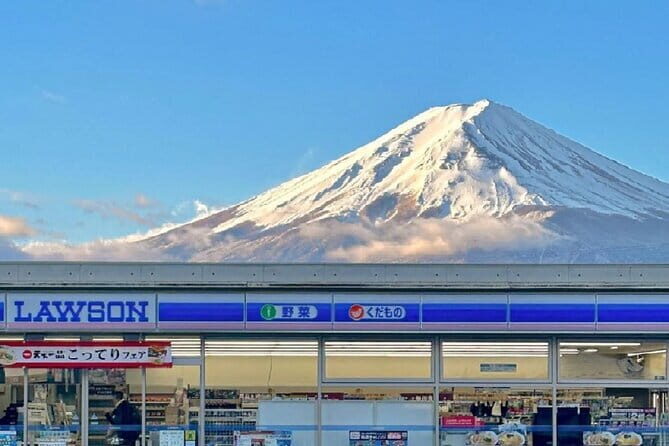
- A famous shortcut stop: The Lawson viewpoint is quick, but it’s famous for a reason
- Group size stays manageable: Maximum of 45 travelers on the tour
- Weather reality check: Visibility can change fast, so go with a flexible mindset
A Ready-Made Mt. Fuji Day Without the Transfer Headache
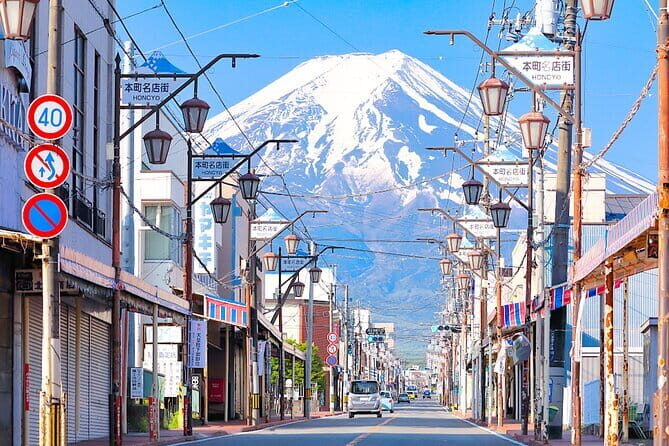
If you’ve ever tried to plan a Mt. Fuji day trip from Tokyo, you know the pattern: train transfers, schedule math, and then you’re still stuck in traffic when your plans meet real life. This experience is built to remove that friction. You’re picked up and dropped off at a designated point, then you move stop to stop in one vehicle.
That matters because the Fuji area rewards patience. You want to arrive at viewpoints when the light looks good, and you want your energy for short walks and photo time—not for rail navigation. With this kind of day, the guide also helps you get your bearings fast. They point out what to look for and explain why each spot is special, so the scenery doesn’t turn into a random list of places.
The itinerary is also structured around variety. You get a pagoda viewpoint, a calm walking street, spring-fed ponds, a quick commercial photo stop, and finally Lake Kawaguchi. Even if Mt. Fuji isn’t perfectly visible all day (it happens), you still get a full sampler of the Kawaguchiko area’s textures: stone, water, mist, and classic Japanese photo angles.
You can also read our reviews of more tours and experiences in Tokyo.



Price and Value: What $51.60 Buys You in the Fuji Area
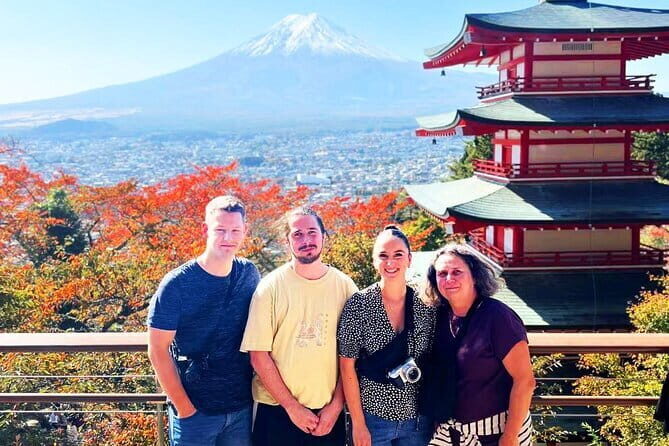
At $51.60 per person, the big question is value: what’s included, and what’s on you?
Here’s the practical breakdown:
- Included: air-conditioned vehicle, tour guide, and pick-up/drop-off at a designated point
- Admission included at stop 1 (Arakurayama Sengen Park)
- Other listed stops show free admission time in the plan
- Not included: lunch (you’ll typically budget around US$10 per head for a normal meal)
So you’re paying for two things that are hard to DIY quickly: transportation across multiple locations and guided interpretation. If you’re used to doing everything alone, it can feel like you’re paying for convenience. If you’re visiting on limited time, that convenience becomes the whole point.
Also, the day is long—about 11 hours—so the included vehicle comfort isn’t a small detail. On a warm day (or a cool one when you still want to move efficiently), you’ll appreciate having a warm or cool ride between stops without paying extra for each transfer.
In short: this is good value if you want a structured Fuji day with minimal planning and you’re okay handling your own meals and timing tweaks.
The Vehicle, the Guide, and the Group Feel (Max 45)
The tour runs with a guide and a driver in a single group, capped at 45 people. That size is big enough to be lively, but small enough that you can still hear explanations and find your place for photos.
At the meeting point, the guide holds a yellow flag with the Gogoday logo. You just tell them the name you used when booking. The plan says to arrive 15 minutes early, and late arrivals or no-shows don’t get refunds—so it’s worth treating this like a train: show up early, then relax.
The guide’s role is more than “stand and talk.” They’re there to help you understand what you’re looking at, why certain viewing angles matter, and when it makes sense to move quickly for photos versus when you can slow down and wander.
You’ll also get an email the night before with guide/driver info and the vehicle license plate. That’s helpful if you’re trying to match where you’re going to meet the group without guesswork.
Stop 1: Arakurayama Sengen Park and the Chureito Pagoda View
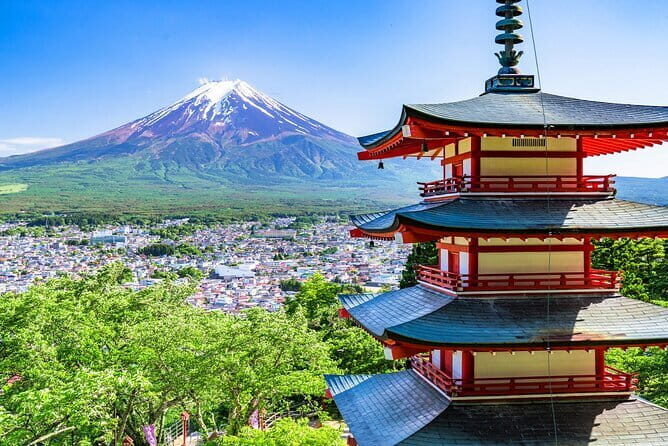
This is the headline stop for a reason. Arakurayama Sengen Park is famous for panoramic Mt. Fuji views, and it’s set up for camera-ready angles. Your time here is about 1 hour, and admission is included.
The main move is a climb: 397 steps leading to the iconic Chureito Pagoda viewpoint. Those steps are not a “keep your shoes clean” stroll. They’re a short, real stair effort, and that’s exactly why the payoff feels worth it. Once you’re higher up, the scene opens—Fuji (when visible), the pagoda, and the layered perspective that looks like it belongs in postcards.
Why I like this stop for first-time Fuji visitors: it gives you instant context. If Fuji is clear, the view anchors the whole day. If it isn’t perfectly visible, the park still gives you atmosphere—forested slopes, sky gaps, and a sense of how the region frames the mountain.
What to consider:
- Wear shoes you don’t mind on stairs.
- If you’re slower on the climb, give yourself a little extra buffer so you don’t feel rushed once you reach the top.
- Crowds can build around the viewpoint, so early movement matters for getting the angle you want.
Hikawa Clock Shop Street: A Quick Walk Toward Mt. Fuji
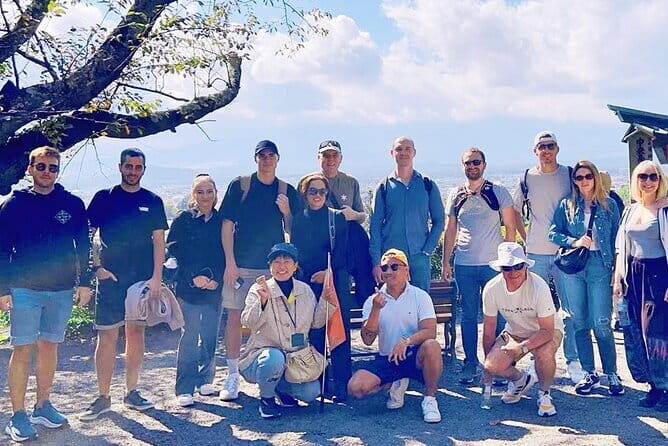
After the park, the tour shifts gears to something calmer: Hikawa Clock Shop Street. This stop is brief—about 20 minutes—and it’s free.
The charm here is the “walking perspective.” The area is known as the Stairway to Mt. Fuji, and even in a short visit, you can feel the progression toward the mountain. It’s not a big ticket attraction like a pagoda viewpoint; it’s more of a photo corridor and a change of pace.
This is a smart pairing after Arakurayama. Your legs have already done some work, and this stop gives you a chance to reset while still getting another Fuji-related viewpoint experience. If you want to slow down, stretch your calves, and grab a couple of photos from street-level angles, this is where that fits.
One practical tip: keep an eye on your timing. Because the stop is short, you’ll want to move at a steady pace rather than stopping to look at every storefront for too long.






Oshino Hakkai’s Eight Ponds: Snowmelt Water at Fuji’s Foot

Next comes Oshino Hakkai, usually the “wait, look at that water” stop. You get about 1 hour 30 minutes, and admission is free here too.
Oshino Hakkai is known for eight crystal-clear ponds formed by snowmelt from Mt. Fuji. The key point is that it’s not just a pretty village. The ponds represent a water system shaped by Fuji’s seasonal melt. The area feels cooler, calmer, and more grounded in nature than the viewpoint stops.
Why this matters for your day: photos around Fuji are often sky-and-distance photos. Here you get close-up water details—reflections, ripples, and the contrast between stone structures and spring-fed pools.
What to watch for:
- The pace can feel slightly slower and more “wander.” That’s a good thing if you’re tired of standing in photo crowds.
- This is also a popular stop, so expect some foot traffic and small queues in busy times.
If you like stepping away from the big panorama and enjoying a quieter, water-focused part of the Fuji region, Oshino Hakkai delivers.
The Lawson Fujikawaguchiko Town Hall Stop: A Weirdly Effective Photo Moment
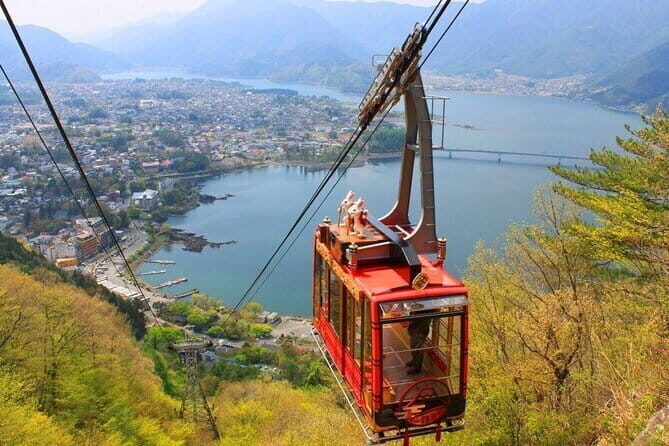
This is the quick, fun stop: a Lawson convenience store viewpoint area near Fujikawaguchiko. It’s on the itinerary for about 20 minutes and admission is free.
Yes, it’s a convenience store. But Fuji tourism includes these “shortcut viewpoint” moments for a reason: the mountain is framed by the surrounding setting, and the angle is repeatable and easy to access. You’ll have time to step out, take photos, and even grab a snack if you want.
Why it’s worth including in a structured day: when you’re doing multiple locations, you want at least one low-effort photo stop. This one lets you get another Fuji angle without adding walking time or complexity.
A practical note: convenience stores can be a convenient option for quick bites when lunch timing is tight. Still, your lunch is not included, so plan to eat separately.
Kawaguchi Lake: Seasonal Views and Oishi Park Timing
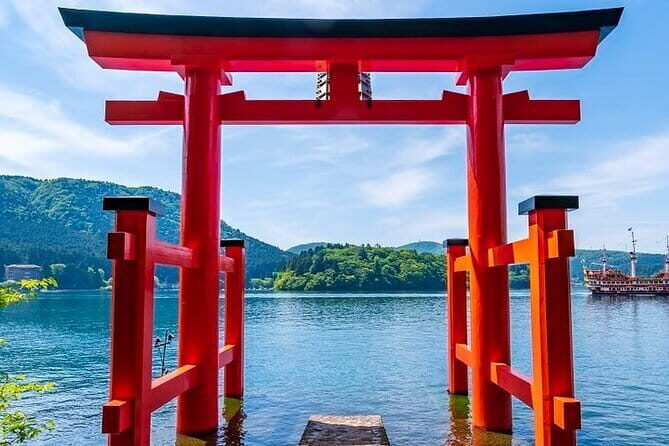
You wrap up at Lake Kawaguchi with about 50 minutes on the schedule, and admission is free.
Lake Kawaguchi is all about space—wide water views and the sense of Fuji sitting in the background. Depending on the season, the plan mentions exploring Oishi Park at the lakeshore. For summer, lavender at Oishi Park is a highlight. In other seasons, the charm shifts, but the idea stays the same: you get a wide-open end to the day that feels different from the stair-and-pond stops.
Why this ending works: by the time you reach the lake, you’ve already seen Fuji from higher ground (Arakurayama), from street perspective (Hikawa Clock Shop Street), and from water-level reflections (Oshino Hakkai). The lake is the final “big picture” anchor.
One consideration: this is also where visibility matters most. If the weather isn’t cooperating, you might still enjoy the lake atmosphere, but you’ll be disappointed if you came only for a perfect Fuji photo. The tour does warn that visibility isn’t guaranteed due to unpredictable conditions.
Weather, Crowds, and the 11-Hour Reality Check
Mt. Fuji days have a special rule: you can’t force the sky. The tour explicitly notes that visibility can’t be guaranteed. That’s not a scare tactic—it’s the climate reality of the region. Clouds, haze, and shifting conditions can hide the mountain even when forecasts looked promising.
Here’s how to make this work for you:
- Keep your expectations flexible. If Fuji shows up, treat it like a bonus gift, not a fixed schedule.
- Use the stops that still feel worthwhile even without a perfect summit view: Oshino Hakkai’s ponds and the general atmosphere of the area remain enjoyable.
- Take photos early if conditions look good, especially at Arakurayama.
Traffic is another factor. On weekends and holidays, return time may delay past 8 p.m. and visiting times at attractions may be shortened, adjusted, or canceled due to the same reason. The tour company says overtime fees for guide and driver are covered, but the effect on your schedule can still happen.
So don’t schedule anything critical right after your tour ends. Build in buffer time back in Tokyo.
What to Bring and How to Handle the Small Stuff
A few details will make your day easier.
Cash helps. The tour recommends bringing some because some scenic spots and restaurants in the Mount Fuji area may only accept cash payments. Convenience stores sometimes accept cards, but not everywhere does—cash prevents last-minute stress.
Shoes matter. Arakurayama involves a stair climb. You’ll want comfortable shoes with good grip.
Luggage rules are simple. Each participant is allowed one piece of luggage. If you bring more, the fee is 2000 JPY per extra piece. If you’re traveling light, you’ll feel calmer.
Lunch is on you. The tour lists lunch as a normal cost, roughly US$10 per head. Plan to eat nearby to your stop times, and don’t count on having a perfect long sit-down meal scheduled in.
Also, the tour runs with a mobile ticket. That’s convenient—just make sure your phone battery is charged, because you don’t want to be hunting for signal at the meeting point.
Who This Tour Suits Best (and Who Might Want a Different Plan)
This tour is ideal if you want classic Fuji sights without the heavy planning. It’s especially good for:
- First-time visitors who want a structured “hits of the Fuji region” day
- People who don’t want to figure out transfers between distant stops
- Anyone who prefers guided context over wandering without direction
It may not be the best fit if:
- You want lots of free, independent time at a single location (this day is intentionally packed)
- You’re hoping to hike long distances, because most stops are short and walking is controlled
- Your schedule is extremely strict, since weekend traffic can affect return times and stop durations
If your goal is a well-organized Fuji sampler with a comfortable ride and photo-friendly stops, this style of tour makes sense.
Should You Book This Mt. Fuji Day Trip?
I think you should book if you’re traveling with limited time, you want the key viewpoints connected in one smooth loop, and you like having a guide interpret what you’re seeing. The value is strongest when you factor in the included vehicle, the guide, and the fact that admission at the main park stop is included.
I’d hesitate only if you’re the type who needs guaranteed summit visibility. The tour doesn’t promise that, and Mt. Fuji can disappear behind weather. If you can handle that uncertainty and treat the day as a mix of views, water, and classic scenery, you’ll likely leave satisfied.
If you do book, go in with one mindset: move at the tour pace, but keep your eyes ready for the moments when Fuji appears. Those are the moments you’ll remember.
FAQ
What does the tour include?
It includes an air-conditioned vehicle, a tour guide, and pick-up/drop-off at a designated point. Admission is included for Arakurayama Sengen Park, while the other listed stops have free admission time in the plan.
How long is the tour?
The duration is approximately 11 hours.
Is Mt. Fuji visibility guaranteed?
No. The tour notes that weather conditions are unpredictable and Mount Fuji visibility cannot be guaranteed.
What stops are included in the day?
The itinerary includes Arakurayama Sengen Park, Hikawa Clock Shop Street, Oshino Hakkai, a Lawson Fujikawaguchiko viewpoint stop, and Lake Kawaguchi (with seasonal options like Oishi Park).
Do I need cash?
Yes, it’s recommended to bring some cash because some scenic spots and restaurants in the area may only accept cash payments.
How much luggage can I bring?
You can bring one piece of luggage. If you bring additional luggage, there’s a fee of 2000 JPY per extra piece.