REVIEW · TOKYO
Mt Fuji Small Group 1 Day Tour Kawaguchi and Yamanaka with Pickup
Book on Viator →Operated by QHTravel · Bookable on Viator
Clear Fuji viewpoints in a single day.
This small-group trip is built for people who want Mount Fuji views without fighting Tokyo train connections. You ride in an air-conditioned vehicle with pickup from Tokyo Station, then spend focused time at classic Fuji spots like Oishi Park, Lake Kawaguchiko, Oshino Hakkai, and Lake Yamanaka. One review even called out how the driver helped everyone figure out where to go at each stop, with a friendly assist from a driver named Hyeonni.
What I really like is the rhythm: short, timed stops let you hit multiple lookouts even if Fuji is hiding behind clouds. I also like that admission at the key stops is listed as free, so your spending is mostly meals and personal items instead of entry fees. The one drawback to plan around is weather—if conditions are bad, you may not get the views you want, and the tour can be rescheduled or refunded.
In This Review
- Key highlights you’ll feel on the day
- Why this Fuji day tour feels efficient from Tokyo
- Price and what $15 really buys you
- Pickup at Tokyo Station and how a small group changes the day
- Stop-by-stop: Oishi Park for panoramic Fuji photo time
- Lake Kawaguchiko: the main lakeside hit and seasonal Sakura timing
- The Lawson Fujikawaguchiko photo stop (and why it works)
- Hikawa Clock Shop and the Heavenly Town streets
- Oshino Hakkai: UNESCO spring ponds and the story under the water
- Lake Yamanaka: your alternative Fuji angle and the hot spring skip
- Driver and guide style: what to expect from the English help
- How to improve your odds of seeing Fuji
- What kind of person should book this tour
- Should you book this Mount Fuji day tour?
- FAQ
- How long is the Mt Fuji small group tour?
- Where is the pickup location in Tokyo?
- Is lunch included?
- Do the stops require admission fees?
- Do I need a printed ticket?
- If I choose Lake Yamanaka, do I still visit the hot spring?
Key highlights you’ll feel on the day
- Tokyo Station pickup + air-conditioned transport so you’re not doing logistics while looking for Fuji
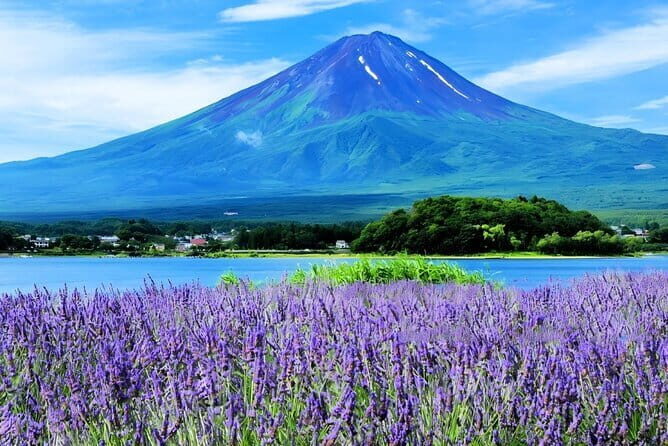
- A tight Fuji photo route: Oishi Park, Lake Kawaguchiko, Oshino Hakkai, and Lake Yamanaka options
- Free admission at the listed stops, which helps this feel like real value
- Photo-friendly quick stops like the Lawson spot and Hikawa Clock Shop streets
- Basic English guidance focused on directions and timing, not deep lectures
Why this Fuji day tour feels efficient from Tokyo
If you only have one day away from Tokyo, the hardest part is rarely distance—it’s time. That’s what this tour solves. You get a scheduled route that strings together several Fuji viewpoints across the Kawaguchi and Yamanaka areas, so you’re not piecing together trains and buses while the sky changes every hour.
The tour is also set up to work for different comfort levels. Most stops are timed in a way that doesn’t demand a long hike. You’ll still do walking, but it’s the kind of walking you can handle between sights: get off the bus, enjoy the view, take photos, then move on before the day gets drained.
And Fuji viewing is never guaranteed. Clouds happen. When they do, you’ll want locations that give you more than one shot at a good moment. This route gives you that: you’re not stuck at only one viewpoint for hours.
A few more Tokyo tours and experiences worth a look



Price and what $15 really buys you
$15 per person is the big headline here. On paper, it’s hard to believe—until you look at what’s actually included. Your money goes toward an air-conditioned vehicle, plus driver and guide service fee. The stops listed have free admission, which matters because you’re not paying entry fees that can add up quickly on a day trip.
What isn’t included is also important. Lunch is not included, and you’ll handle other personal spending. That’s normal for a one-day bus tour, but it does mean you should budget for at least one meal and any snacks you need while you’re out chasing the best light.
So the value isn’t in a full-day guided lecture or a sit-down meal. The value is in transportation and a structured itinerary that saves you from planning.
Pickup at Tokyo Station and how a small group changes the day
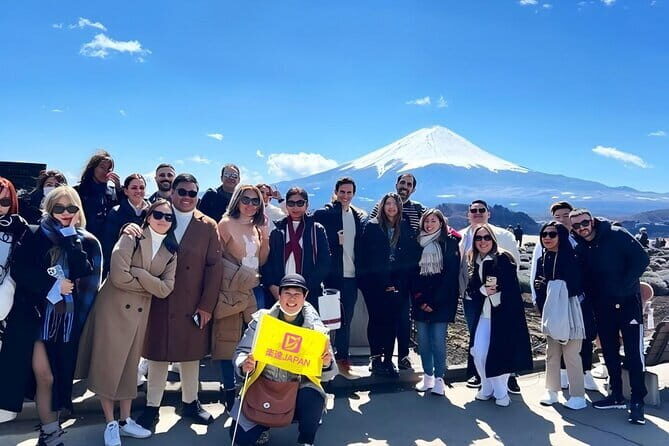
You start at Tokyo Station Marunouchi North Gate (Dome1), and the tour ends back at the meeting point. That return-to-base matters: it cuts down on decision fatigue when the day is done and you just want to go home.
The group size is capped at 50 travelers, which is big enough that you’ll always find a seat and elbow room when you get back to the bus, but small enough that the schedule usually stays manageable.
You also get a mobile ticket, which is convenient. Less time spent figuring out paper passes at a busy station.
Stop-by-stop: Oishi Park for panoramic Fuji photo time
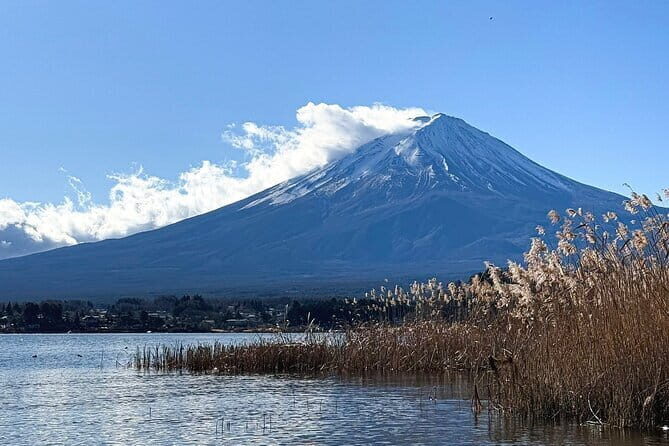
Your first major viewpoint is Oishi Park (about 50 minutes). This is one of those places where you’re rewarded for arriving with patience. The park is known for panoramic views of Mount Fuji, and it’s also described as having flower fields and a peaceful lakeside feel.
A practical tip: for Fuji, you’re not just waiting for the mountain to appear—you’re also waiting for the light. Even when Fuji is partially obscured, you may catch a clear edge or a peak outline from the best angle. With a 50-minute block, you have enough time to walk to a viewpoint, take your photos, and still be ready to move when the tour does.
One consideration: Oishi Park is often best when the weather cooperates. If it’s very cloudy, you’ll still enjoy the park setting, but expect more “maybe Fuji” than “guaranteed Fuji.”
Lake Kawaguchiko: the main lakeside hit and seasonal Sakura timing
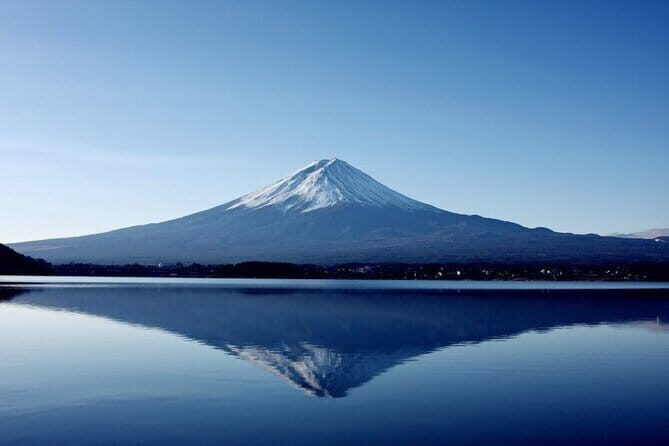
Next up is Lake Kawaguchiko (about 1 hour). This is where the tour leans into classic Fuji-lake scenery. The itinerary notes Kawaguchiko Sakura Festival and Kawaguchiko Lakeside Sakura Festival, with a seasonal limited period around mid-March.
Why that matters for you: when the timing matches, the lake area can feel like a whole different experience. Even if your goal is photographs, a seasonal festival can change the vibe, the crowd flow, and where the best viewpoints are.
If you’re visiting outside cherry blossom season, don’t worry. The core reason to be here still holds: it’s a Fuji-view area built around the lake. That gives you more natural framing than a roadside pull-off.





The Lawson Fujikawaguchiko photo stop (and why it works)

Then you go to the Lawson Fujikawaguchiko Town hall area for about 20 minutes. Yes, it’s a convenience store stop. But it’s the kind of stop Japan does well: an everyday street scene with Mount Fuji in the background.
The tour specifically calls out Instagram-style shots at the famous Lawson store near Kawaguchiko Station. For me, the value of a quick photo stop like this is that it’s a break from the “big viewpoint” mindset. You can catch a different composition—Fuji stacked behind real-life buildings and signage—without spending an hour searching for the perfect spot.
Keep your expectations realistic: it’s short. Treat it like a photo moment, not a destination you’ll fall in love with for an hour.
Hikawa Clock Shop and the Heavenly Town streets
After that, you get Hikawa Clock Shop (about 20 minutes). The tour describes a walk through a “Heavenly Town”-style area with picturesque streets and a unique perspective on Mount Fuji.
This stop is less about wide panoramas and more about the feel of place. Smaller streets and storefront backdrops can be better for photos if the mountain is only partially visible, because you can still frame Fuji through gaps and angles.
One practical thing: 20 minutes goes fast. Wear shoes you can walk in comfortably, and decide quickly where you want your photos. If you wander too slowly, you’ll end up sprinting back to the bus with your camera still in your bag.
Oshino Hakkai: UNESCO spring ponds and the story under the water
Your biggest time block is Oshino Hakkai (about 1 hour 20 minutes). This is a UNESCO World Heritage site known for crystal-clear spring ponds fed by Mount Fuji’s underground water.
This stop is valuable for a reason beyond photos. It connects what you’re seeing above ground with a bigger system underneath. Instead of only chasing the mountain shape, you get to see how Fuji’s presence shows up in the water and the springs.
Photo-wise, this is often a place where clarity matters. If the surface looks calm, you can get mirror-like reflections. If the weather is windy, you’ll still enjoy the view, but reflections can be harder.
One consideration: you’ll want to bring patience. Nature sites often have a slower pace than lakeside bus stops, and that longer time (1 hour 20 minutes) is there so you can actually enjoy it, not just pass through.
Lake Yamanaka: your alternative Fuji angle and the hot spring skip
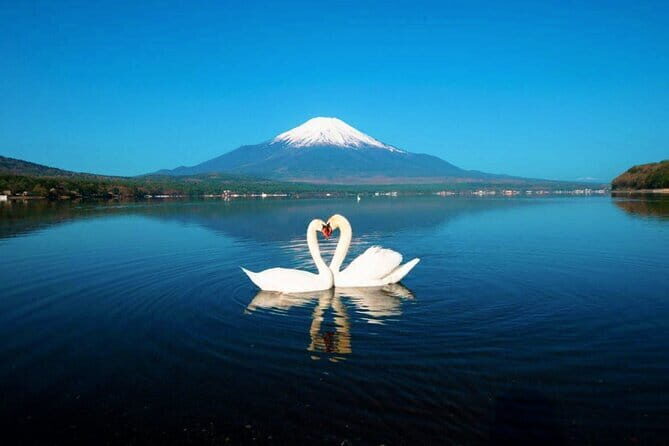
Finally, you reach Lake Yamanaka (about 1 hour 30 minutes), with a note that views can be especially good around sunrise. The itinerary also includes an important option detail: If you opt for Lake Yamanaka, the visit to hot spring will be skipped.
So how should you choose? If you’re prioritizing a wider set of Fuji angles and a lakeside setting, Lake Yamanaka is the move. If the hot spring is the reason you booked, you’ll need to avoid the Yamanaka choice so you don’t lose that part of the day.
Also, be honest about timing. The tour runs about 10 hours from Tokyo, so you’re not necessarily getting sunrise in the strictest sense. Still, longer time here (1 hour 30 minutes) is a plus because you might catch a good moment even when the sky shifts.
Driver and guide style: what to expect from the English help
This tour includes driver and guide service fee, and you’ll get commentary while you move between stops. The additional info also clarifies that drivers provide basic English guidance and can’t give in-depth explanations of attractions and culture.
That’s fine—if you go in with the right mindset. Think of this as a logistics-and-spotlight guide. You’ll get help with where to go, when to be back, and what you should be looking for at each location.
One review highlighted that the driver, Hyeonni, was friendly and helpful in making sure people understood where to go during each stop. That’s exactly the kind of support that makes a one-day day trip feel smooth, especially when signage and street layouts are new to you.
How to improve your odds of seeing Fuji
You can’t control clouds, but you can control your strategy.
Here’s what I’d do:
- Start with the mindset that Fuji might be partial, not perfect. A brief peak outline through cloud can still be satisfying.
- Take photos at multiple stops, not just one. This itinerary is built for that.
- Keep your camera or phone ready as you walk out of the bus. Fuji often shows up for short windows.
Also, remember that each stop is timed. If you miss the best angle at one place, you’re still going to more areas where the mountain might appear better.
What kind of person should book this tour
This tour fits best if:
- You want Mount Fuji views but don’t want to spend your day planning transport out of Tokyo
- You like short focused sightseeing blocks
- You’re okay doing photos and walking at several spots rather than staying at one location for hours
- You appreciate free admission and a clear itinerary
It might be less ideal if you want deep cultural context and long guided storytelling. Since English guidance is basic, you’ll likely do your extra learning on your own before or after.
For older visitors, the info notes that elders over 70 should be accompanied by a family member.
Should you book this Mount Fuji day tour?
If your main goal is a structured Fuji day with transport handled and several photo-worthy stops lined up, I think this is an easy yes—especially for the price. The $15 cost makes sense when you consider that the transport and guide service are the core inclusions, and the listed admissions are free.
Book it if you’re comfortable with a day that moves from spot to spot and you’re aiming to capture the mountain’s shape wherever the sky lets you. Skip it only if you’re chasing a very specific experience that isn’t guaranteed by the itinerary, like sunrise-level conditions, or if you want long in-depth explanations rather than practical guidance.
If you can travel with flexible expectations for the weather and you want Fuji without the Tokyo-to-Fuji planning headache, this one-day small-group route is a strong value.
FAQ
How long is the Mt Fuji small group tour?
The tour runs for about 10 hours (approx.).
Where is the pickup location in Tokyo?
Pickup is at Tokyo Station Marunouchi North Gate (Dome1).
Is lunch included?
No. Lunch is not included.
Do the stops require admission fees?
The listed stops show admission tickets as free for Oishi Park, Lake Kawaguchiko, Lawson Fujikawaguchiko Town hall, Hikawa Clock Shop, Oshino Hakkai, and Lake Yamanaka.
Do I need a printed ticket?
You’ll use a mobile ticket.
If I choose Lake Yamanaka, do I still visit the hot spring?
No. If you opt for Lake Yamanaka, the visit to hot spring will be skipped.