REVIEW · NAGOYA
Nagoya: Miso Ramen Lesson with plenty of vegetables
Book on GetYourGuide →Operated by Japanese Cooking Class / NAGOYA · Bookable on GetYourGuide
Ramen turns into a skill when you cook it. This Nagoya miso ramen lesson stands out because you’re not just watching a demo—you’re making your own bowl and learning why Nagoya’s miso works so well with vegetables and noodles. I like the clear, step-by-step teaching, and I also like the focus on Nagoya’s aka-miso style of flavor.
One thing to consider: this is not a vegetarian menu, and it doesn’t accommodate allergies. If that affects you, it’s smart to sit this one out and look for a different class format.
In This Review
- Key things that make this ramen lesson worth your time
- Why Nagoya Miso Ramen Feels Different Than Restaurant Ramen
- Meeting at Nagoya City Higashi Lifelong Learning Center and Getting Oriented
- The Aka-Miso Connection: What You Learn About Nagoya’s Fermentation Culture
- Hands-On Cooking: Building Your Own Miso Vegetable Ramen
- Vegetables Aren’t Decoration Here: Flavor Balance You Can Taste
- Tasting Your Bowl On The Spot and Getting a Recipe You Can Recreate
- Price and Value: Is $64 for Two Hours Fair?
- Practical Tips to Make Your 2 Hours Stress-Free
- Who Should Book This Nagoya Miso Ramen Lesson?
- Should You Book It?
- FAQ
- How long is the Nagoya miso ramen lesson?
- Where do I meet for the class?
- How do I get there from nearby stations?
- What is included in the price?
- Do I get to eat the ramen during the lesson?
- What language are the instructors?
- Is this lesson vegetarian?
- Does the class accommodate allergies?
- Will I receive a recipe to take home?
- Is the class location always the same?
Key things that make this ramen lesson worth your time
- Hands-on practice, not just a sit-and-watch demonstration
- Nagoya aka-miso focus, with guidance on a ramen-friendly flavor profile
- You taste what you make, hot and freshly prepared during class
- Lots of vegetables, so you learn how balance changes the broth
- Instructors teach in English and Japanese, so questions don’t get stuck
Why Nagoya Miso Ramen Feels Different Than Restaurant Ramen
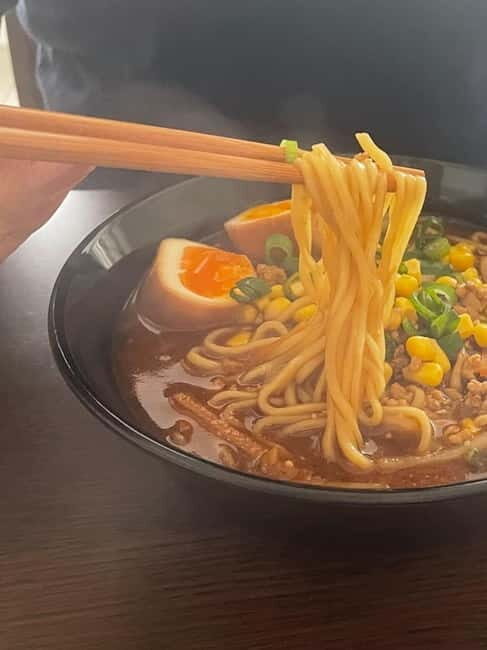
Restaurant ramen is delicious, but it’s also sort of a black box. This class turns the black box into something you can reproduce at home: you learn the recipe logic, then you actually do the steps with an instructor standing by.
Nagoya adds a fun twist because the miso here is its own thing. Nagoya’s miso is called aka-miso (red miso). It’s darker and slightly saltier than Kyoto’s lighter white miso—but when you turn it into ramen soup, the result is mild and easy to pair with vegetables and noodles. That matters, because vegetable-heavy ramen can go two ways: either the broth gets buried, or the veggies taste bland. This lesson is built to help you keep that balance.
The other difference is that you’re eating in a lesson setting, not in a dining room. While you enjoy your bowl, the experience naturally shifts toward conversation—Nagoya sightseeing, your home country, and whatever comes up. It’s a more personal way to spend two hours than lining up for the next bowl.
A few more Nagoya tours and experiences worth a look



Meeting at Nagoya City Higashi Lifelong Learning Center and Getting Oriented
You’ll meet at the Nagoya City Higashi Lifelong Learning Center. It’s a short walk from Shinsakae-machi Station (about three minutes on foot), and roughly seven minutes from Nagoya Station by train. For a two-hour class, that location is practical: you can fit it into a day of sightseeing without needing extra buffering.
Plan for a simple reality: transportation to the venue isn’t included. So if you’re staying far from the rail network, give yourself a little extra time to get there calmly—cooking lessons feel best when you arrive with your brain already in food mode.
One more logistics detail worth knowing up front: the class location can change depending on reservation dates. If that happens, you’ll be notified before confirming. It’s not a dealbreaker, but it’s the kind of small note that saves you from showing up at the wrong room.
The Aka-Miso Connection: What You Learn About Nagoya’s Fermentation Culture
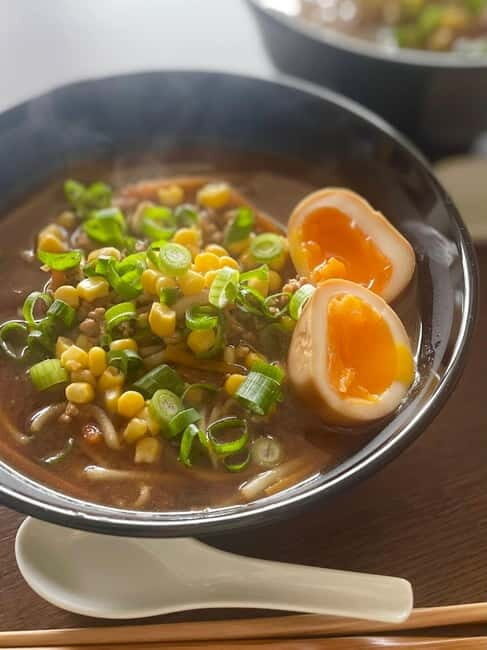
Before hands-on cooking, you get the cultural and flavor context that makes miso ramen click. In Nagoya, fermentation isn’t a vague background idea—it’s a local craft. The region has stores that have been producing miso, soy sauce, and mirin for centuries, and the city’s culture is tied to that tradition.
You also learn that miso isn’t one flavor. There are many varieties, and they can behave differently in a soup. In this class, you specifically work with Nagoya’s aka-miso. The key takeaway isn’t just that it’s red and darker; it’s how its slightly saltier base can still become mild once it’s built into ramen broth.
That’s the kind of information you can actually use. When you’re recreating ramen later, you’ll know you’re not just copying a color. You’re aiming for a soup that supports noodles and vegetables, not one that overwhelms them.
Hands-On Cooking: Building Your Own Miso Vegetable Ramen
This is a working class. You’re not limited to one fixed script where your role is stirring once and calling it success. The lesson explicitly includes practicing with your instructor as you go, with plenty of chances to ask questions.
Here’s what this structure does for you as a home cook:
- It reduces guesswork. You’ll see the recommended approach, then repeat it step-by-step.
- It helps you build a sense of timing. Ramen soup and noodles aren’t forgiving if you rush the flow.
- It teaches you how to troubleshoot. If something looks too salty, too thin, or too heavy, you’ll get guidance in the moment.
You’ll make miso ramen with a vegetable-forward approach. The class is designed so you can create your own original recipe using Nagoya’s miso, rather than only following a single “chef’s secret” version. That’s valuable because it gives you a ramen framework you can adapt later—swap vegetables, adjust texture, and make the soup fit your taste.
Also, you’ll wear an apron and use the utensils provided. That’s the kind of detail that makes a class smoother. You show up, cook, and don’t spend your trip worrying about what to pack.
Vegetables Aren’t Decoration Here: Flavor Balance You Can Taste
Lots of classes mention vegetables. This one is more intentional: it’s miso ramen with plenty of vegetables. That changes the entire cooking problem in a good way.
Vegetables bring sweetness, moisture, and texture. But they can also dilute flavor if the soup isn’t built correctly. The instructor’s guidance on Nagoya’s aka-miso helps you avoid a common issue: a broth that tastes fine alone, but loses punch once vegetables and noodles are involved.
You also get a lesson in pairing. Remember the earlier miso context: aka-miso is darker and slightly salty compared with Kyoto’s white miso, yet in ramen it becomes mild and vegetable-friendly. That’s the practical point. You’re learning how local miso style becomes a broth style.
If you like ramen for more than just the noodles—if you want broth, balance, and a bowl that feels like a meal—this vegetable emphasis is exactly the reason this class is worth your time.




Tasting Your Bowl On The Spot and Getting a Recipe You Can Recreate
After cooking, you eat what you made right there. The ramen is served hot and freshly made during the tasting time, so you get immediate feedback. That’s a huge difference from a class where you make food and then everyone eats something else.
During tasting, you can enjoy the flavor while also talking with your instructors. Recent experience with this provider has included instructors who are friendly and comfortable guiding you through the whole process, like Mikiko, Mikito & Michiyo, and also Yuko & Chinatsu. The theme from that instruction style is consistent: you’re not left to guess, and you’re not rushed.
You’ll also leave with a copy of the recipe. That’s one of the best “value boosters” in any cooking class because it’s not just a memory—it becomes a repeatable dish. You’ll also get recommendations on specific misos to look for in local stores when you recreate it at home, which is the difference between following a generic miso idea and actually buying something that behaves like what you learned.
Price and Value: Is $64 for Two Hours Fair?
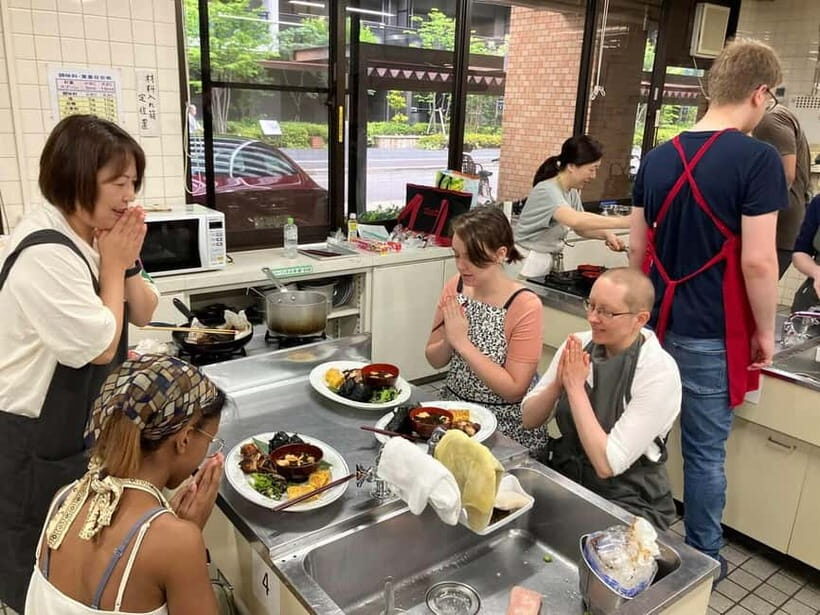
At $64 per person for a two-hour lesson, the question isn’t just whether it’s “expensive” or “cheap.” It’s what you’re buying.
You’re paying for:
- ingredients used (so you’re not separately shopping),
- cooking utensils and aprons (so the class doesn’t depend on what you bring),
- guided hands-on practice with an instructor,
- and the ramen tasting you make on the spot.
That package is where the value comes from. You’re not only eating ramen; you’re learning a repeatable cooking method. And since Nagoya’s aka-miso is a local style, you’re getting something you likely can’t learn from a quick ramen meal.
If you were to recreate this at home without a teacher, you’d still spend time learning miso behavior and building broth balance. Here, that learning is compressed into two hours, with support while you cook.
Practical Tips to Make Your 2 Hours Stress-Free
A ramen cooking class moves fast, even when it’s friendly. Here are a few ways to get the best result with minimal stress:
- Go hungry in a good way. This isn’t a snack; you’ll be tasting what you cook.
- Come ready to ask questions. The class is set up for Q&A, and it’s where you get the practical adjustments.
- Expect miso variety talk. If you’re the type who likes buying the right ingredient, this lesson will give you direction.
- Since it’s not vegetarian and doesn’t accommodate allergies, double-check before you book. If you’re uncertain, treat the class as unsuitable for your needs rather than hoping for substitutions.
If you’re also sightseeing that day, keep the class timing in mind. A hot bowl and recipe notes take a little mental space, even if the cooking itself is structured.
Who Should Book This Nagoya Miso Ramen Lesson?
Book it if you want more than a meal. This is for you if:
- you love ramen and want to understand the soup-building logic,
- you enjoy cooking and like the idea of making your own version,
- you’re curious about Nagoya’s food culture, especially fermentation and miso,
- and you want a vegetable-forward bowl, not just noodles in broth.
It’s also a great option for people who learn best by doing. The lesson isn’t passive, and that matters if you want to walk away feeling confident.
If you’re looking for a pure sightseeing tour with photo stops every hour, this isn’t that. It’s a focused food experience. Two hours, one main theme, and a practical skill at the end.
Should You Book It?
Yes, you should book this if you want a ramen skill you can use again at home. The combination of Nagoya’s aka-miso approach, the vegetable-forward ramen, and the fact that you cook and eat what you make gives this class real momentum.
Skip it if you need a vegetarian menu or have allergy concerns. The class is clearly not designed around those needs, so you’ll have less peace of mind trying to force it to fit.
If you’re in Nagoya and you like food experiences that turn into something you can actually recreate, this is one of the better “worth it” ways to spend your time.
FAQ
How long is the Nagoya miso ramen lesson?
The duration is 2 hours.
Where do I meet for the class?
The meeting point is Nagoya City Higashi Lifelong Learning Center.
How do I get there from nearby stations?
It’s about a 3-minute walk from Shinsakae-machi Station, and about 7 minutes from Nagoya Station by train. Detailed access info is provided via the meeting-point link.
What is included in the price?
Included: the cooking class experience, ingredients, cooking utensils, aprons, and tasting time.
Do I get to eat the ramen during the lesson?
Yes. During the tasting time, you can eat the ramen you made on the spot.
What language are the instructors?
The instruction is available in English and Japanese.
Is this lesson vegetarian?
No. This is not a vegetarian menu.
Does the class accommodate allergies?
No. This menu does not accommodate allergies.
Will I receive a recipe to take home?
You will leave with a copy of the recipe.
Is the class location always the same?
Not necessarily. The location can change depending on the reservation dates, and you’ll be notified before confirming your reservation.