REVIEW · NAGOYA
Nagoya: Private Koto Lesson with Professional Musician
Book on GetYourGuide →Operated by Asia Resource Connection Corp. · Bookable on GetYourGuide
There’s something calming about plucked notes. In Nagoya, you’ll take a private koto lesson inside a traditional Japanese classroom, learning the basics with a professional musician guiding your hands. I love that it’s hands-on (not just watching), and I also like the quiet, wabi-sabi feel that makes the whole session feel like a reset.
The main practical catch is simple: you’ll need socks, because bare feet aren’t allowed in a Japanese-style room. Plan for that, and you’ll be free to focus on music instead of logistics.
If you want an authentic intro to one of Japan’s most iconic instruments, this is a thoughtful way to do it. In 90 minutes, you’ll get demonstrations, time to try, and enough structure to walk away with a beginner piece you can recognize right away.
In This Review
- Key reasons this Nagoya koto lesson is worth your time
- A calm start in a traditional Nagoya classroom
- Koto basics: posture, hand position, and first clean sounds
- How the lesson builds into a beginner piece
- Why a professional musician changes everything in 90 minutes
- Wabi-sabi calm: why the room feels part of the lesson
- Price and value: $77 per group that can make sense for 1 to 6
- What to bring (and what can trip you up)
- Who this lesson suits best
- Should you book this Nagoya koto lesson?
- FAQ
- What is the duration of the Nagoya private koto lesson?
- How much does the lesson cost?
- Is the class private?
- What language is the instruction offered in?
- Is the koto provided during the lesson?
- What should I bring to the lesson?
- Is the location wheelchair accessible?
- Can I cancel for a refund?
- Are transportation or meals included?
Key reasons this Nagoya koto lesson is worth your time
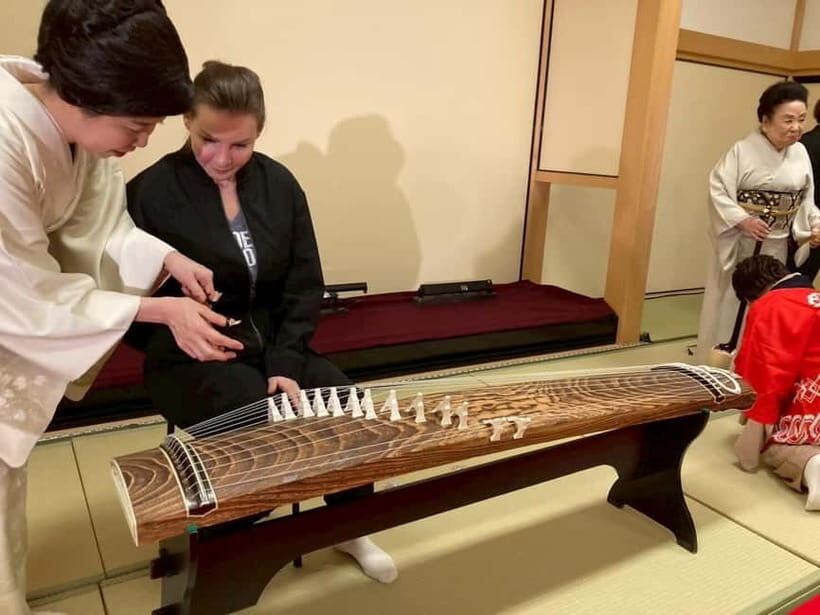
- A private group up to 6 means you get real attention, not a rushed show-and-tell
- Traditional classroom setting brings a wabi-sabi calm that matches the instrument’s mood
- Professional koto musician instruction in English helps you understand technique fast
- You play during the lesson, including time to try the instrument and work on a beginner piece
- Instrument and accessories provided, so you don’t need to rent or pack anything musical
- Wheelchair accessible, so more people can enjoy the same peaceful experience
A calm start in a traditional Nagoya classroom
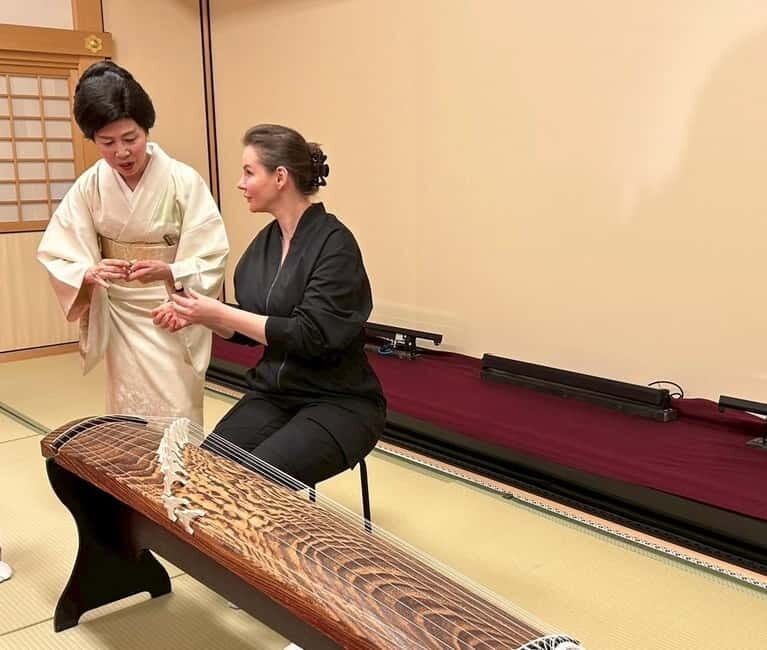
The best part of this experience is the atmosphere. You’re not learning koto in a loud music room. You’re in a traditional Japanese classroom setting, where the space feels made for quiet focus. That matters because koto technique is physical and detailed: where your hands rest, how you pluck, how you move without tensing up. A noisy environment makes everything harder.
Before you start, you’ll settle into the room and get ready to play. The lesson is designed for comfort and clarity, with the instructor acting as a calm guide rather than a lecturer. If you like learning that feels practical and gentle, this format fits.
One small but important note: bring socks. Barefoot isn’t allowed in a Japanese-style room, and missing that detail is an avoidable hassle. Once you’re set, the whole experience runs smoothly.
You can also read our reviews of more private tours in Nagoya


Koto basics: posture, hand position, and first clean sounds
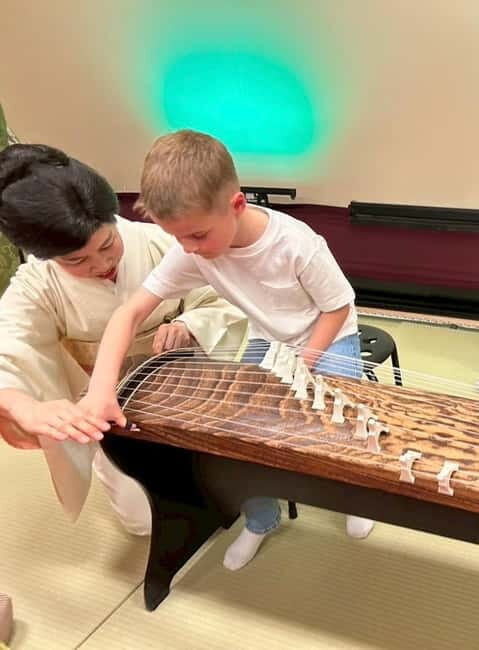
When you sit down with the koto (and yes, you’ll use the instrument during the session), the instructor’s job is to help you find the basics quickly. Koto playing isn’t complicated in concept, but it’s exact in execution. Tiny changes in hand angle and finger placement change the sound.
In a good lesson, you don’t just get told what to do. You get guided while you do it.
Here’s what you can expect as the lesson starts:
You’ll be shown how to approach the instrument and how to hold your hands for comfortable control. Then you’ll try, right away. That hands-on rhythm is one of the things that makes this lesson feel effective, because you correct mistakes in real time instead of building bad habits and hoping you fix them later.
Because the lesson is private (up to 6 people), the instructor can watch your technique closely. If your wrist is too tense, if your pluck lands in the wrong place, or if your timing feels off, you should get direct, understandable feedback. Since the instructor teaches in English, explanations can focus on technique instead of getting lost in translation.
If you’ve never touched a koto before, that’s no problem. This is meant to be an entry point. The session pacing supports beginners, so you’re not overwhelmed by too much theory at once.
How the lesson builds into a beginner piece
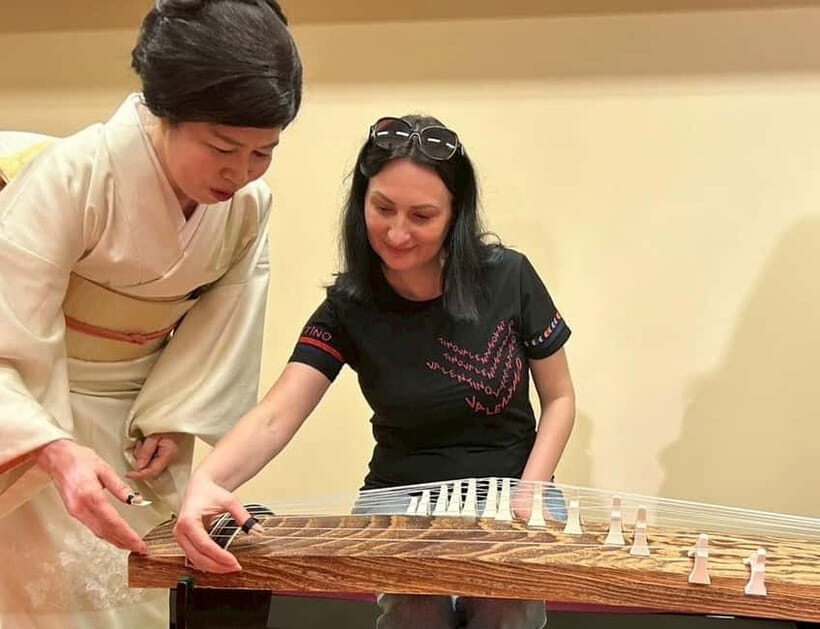
The structure of the 90 minutes matters. You’re not just learning random moves. You’re moving through a path that connects fundamentals to music you can actually recognize.
A balanced lesson usually has three parts:
1) Demonstration: the instructor shows what correct technique looks and sounds like
2) Practice time: you try those same motions on your own instrument
3) Guided learning: you work toward a beginner piece, so your effort ends with something musical
From the way the lesson is described and the way it’s experienced, that mix is exactly what you get. The instructor demonstrates, performs in a way that shows the emotional side of the instrument, and then gives you time to try. After that, you shift into learning a beginner piece.
That last part is key. Many “try it” experiences stop after a first sound. Here, you get enough structure to leave with a short piece you can play again later. Even if you don’t sound perfect on day one, you’ll understand the shape of the music. That makes practice outside the lesson feel satisfying instead of random.
Also, the time allocation is considerate. You get hands-on moments, not long stretches of sitting while someone else plays. For most people, that’s the difference between a lesson that feels like a memory and one that becomes a skill.
Why a professional musician changes everything in 90 minutes
A lot of cultural classes are guided by enthusiastic hosts. This one is led by a professional koto musician. That difference shows up fast, especially for technique.
Pros tend to teach with two things in mind:
- you should hear the difference between correct and incorrect sounds
- you should feel why the technique works physically
In koto lessons, sound is everything. The instrument can sound bright or soft depending on how you pluck and how you position your hands. A professional instructor can demonstrate those details clearly and then help you reproduce them.
This lesson also includes what feels like both instruction and performance. You’ll likely hear moving playing during the session, which gives you a target to aim for. Then you’ll translate that into your own practice. That back-and-forth makes the lesson feel alive rather than mechanical.
And because the group is small and private, the instructor can keep your learning on track. You’re not competing for attention. You’re learning at a pace that fits you.
Wabi-sabi calm: why the room feels part of the lesson
Koto music is delicate, and the instrument invites slow listening. That’s why the setting matters. The wabi-sabi aesthetics and meditative atmosphere aren’t just decoration. They support the way you play.
In a quiet room, you naturally listen more carefully to your own sound. You also pay attention to pacing and breath-like phrasing in the music. When the environment is calm, technique becomes less about forcing and more about control.
This kind of setting is also a welcome break from the “move fast, see everything” style of travel. If your trip has been packed with temples, trains, and checklists, this lesson can reset your attention. You’ll still be learning something new, but it won’t feel stressful.
If you’re the type who likes thoughtful cultural experiences over quick photo stops, you’ll probably leave feeling quietly proud and a little refreshed.
A few more Nagoya tours and experiences worth a look


Price and value: $77 per group that can make sense for 1 to 6
At $77 per group up to 6 for 90 minutes, this can be good value, especially if you share the experience with family or friends. Think about the math:
- For a group of 6, that’s about $12.80 per person.
- For 2 people, it’s about $38.50 each.
- For 1 person, it’s $77 for a private session.
Is it expensive for a solo traveler? It can be, depending on what you compare it to. But for a private, instructor-led session with a provided koto and a traditional classroom setting, the structure is strong. For groups, the cost becomes surprisingly reasonable.
Here’s how I’d decide if it’s worth it for you:
- If you’re traveling with at least one person who wants a hands-on musical activity, this is a great way to split the cost.
- If you’re solo and you want a true professional-led introduction rather than a casual demo, it may still be worth it because you’re paying for direct teaching time.
Either way, the lesson duration is long enough to matter. Ninety minutes is not just a sampler. It’s enough time to build fundamentals, try the instrument, and learn a beginner piece you can revisit.
What to bring (and what can trip you up)
The good news: you don’t need to bring a koto or special accessories. The instrument and accessories are provided. That saves money and packing space.
Your main task is footwear-related: bring socks. Barefoot isn’t allowed in the Japanese-style room, so plan ahead. If you wear thin socks, it helps you feel grounded on the floor and keeps you comfortable throughout the lesson.
Also remember that transportation isn’t included, and meals and drinks aren’t included. That’s not unusual, but it does affect your timing. Give yourself a little buffer so you can arrive calmly and not rush in hungry or flustered.
If you’re planning this during a busy day in Nagoya, I’d treat it like a sit-down appointment, not a quick side stop.
Who this lesson suits best
This is a smart fit if you:
- want a beginner-friendly way to learn a traditional instrument
- prefer small, calm instruction over crowd-based classes
- like cultural experiences where you actually do the activity
- are traveling with a friend or family member and want shared attention
- appreciate wabi-sabi-style spaces and quiet focus
It’s also suitable if you’re someone who gets nervous in group settings. A private group up to 6 helps the instructor adjust their explanations and pacing.
If you want a deep conservatory-level training course, this 90-minute lesson won’t replace years of study. But it will give you an honest starting point and a beginner piece with clear next steps.
Should you book this Nagoya koto lesson?
Yes, you should consider booking it if you want an authentic, hands-on introduction to koto in a genuinely calm setting. The professional musician instruction in English, the traditional classroom atmosphere, and the fact that you get time to try and learn a beginner piece make this more than a cultural “taster.”
If you’re on a solo budget, weigh the $77 cost against other activities you could do. But if you value direct teaching and want a memorable musical skill rather than just photos, this is a solid choice.
And if you can go with others, the group pricing turns this into an excellent value. Bring socks, plan your transit, and enjoy a 90-minute pause where the goal is simple: make music, learn the basics, and leave with something you can keep practicing.
FAQ
What is the duration of the Nagoya private koto lesson?
The lesson lasts 90 minutes.
How much does the lesson cost?
The price is $77 per group, up to 6 people.
Is the class private?
Yes, it’s a private group (maximum group size is 6).
What language is the instruction offered in?
The instructor teaches in English.
Is the koto provided during the lesson?
Yes. The koto instrument and accessories are provided.
What should I bring to the lesson?
Bring socks, since barefoot is not allowed in the Japanese-style room.
Is the location wheelchair accessible?
Yes, the activity is wheelchair accessible.
Can I cancel for a refund?
Yes. You can cancel up to 24 hours in advance for a full refund.
Are transportation or meals included?
No. Transportation to the venue and meals and drinks are not included.