REVIEW · TOKYO
Official Japan Go-Kart Shibuya / Tokyo Tower (IDP Required)
Book on Viator →Operated by JAPANKART · Bookable on Viator
Tokyo streets, on a go-kart.
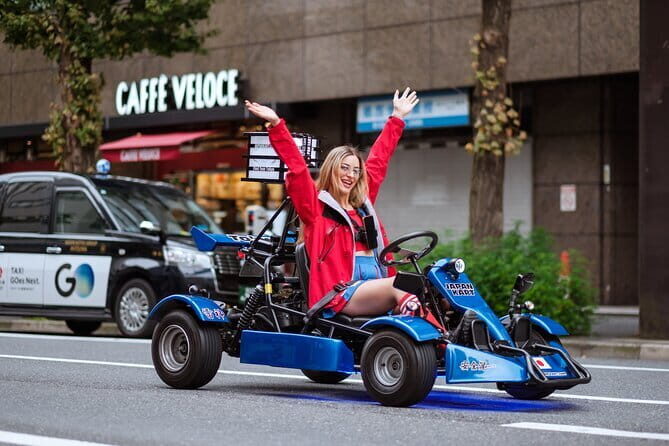
This Shibuya-to-Tokyo Tower route is interesting because you’re not stuck watching the city from behind glass. You’ll drive through classic photo stops like Shibuya Crossing and Tokyo Tower as part of a guided convoy, with the kart rental handled for you. I especially like that it’s built for city sightseeing (not a full-throttle race) and that the group stays small enough to feel organized. One drawback to plan for: you must bring the correct documents, and the ride can be canceled on the spot if you don’t show what Japan’s road rules require.
The vibe is straightforward: arrive a little early, get your safety briefing, and then follow your lead through key Tokyo areas like the Imperial Palace, Tokyo Station, and Roppongi. You’ll also get help in the form of route guidance so you’re not constantly checking maps or trying to find where to turn next. Still, this isn’t for casual “walk up and drive” travelers. Your International Driving Permit (IDP) requirements are strict, and your footwear and clothing matter too.
In This Review
- Key Highlights You’ll Care About
- What This Shibuya Go-Kart Tour Feels Like on the Road
- The Big Non-Negotiable: Your IDP Must Match Japan’s Rules
- Meeting at JAPANKART Kanda: Arrive Ready and Dressed Right
- Imperial Palace to the Neon: How the Route Builds Momentum
- Imperial Palace: A Calm Start Before the Crowds
- Shibuya Crossing: Driving Through a Tokyo Icon
- Roppongi Pass-By: Nightlife District Energy, Daytime Too
- Tokyo Tower: The Shortcut to Sweeping City Views
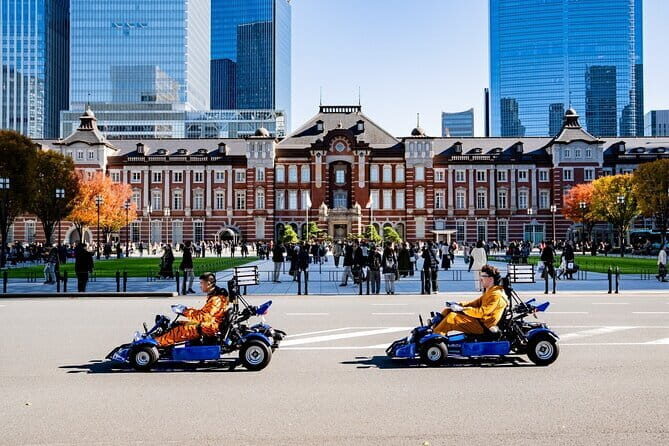
- Tokyo Station: Red-Brick Icon Meets Modern Tokyo
- Safety and Staff: Why This Tour Usually Feels Effortless
- Who Should Book This (and Who Should Rethink It)
- Should You Book This JAPANKART Shibuya Go-Kart Tour?
- FAQ
- Do I need an International Driving Permit for this go-kart tour?
- What kind of IDP is accepted in Japan for this activity?
- What if I only have a digital copy or a photo of my IDP?
- How long is the go-kart experience?
- What major sights are included on the route?
- Where does the tour start?
- Are there dress rules or restrictions?
- What happens if weather is bad?
Key Highlights You’ll Care About
- IDP in the right format is mandatory: Japan only accepts specific IDP rules, and it must be in booklet form
- Small-group convoy driving: you’ll move together rather than fending for yourself
- Major Tokyo sights in one outing: Shibuya Crossing, Tokyo Tower, Imperial Palace, Tokyo Station, and Roppongi
- Kart rental is included: you’re paying for the whole experience, not just the vehicle
- Staff support plus photo moments: the team guides you and helps you capture the trip
What This Shibuya Go-Kart Tour Feels Like on the Road
A go-kart in Tokyo is a different kind of sightseeing. You feel the speed in your hands and the energy in the streets, but the experience is guided—so you’re not constantly deciding turns or figuring out where you should be next. The route is designed around recognizable landmarks, which means you get to check off big names like Shibuya Crossing and Tokyo Tower without spending your whole day hopping between stations.
I also like that the timing is realistic: about 2.5 to 3 hours. That’s long enough to experience Tokyo from street level, but not so long that you’re exhausted before you can enjoy the rest of your trip. And because you’re in a controlled group ride, it tends to feel like a structured outing rather than a chaotic street scramble.
Now the practical value piece: at $145.35 per person, you’re paying for more than the kart. You’re paying for guiding, routing, safety handling, and the included kart rental that lets you enjoy Tokyo’s sights without renting and managing a car. If you’ve been eyeing pricey day tours that mostly involve standing in lines, this often feels like better bang for your time—assuming you’re ready for the IDP paperwork and the driving rules.
You can also read our reviews of more tours and experiences in Tokyo.



The Big Non-Negotiable: Your IDP Must Match Japan’s Rules
Here’s the deal-breaker that you should treat as step one. Japan requires you to show both:
- your driver’s license from your home country
- an International Driving Permit (IDP)
The IDP must be issued in the format of the 1949 Geneva Convention, and it must be in booklet form (not paper slips and not A4-sized prints). Some common online IDP products are unofficial, so you need to be careful and only use a government-authorized association.
Also important: IDPs issued under the Vienna Convention 1968 are not accepted in Japan. This matters because people sometimes buy an IDP without realizing there are different convention formats. Japan’s rules are strict here, and the operator is explicit about it.
There’s also a specific exception path if your license is from Switzerland, Germany, France, Taiwan, Belgium, or Monaco. In that case, you’ll need a Japanese translation of your license through the Japan Automobile Federation (JAF), plus your own license. If you’re not in those countries, the main requirement is the license plus the correct IDP.
And one more thing that many first-time visitors miss: you need the physical copy of your documents at the time you ride. Digital copies or photos won’t cut it. If you show up without the required documents, your participation can be canceled without a refund.
Meeting at JAPANKART Kanda: Arrive Ready and Dressed Right
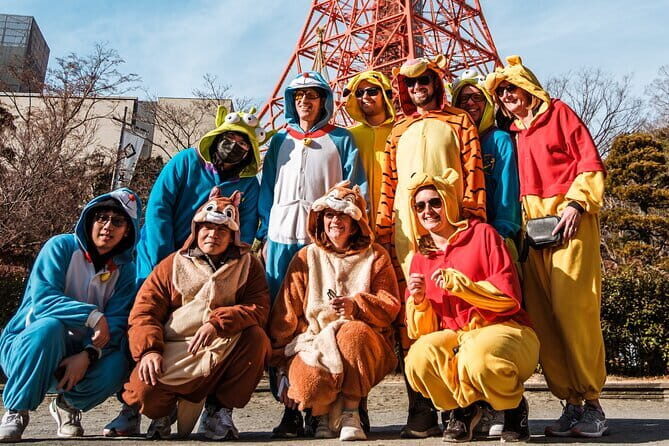
You meet at JAPANKART Kanda Branch, address:
101-0042 Tokyo, Chiyoda City, Kanda Higashimatsushitachō, 42, 2nd floor.
It’s listed as near public transportation, which is a big help because you don’t want to spend your pre-ride time fighting Tokyo directions. Still, plan on being there early. You should arrive 15 minutes before your booking time so you can check in, complete the required steps, and get ready to drive.
A few rules you’ll feel in your first minutes:
- Alcohol consumption before the tour is prohibited.
- Avoid long skirts, high heels, and sandals. Choose footwear that’s safe and stable for kart pedals and riding.
- You’ll receive a confirmation at booking time, and you’ll use a mobile ticket for the activity.
The staff also emphasizes instruction and prep. They’ll point you to an instructional video in your confirmation email, which is smart. If you watch it before you go, you’ll spend less time at the front end sorting out how everything works and more time actually enjoying the drive.
Imperial Palace to the Neon: How the Route Builds Momentum
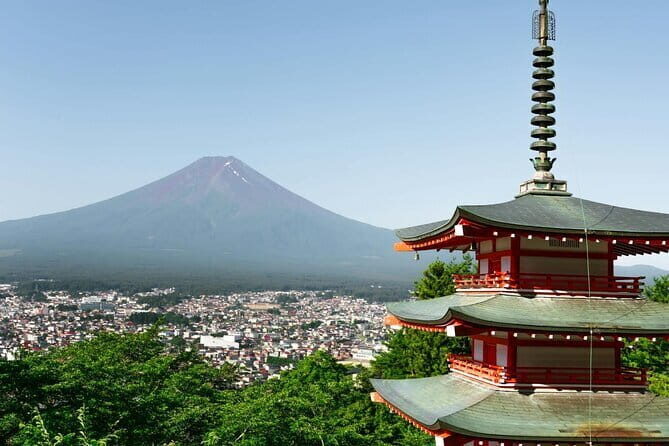
This outing is paced like a city highlight reel. The route is guided, and you travel in a small convoy. That means the experience is less about racing through Tokyo and more about following a plan that strings together the places people put on their must-see lists.
While exact timing can vary by conditions, you can expect the outing to hit these major stops:
- Imperial Palace area
- Shibuya Crossing
- Roppongi
- Tokyo Tower (with a short on-foot viewing window)
- Tokyo Station
What makes the sequencing work is the contrast. You start with a historically significant, calmer-feeling area, then move into Shibuya’s high-energy street presence, then swing into Roppongi’s nightlife-and-lights vibe, and later end back in the central rail area around Tokyo Station.
Imperial Palace: A Calm Start Before the Crowds
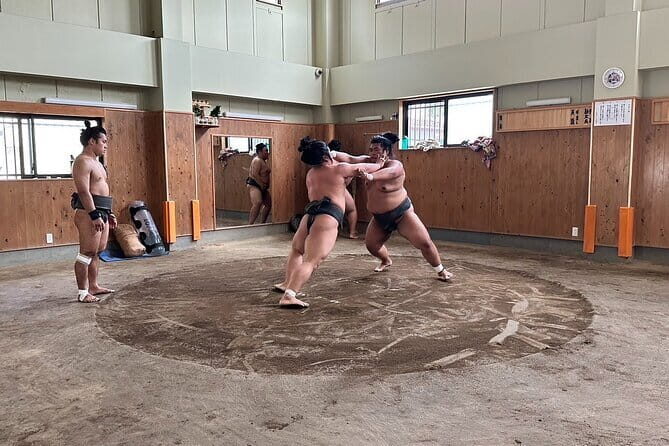
The Imperial Palace area is the kind of landmark you can appreciate even when you’re not walking deep into it. It’s the primary residence of Japan’s Emperor, and the grounds you’ll be seeing connect to the former site of Edo Castle. You get a sense of traditional architecture, gardens, and the water-and-stone edges around the complex.
From a go-kart perspective, this stop is useful because it’s a mental reset. If Shibuya is loud and in-your-face, the Imperial Palace area is more about atmosphere and scale. It also tends to be a good time to settle into kart rhythm: you’re not trying to drive at maximum intensity immediately—you’re easing into the day while the scenery helps set the tone.





Shibuya Crossing: Driving Through a Tokyo Icon
Shibuya Crossing is the one that most visitors recognize instantly. It’s the major pedestrian scramble where lights change and people surge in multiple directions. From the kart, you’re seeing it from a driver’s-eye perspective, not just a sidewalk vantage point.
This is where the experience feels most like a Tokyo movie set. The streets around Shibuya are packed with signage, color, and energy, and you get to experience that street-level motion while your group stays organized.
One consideration: Shibuya is also where you’ll be most aware that you’re in a real city with real traffic patterns and crowds. The guided convoy approach helps a lot. You still need to follow instructions carefully and keep your focus on safe driving, not on taking selfies every ten seconds.
Roppongi Pass-By: Nightlife District Energy, Daytime Too

Roppongi is known for nightlife and international food, but it’s not only a late-night stop. During the day, you can find museums and stylish shops in the area, and it’s a place where modern Tokyo energy shows up in a different way than Shibuya.
From the kart route, this stop is valuable because it broadens the story of the city. Shibuya and Tokyo Tower are top-of-mind landmarks, but Roppongi reminds you that Tokyo’s fun isn’t only neon intersections. It’s also neighborhoods with their own pulse.
If you like cities where the skyline and street life mix, Roppongi is a nice “in-between” highlight that keeps the ride from feeling like a straight shot between icons.
Tokyo Tower: The Shortcut to Sweeping City Views
Tokyo Tower is hard to miss, and the route gives it a proper moment. It’s 333 meters tall and modeled after the Eiffel Tower, painted the bright orange-and-white you’ll recognize from posters and postcards.
You’ll get a short stop time here—about 10 minutes. And there’s an important detail: admission ticket is not included, so don’t plan on a full observation deck visit unless you’re ready to pay separately for that part.
Even with limited time, this stop works because Tokyo Tower is a “locate yourself instantly” landmark. Seeing it up close, from the street and in your peripheral vision as you drive, helps your brain map Tokyo in a way that photos sometimes don’t. It’s one of those stops that makes the rest of your trip feel more connected.
Tokyo Station: Red-Brick Icon Meets Modern Tokyo
Tokyo Station has that classic red-brick look you’ll recognize instantly once you’re near it. It opened in 1914 and stands out as a historic railway hub in the middle of Tokyo’s modern skyline.
This last highlight is a smart way to close the loop. After time in Shibuya and around city excitement, Tokyo Station gives you a sense of structure—an old-but-still-busy center where trains and people keep everything moving. It’s also a place where you can find shops and restaurants if you want to continue exploring once the ride ends.
Since this is the end-of-activity area, it also makes practical sense: you’re finishing close to a major transit hub, which can help you get to dinner plans without too much stress.
Safety and Staff: Why This Tour Usually Feels Effortless
The biggest repeated theme is that the staff makes the experience smoother and safer. You’ll get clear guidance before you start, and you’ll be managed as a group rather than thrown into the streets with a vague plan.
Two things I’d call out from the way this tour tends to run:
- They take safety seriously and keep the briefing focused on what you need to do to ride confidently.
- They help you capture the moment, including photo stops and photos taken by the team that you can use afterward.
And you’ll feel the benefit of the small-group setup. The tour is capped at 10 people for the riding group, and the overall activity lists a maximum of 15 travelers, which typically means less wandering and more attention from the guides.
Speed-wise, think “thrilling sightseeing drive,” not “full racing.” Some people describe it as similar energy to a movie-style chase, but slower and managed by traffic and the convoy. That’s actually a plus for most first-timers: you’re getting the fun without needing racing experience.
Who Should Book This (and Who Should Rethink It)
This go-kart tour is a great fit if you want:
- a fun, outdoor way to see multiple top Tokyo landmarks in one outing
- guided driving so you’re not navigating around a map all day
- a small group experience that feels organized and supported
It can also work well for visitors who are not young or who don’t want to handle complex transport planning. Some people do this in their early 50s, and the structure is designed to help you feel comfortable and confident.
You should rethink it if:
- you don’t have the correct IDP format and paperwork ready in time
- you aren’t willing to follow the dress rules (safe footwear matters)
- you’re expecting a free-for-all race experience rather than a managed convoy ride
Also, if you’re sensitive to weather swings, pay attention to the fact that this experience requires good weather and can be canceled or rescheduled when conditions are unsafe.
Should You Book This JAPANKART Shibuya Go-Kart Tour?
If you meet the driving-document requirements and you want a high-energy way to see Tokyo’s headline stops, I think you’ll be happy with this pick. The value is strongest when you see it as an all-in-one activity: kart rental included, guided route through major areas, and a time length that doesn’t steal half your day.
Book it if you’re the type who likes street-level travel—seeing the city while you’re moving through it, not just standing on a sidewalk with your phone held up. And if you’re curious about Tokyo from a different angle, driving past Imperial Palace landmarks, riding toward Shibuya Crossing, and ending near Tokyo Station is a pretty satisfying storyline.
Skip it only if the IDP rules feel like a hassle you can’t solve, or if you don’t plan to follow basic safety and clothing expectations. In Japan, that stuff is not optional, and the experience depends on it.
FAQ
Do I need an International Driving Permit for this go-kart tour?
Yes. You must present both your driver’s license and an International Driving Permit (IDP) to participate.
What kind of IDP is accepted in Japan for this activity?
The IDP must be issued in the format of the 1949 Geneva Convention, and it must be in booklet form. IDPs issued under the Vienna Convention 1968 are not accepted.
What if I only have a digital copy or a photo of my IDP?
You need the physical copy of your documents at the time of driving. Photos or digital copies are not accepted.
How long is the go-kart experience?
It runs about 2 hours 30 minutes to 3 hours.
What major sights are included on the route?
You’ll enjoy views of Shibuya Crossing, Tokyo Tower, the Imperial Palace, Tokyo Station, and you also pass through Roppongi.
Where does the tour start?
It starts at JAPANKART Kanda Branch at 101-0042 Tokyo, Chiyoda City, Kanda Higashimatsushitachō, 42, 2nd floor, and ends back at the meeting point.
Are there dress rules or restrictions?
Yes. You should not wear long skirts, high heels, or sandals.
What happens if weather is bad?
The experience requires good weather. If it’s canceled due to poor weather, you’ll be offered a different date or a full refund.