REVIEW · TOKYO
Shibuya Kart: Premium Go-Karting Tour through Shibuya, Tokyo
Book on GetYourGuide →Operated by ShibuyaKart · Bookable on GetYourGuide
Shibuya, but with a steering wheel. This go-kart tour is a fun way to see Tokyo’s famous streets up close, with a professional local guide and plenty of photo stops built in. I especially like the costumes plus guided photo capture, so the memories feel like part of the experience, not an afterthought. One thing to consider: you must have the right driving paperwork (a hard copy International Driving Permit that’s valid for Japan), or you can’t ride.
It’s also well run in the real world sense: clear instructions, steady pacing through busy areas, and guides who keep the group together. I saw plenty of praise for guides such as San and Omar, who focus on safety while still making it feel like an adventure.
If you’re hoping for a relaxed sightseeing walk, this is different. You’ll be driving in traffic conditions, so the thrill comes with a need to listen closely and follow the rules.
In This Review
- Key things I think you’ll care about
- Why Shibuya Kart feels like Tokyo at speed
- Choosing 45, 60, or 90 minutes without wasting your day
- Meeting in Togoshi and getting kitted out
- Safety briefing that actually helps (and not just paperwork)
- Zipping past Tokyo Tower: the sightseeing hit before you even settle in
- Roppongi’s flashy streets: fun driving with the right energy
- Shibuya Scramble Crossing and Omotesando: where the ride becomes the story
- Costumes, lockers, and the photo package you don’t have to manage
- Price and value: why $63 can make sense in Tokyo
- Who should book Shibuya Kart, and who should skip it
- Practical driving rules that can make or break your day
- Should you book Shibuya Kart?
- FAQ
- How much does Shibuya Kart cost?
- How long is the tour?
- Where does the tour start and end?
- What language are the guides?
- What do I need to bring to drive?
- Do I need an international driving permit?
- Are drinks or alcohol allowed during the ride?
- What’s included for photos and costumes?
- What’s the cancellation policy?
Key things I think you’ll care about
- Tokyo Tower to Shibuya Scramble Crossing in one run, with landmark energy along the route
- Small-group feel and a guide who manages the ride for you (names people mention include San and Omar)
- Costumes, accessories, and photo shooting with digital photo data at the end
- 45, 60, or 90 minutes lets you match the ride to your schedule and stamina
- International driving rules are strict, and the IDP must be the correct paper version for Japan
Why Shibuya Kart feels like Tokyo at speed
Shibuya Kart is basically the opposite of standing on the curb and waiting for the right angle. You get into a go-kart, learn the controls, and then cruise through Tokyo’s headline neighborhoods like you’re part of the city’s motion.
The best part is how the tour ties the adrenaline to sightseeing. Instead of saying Tokyo Tower is “somewhere you should see,” the ride is designed so you actually pass it. The same goes for the Shibuya area—your kart gets you moving through streets that you’d normally only browse from a train window.
I also like that the tour isn’t just a ticket to drive. You get a live guide in English and Japanese, plus a safety briefing and driving instructions right at the start. Guides such as San, Omar, Ren, and Alice come up again and again in the feedback, and the common thread is confidence: they keep everyone oriented and moving at a safe, workable speed.
A final note before you picture the perfect scenario: this is active driving. You’ll have to pay attention, even when the views are tempting. If you can follow instructions quickly, you’ll enjoy it more than anyone trying to wing it.
You can also read our reviews of more tours and experiences in Tokyo.



Choosing 45, 60, or 90 minutes without wasting your day
You can book the experience in 45, 60, or up to 90 minutes, and that choice matters more than people think. Go-kart time is fun, but it also adds up to a chunk of your Tokyo day.
Here’s how I’d choose based on your travel style:
- 45 minutes: best if you want the highlight loop without committing too long. It’s also a good fit if you’re stacking other Tokyo must-dos and still want a quick hit of Shibuya energy.
- 60 minutes: the sweet spot for most people. You’ll feel like you got real driving time, not just a warm-up.
- 90 minutes: pick this if you want the full experience, especially when you’re riding later for better lighting. Riders specifically praised longer runs at night, calling out the glow from Tokyo Tower and the night look from Shibuya Scramble.
Timing also affects how your ride feels. One practical tip from the ride reports: earlier slots can mean easier traffic conditions, while later slots can be better for photos and atmosphere. If you hate feeling rushed, consider going earlier. If you want the city lights effect, look at the later options.
Meeting in Togoshi and getting kitted out
The tour starts and ends at the shop in Togoshi. That matters because you’re not constantly zig-zagging across the city before you even drive—you begin in one place, get ready, and then come back to the same base.
Once you arrive, expect a setup period that includes:
- a safety briefing and driving instructions
- getting your kart assigned
- getting into your costume and accessories
- locker use for your belongings
Lockers are included, which is a real quality-of-life detail. You don’t want to spend your ride worrying where your bag is or whether your phone is safe.
A useful comfort note from rider feedback: the experience can get cold with wind (especially in winter). Some guests mentioned they were given gloves and hats, and costumes helped with warmth too. If you’re visiting in cooler months, dress like you’re going to be outside in motion, not like you’re strolling indoors.
Safety briefing that actually helps (and not just paperwork)
This is one of the most praised parts of Shibuya Kart: the approach feels structured, not chaotic. You get a professional local guide and clear instructions before you roll.
What makes that important is simple: Tokyo traffic is busy and drivers are fast-moving. Your job is not to “battle” the streets. Your job is to drive smoothly and follow the route and timing your guide manages.
A few real-world points that come through in the feedback:
- Guides explain clearly how to operate the kart, and they keep it calm and understandable.
- Photo stops happen without turning the ride into a long pause-fest.
- Guides also manage group spacing, so you’re not constantly braking and accelerating.
If you’ve never driven a go-kart before, don’t worry. The tour is built around teaching you and then putting you on streets where your guidance matters. People who cared about feeling safe consistently praised guides like San, Omar, and Manu for their confidence and patience.
Zipping past Tokyo Tower: the sightseeing hit before you even settle in
The experience is designed so your first big “wow” moment isn’t just a photo op—it’s the ride itself. You get to zip past Tokyo Tower, which gives the tour an instant landmark hook.
Why this works: Tokyo Tower isn’t a quiet backdrop. It’s a recognizable symbol, and seeing it while you’re actually moving helps it feel real. You’re not imagining where you’ll go later; you’re actively driving your way through it.
You’ll also likely notice a pattern in the route flow: landmark passes, then the next stretch. That keeps your eyes up, and it prevents the tour from turning into one long, identical loop.



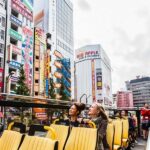


Roppongi’s flashy streets: fun driving with the right energy
Another highlight is the chance to see Roppongi’s flashy streets. This is where the tour leans into the “Tokyo at night or day” vibe, with city sights that look like a movie set.
Driving through areas like this feels different from sightseeing on foot. On foot, you stop for corners, photos, and crowds. In a kart, you’re continuously moving, and that movement makes the streets feel sharper and more immediate.
If you’re a photographer, this is a strong section to watch. Even if you don’t bring anything fancy, you’ll understand why the tour includes photo shooting. It’s hard to frame everything while driving, and that’s exactly why someone on staff takes photos for you.
Shibuya Scramble Crossing and Omotesando: where the ride becomes the story
Two route elements keep getting called out: Shibuya Scramble Crossing and racing through Omotesando (through the Omotesando area streets).
This combination is smart. Shibuya gives you the worldwide recognition moment—the intersection that’s basically Tokyo’s nickname on the big screen. Omotesando gives you the stylish, slower-impatience streets where the city’s design and storefront energy show up.
Why these parts matter:
- Shibuya is intense. You’re driving through a famous pocket of crowds, and that makes the experience feel like more than a theme-park ride.
- Omotesando adds contrast. It breaks the route up so it’s not just “big-name landmark after big-name landmark.”
One rider specifically highlighted the fun of going through Shibuya Scramble. Another pointed out that night rides can look amazing from the kart, with Tokyo Tower and Shibuya lit up. If you want maximum photo payoff, consider planning your ride time so darkness isn’t cutting the fun short.
Costumes, lockers, and the photo package you don’t have to manage
This is a tour where the details are doing real work.
You get:
- costume and accessories included
- lockers included
- photo shooting and digital photo data included
In other words, staff handles the memory part. Guides take photos throughout the ride, and guests reported digital delivery afterward (including sharing methods like air-drop). Some guests also mentioned printouts of a few photos, which is a nice optional souvenir if you like something physical.
The costume piece is also not just a gimmick. It turns a driving activity into a playful character moment. Riders reported there are lots of costume choices, and extra themed outfits might cost extra, but the base experience includes costumes and accessories.
Practical tip if you care about comfort: exhaust can be strong enough that one rider suggested bringing a face mask. If you’re sensitive to fumes, that’s worth considering. And if you have an action camera like a GoPro, bringing it can help because you’ll be in motion the whole time.
Price and value: why $63 can make sense in Tokyo
At $63 per person for 45 to 90 minutes, you’re paying for three things at once:
- A guided route through high-profile areas
- A kart rental plus fuel
- The “do the work for you” extras: costumes, lockers, and a photo package
In Tokyo, you can easily spend that kind of money just getting from point A to point B and paying for an entrance ticket. This is different because the value is in the full package—especially the fact that you’re not navigating traffic and roads yourself.
What helps the value feel real:
- the guide manages the pace and group
- safety briefing is included
- you get digital photo data so you don’t have to constantly stop for pictures
The cost also lines up with the duration you pick. If you choose the longer option, you’re buying more driving time, not just a longer wait.
One more pricing-related consideration: the tour includes insurance for the customer, but kart insurance is not included beyond that. That means you should expect there may be some limitations on coverage for the vehicle itself. If you’re worried about minor mistakes, ask your booking team what that means in practice so you feel comfortable.
Who should book Shibuya Kart, and who should skip it
This tour fits best if you want Tokyo energy without the usual “standing and observing” vibe.
It’s a great match for:
- couples, families, and groups who want something shared and active
- first-time visitors who want to see headline spots fast
- people who like photo-friendly experiences with built-in staff help
It’s not for you if:
- you don’t have a driver’s license. The tour states it’s not suitable for people without a driver’s license.
- you’re planning to drink or show up intoxicated. Alcohol and drugs are not allowed, and drinks aren’t allowed in the vehicle.
Also consider your comfort level with wind and cold. People mentioned it can get chilly, and the ride is outdoors while you’re moving. Dress for motion, not for sitting.
Practical driving rules that can make or break your day
Here’s the part that needs your full attention: Japan driving paperwork.
The tour requires:
- Passport or ID card
- International Driver’s Permit (IDP) in a hard copy form (digital copies don’t count)
But the tour info is specific about validity. The IDP must be the correct accepted version for Japan under the 1949 Geneva convention, and it’s only valid for a year. Also:
- some countries (including Switzerland, Germany, France, Taiwan, Belgium, and Monaco) require a Japanese translation of the license from the Japan Automobile Federation (JAF), not an international driving permit
- if your country isn’t covered by the 1949 Geneva convention (examples listed include Mexico, Kuwait, China, Colombia, Saudi Arabia), you can’t operate the kart in Japan
If you’re traveling from India, the tour recommends contacting them directly because there are multiple types of IDPs with different legal standing.
One more heads-up: the tour explicitly says that if you don’t have a valid IDP for Japan, they can’t make a refund. So don’t treat paperwork as optional. It’s the entry ticket for the experience itself.
Should you book Shibuya Kart?
If you have a valid driver’s license and the right hard-copy IDP, I think Shibuya Kart is one of the better ways to turn a Tokyo day into a story you’ll talk about for years. You get landmark driving, a guide-led route, costumes, and photo capture handled for you. Guides like San and Omar show up often in feedback, and the focus on safety is a consistent theme.
I’d only hesitate if you’re traveling without the correct paperwork, or if you strongly dislike active driving and following instructions in a busy environment. It’s not a casual stroll—it’s Tokyo with throttle.
If you want, tell me your travel month and whether you’re going 45, 60, or 90 minutes. I can help you pick the slot that best matches your priorities (photos, speed, comfort, or time efficiency).
FAQ
How much does Shibuya Kart cost?
It’s priced at $63 per person.
How long is the tour?
You can choose a 45-minute, 60-minute, or even a 90-minute experience. The exact start times depend on availability.
Where does the tour start and end?
The tour starts and ends at the shop in Togoshi.
What language are the guides?
The live guide is available in English and Japanese.
What do I need to bring to drive?
Bring a passport or ID card and a hard copy International Driver’s Permit (IDP). The tour notes the IDP must be the correct accepted version for Japan under the 1949 Geneva convention.
Do I need an international driving permit?
Yes. People without driver’s license are not suitable to drive. The tour also specifies hard copies of international driving permits and describes which versions are accepted.
Are drinks or alcohol allowed during the ride?
Drinks are not allowed in the vehicle, and intoxication, alcohol, and drugs are not allowed.
What’s included for photos and costumes?
Costumes and accessories are included, and there is photo shooting with digital photo data included at the end of the experience.
What’s the cancellation policy?
Free cancellation is available up to 24 hours in advance for a full refund.