REVIEW · TOKYO
Official Japan Go-Kart Through Shibuya / Shinjuku (IDP Required)
Book on Viator →Operated by JAPANKART · Bookable on Viator
Traffic turns into fun fast on this go-kart route, with your guide handling navigation so you can focus on the ride. I love the small-group setup (max 10) and the way the experience is designed to help you stay calm even when the streets feel intense. The biggest catch is paperwork: you must bring a valid driver’s license plus an International Driving Permit in the right format, or you won’t be able to ride.
You’ll cruise past Tokyo’s most famous scenes—Shinjuku Gyoen, Omotesando, Harajuku, and then the big-stage moment of Shibuya Scramble—without the stop-start hassle of public transport. Expect a safety-first operation with staff leading the group and keeping you moving as one unit, plus photo and video stops along the way. The only other consideration I’d flag is that you’ll be low to the road, so fumes can be real; a mask can make a difference.
In This Review
- Key highlights you’ll feel immediately
- Entering Tokyo streets by kart: what this experience is really like
- Getting the IDP rules right: the paperwork that decides everything
- Meet at JAPANKART Shinjuku: the check-in flow and pre-ride prep
- Safety in traffic: what “controlled chaos” feels like at first
- The sightseeing route you’ll actually enjoy riding: Shinjuku Gyoen to Omotesando
- Shinjuku Gyoen National Garden (sakura-season famous)
- Omotesando: high-end streets and fancy car watching
- Harajuku: street style, quick thrills
- Shibuya Scramble and Yoyogi Park: the Tokyo postcard moments, without the tourist pinch
- Shibuya Scramble: watch the crossing from the inside
- Yoyogi Park and the Meiji Jingu neighbor effect
- Shinjuku skyline views and Kabukichō nightlife texture
- Tokyo Metropolitan Government Building observation decks (free views)
- Kabukichō: neon entertainment district edge
- The value question: is $125.53 worth it for two hours?
- Who should book this go-kart ride (and who should skip it)
- Final verdict: should you book JapanKart Through Shibuya and Shinjuku?
- FAQ
- How long is the go-kart tour?
- What documents do I need to drive?
- Are Vienna Convention IDPs accepted in Japan for this activity?
- How big is the group?
- Is alcohol allowed before the tour?
- What happens if the tour is canceled due to bad weather?
Key highlights you’ll feel immediately
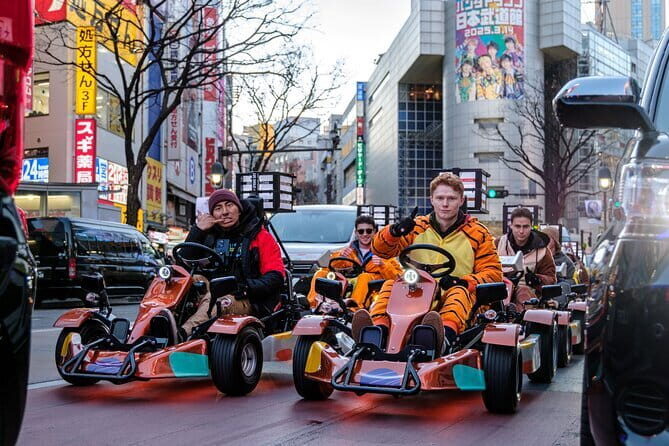
- Max 10 riders keeps the vibe controlled and the instructions easier to follow
- Guide-led navigation means you’re not wrestling with streets or turns
- Safety convoy feel with vehicles coordinating around your group so you don’t get lost in traffic
- Icon route by kart: Shinjuku Gyoen, Omotesando, Harajuku, Shibuya Scramble, Yoyogi, and more
- Photo and video moments are part of the experience, so you can enjoy the ride and still get keepsakes
- IDP rules are strict: 1949 Geneva Convention booklet format is required, not a “Vienna” IDP
Entering Tokyo streets by kart: what this experience is really like
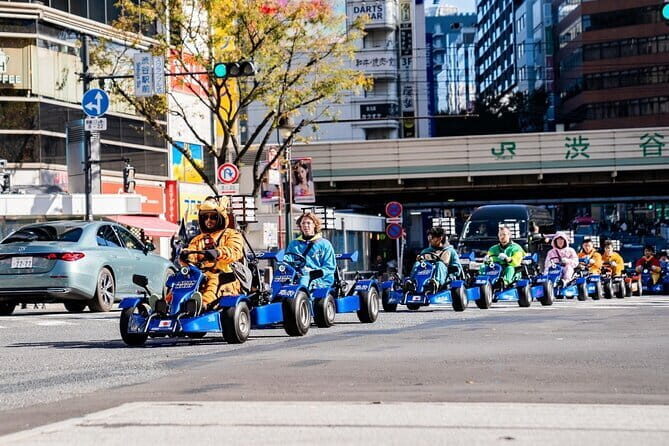
This is a go-kart tour built for two things: speed (in the sightseeing sense) and fun without the stress. You trade crowded trains and long walks for an enclosed, guided ride where you’re moving through neighborhoods that would take you hours to stitch together on your own. It’s also a different way to see Tokyo: instead of standing in a crowd trying to capture a perfect angle, you’re in motion, close to the action.
The “small-group + guide” combo is the real engine here. With a limited group size, you get clearer briefing, less waiting around, and a better chance to stay together. The guides also handle the navigational side, which matters in Tokyo where streets can feel like a maze if you’re not already used to it.
You can also read our reviews of more tours and experiences in Tokyo.



Getting the IDP rules right: the paperwork that decides everything
Here’s the deal that can make or break your day: you must show both your driver’s license and an International Driving Permit (IDP). The IDP must be issued in the format of the 1949 Geneva Convention, and it must be in booklet form (not a paper sheet and not an A4-style format).
Your passport is also part of the requirement. If you skip any document or show the wrong type of IDP, you may be denied participation and there’s no refund if you can’t ride.
There are a few exceptions listed for participants with licenses issued in Switzerland, Germany, France, Taiwan, Belgium, or Monaco. In that case, you’ll need a Japanese translation of your license from JAF (Japan Automobile Federation). But the safe approach is the same for everyone: double-check what you’re bringing before you leave your country.
Also note what won’t work: International Driving Permits under the Vienna Convention 1968 are not accepted in Japan. If your IDP is issued under Vienna, don’t treat it as equivalent—assume it won’t meet the requirement.
Practical tip: pack your documents where you can grab them instantly on arrival. One of the best pieces of advice from the ride experience is simple: bring everything on hand and don’t scramble at the counter.
Meet at JAPANKART Shinjuku: the check-in flow and pre-ride prep
You’ll start at the JAPANKART Shinjuku Branch in Shinjuku (5-chōme, 1123 3階). The location is described as near public transportation, which helps because you’ll want to arrive calm, not rushing through Tokyo.
Plan to arrive early. The tour instructions say to get there 15 minutes before your booking time, and riders also recommend showing up even earlier if you can. That buffer matters because you’ll need time for document checks and the safety briefing.
Before you ride, you’ll get an instructional video in your confirmation email, and you’ll receive safety guidance on site too. The staff emphasis is on keeping you in control and keeping the group organized. In practice, this means you’re not just dropped into a kart and told to figure it out.
Safety in traffic: what “controlled chaos” feels like at first
The first minutes on the road can feel a little intense—Tokyo traffic is fast and dense, and you’re low in the kart. That said, the ride is structured to reduce your stress. Multiple pieces of evidence point to a lead vehicle in front and a vehicle coordinating from behind (including a motorcycle mentioned in the ride experience), which gives you a clear pattern to follow.
What I like about this approach: it doesn’t rely on you being fearless. It relies on organization. Once you get moving, the karts feel manageable and the staff keeps you from turning the ride into a solo street challenge.
You’ll also want to follow the dress rules: no long skirts, no high heels, and no sandals. These restrictions are about safety and control. And one more rule that’s very direct: alcohol consumption before the tour is prohibited, so keep your plans responsible.
If you’re worried about nerves, you can treat the ride like a training track that turns into a sightseeing highlight. Riders who were cautious often report that after the first stretch, it clicks fast and becomes pure fun.
The sightseeing route you’ll actually enjoy riding: Shinjuku Gyoen to Omotesando
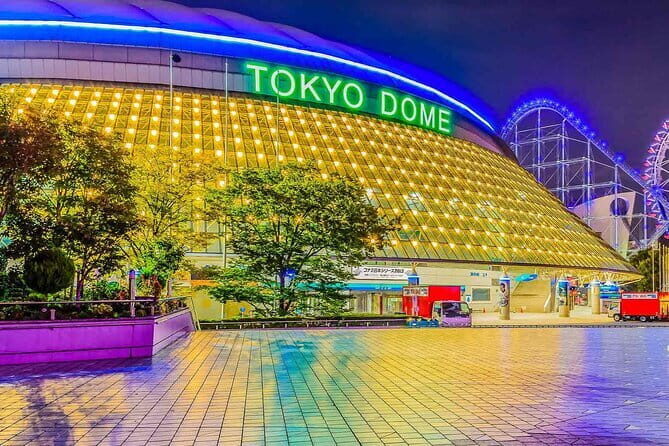
This tour is packed into roughly two hours, and the route is built like a shortcut through Tokyo’s “wow” zones. You don’t just pass one theme—you pass several, so the scenery keeps changing.





Shinjuku Gyoen National Garden (sakura-season famous)
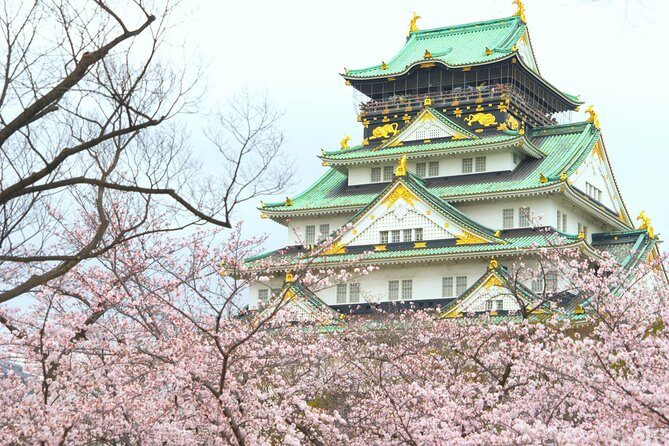
You’ll ride past Shinjuku Gyoen National Garden, one of Tokyo’s most beautiful parks. Even if you aren’t traveling during spring, it’s still a strong name because it’s famous for sakura viewing. Riding past parks like this works well by kart because you get a view without losing time to long routes on foot.
Possible drawback: gardens are best when you can slow down and linger. Since you’re primarily cruising by, you won’t get the same deep park experience as you would if you paid admission and walked the paths for a couple of hours. Still, for many visitors, it’s a perfect “peak from the road” moment.
Omotesando: high-end streets and fancy car watching
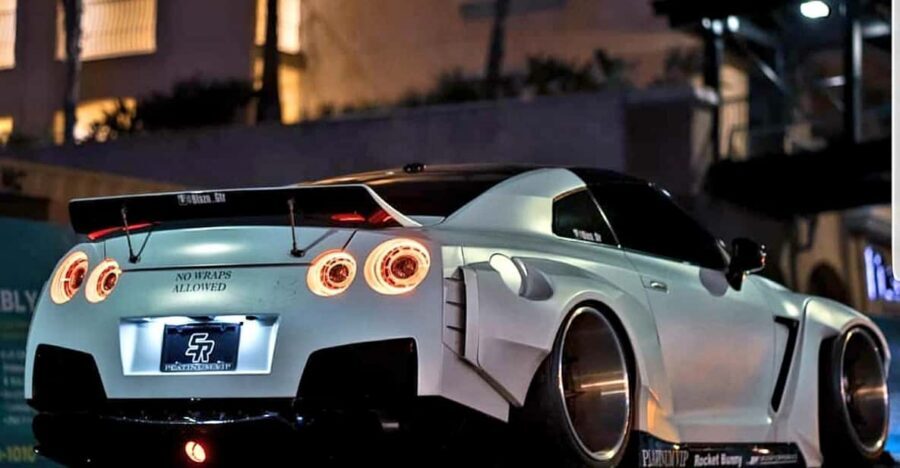
Next comes Omotesando, known as a high-class shopping area. This is where the visual vibe shifts—clean storefronts, bold architecture, and the kind of traffic that makes you feel like you’re in a movie for a few minutes. Cruising through here is fun because you’re watching Tokyo’s modern side at street speed.
What to watch for: the atmosphere. Even if you’re not shopping, Omotesando gives you that Tokyo fashion-and-design energy.
Harajuku: street style, quick thrills
Then you’ll go by Harajuku, where trendy culture shows up in a hurry. If you want Tokyo that feels a little weird in the best way, this is your stretch. It’s also one of those neighborhoods where watching people is half the entertainment, and from a kart you get to see more of the street world than you would from a stationary sidewalk.
Shibuya Scramble and Yoyogi Park: the Tokyo postcard moments, without the tourist pinch
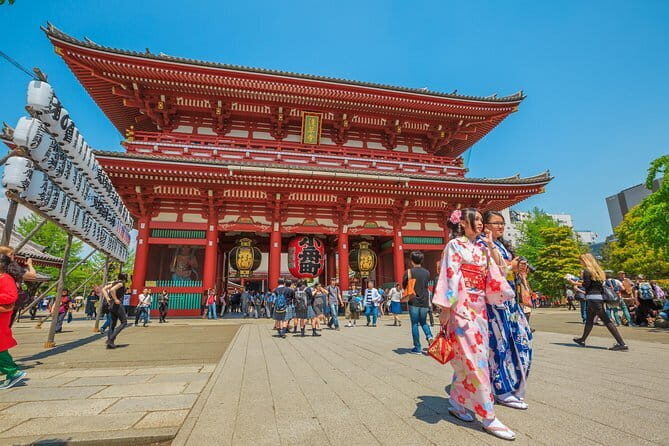
Two of the biggest reasons people do this ride are the Shibuya and Yoyogi segments. They’re famous for a reason, and the kart format makes them feel different.
Shibuya Scramble: watch the crossing from the inside
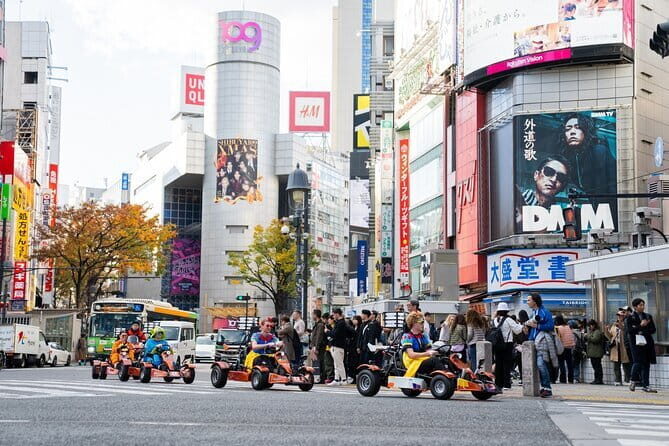
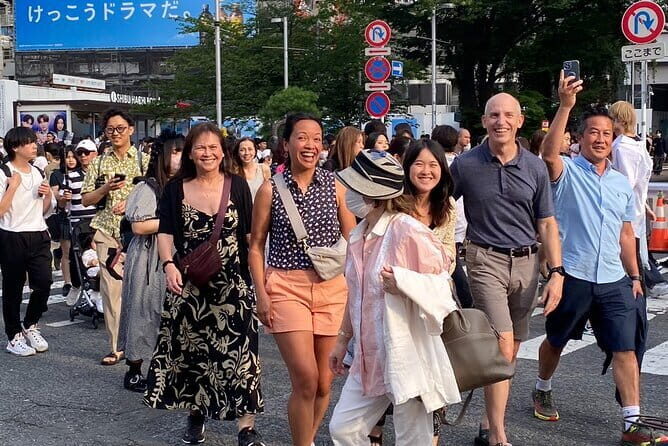
You’ll catch the Shibuya Scramble crossing experience by watching the traffic lights and the stream of people crossing in every direction. This is the kind of place where standing still can feel crowded and slow. From the kart, you experience it like a moment in the city’s rhythm rather than a snapshot you fight for.
Practical tip: if you want photos, position your phone or camera the way the staff recommends. Some karts offer a way to hold your mobile for video (a rider described using a mobile harness), but the safest approach is to follow whatever system staff shows you during briefing.
Some departures also create a sense of repetition—one rider specifically noted multiple passes through Shibuya Scramble. So if Shibuya is your must-see, this route is designed to make it a centerpiece, not a quick drive-by.
Yoyogi Park and the Meiji Jingu neighbor effect
After Shibuya, you’ll pass by Yoyogi Park, a large city park with lawns, ponds, and forested areas. It’s a good contrast to the hard-edged city streets—Tokyo’s green breaks, even from a moving kart.
Yoyogi is also described as neighboring Meiji Jingu shrine, which matters because the area has a calmer spiritual tone right next to the loud energy of Shibuya. Even if you aren’t stepping into the shrine grounds during this ride, the proximity gives you a sense of Tokyo’s two personalities: megacity noise and quiet space.
Shinjuku skyline views and Kabukichō nightlife texture
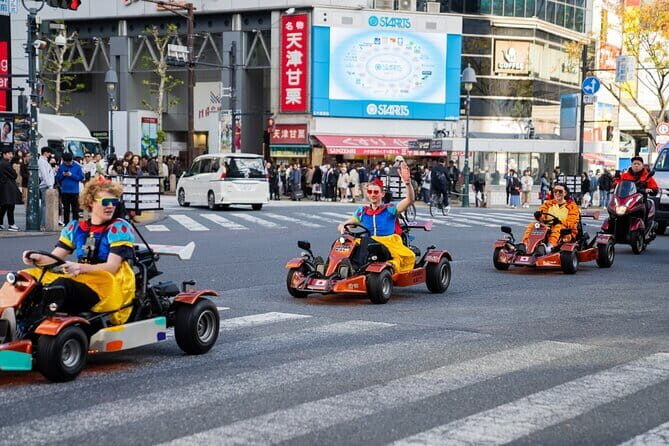
The tour doesn’t stop at shopping and youth culture. It also threads in Shinjuku’s adult energy and the city’s big-view moments.
Tokyo Metropolitan Government Building observation decks (free views)
You’ll pass by the Tokyo Metropolitan Government Building in Shinjuku, a spot tourists often visit for free observation decks and broad panoramic views. Riding past it gives you context fast: you see why it’s such a magnet for skyline lovers.
One drawback to know: while the observation decks themselves are a separate visit, passing by is still useful if you’re trying to decide later where to go for your own view. This is the kind of preview that helps you plan what to do next.
Kabukichō: neon entertainment district edge
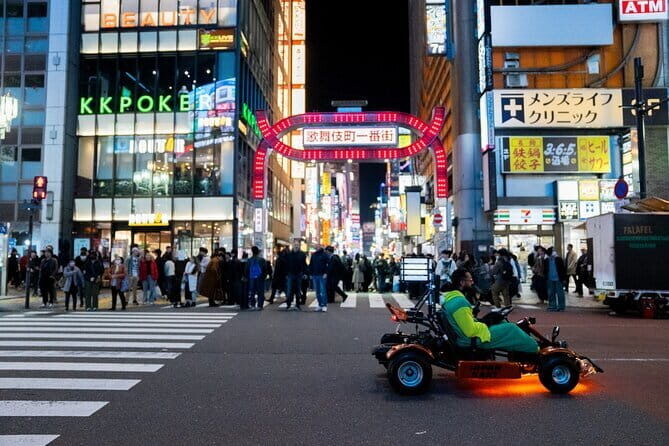
Finally, you’ll go by Kabukichō, Shinjuku’s famous entertainment district. It’s described as a red-light area with host/hostess clubs, love hotels, shops, restaurants, and nightclubs. This stop is less about scenery and more about atmosphere—Tokyo at night, Tokyo’s grown-up side.
If you’re sensitive to nightlife vibes, you might feel a stronger shift here than in the earlier parts of the route. But for most visitors, it’s the contrast that makes the overall experience feel complete.
The value question: is $125.53 worth it for two hours?
At $125.53 per person for about two hours, the price may look steep if you compare it to a single attraction ticket. But this isn’t a standalone view. You’re paying for the combination of:
- the karts and street operation
- staff navigation and safety control
- a small-group format (max 10)
- and photo/video capture during the ride
The best way to think about value here is to compare it to what you’d pay for an all-in guide plus multiple admissions and transport costs. This ride compresses a surprising number of Tokyo “zones” into one session. It’s also time-efficient in a real way: Tokyo can be slow if you spend all day traveling across neighborhoods.
That said, it’s not a budget-friendly activity. If you’re the type who likes museum-level immersion, this will feel like a highlight reel rather than deep exploration. But if you want a memorable Tokyo “experience moment” and you’re comfortable with the IDP paperwork, it’s the kind of spend that tends to land as worth it.
Who should book this go-kart ride (and who should skip it)
This tour is ideal if you want an energetic way to see Tokyo’s big neighborhoods without being stuck on public transit all day. It also fits well for first-time visitors who want an early hit of Tokyo personality: the mix of modern streets, iconic crowds, and Shinjuku nightlife texture.
It’s also a smart choice if you’d rather drive than just watch. The staff guidance is key here; once you’re rolling, you get control in a way that feels exciting instead of intimidating.
You might want a different plan if:
- you’re missing the required IDP format or your documents aren’t ready
- you don’t like traffic-feeling adrenaline (the first minutes can feel edgy)
- you’re not comfortable in fumes at street level (a mask can help)
Riders even mention the thrill of passing the sights with onlookers reacting like you’re a celebrity for a short while. That’s not guaranteed, but the vibe is real: you’ll attract attention, and it’s part of the fun.
Final verdict: should you book JapanKart Through Shibuya and Shinjuku?
If you meet the IDP requirements and you want Tokyo at action speed, I’d say yes, book it. This is one of those rare tours where the “why” is obvious the moment you finish: you were actually driving through major neighborhoods, you weren’t just walking past them, and the staff keeps it organized and safe.
Before you pay, do one boring but powerful thing: verify your IDP is 1949 Geneva booklet format and that you have your license and passport ready. Also dress for safety (no long skirts, no heels, no sandals) and plan to arrive early so you’re not rushed.
If you want a Tokyo highlight that feels like more than a photo stop, this is a strong pick.
FAQ
How long is the go-kart tour?
The tour duration is about 2 hours.
What documents do I need to drive?
You must present a valid driver’s license from your home country, an International Driving Permit (IDP) issued in the 1949 Geneva Convention format in booklet form, and your passport.
Are Vienna Convention IDPs accepted in Japan for this activity?
No. IDPs issued under the Vienna Convention 1968 are not accepted.
How big is the group?
This activity has a maximum of 10 travelers.
Is alcohol allowed before the tour?
No. Alcohol consumption before the tour is prohibited.
What happens if the tour is canceled due to bad weather?
If canceled due to poor weather, you’ll be offered a different date or a full refund.
If you tell me your country (and what IDP type you have, if you already got one), I can help you sanity-check whether your paperwork matches the 1949 Geneva booklet requirement.