REVIEW · TOKYO
Official Japan Go-Kart Tokyo Skytree/Akihabara (IDP Required)
Book on Viator →Operated by JAPANKART · Bookable on Viator
Tokyo goes Mario Kart fast. This official Japan Go-Kart route links Asakusa with Tokyo Skytree, then adds Ueno and Akihabara so you’re seeing a lot of Tokyo without burning an entire day on foot. It runs on an easy pace for most people and pairs driving with a guide who explains what you’re passing.
I like the way JapanKart runs the start: you sign the waiver, get your setup sorted, then watch a short instructional video before you ride. I also like the small-group limit of 10, which keeps the whole experience organized and makes it easier to get questions answered along the way.
One drawback matters more than thrills: you have to show the correct driving documents. If you show up without a valid International Driving Permit (IDP) in the right format, you can be denied participation, with no refund.
In This Review
- Quick highlights you’ll notice right away
- Why this Tokyo go-kart loop feels worth the money
- Stop-by-stop: Kaminarimon, Ameyoko, Ueno Park, Akihabara, Kappabashi, Skytree
- Kaminarimon (Sensō-ji area): Thunder Gate photos without the long queue plan
- Ameyoko (Ameya Yokocho): a market street with a story behind it
- Ueno Park: culture and seasonal scenery, fast
- Akihabara (“Akiba”): neon tech, anime, and the shop-hopper’s dream
- Kappabashi (“Kitchen Town”): knives, cookware, and realistic plastic food
- Tokyo Skytree: 634 meters, panoramic views, and a whole entertainment complex
- Your ride setup: waivers, instruction video, and costume-style fun
- Price and what you actually get for $65.69
- The non-negotiables: IDP rules, alcohol ban, and shoe rules
- Street-kart reality check: timing, nerves, and why the guide helps
- When to book it in your Tokyo plan
- Should you book this JapanKart Tokyo Skytree–Akihabara go-kart tour?
- FAQ
- Do I need an International Driving Permit (IDP) for this tour?
- What format does the IDP need to be in?
- Are IDPs issued under the Vienna Convention 1968 accepted in Japan?
- Where is the meeting point, and does the tour end there too?
- How long is the experience?
- How big is the group?
- What’s included in the price?
- What should I wear or avoid?
- How early should I arrive?
- What happens if the weather is bad?
- Is dinner included?
Quick highlights you’ll notice right away
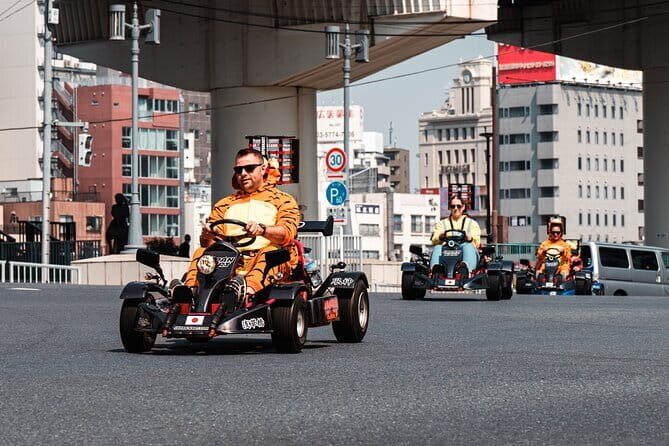
- Small group capped at 10 for a smoother, more human experience in busy Tokyo
- English & Japanese speaking guide to explain what you’re seeing, not just where you’re driving
- Short start-to-ride flow, including a brief how-to video right before you go
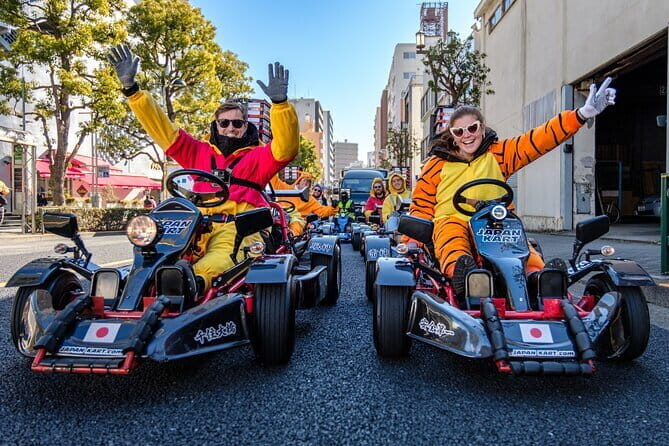
- Costume/outfit fun that turns street-karting into a photogenic, laugh-friendly moment
- A route built for first-timers, covering Kaminarimon, Ameyoko, Ueno Park, Akihabara, Kappabashi, and Skytree
- Strict driving rules (including IDP format and dress/footwear) so double-check your documents early
Why this Tokyo go-kart loop feels worth the money
For $65.69 per person, you’re buying speed, not just a souvenir. In about 1 hour 30 minutes total, you roll through multiple neighborhoods that normally take planning, transit rides, and a lot of walking to string together.
This tour works especially well if you’re doing the “Tokyo highlights” thing but you don’t want to spend your limited time dodging crowds all day. You get a go-kart thrill plus a guided route that hits big names quickly: Asakusa’s Thunder Gate area, Ueno, Akihabara, Kitchen Town (Kappabashi), and Tokyo’s tallest landmark, Skytree.
The other value play is the small group. With a max of 10 riders, the tour doesn’t feel like a cattle chute. You’ll also be less stressed if you want to ask questions about what you’re passing—markets, parks, and tech/food shopping streets all have different vibes.
You can also read our reviews of more tours and experiences in Tokyo.



Stop-by-stop: Kaminarimon, Ameyoko, Ueno Park, Akihabara, Kappabashi, Skytree
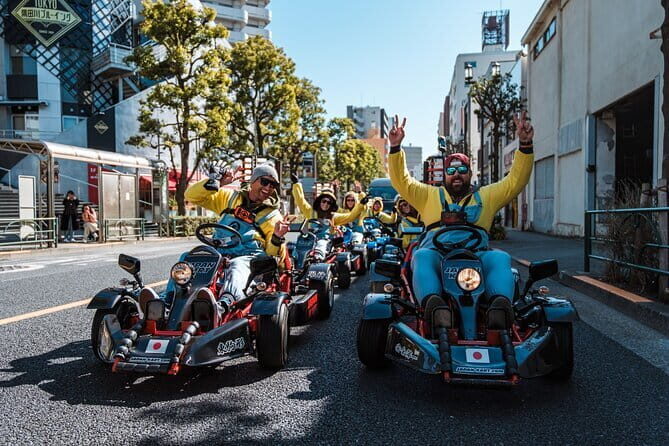
This is a “see a lot in a short time” route. You’re not doing long museum-style stops, so think of each location as a highlight pass with quick context.
Kaminarimon (Sensō-ji area): Thunder Gate photos without the long queue plan
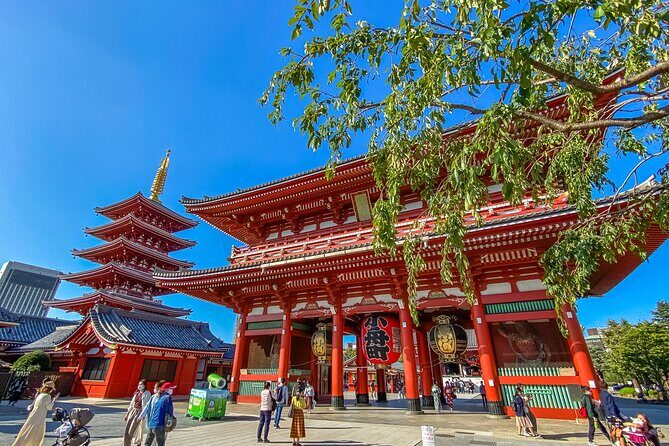
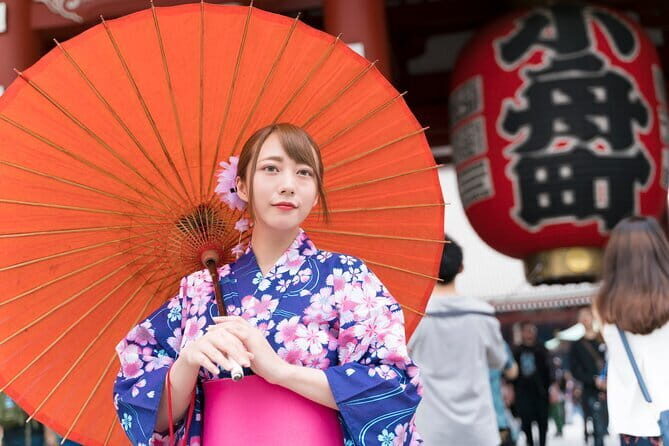
Kaminarimon is the big red-lantern gate that marks the entrance to Sensō-ji in Asakusa. It’s instantly recognizable, and the statues of Fujin (god of wind) and Raijin (god of thunder) add extra visual punch when you catch them from the right angle.
Because this is a go-kart route, you get the landmark energy without needing to dedicate a whole afternoon to walking in that district. The tradeoff: the time for photos and lingering is usually shorter than if you were there on foot.
Ameyoko (Ameya Yokocho): a market street with a story behind it
Ameyoko in Ueno is known for its street-market energy. It evolved from a place associated with American goods—“ame” coming from America—into a packed shopping corridor where you can sense everyday Tokyo right away.
On the kart, you’re mainly getting the look and the vibe. If you want to shop, you’ll probably want to plan a follow-up stop after the tour. Still, it’s a great way to understand why Ueno feels different from the more formal temple areas.
Ueno Park: culture and seasonal scenery, fast
Ueno Park is a large public park with cultural attractions like the Tokyo National Museum and Ueno Zoo. In spring, it’s famous for cherry blossoms, which makes it one of those Tokyo “you’ll recognize it even if you don’t know the name” places.
The advantage here is simple: you see the park area as part of a moving route, so it doesn’t steal time from everything else. The limitation is also simple: you’re not settling in for a picnic or a full walk-through during the tour.





Akihabara (“Akiba”): neon tech, anime, and the shop-hopper’s dream
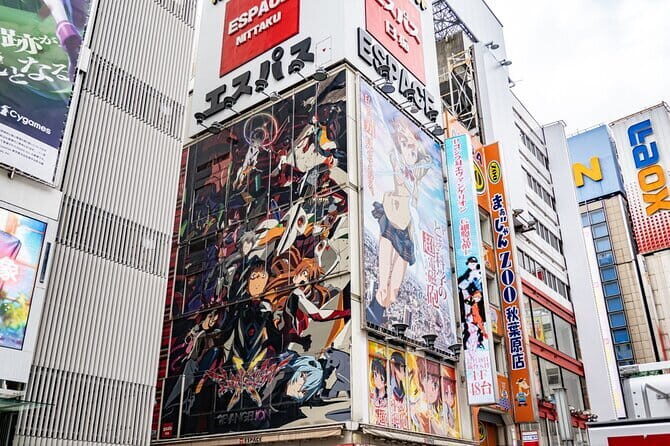
Akihabara is Tokyo’s otaku and tech hub, with electronics stores, anime and manga shops, and neon-lit streets. It’s the kind of place where you can lose an hour just wandering shop fronts, even if you don’t consider yourself an anime person.
From the kart, you get motion, quick snapshots, and a feel for the intensity of the neighborhood. If you want deeper shopping time, treat the tour as your orientation—and then return later when you’re not strapped to a driving schedule.
Kappabashi (“Kitchen Town”): knives, cookware, and realistic plastic food
Kappabashi is a favorite for food lovers and hobby cooks. The street is lined with shops selling professional-grade knives and cookware, plus those intricate plastic food models that can look shockingly real.
This is where the tour shines for curiosity. You can spot what kinds of shops line the street, then decide if you want to browse in detail after you finish driving. If you’re hoping to buy something big, do that after the tour rather than while you’re in “helmet-and-hands-on” mode.
Tokyo Skytree: 634 meters, panoramic views, and a whole entertainment complex
Tokyo Skytree is Japan’s tallest structure at 634 meters, and it’s hard to miss once you’re close. The observation decks are known for panoramic views, and Mount Fuji can be visible on clear days.
Even if you don’t spend time inside during your karting window, seeing Skytree from the street gives you scale fast. Inside the complex there are shops, dining, an aquarium, and a planetarium—so you can easily turn this into a longer stop later if you want.
Your ride setup: waivers, instruction video, and costume-style fun
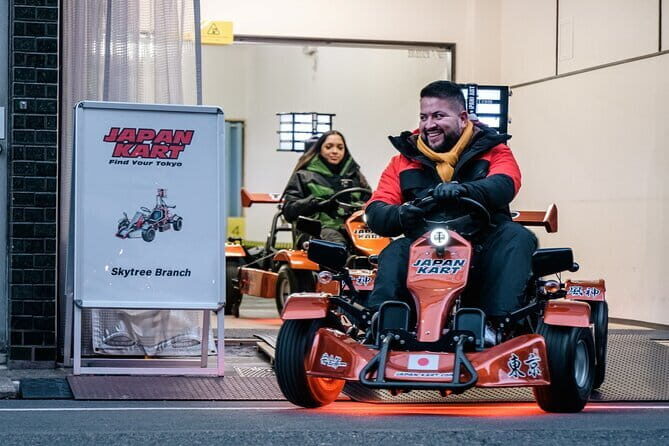
The start is one of the things that makes this tour feel smooth instead of chaotic. You’ll sign your waiver and get your ride setup handled before you roll.
Then comes the instruction moment. One rider described a quick instructional video—about three minutes—showing you how to use the kart. That short briefing matters. Street karting is fun, but it’s also not the time to guess how something works.
I like that there’s a guide available during the experience. You’re not just dropped into traffic with a map and vibes. With a guide on hand, you can focus on driving and the sights without wondering what you’re looking at.
Costumes and outfits also add a layer of fun. In one example, a rider got assigned the lead kart in front of the group, which sounds like a great way to feel the momentum. Just remember: lead or follow, the real point is getting the whole route experience in one go.
Price and what you actually get for $65.69
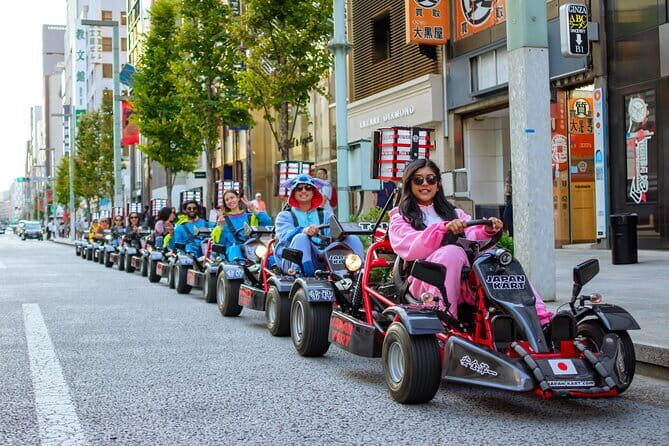
Let’s talk value in plain terms. You’re paying for a go-kart and an English & Japanese speaking guide, and you’re getting a guided loop across multiple major areas in Tokyo.
What’s not included is dinner. That’s fine—this is a daytime-style activity in the middle of sightseeing. Plan on eating separately before or after, and you’ll avoid that awkward scramble.
Also, the mobile ticket part is convenient. You’re not stuck hunting for paper. You still want to keep an eye on the timing so you’re ready when the group starts.
If your budget is tight, the real “worth it” factor is that the route stacks several famous neighborhoods into one paid block. Instead of paying for separate activities (or losing time to transit), you get one structured driving experience that doubles as an itinerary shortcut.
The non-negotiables: IDP rules, alcohol ban, and shoe rules
This is the section that can make or break your day.
You must have an International Driving Permit in the 1949 Geneva Convention format, plus your home-country driving license and your passport. The IDP must be in booklet form, not a single-sheet paper/A4-style document.
There are exceptions for certain license origins: Switzerland, Germany, France, Taiwan, Belgium, and Monaco. If you’re from one of those places, you’ll need a Japanese translation of your license via JAF (Japan Automobile Federation), along with your own driving license.
One more important detail: IDPs issued under the Vienna Convention 1968 are not accepted in Japan. And IDPs need to be issued by your country’s approved issuer (examples listed include AAA/AATA for the USA, AA/RAC for the UK, and CAA for Canada).
If you don’t have the right documents, you risk being denied participation, and there’s no refund for that situation.
On top of the paperwork, there are behavior and clothing rules:
- Alcohol consumption before the tour is prohibited
- Don’t wear long skirts, high heels, or sandals
- Arrive 15 minutes before the booking time (they can wait up to 10 minutes after the reserved time)
My practical advice: check your IDP format before you leave home. Then bring everything in the same place so you can show it instantly when asked.
Street-kart reality check: timing, nerves, and why the guide helps
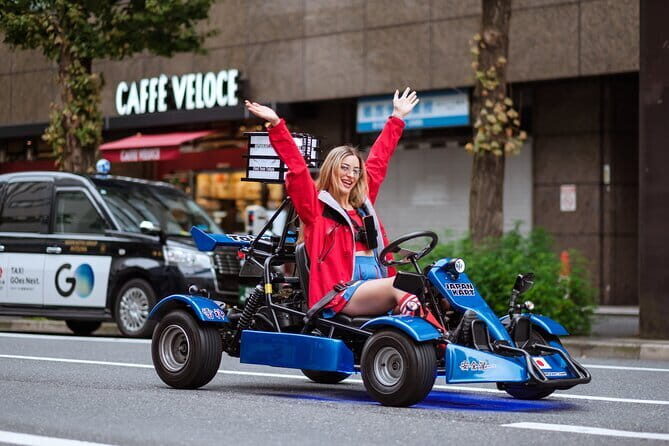
Tokyo street karting can feel intense at first. One rider straight-up called it nerve-wracking, and that’s a fair expectation. You’re moving through real city streets, with other people around, and your brain has to switch from sightseeing mode to driving mode fast.
This tour helps because the staff run the setup and the instruction video beforehand, and the guide stays available. You’re not just relying on luck.
That small-group cap also helps your comfort. When the group is limited to 10, you’re more likely to follow a clear order and keep spacing better than you would with a bigger crowd.
If you’re the type who gets flustered easily in new situations, arrive early and watch the instructional video sent by email. It’s the fastest way to reduce first-minute stress.
When to book it in your Tokyo plan
This karting tour is a great early or mid-trip “orientation” activity. If you do it early, it helps you learn where things are—Asakusa versus Ueno versus Akihabara—and then you can return on foot where you want more time.
If you do it later, it still works because it gives you a memorable highlight recap of multiple districts. And because the route includes Skytree, it pairs nicely with any Skytree-based day you planned.
One more practical thought: the tour requires good weather. If the forecast looks shaky, be ready for schedule changes.
Should you book this JapanKart Tokyo Skytree–Akihabara go-kart tour?
Book it if you want a short, high-energy way to see Tokyo’s highlights across multiple neighborhoods, and you’re comfortable meeting strict driving document rules. It’s especially good for first-timers who want the name-brand sites—Kaminarimon, Ameyoko, Akihabara, Kappabashi, and Skytree—without spending half a day in transit.
Don’t book it if you don’t already have the correct IDP in booklet format under the 1949 Geneva Convention, or if you’re not willing to follow the dress and alcohol rules. That part isn’t flexible, and it can stop you from driving.
If you’re organized and document-ready, this is one of those Tokyo activities that feels like you did something a little crazy—in the best way—and left with a clear map of where you want to go next.
FAQ
Do I need an International Driving Permit (IDP) for this tour?
Yes. You must have an International Driving Permit in the format of the 1949 Geneva Convention, plus your driving license and passport. There are exceptions for Switzerland, Germany, France, Taiwan, Belgium, and Monaco, which require a Japanese translation from JAF along with your own license.
What format does the IDP need to be in?
The IDP must be in booklet form. Paper or A4-style IDPs are not accepted.
Are IDPs issued under the Vienna Convention 1968 accepted in Japan?
No. Vienna Convention 1968 IDPs are not accepted in Japan.
Where is the meeting point, and does the tour end there too?
The tour starts at JapanKart2-chōme-18-15 Azumabashi, Sumida City, Tokyo 130-0001, Japan. It ends back at the same meeting point.
How long is the experience?
The duration is approximately 1 hour 30 minutes. The tour is described as a shorter one-hour-style experience within that total time.
How big is the group?
The tour has a maximum of 10 travelers.
What’s included in the price?
Included are the go-kart and an English & Japanese speaking guide.
What should I wear or avoid?
Do not wear long skirts, high heel shoes, or sandals. The tour also prohibits alcohol consumption before the tour.
How early should I arrive?
Please arrive 15 minutes before your booking time. They can wait a maximum of 10 minutes after the reserved time.
What happens if the weather is bad?
The experience requires good weather. If it’s canceled due to poor weather, you’ll be offered a different date or a full refund.
Is dinner included?
No. Dinner is not included.