REVIEW · TOKYO
This is Asakusa! A Tour Includes the All Must-Sees!
Book on Viator →Operated by OTOMO Travel Guide · Bookable on Viator
Asakusa gets crowded fast. This private tour is built for people who want the highlights without spending the day in a human bottleneck, with stops that cover classic temples, local streets, and even Tokyo Skytree. You’ll move with a guide and a private party setup, so the day feels less like a scavenger hunt.
I especially like the way you’re not just looking at sights. You can ask questions about local life and get context on what you’re seeing, from Buddhism to why shrines and temples work the way they do. That turns Asakusa from a photo set into something you actually understand.
One thing to plan for: the tour price is just for the guide and their necessary expenses, not for everything you’ll eat or enter. Many stops are free, but you should budget for transportation, meals (example restaurant and lunch), and things like Tokyo Skytree admissions that are not included.
In This Review
- Key things that make this Asakusa tour a smart pick
- Why this Asakusa day feels easier with a guide
- Meeting point and route shape: Asakusa to Oshiage
- Stop 1: Asakusa Culture Tourist Information Center and its terrace view
- Stop 2: Senso-ji Temple, lanterns, and the main photo moment
- Stop 3: Asakusa Shrine and what makes Sanja Matsuri matter
- Stop 4: Asakusa Nishi-sandō Shopping Street (festival decorations included)
- Stop 5: Hoppy Street for affordable drinks and street-level Tokyo
- Stop 6: Kappabashi (Kappabashi Dogugai) for kitchenware shopping that makes sense
- Stop 7: Gonpachi soba near Azumabashi Bridge (and where lunch costs show up)
- Stops 8 and 9: Tokyo Skytree and Tokyo Solamachi to finish strong
- Tokyo Skytree: a 634-meter finale
- Tokyo Solamachi: shopping and things to do right next door
- Price and value: what you’re really paying for
- What to expect from your guide (and how to get the most out of the day)
- Good fit for you if…
- Should you book this Asakusa to Skytree private tour?
- FAQ
- How long is the tour?
- Is this a private tour?
- Where does the tour start and where does it end?
- Are entrance fees included for all stops?
- What’s included in the price?
- Do I get a ticket on my phone?
- Can I cancel for free?
Key things that make this Asakusa tour a smart pick
- Private, your-party-only pace: no waiting for strangers, and fewer stop-start delays.
- Crowd navigation help: you’ll spend time looking at Asakusa, not tracing the right path through it.
- Terrace views included via a free stop: the Asakusa Culture Tourist Information Center gives you a high, easy overview.
- Temple plus shrine context: you learn the difference and the significance of each sacred site you visit.
- Food-street energy and practical shopping: Hoppy Street and Kappabashi are both more fun with guidance.
- A big finish at Skytree/Solamachi: you end in a place designed for sightseeing and getting your bearings.
Why this Asakusa day feels easier with a guide
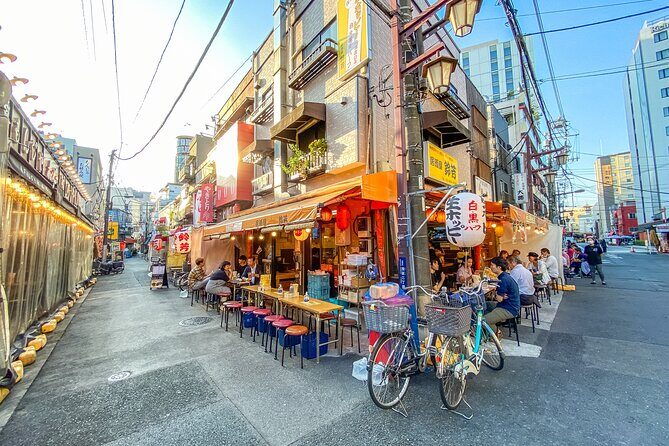
Asakusa can feel like two places at once: part old Tokyo ritual, part tourist traffic jam. A guide helps you keep your bearings fast, even when the streets are packed and your brain wants to do that thing where it forgets which street you came down.
The tour is set up as a private experience for your party only, which matters in Tokyo. You’re not fighting for attention in a large group, and you can ask real questions like why a festival matters or how locals think about the spaces you’re walking through. Guides on this route have included people named Haruo, Macky, Walt, and Sayaka, and they’ve been described as knowledgeable, friendly, and focused on making the day fit the group.
Still, you should expect that you’ll do some walking and you’ll be moving through different neighborhoods on one outing. If you’re hoping for a slow, low-effort stroll, you might want to keep your expectations modest.
You can also read our reviews of more tours and experiences in Tokyo.



Meeting point and route shape: Asakusa to Oshiage
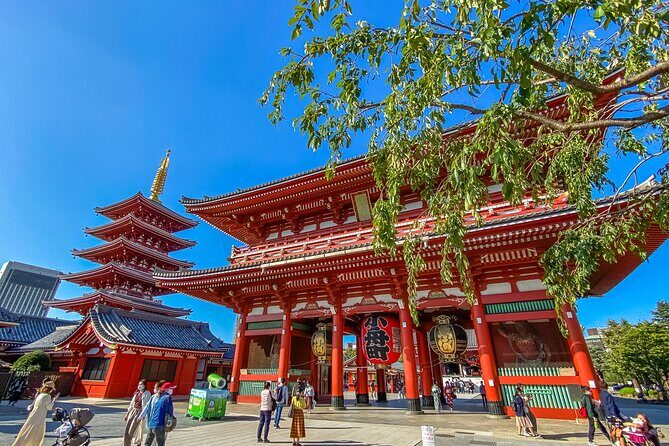
This tour starts near Asakusa Station (the meeting point is listed as Asakusa Sta. 1-chōme-1-3 in Taito City). It ends at Oshiage Station near Tokyo Skytree (Oshiage Sta. SKYTREE 1-chōme-1-65 in Sumida City). That means you’ll finish in a different area than where you started, which is usually a good thing for sightseeing.
One practical note: if you’re using taxis, make sure your pickup instructions are crystal clear. There’s at least one example of a frustrating misdirect when the meeting spot was described too loosely, which is exactly the kind of problem you want to avoid. Bring up the meeting point address and the correct station name with your hotel, and then double-check where your guide will meet you.
The total time is about 6 hours 30 minutes. That’s enough time to see the core highlights and still have room to browse streets without feeling like you’re racing the clock.
Stop 1: Asakusa Culture Tourist Information Center and its terrace view
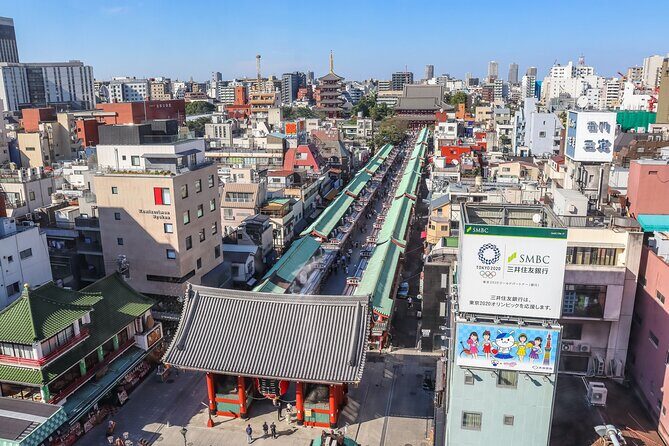
You begin at the Asakusa Culture Tourist Information Center. It’s not just a desk and maps. The big payoff is the observation terrace on the top floor, which looks out over Asakusa city.
I like this kind of start because it gives you a visual map before you walk into the maze. Once you’ve seen the layout from above, the next streets feel more logical, and you’ll understand where the temple area sits relative to the rest of Asakusa.
There’s no admission ticket fee listed for this stop, and it’s a short about 15 minutes. Think of it as your 15-minute reset button.
Stop 2: Senso-ji Temple, lanterns, and the main photo moment
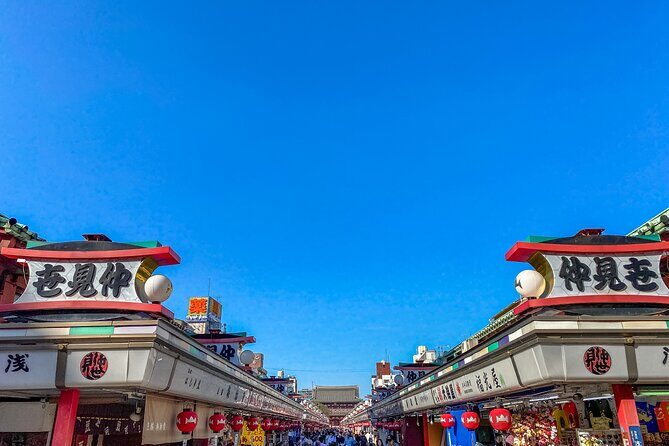
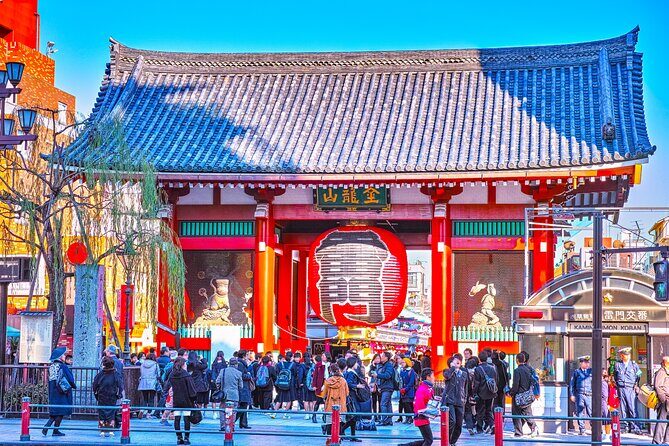
Next comes Senso-ji Temple, Tokyo’s oldest temple, famous for the big red lanterns that basically define Asakusa. The red buildings and the temple grounds are the reason people come, and with a guide you’re more likely to experience the space calmly instead of getting swept along with everyone else.
Admission here is free, and the stop is about 1 hour. That hour gives you time to see the main elements, notice small details, and still step back from the densest areas when the crowd thickens.
If you care about context, this is where it helps that you can ask questions. You’ll get explanations that connect what you’re seeing to how faith and practice show up in everyday Tokyo neighborhoods.
Stop 3: Asakusa Shrine and what makes Sanja Matsuri matter
After Senso-ji, you’ll visit Asakusa Shrine for a short stop (about 15 minutes). The shrine is known for its connection to Sanja Matsuri, one of Tokyo’s major festivals.
This stop is valuable because it adds a different layer to the day. You’ll also get a clear explanation that shrines and temples are different kinds of institutions, even though in casual conversation they often get lumped together. When you understand that difference, you start noticing how people behave in each place.
Admission is listed as free for this stop, so it’s a high value add in a tight schedule.





Stop 4: Asakusa Nishi-sandō Shopping Street (festival decorations included)
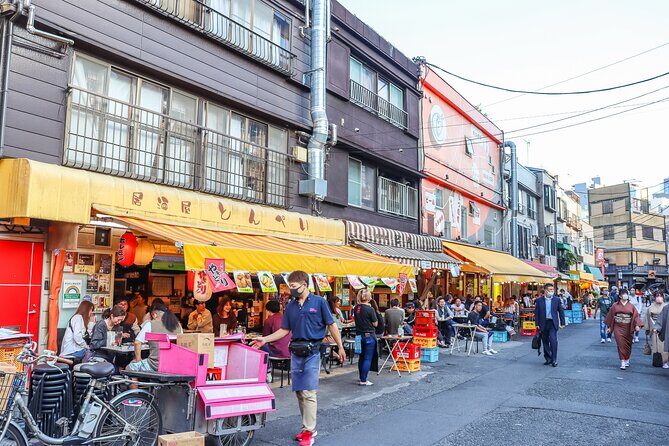
Then it’s back out into the streets: Asakusa Nishi-sandō Shopping Street. This area has shops and festival-themed decorations, and it’s one of those places where you can feel how Japanese tradition and tourism overlap without it becoming entirely artificial.
The time here is about 15 minutes. That’s enough for a stroll, a quick look at shopfronts, and picking up small souvenirs if that’s your thing. If you try to linger too long, this is still a place where you’ll feel the crowd pressure, so the guide’s pacing is useful.
I like these street-stops because they help the day feel like real neighborhoods, not just ticketed attractions.
Stop 5: Hoppy Street for affordable drinks and street-level Tokyo
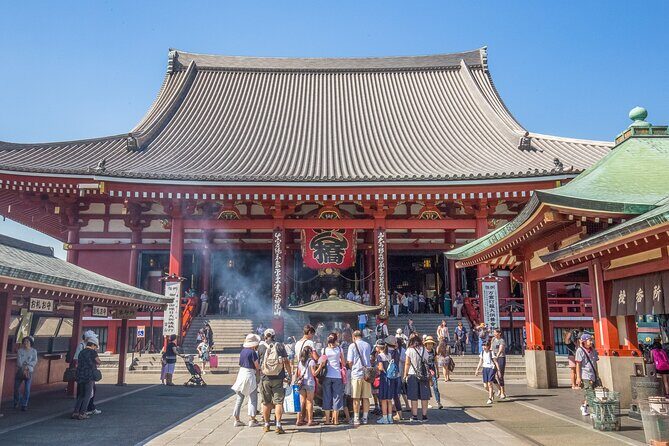
A short stop brings you to Hoppy Street, a strip known for restaurants with outdoor tables and reasonably priced drinks. It’s popular with tourists walking along to soak up the atmosphere, but the key detail is that locals also use it as an easy, casual hangout spot.
This is a short about 5 minutes stop, which tells you the tour isn’t trying to turn it into a sit-down party. It’s more like a quick taste of the local night-life rhythm, even during daylight hours.
Admission is free, and you can use the moment to decide if you want to come back later on your own with an appetite.
Stop 6: Kappabashi (Kappabashi Dogugai) for kitchenware shopping that makes sense
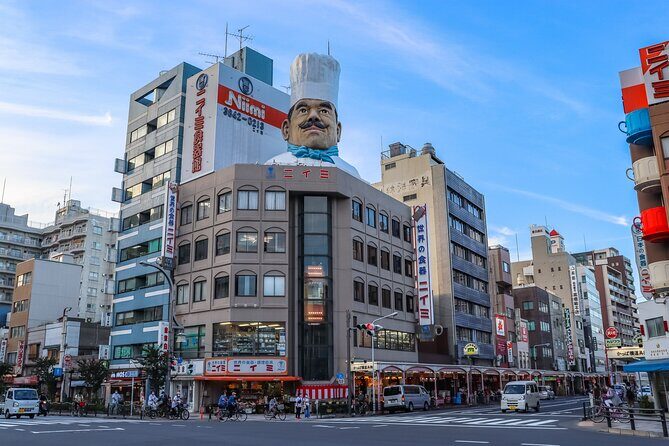
Next is Kappabashi Street (Kappabashi Dogugai), a specialty shopping district focused on knives, tableware, and cooking tools. The area is a magnet for people who like practical souvenirs, and it’s known for selling things like professional kitchen knives.
You get about 30 minutes here, and that’s the perfect length for shopping without turning it into a full afternoon. You’ll also see the types of shops you might otherwise miss, since it’s not just one shopping street but a cluster of specialty stalls.
Admission is listed as free. The real cost comes from your own curiosity. If you’re thinking about buying a blade or expensive tools, it helps to have someone with you who can point out what to look for and when it makes sense to keep moving instead of getting stuck in one shop.
Stop 7: Gonpachi soba near Azumabashi Bridge (and where lunch costs show up)
You’ll stop at GONPACHI, a handmade soba restaurant at the foot of Azumabashi Bridge. This is one of the moments where the tour turns from sightseeing into actual food.
What I like about this stop is the setting: large windows help you see the Sumida River and Tokyo Skytree from inside. That means lunch doubles as a view, not just a meal.
The important detail: admission for this stop is listed as not included. In other words, you should treat lunch as extra spending. The tour’s overall estimate lists meal costs around 1,200 JPY per person, plus other travel and admission costs.
If you’re sensitive to timing, this is where you’ll want to keep a close eye on the group schedule, since lunch can stretch when everyone starts ordering at different speeds.
Stops 8 and 9: Tokyo Skytree and Tokyo Solamachi to finish strong
The final sightseeing cluster is Tokyo Skytree, followed by Tokyo Solamachi near the base.
Tokyo Skytree: a 634-meter finale
Tokyo Skytree is Japan’s tallest building at 634 meters, opened in 2012. It also sits in a larger complex area with shops and entertainment around it, which helps because your time after the main viewpoint doesn’t end the second you’re done looking.
The stop is about 1 hour 10 minutes, and admission is not included. So you’ll likely pay for the viewpoint experience yourself, depending on what ticket you choose.
Tokyo Solamachi: shopping and things to do right next door
After Skytree, you’ll head to Tokyo Solamachi, the commercial complex next to the tower. It’s described as having a new-downtown style, with shopping and entertainment, so it’s a natural place to wander after your view.
This portion is about 30 minutes, and admission is listed as free for the stop. Even if you don’t buy anything, it’s a nice way to slow down for a bit before your end-of-tour station transfer.
Price and value: what you’re really paying for
The tour costs $137.29 per person, lasts about 6 hours 30 minutes, and is run as a private experience with a guide. It also has features like a mobile ticket and is often booked around 36 days in advance, which tells you this is a popular way to experience Asakusa without stress.
What’s included is straightforward: tour guide, private tour format, and the necessary expenses for the guide during the tour.
What’s not included is the part that usually surprises first-timers: the tour notes an estimated additional spending amount of 4,880 JPY per person, broken down roughly as:
- Transportation: 180 JPY
- Admission fees: 3,400 JPY
- Meal costs: 1,200 JPY per person
- Optional experience costs: 100 JPY per person
That breakdown matters because the itinerary includes a mix of free and paid elements. Many of the key temple and street stops list free admission, so your money largely concentrates on the parts that cost: lunch and Tokyo Skytree (plus any transit and optional add-ons).
In plain terms: you’re paying for someone to:
1) keep you on track through crowded areas,
2) give you context so you remember the day, and
3) prevent you from wasting time guessing what matters most.
If you’d enjoy that kind of guidance, this can feel like good value for Tokyo.
What to expect from your guide (and how to get the most out of the day)
This tour is built around interaction, not just walking. The guide is there to share history and culture, and you should use that to your advantage. Ask about the difference between shrines and temples, why certain festivals are important, and what locals do around Hoppy Street when they want an easy night out.
The reviews included names like Haruo, Macky, Walt, and Sayaka/Sakaya, with descriptions that often point to clear planning and good communication. One review also noted that a guide helped with practical logistics like making it easy to find them at the subway station.
If you want this experience to feel personal, come with even two or three questions. For example:
- Which area should I explore again later for quieter photos?
- What should I buy at Kappabashi without wasting money?
- What does Sanja Matsuri connect to in daily life?
A good guide will happily steer you.
Good fit for you if…
This tour makes the most sense when you want to see the core Asakusa highlights and still feel like you’re experiencing the neighborhood, not just passing through it.
You’ll likely enjoy it most if:
- you don’t want to spend hours figuring out routes through crowds,
- you like temples and street shopping, but want context,
- you want a day that ends at a big landmark like Skytree and stays lively afterward with Solamachi.
It may be less ideal if you hate city walking, have very limited interest in Skytree, or prefer fully self-guided travel where you control every minute. Also, since the end point is Oshiage, plan your return to your hotel accordingly.
Should you book this Asakusa to Skytree private tour?
I’d book it if you want a guided day that hits the best-known Asakusa stops plus a modern finale, while keeping the hardest part of Tokyo tourism (crowds and confusion) under control.
Before you book, do two simple checks:
- Look at your schedule and accept that you’ll start at Asakusa Station and finish at Oshiage Station.
- Budget for extra costs, especially Skytree admission and lunch, since those are not included.
If you want structure with room to ask questions, this is a solid choice. You’ll come away with more than photos: you’ll understand the spaces and the why behind the sights.
FAQ
How long is the tour?
The tour is approximately 6 hours and 30 minutes.
Is this a private tour?
Yes. It is a private tour exclusively for your party.
Where does the tour start and where does it end?
It starts at Asakusa Sta. 1-chōme-1-3 in Taito City and ends at Oshiage Station (SKYTREE) 1-chōme-1-65 in Sumida City.
Are entrance fees included for all stops?
Not for everything. Many stops list free admission, but some items are not included, including lunch at Gonpachi and admission at Tokyo Skytree. The tour also notes estimated extra costs for transportation, admissions, and meals.
What’s included in the price?
The tour includes a tour guide, the private tour format, and the necessary expenses for the guide during the tour.
Do I get a ticket on my phone?
Yes. The tour features a mobile ticket.
Can I cancel for free?
Yes, free cancellation is available up to 24 hours in advance for a full refund.