REVIEW · TOKYO
One Day Private Tour to Kamakura with English Speaking Driver
Book on Viator →Operated by Yujin Group Co., Ltd. · Bookable on Viator
Kamakura makes a perfect day break from Tokyo. You get a private 10-hour route that hits the city’s major medieval sites and ends with seaside air on Enoshima. I like how the schedule gives you breathing room at each stop instead of rushing from one photo spot to the next.
Two things I really like: first, the English-speaking driver keeps the day smooth, with pickup and a mobile ticket approach. Second, the tour balances big-ticket sights (like the Great Buddha) with calm, slower temples such as the bamboo at Hokoku-ji.
One thing to consider: temple entry and the biggest attractions’ fees are not included for several stops, so you’ll want a bit of cash (or card) ready for on-site admissions.
In This Review
- Key highlights at a glance
- Why Kamakura fits so well into one long day
- Private transport from Tokyo: the real comfort upgrade
- Stop 1: Hokoku-ji Temple and its bamboo forest calm
- Stop 2: Hase-dera’s stone steps, gardens, and temple mood
- Stop 3: Kotoku-in Great Buddha—scale you can’t fake
- Stop 4: Tsurugaoka Hachimangu Shrine (free) and samurai-era meaning
- Stop 5: Enoshima for sea air, gardens, and Mount Fuji views
- Time management: how five stops fit into 10 hours
- Price and value: $391.22 for up to 3 people
- What to pack so the day feels easy
- A quick note on how the driver experience shapes the day
- Should you book this Kamakura private tour?
- FAQ
- How long is the Kamakura private tour?
- How many people are in each group?
- Does the tour include pickup in Tokyo?
- What’s included in the price?
- Are temple and attraction tickets included?
- Is food included?
- Where does the tour start and when?
- Is Wi-Fi available during the tour?
- What happens if the weather is bad?
Key highlights at a glance
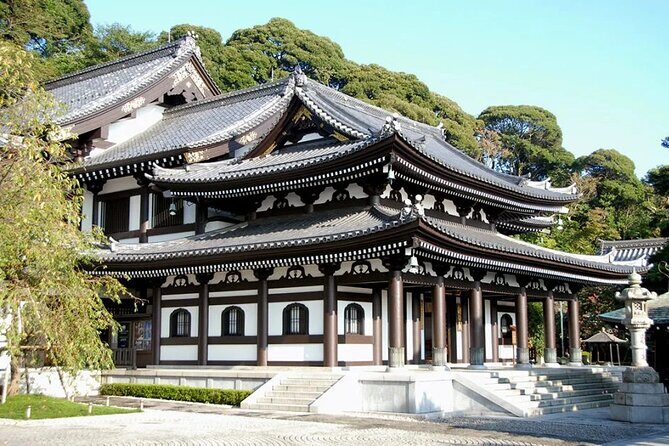
- Private, air-conditioned vehicle for a stress-free day outside Tokyo
- Pickup + meet and greet so you start moving without hunting down details
- Hokoku-ji bamboo forest for a genuinely quiet break
- Kotoku-in Great Buddha with a scale you feel the moment you arrive
- Tsurugaoka Hachimangu Shrine included and free to enter
- Enoshima coastal views with great photo energy when weather cooperates
Why Kamakura fits so well into one long day
Kamakura is one of those places where the stories feel physical. You walk from temples and shrine grounds that echo Japan’s medieval era, then you shift to coastal Enoshima for sea views and an easier pace. It’s a blend that works well when you only have one day and want both culture and scenery.
The value here is the flow. Five stops in about 10 hours keeps the day meaningful without turning it into a speed-run. You still get enough time to wander temple grounds at a relaxed pace, which is what you want when the best moments are the quiet ones—like hearing bamboo leaves move in the wind, or standing still for a long look at the bronze Great Buddha.
You can also read our reviews of more private tours in Tokyo


Private transport from Tokyo: the real comfort upgrade
This is a private tour for up to 3 people, which is a big deal in practice. You don’t have to coordinate with strangers, and your driver can keep things practical around timing. The van is air-conditioned, and there’s a Wi‑Fi hotspot in the vehicle when available—useful for mapping, translating, or just uploading your photos later.
Pickup is offered, plus there’s a meet-and-greet. That matters more than it sounds. In Tokyo, finding the right starting point can eat time—so being picked up helps you get to Kamakura without spending your morning in transit stress. The tour also includes tolls, petrol/gas, and private transportation, so you’re not piecing together extra costs mid-day.
One detail I appreciate: the tour starts at 8:00 am. Early timing helps you reach popular sites before the crowds fully settle in, and it also gives your driver more flexibility if the morning traffic changes.
Stop 1: Hokoku-ji Temple and its bamboo forest calm
Hokoku-ji is all about quiet focus. You’ll have about 2 hours here, and the star is the bamboo forest. Even if you’ve seen bamboo gardens before, Hokoku-ji has a way of making you slow down—because the area naturally pulls your attention toward the details: the movement of stalks, the shade, the soft rustle.
What I like about structuring this as the first stop: it sets a calmer tone before the day gets more “big landmark” intense. It’s a reset you feel.
Practical note: the Hokoku-ji admission ticket is not included, so budget for that. Also, bamboo areas are often a little cooler and more shaded than open plazas—so if you run hot, you might want a light layer you can toss in your day bag.
Stop 2: Hase-dera’s stone steps, gardens, and temple mood
Next is Hase-dera, another 2-hour stop. This temple gives you a different feel than Hokoku-ji. Instead of bamboo quiet, you get gardens, incense atmosphere, and temple spaces that reward slow walking. The route up the stone steps is part of the experience—plan for it like a mini-hike, especially if it’s warm outside.
This is where the tour balances “icon sights” with the kind of place that’s more about atmosphere. If you enjoy standing in gardens for a moment and letting your brain catch up, this stop is a strong match. It’s also a good place to take breaks, since you can step aside, look around, and rejoin the flow when you’re ready.
Again, entry for Hase-dera is not included. That’s the only real downside here. The upside is time: you’re not getting a quick peek and leaving. You’ll have room to roam.
Stop 3: Kotoku-in Great Buddha—scale you can’t fake
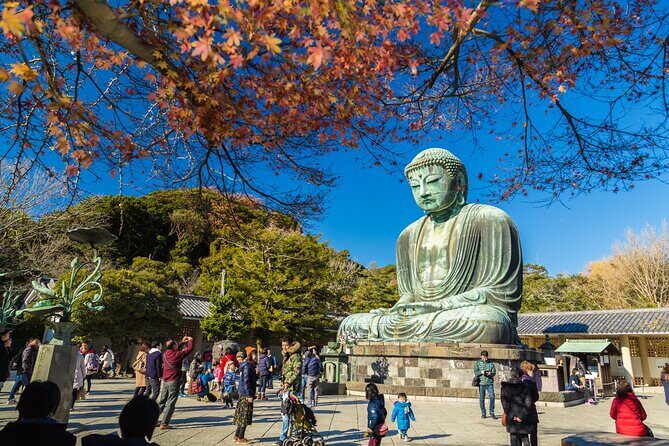
Then you hit Kotoku-in, home to the Great Buddha. This is the “wow” stop, and it’s famous for a reason. The bronze statue is over 13 meters tall, and standing in its presence changes how your brain reads the size of the place. Even if you’ve seen pictures, the scale shows up in person.
You’ll have about 2 hours here, which is enough time to take in the main view, look around the grounds, and still have a moment to just watch the lighting shift. The bronze color can look different throughout the day depending on sun and cloud cover, so time helps.
The key thing to know: Kotoku-in admission is not included. You’ll want to plan for that cost as part of your day budget.
If you’re taking photos, do a quick sweep early in your visit and then return to your favorite angle later. That’s one of the simplest ways to get variety without rushing.
A few more Tokyo tours and experiences worth a look




Stop 4: Tsurugaoka Hachimangu Shrine (free) and samurai-era meaning
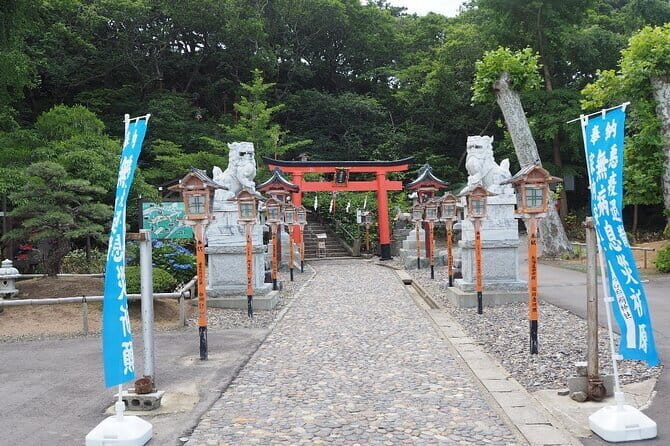
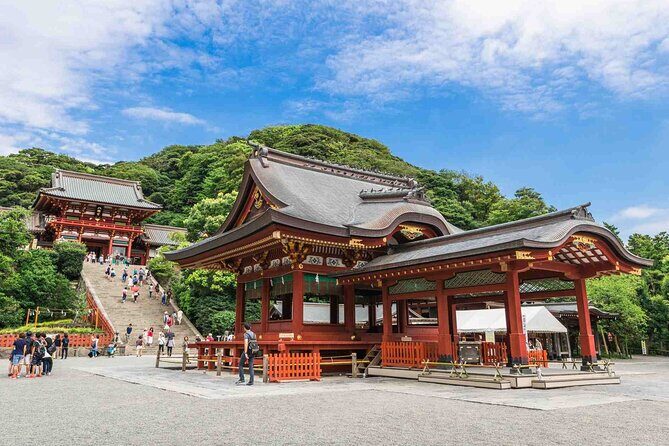
Tsurugaoka Hachimangu Shrine is a great mid-day anchor. You’ll spend about 2 hours, and the entry is free. That makes it an easy “value” stop inside the schedule.
The shrine’s dedication to Hachiman—the Shinto god of war and patron deity of the samurai—adds a layer of meaning as you walk through the grounds. You start to notice patterns: how the architecture and ceremonial spaces guide your sense of movement.
I also like that it’s not just about looking. Shrines encourage you to slow down and observe behavior: where people pause, where they look, and how the spaces are used. Even if you don’t follow every tradition, you can feel the structure of the place.
Stop 5: Enoshima for sea air, gardens, and Mount Fuji views
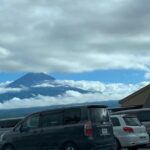
Ending at Enoshima is smart. The tour gives you about 2 hours here, and the best part is how the mood changes from temple/shrine focus to coastal breathing room. Enoshima is an island off the coast of Kamakura, known for beaches, gardens, and views that can include Mount Fuji on clear days.
This stop is also practical: it’s a natural place to stretch your legs, take a longer walk, and enjoy the change in scenery. If the weather is working, Enoshima can become the “memory photo” section of your day—especially when light hits the water.
One key consideration: the tour requires good weather. If conditions are poor, the experience can be canceled and you’ll be offered a different date or a full refund. So if you can choose your travel dates, aim for a day with decent skies.
Time management: how five stops fit into 10 hours
With five major stops, the pacing matters. This tour’s design gives you roughly two hours at each location, including Enoshima. In real life, that two-hour block works because it includes the time you’ll need to walk through grounds, read a few things if you want, and still find a calm spot to rest.
Here’s how I’d think about it when you’re planning your day:
- You’ll likely spend the most energy mentally at Hokoku-ji and Kotoku-in (the atmosphere is strong at both).
- You’ll likely spend the most energy physically at Hase-dera (stone steps).
- You’ll spend the most time “just enjoying” at Enoshima.
If you’re the kind of person who likes longer sits and fewer photos, you’ll probably love the structure. If you prefer nonstop sightseeing, you might feel like some stops could be longer—but the tradeoff is you won’t feel wrecked by the end.
Price and value: $391.22 for up to 3 people
The price is $391.22 per group, up to 3 people. That’s the big value lever: you’re not paying per person like many small-group day tours. If you travel as a duo, your per-person cost lands higher than if you fill the third spot, but it still tends to compete well with private comfort because the ride, driver, and transportation are included.
What you’re paying for:
- Private transportation plus tolls and petrol/gas
- Meet and greet and a pickup offered setup
- Wi‑Fi hotspot in the vehicle when available
- An air-conditioned, English-speaking driver experience
What you’re not paying for:
- Entry tickets for Hokoku-ji, Hase-dera, and Kotoku-in
- Food and drinks
That trade matters. If you know you want the exact stops on this route, paying privately can feel cost-effective because it reduces wasted time and keeps your day organized. If you plan to skip paid entries or want to add extra sites on your own, a custom approach might fit better—but based on this route, the value is strongest when you do everything planned.
Also note timing: the tour is booked about 33 days in advance on average. That suggests the route and private format are in demand. If your dates are fixed, I’d avoid waiting too long.
What to pack so the day feels easy
This is a long day—about 10 hours, starting at 8:00 am. Pack like you’ll be walking temple grounds and moving between areas without returning to Tokyo often.
Bring:
- Comfortable walking shoes for stone steps and temple paths
- Water, plus a small snack even though food isn’t included (you’ll thank yourself later)
- A light layer if you’re sensitive to changing indoor/outdoor temps
- Money or a card for the paid temple entries (Hokoku-ji, Hase-dera, Kotoku-in)
If you get motion sickness easily, you’re in an air-conditioned vehicle, which usually helps. You might still want to take a quick anti-nausea option before the ride if you’re prone to it.
A quick note on how the driver experience shapes the day
The driver matters on a day like this. In the feedback I saw, Hridoy stood out as enthusiastic and entertaining, and that energy tends to make the ride portion feel shorter. You’re not stuck in silence for hours. You get an upbeat flow, plus practical help.
Even when sightseeing is the focus, what you’re really buying is reduced friction: getting you where you need to go, keeping you on schedule, and helping you keep your day sane.
Should you book this Kamakura private tour?
If you want a smooth Tokyo to Kamakura day with the key cultural hits, this is a strong option—especially if you like private comfort and a clear plan. I’d recommend it for couples, small families, and friends who want to see Hokoku-ji, Hase-dera, Kotoku-in, Tsurugaoka Hachimangu, and Enoshima without navigating trains and transfers all day.
Book it if:
- You want a private English-speaking driver and pickup setup
- You’re happy to pay on-site admission fees for the paid temples
- You want a balanced day: temples plus sea views at Enoshima
Skip it if:
- You only want free sights and would rather avoid paid entries
- You need a very flexible stop-by-stop schedule with lots of extras added
- You’re traveling on a day where you can’t handle weather risk (because the tour requires good weather)
FAQ
How long is the Kamakura private tour?
The tour runs for about 10 hours (approx.).
How many people are in each group?
It’s a private tour/activity, and the price is per group up to 3.
Does the tour include pickup in Tokyo?
Yes. Pickup is offered, and there’s a meet and greet.
What’s included in the price?
Included are tolls, petrol/gas, meet and greet, Wi‑Fi hotspot (in the vehicle when available), an air-conditioned vehicle, and private transportation.
Are temple and attraction tickets included?
Not for Hokoku-ji, Hase-dera, and Kotoku-in. Tsurugaoka Hachimangu Shrine and Enoshima are listed as free to enter.
Is food included?
No. Food and drinks are not included.
Where does the tour start and when?
The start time is 8:00 am. The meeting point is near public transportation.
Is Wi-Fi available during the tour?
There is a Wi‑Fi hotspot in the vehicle when available.
What happens if the weather is bad?
The experience requires good weather. If canceled due to poor weather, you’ll be offered a different date or a full refund.