REVIEW · TOKYO
Premium 14-Piece Sushi & Cultural Discovery with Chef Interaction
Book on Viator →Operated by REONA Sushi Tokyo – A Journey to Reveal Sushi's Secrets · Bookable on Viator
Sushi gets personal at this chef counter. In Tokyo, you get a small-group front-row seat to watch an experienced sushi chef work, talk through ingredients, and explain what separates good sushi from great. It’s not just eating. It’s watching technique happen in real time.
I especially like the 14-piece premium omakase structure and how it keeps you from walking away still hungry or still wondering what you just ate. I also like the side-by-side comparisons built into the experience, including how chef-prepared rice changes flavor and how fresh wasabi differs from standard paste.
One thing to consider: beverages are not included in the price, and the experience can’t accommodate allergies or dietary restrictions tied to rice, soy, or seafood. If that affects you, you’ll want to plan carefully before booking.
In This Review
- Key points that make this sushi tour worth your time
- Why this small-group Edomae chef session feels different in Tokyo
- What happens when you arrive: guide welcome, chef counter seating, and the start pace
- The 14-piece premium omakase: how the tasting teaches you to notice details
- Watching techniques you can’t easily see at a normal dinner
- The comparisons that actually change what you taste (rice, wasabi, and ingredient quality)
- Rice preparation: the quiet hero of sushi
- Fresh wasabi vs standard paste
- Premium vs standard ingredients: what changes besides price
- Behind-the-counter workspace photos: small moment, big payoff
- Tools and cultural insights: why the tech talk is worth paying for
- Sake and soft drinks: what you can order and why pairing helps
- The route through Chiyoda, Ochanomizu, Kanda, Jimbocho, and Akihabara
- Price and value: what you’re really paying for at $171.73
- Who should book this (and who might choose differently)
- Tips so you get the most from your time at the counter
- Should you book this sushi chef interaction?
- FAQ
- How long is the sushi experience?
- What is included in the meal?
- Are drinks included?
- Is this a small-group tour?
- Can kids join, and do they sit at the counter?
- Can the experience accommodate allergies or dietary restrictions?
- What if I need to cancel?
Key points that make this sushi tour worth your time
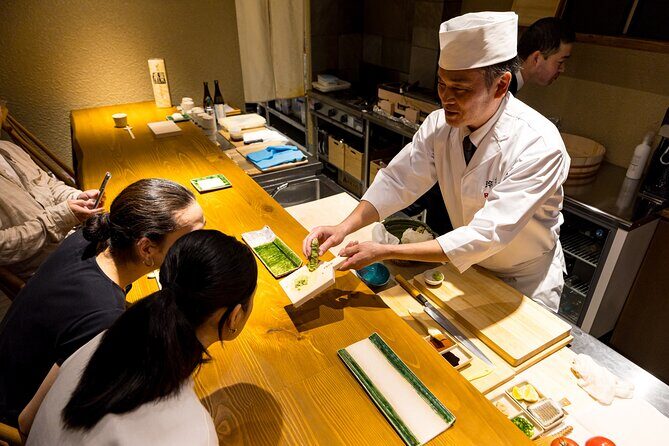
- Chef-counter seating gives you a clear view of technique, not a distant table meal
- 14-piece premium tasting means you get a full, satisfying omakase course within about two hours
- Comparative tastings teach you what premium ingredients change in taste and texture
- Tools and ingredient talk helps you understand Edomae sushi beyond the fish
- Behind-the-counter photo moment lets you remember the workspace view
- Max 5 travelers keeps the mood intimate and makes questions easier
Why this small-group Edomae chef session feels different in Tokyo
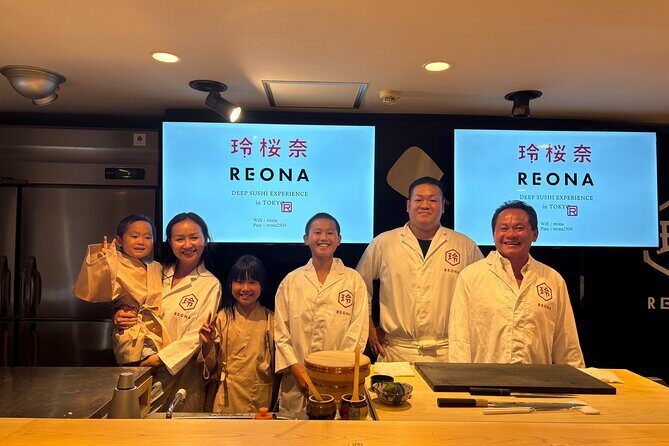
This is the kind of Tokyo experience that stays in your head because you’re not just consuming. You’re watching decisions being made. At the counter, the chef’s rhythm matters, and you can see how each step connects to the next.
The tour is built around an English-speaking guide and a reserved spot at the chef’s counter. That matters if your Japanese is limited. You can actually follow what’s happening: tools, ingredients, and the why behind the taste.
Also, the group size is capped at five travelers. That keeps the atmosphere calm. You’re not shouting over a crowd, and you’re more likely to get clear answers when you ask what you’re tasting.
You can also read our reviews of more tours and experiences in Tokyo.



What happens when you arrive: guide welcome, chef counter seating, and the start pace
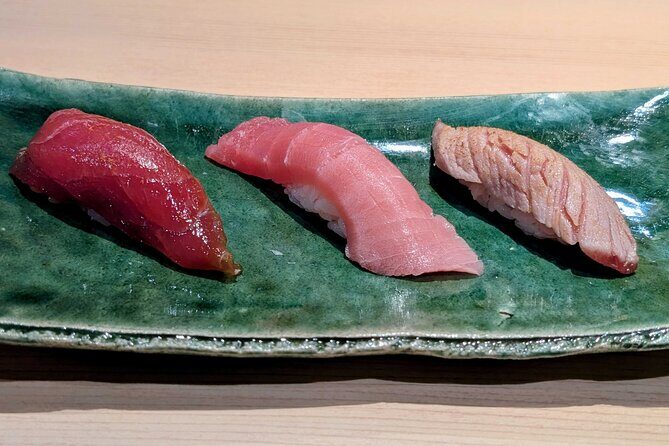
Your session begins at an authentic sushi restaurant, with a meeting point at 3-chōme-3-6 Kanda Surugadai, Chiyoda City, Tokyo. You’ll meet your English-speaking guide, get oriented, and then be seated at the exclusive chef’s counter.
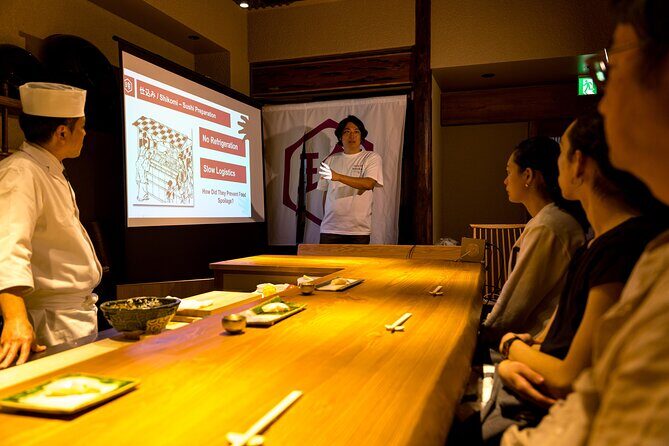
From there, the experience turns into a guided tasting where you’re meant to pay attention. The chef demonstrates core Edomae techniques like simmering, searing, marinating, and wrapping, while you eat the corresponding pieces as the lesson unfolds.
You should expect short teaching moments between bites. The goal is not a long lecture. It’s quick, practical explanations that help you notice differences while your palate is still fresh.
The 14-piece premium omakase: how the tasting teaches you to notice details
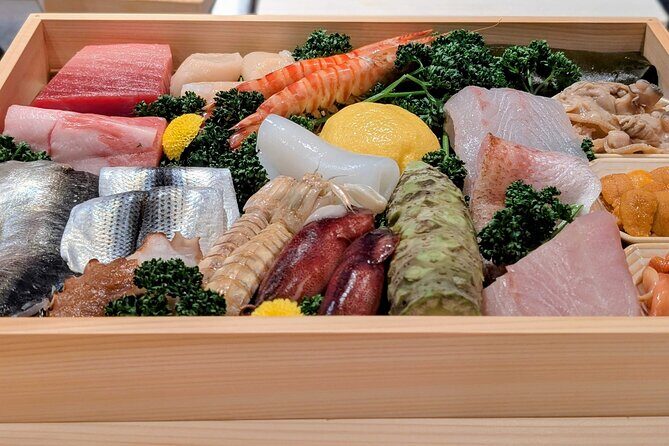
The included meal is a 14-piece omakase sushi course. The standard format runs about two hours, with a maximum of around two and a half hours. For a lot of people, that’s the sweet spot: long enough to feel complete, short enough to fit cleanly into a Tokyo day.
What makes this course more educational than most sushi meals is the way it’s paired with comparative tastings. You’re not only eating. You’re being asked to taste the gaps between approaches—premium versus standard ingredients, and differences in how sushi rice is prepared.
Here’s what that means for you at the table:
- You’ll get taught why rice preparation matters, not just that it matters.
- You’ll learn how freshly prepared wasabi compares to common paste.
- You’ll see the chef talk about tools, so you understand what kind of control and texture the chef is chasing.
If you’re thinking, I just want to eat good sushi, this still works. The course is still a full omakase experience. The education just helps you understand what you’re enjoying.
Watching techniques you can’t easily see at a normal dinner
A lot of sushi restaurants are set up for eating, not for watching. Here, the pacing is meant for technique-spotting.
You’ll see the chef work through methods that directly affect flavor and texture:
- Searing: you’re looking at how heat changes surface character
- Marinating: you’re tasting the effect of time and seasoning style
- Simmering: you’re noticing depth and softness
- Wrapping: you’re watching structure and mouthfeel choices
This turns dinner into a mini workshop. Even if you’re not a big fish person, the instruction style can make you appreciate the craft. One guest note I saw specifically said they do not even like fish, yet they still enjoyed the full spread and found it fun to learn the process.
The comparisons that actually change what you taste (rice, wasabi, and ingredient quality)
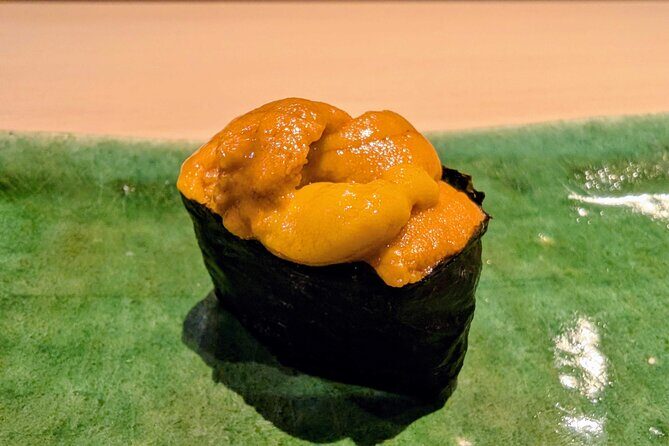
The tour is built around the idea that you can learn sushi fast if someone helps you compare. That’s why you’ll have tastings designed to show differences between premium and standard inputs.





Rice preparation: the quiet hero of sushi
In Edomae-style sushi, rice is not an afterthought. You’ll learn how differences in rice preparation influence flavor. Translation for you: if rice tastes bland, everything else feels less impressive.
The guide and chef focus your attention so you can notice:
- seasoning balance in the rice
- how rice texture supports the fish
- how preparation choices change overall harmony
Fresh wasabi vs standard paste
Another big teaching moment is wasabi. You’ll compare authentic freshly grated wasabi to standard pastes. This is useful because many people only experience one version.
The comparison helps you understand why wasabi can taste sharper, feel different on the tongue, and change the way you perceive each piece.
Premium vs standard ingredients: what changes besides price
This is where the lesson becomes practical. Premium ingredients aren’t just about being more expensive. The differences show up in taste, texture, and how clean the flavors feel.
You’ll do comparative tastings that make the gap easier to detect while you’re still sitting there. That’s the biggest value boost here: you don’t have to guess later what made the best pieces better.
Behind-the-counter workspace photos: small moment, big payoff
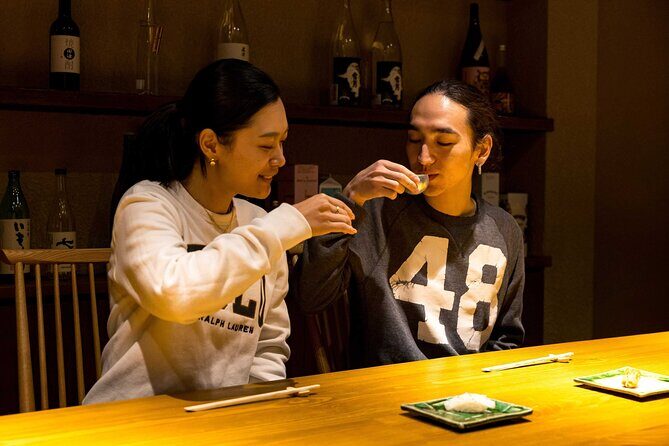
Most sushi meals end with you leaving the counter and forgetting exactly what it looked like from inside the workspace. This one adds a specific chance to step behind the sushi counter into the chef’s workspace and capture photos.
It’s not presented as a gimmick. It gives you a visual memory of the setup and the kind of work zone sushi chefs use. If you like keeping food travel notes you can actually reference later, this is a smart add-on.
Tools and cultural insights: why the tech talk is worth paying for
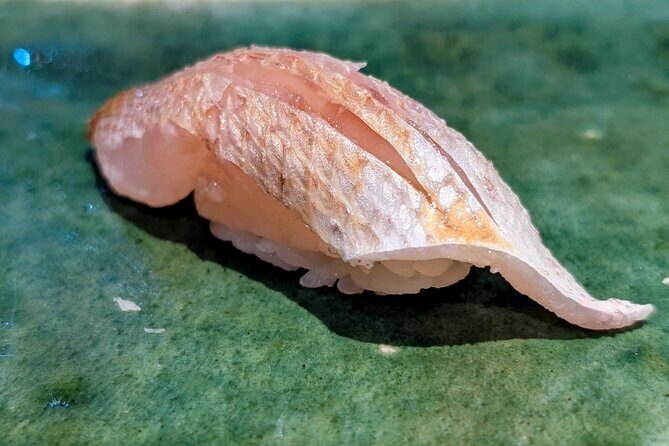
The tour doesn’t just point at the food. It explains the tools and equipment used in authentic sushi-making. That’s a big deal if you’ve ever wondered how sushi chefs manage consistency.
In plain terms, learning about the tools helps you understand why each bite feels intentional. You start to notice things like precision, portioning, and how preparation affects texture.
Cultural insights come through as the chef explains technique steps and ingredient choices, tied to sushi traditions. And if you rely on visuals, this experience tends to work well: one guest note mentioned the use of visual aids and videos to make the history and techniques easier to understand. That kind of support makes the learning feel lighter, not like a class you have to study for.
Sake and soft drinks: what you can order and why pairing helps
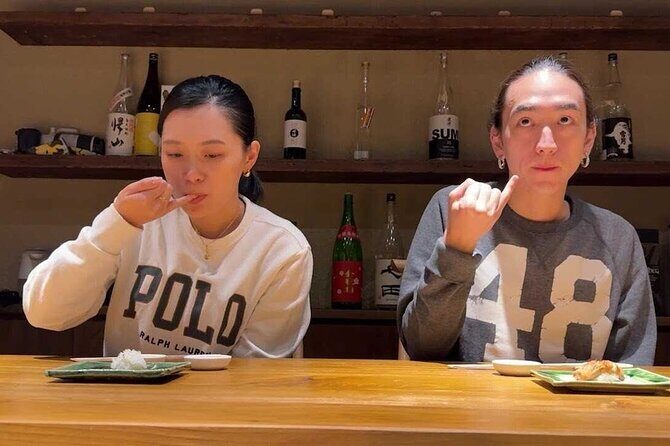
Beverages are not included. You can order drinks after you arrive at the restaurant. The experience notes mention carefully selected sake pairings that complement sushi flavors, plus soft drinks available upon arrival if you prefer not to drink alcohol.
So what should you do?
If you’re the type who likes to match flavors, a sake pairing can turn a good meal into something more memorable. If you’re not into alcohol, the soft drink option keeps things simple.
One guest specifically said they went for the sake experience and still ended up enjoying every dish. That tells me the pairing approach can guide your taste, even if you didn’t come in as a lifelong sushi devotee.
The route through Chiyoda, Ochanomizu, Kanda, Jimbocho, and Akihabara
The experience includes multiple stops across central Tokyo, starting in Chiyoda, moving through Ochanomizu / Akihabara / Kanda, then toward Tokyo Prefecture, and finishing around Kanda Jimbocho Bookstore Area and Akihabara.
Here’s the practical value of that structure: it keeps you in a very workable part of Tokyo for sightseeing. You get a guided flow through recognizable districts, then you settle in for the chef counter session where the main value happens.
What I’d watch for: since the timing is about two hours total, you don’t want this to be your first stop of the day when you’re still figuring out your bearings. It’s better when you can arrive ready to focus. The itinerary is short, and the experience is concentrated.
Also, the tour is near public transportation. That’s useful in Tokyo, where “close” matters more than distance on a map. You won’t need a complicated transit plan to get here.
Price and value: what you’re really paying for at $171.73
At $171.73 per person, this isn’t a bargain. But it also isn’t just paying for sushi. You’re paying for:
- a chef-counter experience designed for watching and questions
- an English-speaking guide to connect the dots
- 14 pieces of premium omakase
- comparative tastings that teach you what you’re eating
- tool explanations and a behind-the-counter photo opportunity
- a small group limit (max five), which affects how much interaction you can actually have
If you’ve done Tokyo food tours before, you know the difference between eating and being taught. This one is priced for the teaching component—chef time, guided comparisons, and the extra workspace moment—rather than for the raw quantity of food.
One caution on value: drinks cost extra since beverages aren’t included. If you plan to add sake pairings, factor that into your budget.
Who should book this (and who might choose differently)
This tour is a great match if you want sushi with context. You’ll enjoy it if you like learning what makes taste differences happen: rice prep, wasabi type, and premium ingredient choices.
It’s also a good fit if you appreciate hands-on style learning. You get demonstrations of techniques like simmering, searing, marinating, and wrapping, while you eat the results.
If you have kids, read the fine print first. Child bookings include a kids’ room (for children up to 12 years old) and a child-friendly meal, but it’s not the same 14-piece course. Children also won’t be seated at the sushi counter for the full experience; they’ll be in a kids room or child-designated seating. If your child specifically wants the full counter experience alongside adults, the guidance says to book under the adult plan.
And if you need to avoid rice, soy, or seafood due to allergy or dietary restrictions, this one may not work. The experience notes say they can’t accommodate allergies or dietary restrictions related to those items.
Tips so you get the most from your time at the counter
Plan to arrive with the mindset that this is a focused lesson. The course is only about two hours, so you’ll get more if you’re present for the technique explanations.
Since the tour uses a mobile ticket, make sure you have access to your ticket on your phone before you leave your hotel. That sounds basic, but it’s one of those little frictions that can steal attention right when you should be watching the chef.
Wear comfortable shoes if your day includes some walking between stops. The districts involved are central, but your total time is still tight.
If you’re ordering sake or soft drinks, decide early. You’ll enjoy the pairing more when you’re ready for the flavor match, not when you’re still waiting to settle in.
Service animals are allowed, and confirmation is sent at booking, so you should have what you need ahead of time.
Should you book this sushi chef interaction?
Book it if you want more than a standard sushi meal. The 14-piece premium course, the chef demonstrations, and the structured comparisons (rice and wasabi especially) are exactly what make this experience valuable.
Skip it (or at least think hard) if you need allergy-friendly options involving rice, soy, or seafood, or if you’re on a strict budget that can’t flex for drinks and sake pairings.
If you like learning by watching, and you want a Tokyo food experience that feels personal because it’s limited to a small group, this is one of the most practical ways to get that kind of access.
FAQ
How long is the sushi experience?
It runs about 2 hours on average, with the 14-piece omakase course lasting up to about 2.5 hours at most.
What is included in the meal?
You get a 14-piece omakase sushi course, plus sushi ingredient and technique comparison tastings and cultural insights into sushi traditions.
Are drinks included?
No. Beverages are not included. Sake pairings can be ordered after arrival, and soft drinks are also available upon arrival.
Is this a small-group tour?
Yes. The experience has a maximum of 5 travelers.
Can kids join, and do they sit at the counter?
Kids up to 12 can use a kids’ room and get a child-friendly meal, but they do not join the full 14-piece course at the sushi counter. For the counter experience, you need to book the adult plan.
Can the experience accommodate allergies or dietary restrictions?
No, the experience states it is unable to accommodate allergies or dietary restrictions related to rice, soy, or seafood.
What if I need to cancel?
You can cancel for a full refund up to 24 hours before the experience start time. If you cancel less than 24 hours before, the amount paid is not refunded.