REVIEW · TOKYO
Private Car Mt Fuji and Gotemba Outlet in One Day from Tokyo
Book on Viator →Operated by Japan Star Travel Agency · Bookable on Viator
One day. Two very different cravings: Mt. Fuji views and Gotemba shopping, handled in a private minivan with a guide who adjusts to your pace. This is the kind of day that saves you from train transfers and timing headaches while still hitting the classic photo areas around Arakura and Oshino.
I especially like the focus on the Mt. Fuji “greatest hits,” starting at Arakurasengen Shrine and the Chureito Pagoda setup, where you get a postcard view in a short time window. I also like how many guides you’ll be assigned, including praised names like Elina, Ken, and Taiji Endo, tend to stay patient and flexible—useful when weather changes or your group needs extra time for photos or wheelchair access.
The main drawback is visibility and scheduling risk: if clouds roll in, Mt. Fuji may not look its best, and even then the tour won’t be canceled or refunded just because some viewpoints aren’t fully visible (plus the 5th Station has seasonal closures).
In This Review
- Key things to know before you go
- The Real Appeal: Fuji Views Plus Outlet Shopping Without the Slog
- Private Car Logistics From Tokyo: How the Day Gets Easier
- Gotemba Premium Outlets: Use the Time Like a Pro
- Arakurasengen, Chureito Pagoda, and the Arakurayama Viewpoints
- Fuji World Heritage Center: The Short Stop That Adds Context
- Mt. Fuji Ropeway: Worth It When the Queue Plays Nice
- Oishi Hana Terrace and Oishi Park: Lakeside Views Plus a Food Break
- Oshino Hakkai and the Ninja Show Detour
- Kitaguchi Hongu Fuji Sengen Jinja: The Shrine That Frames the Climb
- Mt. Fuji 5th Station: The Big Altitude Moment, With Conditions
- Lake Kawaguchiko and Yamanakako: Where Seasons Change the Mood
- Aokigahara Forest and the Caves: Adventure Time in Between Views
- Seasonal Swaps: Ski Time and Weekend Culture Depending on When You Go
- Lunch and Food Planning: Don’t Let Hunger Steal Your Mt. Fuji Time
- Price and Value: What $1,255.38 Covers and When It Feels Like a Bargain
- My Take: Who This Tour Fits Best (and Who Should Think Twice)
- Should You Book This Mt. Fuji + Gotemba Private Car Day Trip?
- FAQ
- How long is the private Mt. Fuji and Gotemba outlet tour from Tokyo?
- What’s included in the tour price?
- Is the itinerary customizable?
- Which stops may require extra payment?
- Is the Mt. Fuji 5th Station always accessible?
- How much time do you spend shopping at Gotemba Premium Outlets?
- What happens if weather affects visibility of Mt. Fuji?
- Is there free cancellation?
Key things to know before you go
- Private hotel pickup with an air-conditioned minivan: faster than hopping between stations, especially with a group of up to 8.
- A tight Fuji photo loop: Arakurasengen + Chureito Pagoda + Arakurayama Sengen Park are designed for maximum views in minimal time.
- You choose your mix: the full list is long, but you typically pick about 4 to 6 sites so the day doesn’t turn into constant rushing.
- Gotemba Outlet is the built-in shopping anchor: a large mall where you can decide how long you want to browse (1 hour is the baseline).
- Budget for a few add-ons: ropeway, caves, the ninja show, and the Mt. Fuji 5th Station toll can add cost beyond the core tour.
- Local guide energy matters: the best reviews call out patience, helpfulness, and time-smart routing when conditions shift.
The Real Appeal: Fuji Views Plus Outlet Shopping Without the Slog
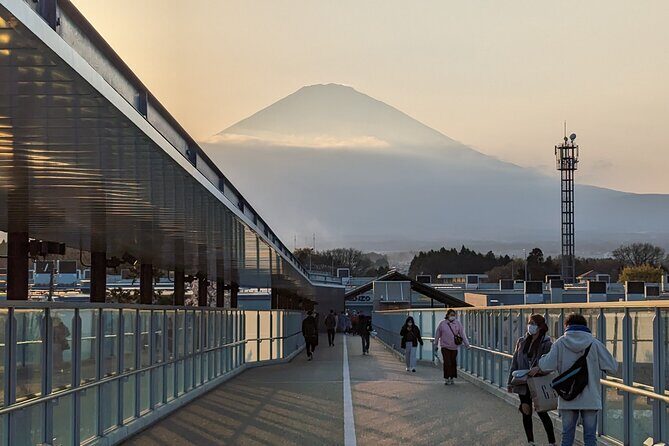
If you’re doing Tokyo and you have limited time, you face a common problem: getting out to Mt. Fuji takes effort, and most group tours feel rushed. This private car day trades that stress for a single door-to-door plan—pickup, drive, photo stops, then shopping—so you’re not managing buses, transfers, and reconnections all day.
What I like most is that the day is built around two “modes.” The first is scenic and spiritual—shrines, viewpoints, lakes, and optional ropeway/cave stops. The second is pure retail therapy at Gotemba Premium Outlets. You can go big on shopping, go big on views, or split the difference, depending on what your group actually wants.
You can also read our reviews of more private tours in Tokyo

Private Car Logistics From Tokyo: How the Day Gets Easier
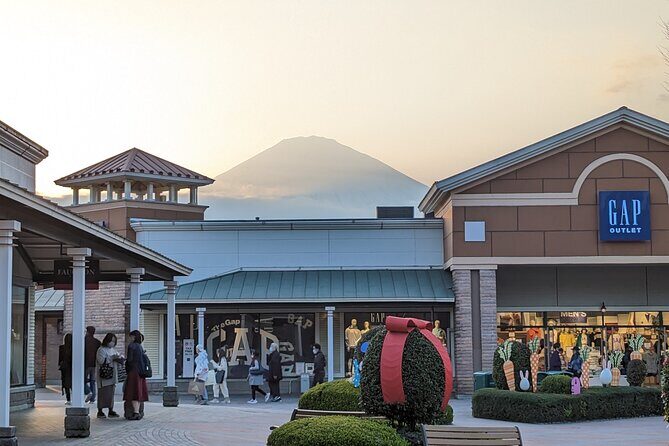
This is a private tour, run with only your group in an air-conditioned minivan, with round-trip hotel pickup and drop-off. Your guide can work in English, Japanese, or French (Chinese and Korean speaking guide available on request), and you get one bottled water per person plus a DVD player in the vehicle.
Duration is about 10 to 11 hours, so it’s not a quick hop. Still, private means fewer timing headaches: one vehicle, one driver, and one plan that your guide can bend when traffic or weather changes. The tour is described as fully customizable, and the long list of possible stops is really there to let you select what fits your energy level.
One practical tip: if you want both Fuji sights and shopping, don’t try to add “every possible stop” from the list. The tour itself signals that you should choose around 4 to 6 sites for the Mt. Fuji area so the day stays enjoyable, not exhausting.
Gotemba Premium Outlets: Use the Time Like a Pro
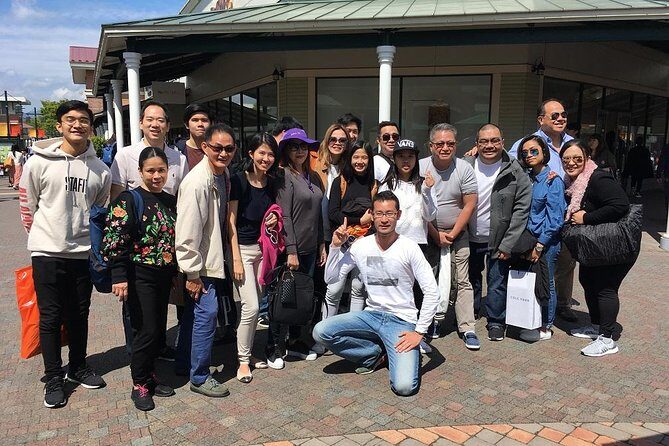
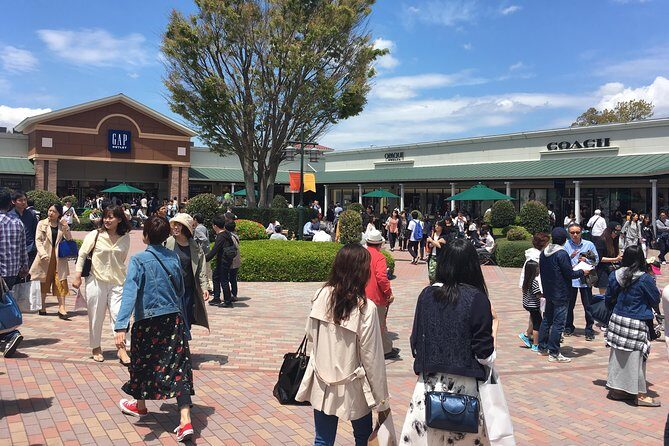
Gotemba Premium Outlets is the shopping anchor of this day. The mall is described as the biggest outlet shopping mall in Japan, with 290 stores (270+ shops are referenced too). Admission is free, and the scheduled stop is about 1 hour, but you can tell your guide how long you want to shop.
Here’s the practical way to think about it: an hour is enough for a focused browse (especially if you already know what you’re looking for), but it’s tight if your group wants to compare brands and prices across lots of stores. Since this is a private tour, you can adjust without derailing everything—just be ready to make a quick decision.
Also, put your shopping brain on before you arrive. Outlets reward speed: comfortable shoes, a clear list, and a plan for who’s shopping for what. Your guide can help your group move efficiently.
Arakurasengen, Chureito Pagoda, and the Arakurayama Viewpoints
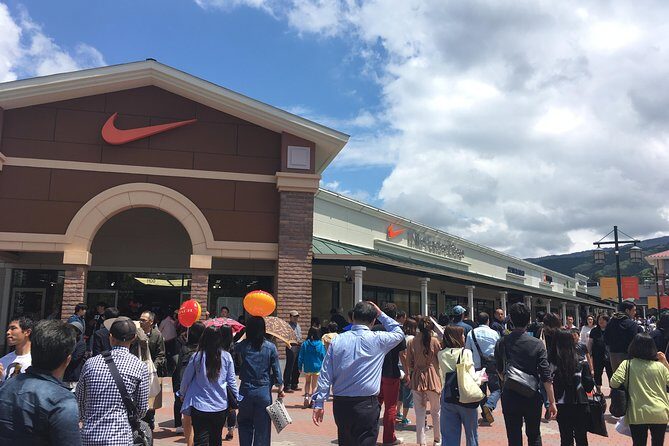
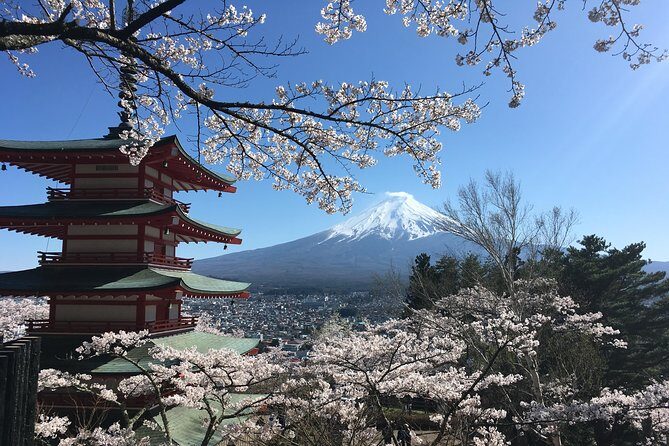
These stops are the heart of the classic Mt. Fuji photo experience, and they’re intentionally clustered.
- Chureito Pagoda (Arakura Sengen Shrine area): You’ll spend about 10 minutes grabbing the panoramic shot with the 5-storied pagoda and Mt. Fuji in the background.
- Arakura Fuji Sengen Shrine: Another quick 10-minute stop, focused on the shrine’s connection to the goddess of fire (it’s described as enshrining that symbol tied to Mt. Fuji).
- Arakurayama Sengen Park: Also about 10 minutes, and it’s specifically called out as a top destination for the panoramic Chureito view.
Why this grouping matters: you get multiple angles and viewpoints without losing hours to long drives. The tradeoff is that it’s a short stop, so come ready. If you want time for photos at different angles, build that into the pace early—your guide can help you time it before crowds thicken.
Fuji World Heritage Center: The Short Stop That Adds Context
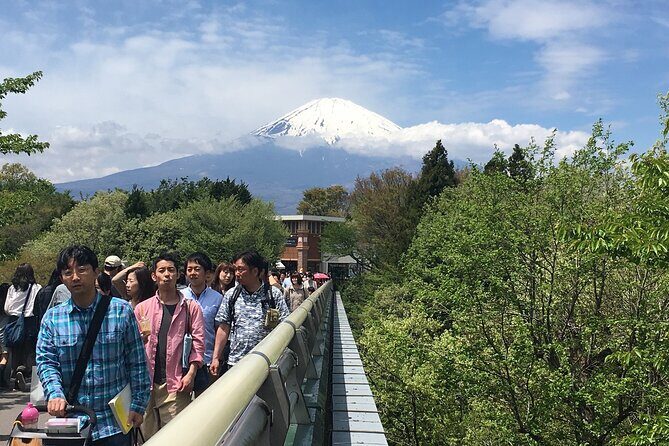
Right after the shrine viewpoints comes the Mt. Fuji World Heritage Center, with a video-style introduction to Mt. Fuji and the rituals tied to the region. The scheduled stop is about 20 minutes, though the video viewing can run 20 to 60 minutes depending on how you watch.
If you like understanding what you’re seeing, this is a smart breather. It turns the day from only a photo mission into something with meaning. If you’re short on time (or the weather is pushing you along), treat it as a quick “orientation reset” before you go back outdoors for the views.
A few more Tokyo tours and experiences worth a look




Mt. Fuji Ropeway: Worth It When the Queue Plays Nice
Next is the Mt. Fuji Panoramic Ropeway, where you get wider views over Mt. Fuji, Lake Kawaguchi, and Fuji Yoshida City. The ropeway time is listed as 30 to 90 minutes, and it depends on the day’s queue.
Important practical point: this is not included in the tour price. If the queue looks long and your group is already seeing Fuji clearly from other viewpoints, you might decide to skip. If the weather is good and you want that higher perspective, it can be one of the day’s payoff moments—just factor in the time uncertainty.
Oishi Hana Terrace and Oishi Park: Lakeside Views Plus a Food Break
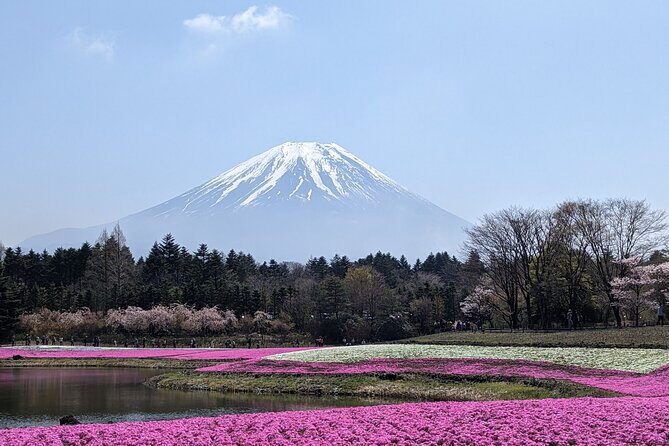
This part of the day leans into softer sightseeing.
- Fuji Oishi Hana Terrace: About 20 minutes scheduled, with a flexible window of 20 to 90 minutes. It’s known for regional crafts and for ice cream and sorbets made with local fruits.
- Oishi Park: Another flexible stop (about 20 minutes scheduled, 20 to 90 minutes possible) with flowers across the seasons, especially lavender.
These are easy places to slow down. The payoff is visual variety—views over the lake area—and a more relaxed rhythm than rushing between shrines. If your group has kids, this is also where breaks feel natural rather than forced.
Oshino Hakkai and the Ninja Show Detour
Oshino is a classic Mt. Fuji area stop, and you can shape it based on your group.
- Oshino Hakkai: A short 10-minute visit with free admission. It’s famous for the spring-fed ponds connected to Mt. Fuji’s water story.
- Oshino Shinobi no Sato (Ninja show): Scheduled as a longer 30 to 90 minutes option, but not included. This is more entertainment than scenery.
This is where customization shines. If your group wants something interactive, the ninja show can be a memorable break. If you just want the iconic ponds and photos, stick to Oshino Hakkai and use the saved time elsewhere.
Kitaguchi Hongu Fuji Sengen Jinja: The Shrine That Frames the Climb
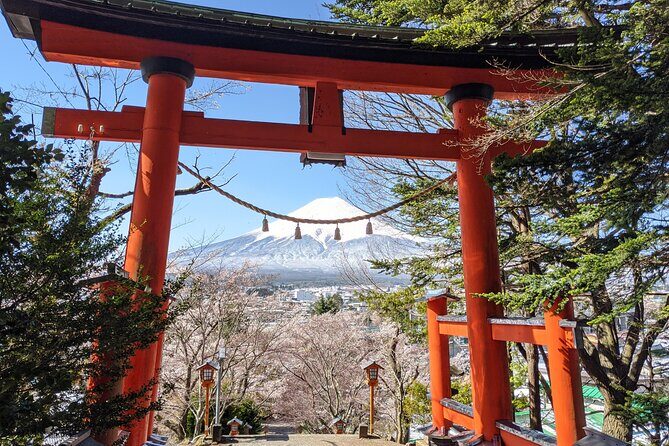
You may also stop at Kitaguchi Hongu Fuji Sengen Jinja Shrine, described as the main shrine in the northern part of Mt. Fuji and connected to the first step of ascension worship. Expect about 30 to 60 minutes and free admission.
Why I think this works in a one-day plan: it gives you a more grounded cultural anchor. You’re not only seeing the mountain; you’re seeing how people historically approached it through rituals and worship practices. Even if you’re not deep into shrine etiquette, your guide can help you understand what to look for.
Mt. Fuji 5th Station: The Big Altitude Moment, With Conditions
If conditions allow, the Mt. Fuji 5th Station is the “wow” upgrade. It’s listed at about 2,300 meters, and it’s described as the closest car-access point. Plan roughly 2 hours, but there are key catches:
- There’s a 2,100 yen toll fee on the spot (not included).
- Access is closed from July to mid-September due to climbing season, and it’s closed in winter as well.
If you’re traveling in a period when the 5th Station is closed, your guide will have to pivot. Even if it’s open, weather controls your ability to see the mountain clearly. So go in with a flexible mindset: the 5th Station is impressive, but it’s not guaranteed to be postcard-perfect.
Lake Kawaguchiko and Yamanakako: Where Seasons Change the Mood
For many people, the Mt. Fuji experience is as much about lakes as it is about the peak.
- Lake Kawaguchiko: Free admission, about 30 minutes. It’s described as the most visited lake out of the five lakes of Mt. Fuji.
- Yamanakako Hananomiyako Park: Free for the park isn’t stated; its admission is marked not included. Time is 20 to 60 minutes. The big seasonal hook is that from spring to fall you see seasonal flowers, and in winter you can enjoy Diamond Fuji (sunset view where Mt. Fuji aligns with the water/landscape).
This is a great area to match the day to your expectations. If you want the classic Fuji reflection vibe, plan to spend a little extra time here. If your group’s energy is fading, keep it short and move on.
Aokigahara Forest and the Caves: Adventure Time in Between Views
The tour list includes multiple options in the Aokigahara region, and this is where you can turn a scenic day into something more active.
Free options:
- Aokigahara Forest: a 30-minute hike described as a relaxing “sea of forest.”
- Saiko Lake: about 30 minutes; it’s described as the “maiden lake,” and admission is free.
Paid / not included options:
- Narusawa Ice Cave: 15 to 30 minutes, not included.
- Fugaku Wind Cave: 15 to 30 minutes, not included.
- Saiko Bat Cave: 30 minutes, not included.
This cluster matters because it changes the personality of your day. If you mainly want views and photos, you can treat these as optional extras. If your group likes something different—temperature changes in caves, eerie forest atmosphere, and a break from crowds—these stops can be the highlight.
Seasonal Swaps: Ski Time and Weekend Culture Depending on When You Go
Depending on the season, the tour list includes time for snow and skiing on Mt. Fuji, described as beginner-friendly with rental outfits for ski, snowboard, and sleds. It’s listed as 1 to 2 hours depending on requests.
There’s also mention that the area is a popular weekend destination for Japanese in summer. The practical takeaway: tell your guide what time of year you’re traveling and what kind of day you want—quiet lakes, shrine time, caves, or active winter fun—and they’ll steer your choices.
Lunch and Food Planning: Don’t Let Hunger Steal Your Mt. Fuji Time
Food and drinks aren’t included, and lunch is explicitly not included. You can ask for a vegetarian option at booking, and the guide can suggest options to match dietary needs.
One useful clue from real guidance styles: one review highlighted a lunch stop called Hoto Fudo, described as a local restaurant with handmade udon and fresh salmon from the river plus homegrown veggies. I can’t promise every group goes there, but it shows the mindset: the guide can steer you toward a place that feels local instead of only grabbing whatever is fastest.
Your practical move: decide ahead of time whether you want a quick sit-down lunch or a longer one. Then give your guide that preference so you don’t lose prime viewing hours to a slow meal.
Price and Value: What $1,255.38 Covers and When It Feels Like a Bargain
The price is $1,255.38 per group (up to 8), for about 10 to 11 hours with round-trip private transfer, a local guide, hotel pickup/drop-off, one bottled water per person, and a DVD player in the minivan. Food and drinks are extra, and some activities have separate costs (ropeway, ninja show, caves, and the 5th Station toll).
Here’s how I’d think about value:
- If you fill the minivan with 8 people, the tour works out to roughly $157 per person.
- If you have 4 people, it’s around $314 per person.
So it becomes most economical with families or small friend groups. It also makes sense when you want to avoid the stress of train transfers and want a guide to manage the day’s pacing. The private car time isn’t just “comfort.” It buys you flexibility—especially important when weather and queues change.
Budget reminders:
- Ropeway and some attractions are not included.
- Mt. Fuji 5th Station has a 2,100 yen toll fee on the spot.
- Gratuity is listed as 5 to 20%.
Also, plan your expectations around viewing. The tour notes that it won’t be canceled or refunded even if some spots are not fully visible due to weather, and the schedule can shift with weather or traffic. That’s normal for Mt. Fuji days—just go in mentally ready for Plan B.
My Take: Who This Tour Fits Best (and Who Should Think Twice)
This is a strong match if you:
- Want a private day out of Tokyo instead of public transport juggling
- Have a group size that can use the max seating (up to 8)
- Want both Fuji sights and shopping in one outing
- Like a day that you can shape to your interests, from shrine viewpoints to caves and forest time
It’s less ideal if you:
- Are on a tight schedule and can’t spare a long car day
- Only want one exact outcome (like always getting a perfect Mt. Fuji view, or always reaching the 5th Station regardless of season and weather)
- Don’t want to deal with possible add-on costs for ropeway/caves/tours
Should You Book This Mt. Fuji + Gotemba Private Car Day Trip?
I’d book it if your priority is convenience plus flexibility, and you want the day to include both the iconic Fuji viewpoints and a serious outlet shopping stop. The best part is that the guide can adjust the mix of stops—so you can focus on what your group will actually enjoy instead of checking boxes.
I’d hold off if you’re traveling during peak 5th Station closure periods or your group needs a very rigid, guarantee-style schedule. Mt. Fuji is weather-dependent, and this tour is designed to keep moving and keep the day meaningful even when the peak isn’t cooperating.
FAQ
How long is the private Mt. Fuji and Gotemba outlet tour from Tokyo?
It runs about 10 to 11 hours (approx.).
What’s included in the tour price?
You get round-trip private transfer in an air-conditioned minivan, hotel pickup and drop-off, a local guide (English/Japanese/French; Chinese/Korean upon request), one bottled water per person, and a mobile ticket.
Is the itinerary customizable?
Yes. The itinerary can be tailored to your preferences, and the guide will help you choose around 4 to 6 sites from the possible stops.
Which stops may require extra payment?
Several activities are marked as not included, including the Mt. Fuji ropeway, Oshino Shinobi no Sato ninja show, Narusawa Ice Cave, Fugaku Wind Cave, Saiko Bat Cave, and Yamanakako Hananomiyako Park. The Mt. Fuji 5th Station also requires a 2,100 yen toll fee on the spot.
Is the Mt. Fuji 5th Station always accessible?
No. Access is closed from July to mid-September due to climbing season, and it is also closed in winter.
How much time do you spend shopping at Gotemba Premium Outlets?
The standard stop is about 1 hour, and you can tell the guide how long you’d like to spend there.
What happens if weather affects visibility of Mt. Fuji?
The tour will not be canceled or refunded even if some spots are not fully visible due to weather. The activity schedule may also change based on weather or traffic conditions.
Is there free cancellation?
Yes. You can cancel up to 24 hours in advance for a full refund.