REVIEW · OSAKA
Samurai Show, Tea Ceremony, Japanese Traditional Activities
Book on Viator →Operated by 道-michi- · Bookable on Viator
Samurai culture turns interactive in Osaka. This 2.5-hour-style program mixes a tea ceremony and calligraphy with live Japanese music and a playful samurai performance. If you like getting your hands moving, not just watching, this kind of format makes the time feel fast and memorable.
One thing to plan for: the headline “armor and kimono” can be an add-on, not always included in the base ticket. If you’re picturing full dress-up, read the options carefully so there are no surprises.
In This Review
- Key points to know before you go
- Starting Near Shinsaibashi and Dotonbori: Getting There Without Stress
- The Big Indoor Facility: How the 150-Minute Flow Works
- Tea Ceremony: Learning the Steps and the Attitude
- Calligraphy Station: A Keepsake You Actually Want to Keep
- Samurai Show and Interactive Sword Moves: Theater First, History Second
- Japanese Traditional Music: Try the Instruments, Not Only Watch
- Costume Upgrades: Kimono and Samurai Armor (Optional, So Plan for It)
- Price and Value: Why This Often Feels Like a Bargain in Osaka
- Who This Is Best For (and Who Might Want Another Plan)
- Practical Tips to Get the Most From Your Afternoon
- Should You Book This Osaka Samurai, Tea, and Calligraphy Experience?
- FAQ
- Where does the experience start?
- How long does the experience last?
- What’s included in the ticket price?
- Are samurai armor, kimono, or ninja included?
- Is this activity indoors?
- How big are the groups?
- Do I need anything special to participate?
- What if the weather is bad?
Key points to know before you go
- Tea ceremony instruction that focuses on doing it correctly, not just sipping and posing
- Calligraphy with a take-home result, so you leave with something you made
- Live traditional music plus instrument practice, not only a performance
- Samurai showdown theater with audience participation, and no real swords
- Small group size (max 20), which helps you actually get help at each station
- Indoor-friendly setup, a solid choice when Osaka weather turns
Starting Near Shinsaibashi and Dotonbori: Getting There Without Stress
You start at Shinsaibashi ARTY Inn, in Nishishinsaibashi (Chuo Ward), Osaka. The address is 2-chōme-17-3 Nishishinsaibashi, Chuo Ward, Osaka, 542-0086, Japan. It’s a convenient launch point because it’s near public transportation, which matters in Osaka where stations can feel like mini cities.
You’ll get a mobile ticket, and you’ll receive confirmation at the time of booking. That’s helpful if your travel day is already packed, since you won’t be hunting for printouts. The group stays small, with a maximum of 20 people, so the day doesn’t feel like a cattle-car cultural mashup.
A practical timing note: the advertised duration is about 2 hours 30 minutes, but plan for closer to 3 hours if you want breathing room between stations. One detailed schedule I’ve seen from people who did the full flow mentioned roughly 3.5 to 4 hours. If you’re pairing this with other Osaka plans, give yourself extra margin.
A few more Osaka tours and experiences worth a look


The Big Indoor Facility: How the 150-Minute Flow Works
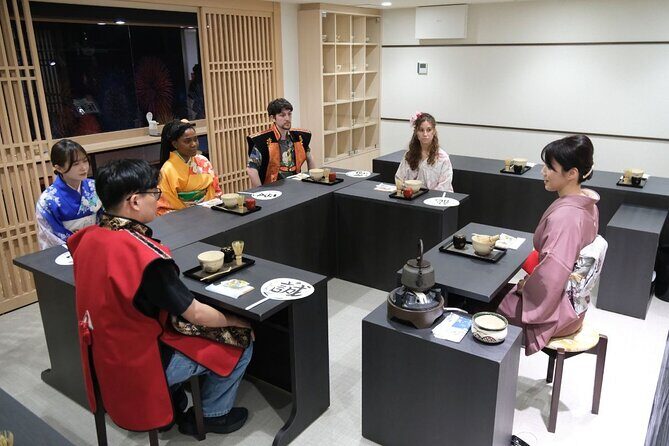
This experience runs in a big facility with multiple “stations” of activity. The core performance-and-workshop time is about 150 minutes, and it’s built around short segments: watch something, then try something, then reset and move on.
That structure is one of the best reasons to book this type of program instead of doing separate paid classes across town. You’re not commuting between locations, and the staff keep you moving in an organized way. The small group size helps here too—there’s enough attention for people who need extra help with the steps.
Also, this format is weather-proof in a way that matters in Osaka. If rain shows up, you’re not stuck changing plans or scrambling for covered alternatives. You’ll be inside for the main show and the hands-on parts.
Tea Ceremony: Learning the Steps and the Attitude
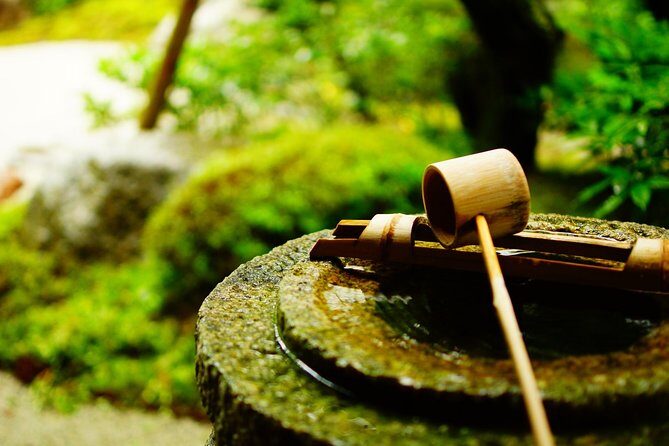
The tea ceremony portion is more than a quick demo. The whole point is that you take part in a guided process and learn how to do it correctly. That matters because tea ceremony is as much about rhythm and respect as it is about the tea itself.
Here’s what I like about this part of the program for your trip: it’s a focused skill you can repeat later. Even if you never become a tea master, you’ll understand what you’re looking at when you see Japanese tea culture in other settings—on film, in restaurants, or during shrine visits.
You also get that satisfying “I did something real” feeling. In other words, it’s not just watching someone pour tea. You’re handling the procedure with instruction, and you’ll come away with a clearer sense of why the ceremony is structured the way it is.
Calligraphy Station: A Keepsake You Actually Want to Keep
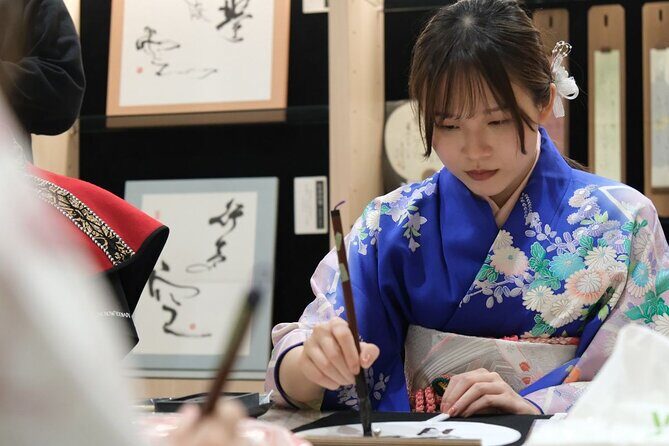
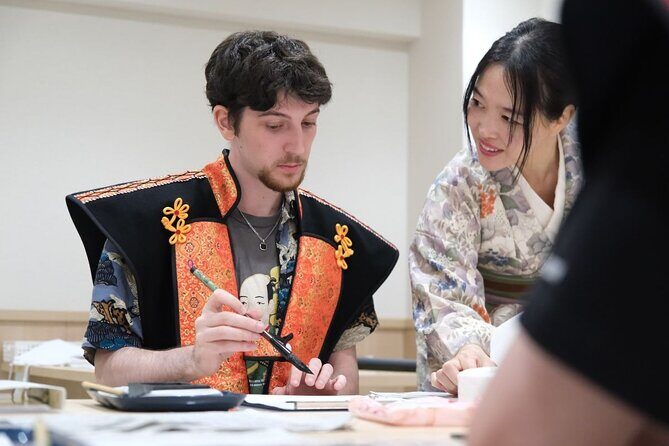
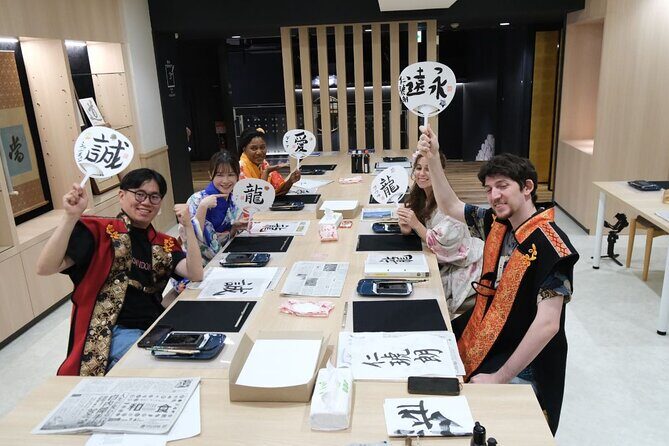
After tea, calligraphy is where the experience gets personal. You’re not just copying random strokes; you’re doing calligraphy as a workshop with guidance. The practical win is that it turns into a souvenir you can keep and use.
From what I’ve seen described, you often finish with a personalized item such as a fan. That’s better than generic trinkets, because it feels connected to the time you spent in Osaka rather than bought at a kiosk.
Also, calligraphy classes tend to reward patience. If you’re traveling with kids, teens, or grandparents, this one usually lands well because it doesn’t require “performance confidence.” You can work at your own pace, ask questions, and still feel like you made progress.
Samurai Show and Interactive Sword Moves: Theater First, History Second
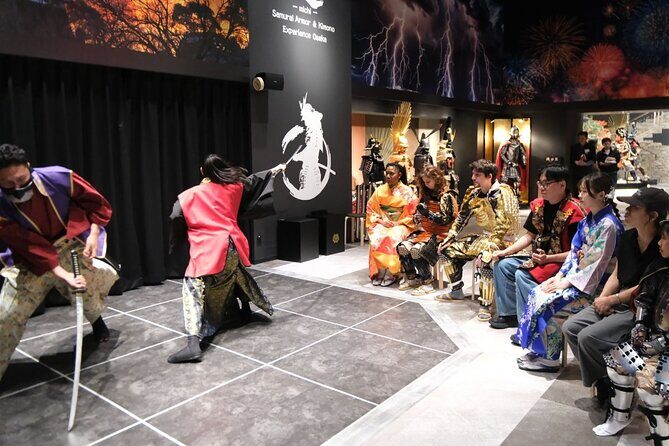
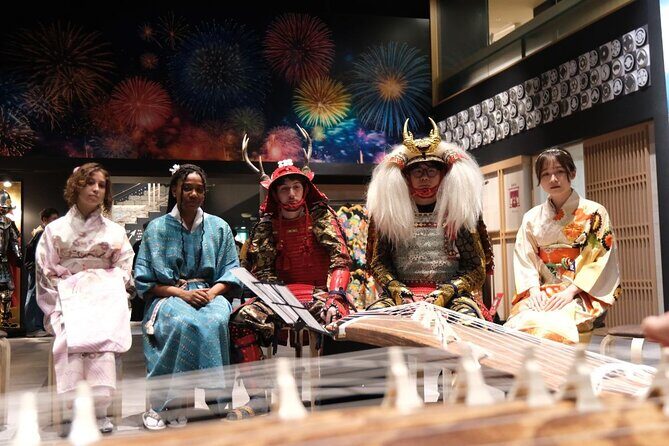
The samurai segment is big entertainment. Expect a performance-style show, with a chance to join in. People describe it as crossing swords with the samurai, but don’t worry: it’s not real weapons.
What you’ll likely get from this section is a taste of samurai-world drama and timing—plus a chance to try simple movement or “skills” in a controlled way. It’s fun, and it has that immediate crowd-energy that makes the day feel like a story, not a checklist.
Still, I’d keep expectations balanced. This isn’t presented as a full museum-grade history lecture. If you’re craving authenticity to the last detail—original arms, deep lineage, scholarly context—you may find it more staged and playful than you hoped. Some people have even flagged that the props can feel like reproductions. If you’re okay with theater-as-learning, you’ll probably enjoy it.




Japanese Traditional Music: Try the Instruments, Not Only Watch
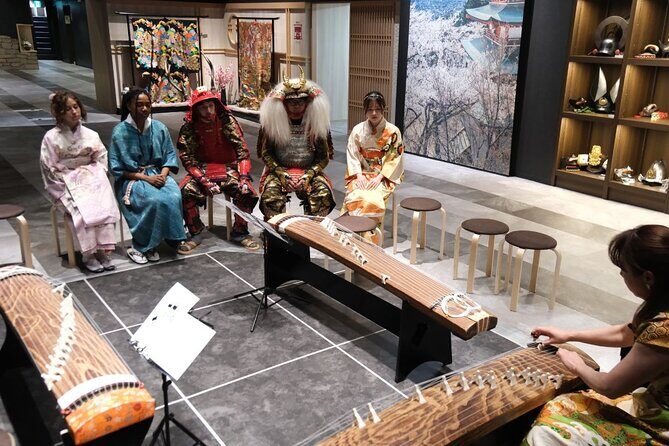
One of the strongest parts of this experience is the music portion. You’ll see authentic Japanese musicians performing on traditional instruments, and you may also practice on instruments yourself as part of the show format.
This is a great value add because it turns music from something passive into something physical. You’ll get a short lesson, you’ll touch the instrument, and you’ll hear how the sound changes with your attempt. That’s the kind of learning you remember later, especially when you catch the same instrument on your next walk through Osaka.
If you’re the kind of traveler who loves “how do they do that?” moments, the music station is likely to be a highlight. It’s also a great way to keep everyone engaged, since even people who don’t care about samurai armor often perk up when it’s time to try playing.
Costume Upgrades: Kimono and Samurai Armor (Optional, So Plan for It)
The big promise you’ll see in marketing is armor and kimono culture. Here’s the deal: the base included list points to tea, calligraphy, traditional music, and samurai performance. Samurai armor, kimono, and ninja are listed as not included.
So if you want the full “dress-up” look, you’ll likely need an upgrade. In one detailed account, a kimono upgrade was mentioned at 5,000 yen, where attendants help you dress and move around for photos. In that same style of upgrade, you keep items such as socks and undergarments.
This is worth thinking about because kimono and armor experiences can change the vibe of the entire afternoon. With costume add-ons, you’ll get more photo time and a stronger sense of entering another role in the story. Without them, it’s still a full cultural program, just more workshop-forward and performance-forward than costume-forward.
If you want photos, budget time. Even in a well-run facility, dressing takes a bit, and you’ll want a calm moment to look comfortable before the stations move on.
Price and Value: Why This Often Feels Like a Bargain in Osaka
At $44.92 per person, this program can feel like strong value because it bundles multiple different cultural activities under one roof. You’re getting several distinct components—tea ceremony, calligraphy, samurai show, and traditional music—rather than paying for one standalone class.
The trade-off is that the base ticket may not include the costume elements (samurai armor and kimono). If you add upgrades, your total spend can rise. But even with that, many people still feel it’s worth it because you’re not piecing together multiple reservations across town.
Also consider group size and how hands-on it is. A small group with staff available at stations makes your money go further, because you’re less likely to get rushed through without help.
Who This Is Best For (and Who Might Want Another Plan)
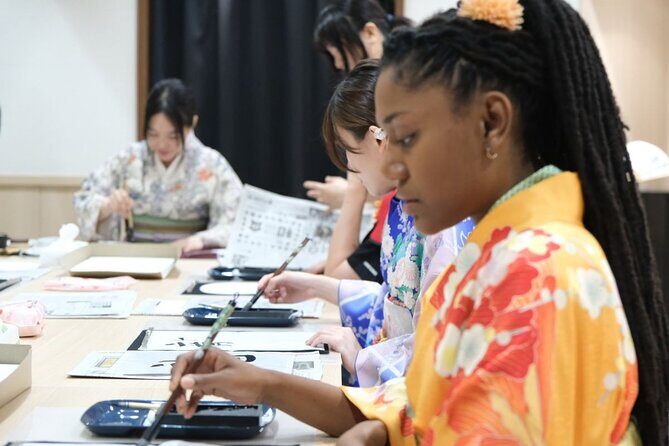
This suits you best if you want an active cultural experience in Osaka where you do more than watch. It’s also family-friendly in practice because there are multiple entry points: tea for calm focus, calligraphy for steady hands, and music and samurai theater for energy.
If you’re a first-timer to Japanese culture and you want a sampler that still feels real, this is a smart way to spend half a day. You’re leaving with skills (or at least a clear starting point), plus a few memorable keepsakes.
If you’re the type of traveler who expects museum-level authenticity in the samurai props and deep academic historical context, this may not satisfy you fully on that front. Think of it as cultural performance and workshop stations, not an advanced lecture.
Practical Tips to Get the Most From Your Afternoon
Here’s how to set yourself up for a smoother visit.
- Plan for extra time. Even if the program is listed around 2.5 hours, give yourself a buffer so you don’t feel rushed between tea, calligraphy, and show segments.
- Wear shoes that work for movement. Some parts involve standing, joining in, or shifting around stations.
- Ask questions during the pauses. The staff are there to guide you through the procedure and the activity steps. If you’re not sure what to do next, ask.
- Decide early if you want the kimono or armor look. Since those elements aren’t in the base list, it’s easier to commit when you can still adjust your schedule and photo expectations.
- Bring patience for calligraphy. Your first strokes won’t look like a professional brush artist. That’s normal, and the workshop format is built around helping you get there.
One staff detail you might appreciate: people have praised specific team members by name, including Yui and Miyu. Having staff who can help you move through the stations calmly makes the whole program feel more comfortable, especially if your Japanese is basic.
Should You Book This Osaka Samurai, Tea, and Calligraphy Experience?
If your goal is a fun, hands-on cultural afternoon in Osaka, I’d say yes. The value is strong because you pack several major experiences into one small-group setup: tea ceremony, calligraphy with a real take-home feel, traditional music (including instrument practice), and a participatory samurai show with no real weapons.
Book it if you want variety and a schedule that keeps you busy without being stressful. Skip or rethink it if you’re only interested in costume-on-a-rack realism or if you need deep historical scholarship to feel satisfied.
Bottom line: for first-time cultural visitors, rainy-day planning, and families, this is a very practical way to turn an afternoon near Shinsaibashi into something you’ll still remember months later.
FAQ
Where does the experience start?
It starts at Shinsaibashi ARTY Inn, 2-chōme-17-3 Nishishinsaibashi, Chuo Ward, Osaka, 542-0086, Japan. The activity ends back at the meeting point.
How long does the experience last?
It’s listed at about 2 hours 30 minutes, with the core activities described as around 150 minutes.
What’s included in the ticket price?
Included are the tea ceremony experience, calligraphy experience, traditional Japanese music, and a samurai performance.
Are samurai armor, kimono, or ninja included?
No. Samurai armor, kimono, and ninja are listed as not included.
Is this activity indoors?
Yes. The main program is described as taking place in a big facility, and people specifically noted it works well on rainy days.
How big are the groups?
The experience has a maximum of 20 travelers.
Do I need anything special to participate?
Most travelers can participate, and you’ll receive confirmation at the time of booking.
What if the weather is bad?
The experience requires good weather, and if it’s canceled due to poor weather, you’ll be offered a different date or a full refund.