REVIEW · TOKYO
Samurai sword cutting experience
Book on GetYourGuide →Operated by 株式会社テイク · Bookable on GetYourGuide
The sword-and-ritual combo is the point. You start with traditional iaido costumes, then move from greetings to real practice with a Japanese blade. It’s a hands-on way to understand samurai training, not just watch it.
I especially love how the session builds from mindset to movement step by step, so you’re not just swinging blindly. I also love that you can use a real Japanese sword that’s said to be over 100 years old, plus a teacher who teaches Battoushi Do in a clear, structured way.
One consideration: this activity isn’t suitable for everyone. If you’re under 14, pregnant, using a wheelchair, or visually impaired, you’ll want to skip it since it involves physical practice and a specific set-up.
In This Review
- Key highlights at a glance
- From Samurai Theater Tokyo to Your First Iai Outfit
- Changing Into Iai Clothing and Setting Your Mind
- Sword Basics: Learning the Japanese Sword Without Guesswork
- The Real Blade Moment: Over-100-Year Sword and a Focused Demo
- Cutting Tatami Twice, at Your Timing
- What’s Actually Included in the $93 Price
- Languages, Teacher Style, and How You Can Get the Most Out of It
- Who This Is Best For (and Who Should Skip It)
- Quick practical flow: what you’ll do, in order
- Should You Book Samurai Sword Cutting in Honshu?
- FAQ
- Where is the meeting point for this experience?
- How much does it cost?
- What languages are available during the session?
- What will I be doing during the practice?
- Do I get to use real swords?
- Is photography and video allowed?
- Is it suitable for children?
- Is it suitable for wheelchair users or visually impaired people?
- What is the cancellation policy?
Key highlights at a glance

- Traditional iaido costume change that makes the whole session feel official, not staged
- Greetings and meditation-style “mental unity” before any cutting
- Instruction from a Battoushi Do teacher with explanations you can actually follow
- Real sword training gear, including an imitation sword and a real blade (over 100 years old)
- You cut tatami mats twice, and you choose the timing for your cuts
From Samurai Theater Tokyo to Your First Iai Outfit
Your experience starts by finding the meeting point: search Samurai Theater Tokyo in Google Maps. From there, the session runs back to the same place when you’re done.
What I like about this set-up is that it’s straightforward. You don’t need to hunt down a weird address or guess where to stand. You show up, you’re guided in, and you get into the flow fast.
Once you’re in, the first shift is costume. You’ll change into traditional iaido practice clothing for the session. It’s not just about looking the part; it helps your body learn the right “frame,” since the clothing is part of how the movements are meant to be done.
You can also read our reviews of more tours and experiences in Tokyo.



Changing Into Iai Clothing and Setting Your Mind
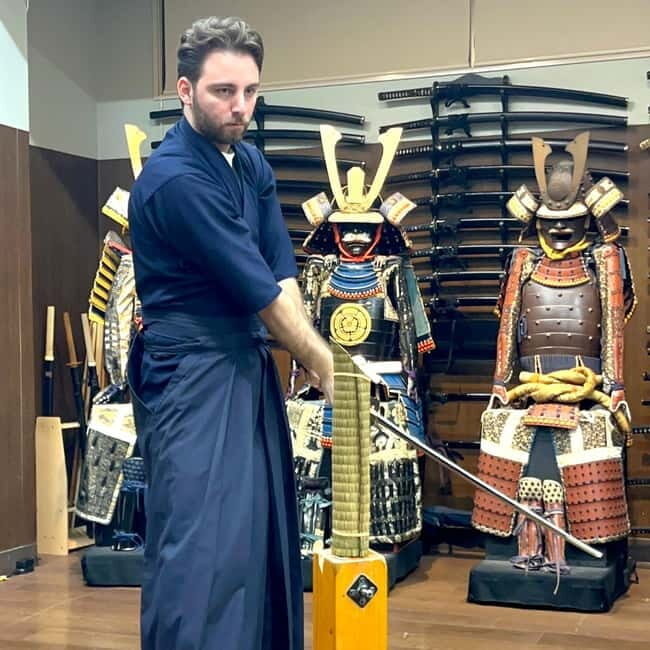
Before you touch the sword, you’re guided through the mental side: greetings and mental unity. This is the part that tends to feel strange if you’re used to casual tours, but that’s also why it’s valuable.
You’ll do practice focused on alignment and readiness, then move into the ritual that comes before technique. In other words, you’re not only training arms and hands. You’re training attention, timing, and calm.
You’ll get a clear lead-in to what comes next, so the session doesn’t turn into “watch this, then do whatever.” Instead, you learn what each step is supposed to do, and your practice has a purpose.
Sword Basics: Learning the Japanese Sword Without Guesswork
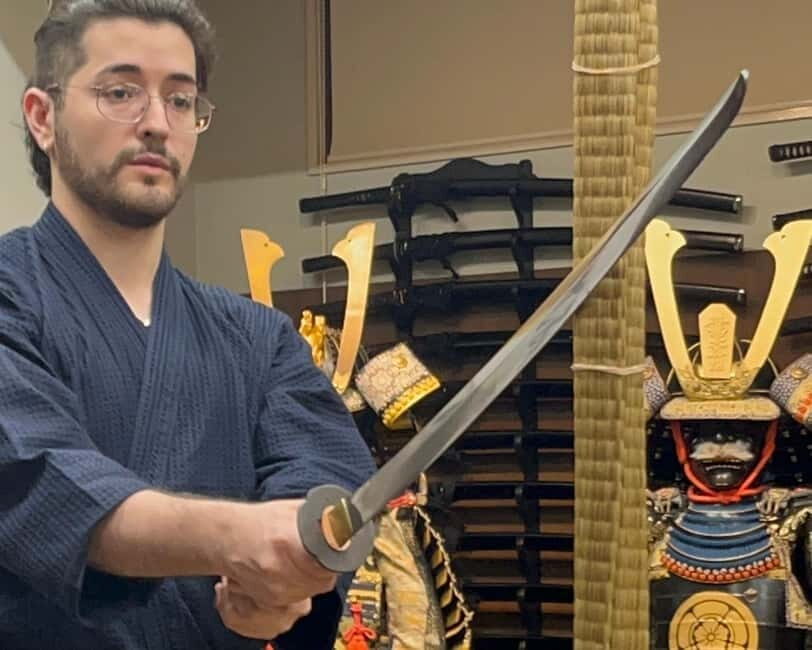
Next comes the explanation phase. You’ll receive an overview of the Japanese sword and how it fits into the practice. Then you’ll practice swinging the sword.
This is where the session becomes useful even if you’ve never held a sword before. You don’t start at full cutting power. You start with motion practice, with the teacher steering you toward safer, cleaner movement.
You’ll also see an instructor demonstration. Watching the teacher first matters because it gives your brain a model to copy. And since the teacher is teaching Battoushi Do, you’ll understand the intent behind the movements, not just the mechanics.
At this point, you should pay attention to pacing. In iaido and related cutting disciplines, timing is part of the craft. If you rush, your form usually follows. If you slow down, you tend to control your cut better.
The Real Blade Moment: Over-100-Year Sword and a Focused Demo
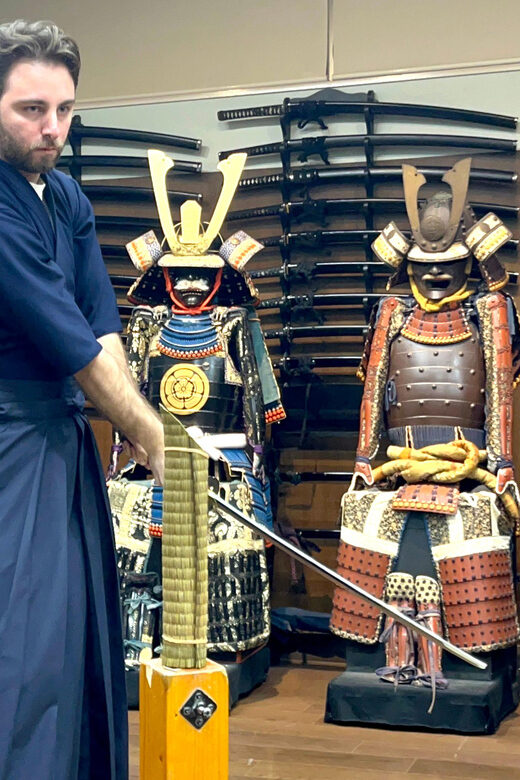
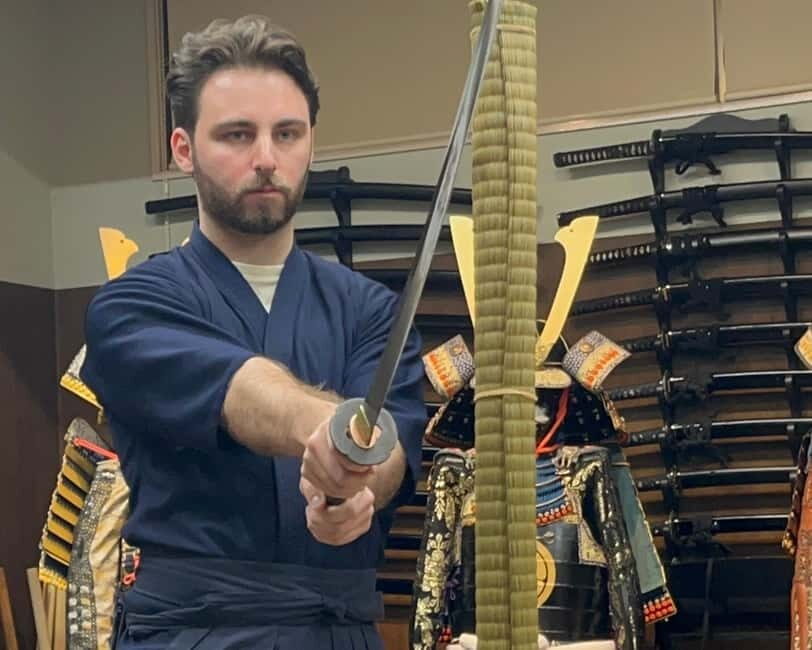
Here’s the big emotional moment: you’ll use real swords, not just plastic props. Your kit includes an imitation sword for practice, plus the chance to use a real Japanese sword said to be more than 100 years old.
That age detail is more than trivia. A sword with that kind of history tends to make people careful, because you feel the weight of what you’re handling. Even if you’ve seen swords in museums, cutting practice is different: the blade is in your hands, and your form becomes the whole point.
The instructor demonstration is again an important guidepost before you cut. You’re not just being told to copy. You’re being shown the flow, and then you’re guided to follow it.
If you’re the type who likes rules, this part will suit you. The teacher-led approach gives you a structure to work within, which helps a lot when your adrenaline kicks in.
Cutting Tatami Twice, at Your Timing
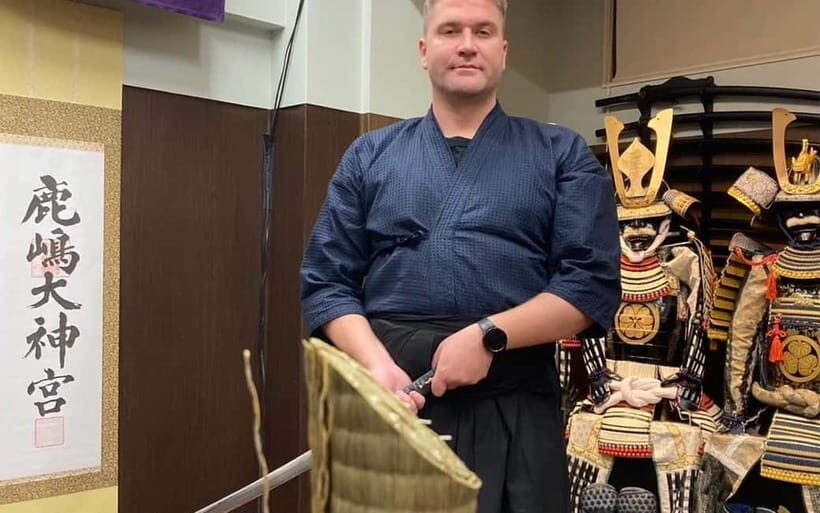
Now you get to the heart of it: cutting. You’ll follow the instructor’s instructions to cut rolled tatami mats.
The session has two rounds of cutting. You cut the tatami twice, and you can cut at the timing you want. That choice is important. It means you’re practicing more than strength. You’re practicing controlled decision and timing.
Before each cut, you’ll be reminded what you’re aiming for. After all the explanation and swinging practice, this step is where the training clicks into something physical and real.
You can also take pictures and videos of yourself cutting if you wish. The photos and clips usually help you see what you did right or wrong, and that’s handy if you want to improve your form on a next try someday.
After your cutting, there’s another sequence of greetings and mental unification. It acts like a bookend. You’re not just ending with noise and chaos. You close the session the way you started it.
Finally, you’ll take a commemorative photo. It’s a simple way to mark the fact that you completed a real, structured practice moment, not a random activity.






What’s Actually Included in the $93 Price
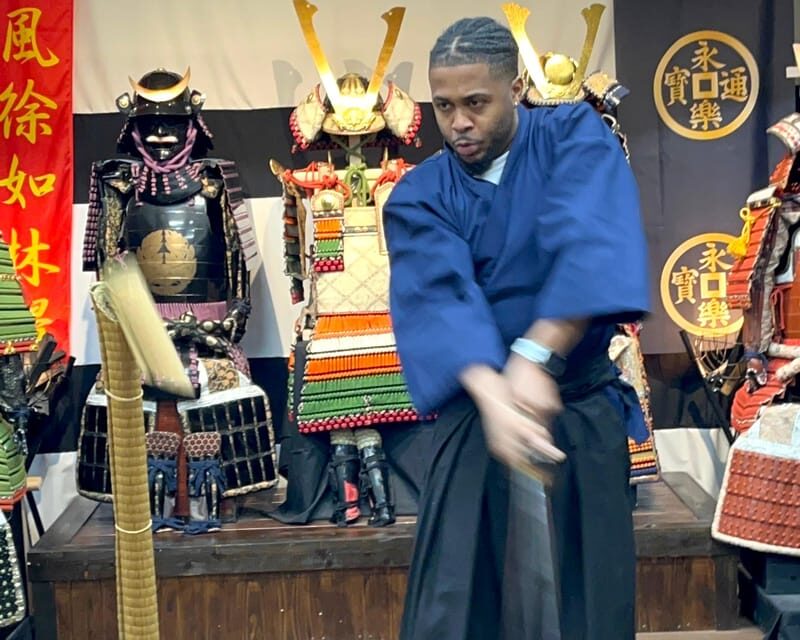
At $93 per person, you’re paying for more than the sword. You’re paying for coaching, equipment, and the full practice format.
Here’s what’s included:
- Instructor guidance
- Sword explanation
- Sword practice
- Practice suit
- Practice sword
- Instructor demonstration
- Rolled tatami mats
- Imitation sword
- Real sword
- Photography and video recording
That matters for value. Many experiences focus only on the “cool moment” and leave you on your own for the learning part. Here, you get structured instruction and a teacher demonstration, plus the real-and-imitation sword setup so you can practice safely and then graduate to the real blade.
Also, the costume and practice suit being included is a quiet win. You don’t need to plan what to wear beyond being ready for the session.
Based on the session format and what’s included, this price feels more like paying for instruction and equipment than paying for a single stunt.
Languages, Teacher Style, and How You Can Get the Most Out of It
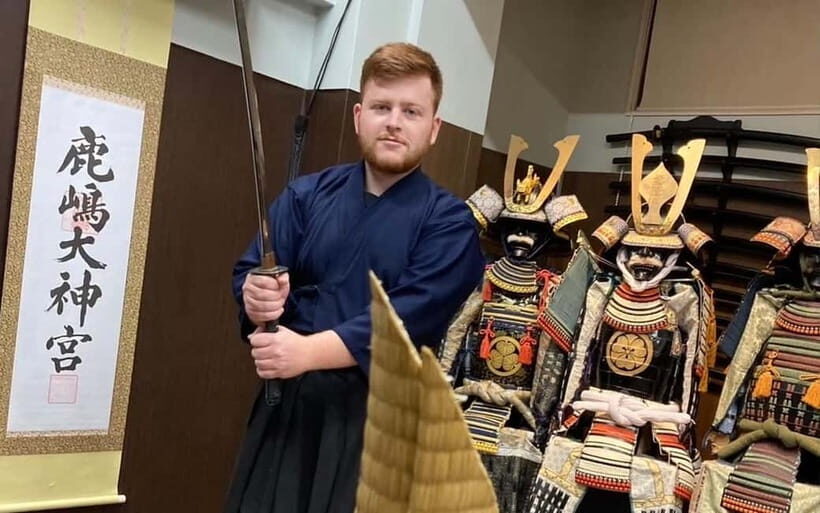
The session runs in English and Japanese. That’s a big deal if you’re traveling solo or your Japanese is basic. You’ll be able to follow the core steps without guessing.
The instructor is a real teacher of Battoushi Do, and you’ll have a chance to ask questions after the practice. If something felt confusing, use that moment. Don’t wait until you’re back on the train.
A practical tip: during the sword explanation and the swing practice, listen for the “why,” not only the “how.” When you understand the reason for a movement, your cutting tends to improve because you’re less likely to copy the surface and more likely to copy the intent.
And if you’re taking photos or video, decide early. You don’t want to fumble with your phone mid-cut. Get your settings ready during the practice parts where you’re not in the cutting line.
Who This Is Best For (and Who Should Skip It)
This is a strong choice if you:
- want hands-on instruction, not a spectator experience
- enjoy disciplined activities with ritual and structure
- like the idea of cutting tatami mats with teacher guidance
- want to experience the samurai practice feel, including costume and mental unity
It’s also a good fit for travelers who like “guided performance meets real training.” You get demonstrations, then you do the steps yourself under supervision.
Skip it if you’re under 14, pregnant, wheelchair users, or visually impaired, since it’s not listed as suitable for those situations. If you have mobility limits or concerns about physical practice, it’s worth planning something else.
Quick practical flow: what you’ll do, in order
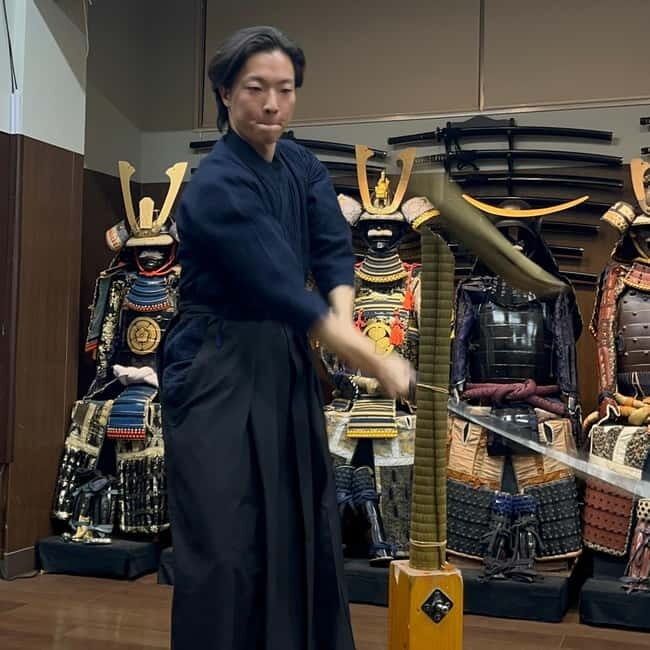
Expect a session that moves like this:
- Change into traditional iaido clothing
- Do greetings and mental unity
- Get an explanation of the Japanese sword
- Practice swinging the sword
- Watch the instructor demonstrate cutting
- Cut rolled tatami mats twice following instructions
- Cut at the timing you want
- Take photos and video if you want
- Watch the teacher’s performance again
- Do greetings and mental unification again
- Take a commemorative photo
- Ask questions if you wish
That order matters. It’s built to keep your learning from jumping around.
Should You Book Samurai Sword Cutting in Honshu?
If you want a taste of samurai training with real equipment and real instruction, I’d book it. The strongest reasons are simple: you learn the method, and you get the chance to use a real sword with a teacher guiding the process.
The value comes from the full package: costume, instruction, imitation sword practice, rolled tatami cutting, and photos/video. For a flat price, you’re not just paying to swing once. You’re paying for a guided progression from mindset to movement to cutting.
The only reason to hesitate is the fit. If you need accessibility accommodations or you’re not comfortable with physically active practice, this won’t be your best choice. For most adults who can follow instructions, it’s a memorable, hands-on experience that feels authentic and respectful of the tradition.
FAQ
Where is the meeting point for this experience?
Start by searching Samurai Theater Tokyo in Google Maps. The activity ends back at the meeting point.
How much does it cost?
The price is listed as $93 per person.
What languages are available during the session?
The experience is available in English and Japanese.
What will I be doing during the practice?
You’ll change into iaido clothing, do greetings and mental unity, receive a sword explanation, practice swinging, watch the instructor demonstrate cutting, and cut rolled tatami mats twice following the teacher’s instructions.
Do I get to use real swords?
Yes. The experience includes an imitation sword for practice and also provides a real Japanese sword that is more than 100 years old.
Is photography and video allowed?
Yes. You can take pictures and videos of yourself cutting tatami if you wish, and photography/video recording is also included.
Is it suitable for children?
No. It’s not suitable for children under 14.
Is it suitable for wheelchair users or visually impaired people?
No. It’s not suitable for wheelchair users or visually impaired people.
What is the cancellation policy?
Cancel up to 24 hours in advance for a full refund.