REVIEW · KYOTO
Simple Plan with Maiko
Book on GetYourGuide →Operated by B.B.Advisors Inc. AN KYOTO · Bookable on GetYourGuide
Meeting a Maiko feels like stepping sideways in time. This 90-minute program in Kyoto brings you close to Maiko culture with a tea ceremony demonstration, direct Q&A, and a dance show right in front of you.
What I like most is the chance to ask questions straight to Maiko, not just watch from a distance. The second win: you get a close photo and even a lucky charm (Senjyafuda) as a souvenir. One thing to consider is seating and room layout—if you’re toward the back, it can be harder to see the dance clearly, so the extra seat options are worth thinking about.
In This Review
- Key points worth your attention
- A close-up Kyoto meet with Maiko (and why this matters)
- The 90-minute flow: tea, questions, photos, dance, games
- 1) Greeting and tea ceremony demonstration
- 2) Q&A session with Maiko
- 3) Photo opportunity up close
- 4) Dance performance: seasons, love stories, everyday life
- 5) Interactive game with Maiko
- 6) Maiko leaves, then chatting time
- Tea ceremony demonstration: what you’ll learn, and what you won’t
- Q&A with Maiko: how to get the most from your questions
- Photo time and Senjyafuda: the souvenir with meaning
- Where you sit affects what you see (so choose smart)
- Price and value: $38 is a fair deal, with one caveat
- Getting there near Gojo Station (and what to plan for)
- Who should book this Maiko experience?
- Should you book Simple Plan with Maiko?
- FAQ
- How long is the Simple Plan with Maiko?
- Where do I meet the group?
- Does this program include making matcha?
- Can I ask Maiko questions during the event?
- What is the seating situation and are there upgrades?
- Is English available?
Key points worth your attention
- Direct Q&A with Maiko: you can ask questions and learn how her daily life works
- Tea ceremony etiquette, without the DIY matcha: you watch the proper steps and manners
- Close photo + Senjyafuda: you’re not just a spectator, you leave with a meaningful gift
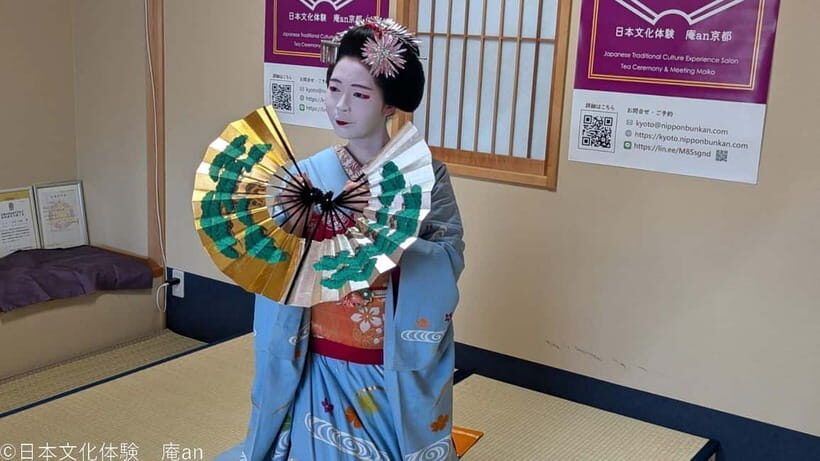
- Two seasonal or story-themed dances: short, focused, and designed for audience viewing
- Interactive game with Maiko: cheering along is part of the fun, even if you don’t play
- Venue is in a building, not an ochaya: relaxed atmosphere, but don’t expect a traditional house setting
A close-up Kyoto meet with Maiko (and why this matters)
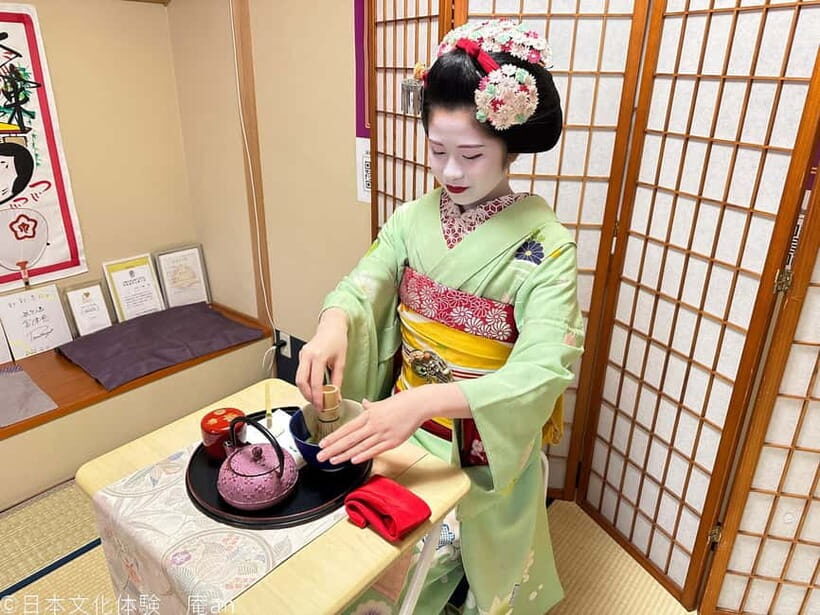
Kyoto has plenty of cultural performances, but this one is built around interaction. You’re not just watching kimono and choreography from across a room. You’re given structured chances to connect—through questions, a photo moment, and a game.
That matters because Maiko culture isn’t only about what you see at a show. It’s also about etiquette, timing, and the way she moves through everyday ritual. In this format, you get a guided path: tea ceremony demonstration first, then conversation, then performance. It’s a simple plan that still feels personal.
Also, keep your expectations realistic: this isn’t described as an ochaya (a traditional tea house). The experience takes place in a building, with a relaxed setup and friendly staff. That makes it easier for first-timers. It also means you’re trading “old-house romance” for clear access and a smoother experience.
You can also read our reviews of more tours and experiences in Kyoto.



The 90-minute flow: tea, questions, photos, dance, games
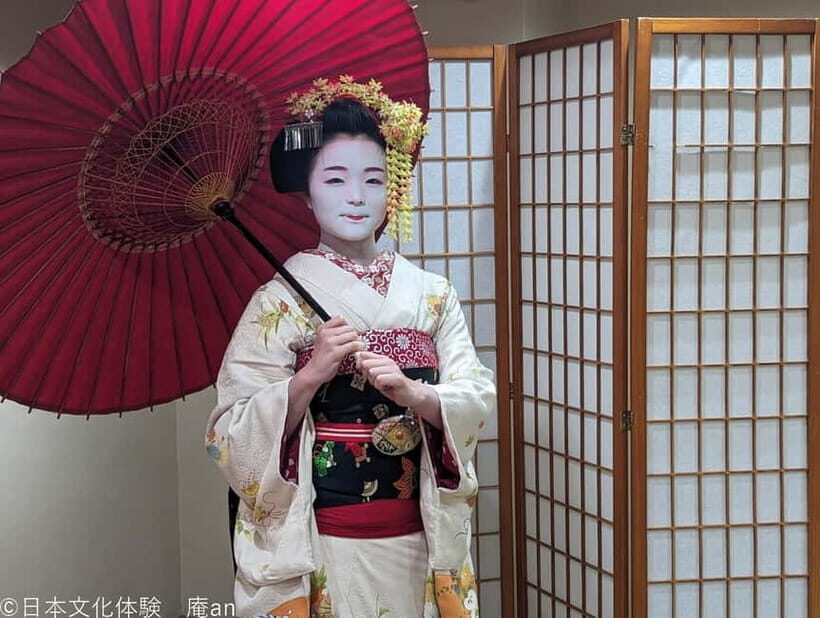
The schedule is tight and easy to follow. Plan on about 90 minutes total from start to room departure, and treat it like an evening of curated cultural time rather than an open-ended tour.
Here’s what the program typically does, in order:
1) Greeting and tea ceremony demonstration
You start with a greeting from Maiko. Then you watch a tea ceremony demonstration focused on graceful movement and proper etiquette. It’s not billed as a full hands-on tea-making class. You’ll observe how the ceremony is presented, which is perfect if your main goal is understanding the culture quickly.
If you want to make your own tea, the info provided points you to a different option (Tea Ceremony with Maiko Premium). The simple plan keeps costs lower and keeps you moving.
2) Q&A session with Maiko
This is the centerpiece. After the demonstration, you get a question-and-answer session where you can ask Maiko about her world. The program is set up for translation support as much as possible, and the host is there to help the group feel included.
This is where the experience becomes more than a performance. You’re learning context: what her routine looks like, what certain traditions mean, and how she thinks about being a living part of the culture.
3) Photo opportunity up close
Next comes the photo moment. You’ll take a commemorative photo beside Maiko, with time designed to get you close without it turning into a chaotic line.
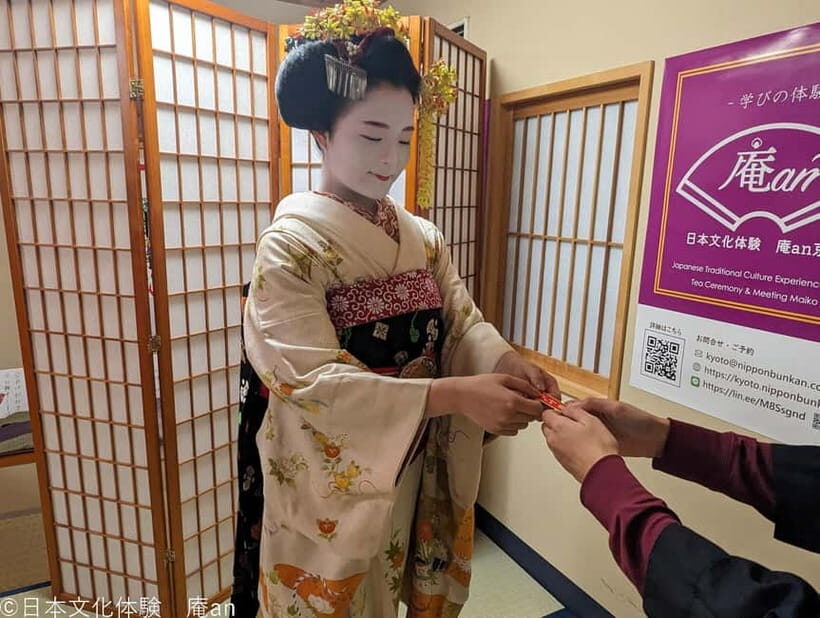
As a special gift, Maiko presents you with a Senjyafuda—a lucky charm. It’s small, but it’s the kind of souvenir that feels tied to the moment, not mass-produced.






4) Dance performance: seasons, love stories, everyday life
Then you watch two traditional dances. The description frames them as expressions of seasons, love stories, or everyday life. Even without long explanations, the structure helps: you’re seeing multiple moods and styles rather than one dance stretched too long.
The practical note: room arrangement matters. In some setups, people toward the back may have a tougher time seeing clearly. If you care a lot about viewing details, it’s worth considering the seat upgrades.
5) Interactive game with Maiko
Last major segment: an interactive game. Maiko often play simple games with guests as part of hospitality. Volunteers may join, but watching is still described as fun.
This part usually works best if you go in with a light attitude. Don’t wait for the game to be perfect English entertainment. Treat it like a cultural “play along” moment where the goal is cheer and participation, not performance polish.
6) Maiko leaves, then chatting time
The program ends after Maiko leaves the room, and you’ll have some short chatting time before departing. It’s not presented as an open meet-and-greet for hours, so if you want to ask one last question, watch for when the informal time begins.
Tea ceremony demonstration: what you’ll learn, and what you won’t
This plan includes watching the ceremony steps, not making the tea yourself. That sounds basic, but it’s actually a smart value choice.
If you’ve never seen a tea ceremony before, a well-paced demonstration gives you the etiquette “grammar”:
- how actions look when done with intention
- the pacing and manners built into the ceremony
- how the ceremony is presented to an audience in a respectful way
If you have already done a tea ceremony earlier in Kyoto, the simple plan still has plenty of payoff because the Q&A, dance, and games are where you learn something new.
What you should be aware of: the simple plan doesn’t position itself as a full hospitality package with extra food/drink included. There are optional add-ons like a snack and drink for 500 JPY. If your expectation is that tea and a sweet are automatically included, read the program details carefully or be ready to grab the optional add-on.
Q&A with Maiko: how to get the most from your questions
The biggest reason to pick this program is that you can ask questions directly. But you’ll get more out of it if you prepare.
I suggest you think in three categories:
- Her daily routine: what training or practice looks like, and what her day feels like
- Tradition and meaning: what specific customs represent, not just what they are
- Practical life as a Maiko: what feels challenging, what feels exciting, and what people misunderstand
Because translation is provided as much as possible, it helps to keep questions short and clear. If you ask something broad, the host may need time to interpret and shape the answer.
And one more tip: listen closely during the demonstration and greeting. The Q&A often feels like it builds on those early moments. If you noticed a detail in posture, movement, or etiquette, ask about that. You’ll get a more specific answer.
Photo time and Senjyafuda: the souvenir with meaning
A “close photo” can sometimes feel like a quick snapshot. Here, the program is structured so you take a commemorative photo right beside Maiko, then receive Senjyafuda, a lucky charm.
This is one of those details that turns a performance into a memory you can carry. When the gift is tied to the moment, it doesn’t feel like a souvenir you bought while hungry.
If you want great photos, arrive ready to follow directions. The time window is part of a tight 90-minute program, so you’ll get the best results by being relaxed and moving when they guide you.
Where you sit affects what you see (so choose smart)
This is where the experience can feel different depending on where you land in the room.
The program offers optional seating upgrades:
- SS seat (First row): 3,300 JPY
- S2 seat (Second row): 2,200 JPY
- S3 seat (Third row): 1,100 JPY
If you’re sensitive to viewing angles—especially during dance—this is worth serious consideration. Some feedback in the supplied information points to viewing obstacles from tables or being in the back row.
You’re not required to buy the upgrade. But if your goal is to see the dance artistry clearly, paying extra for front/middle seating can be the difference between polite viewing and really appreciating the movement.
Price and value: $38 is a fair deal, with one caveat
At $38 per person for 90 minutes, this program is priced like a cultural experience that aims to be accessible—not a premium ochaya-style night.
The value comes from what you get in one package:
- a tea ceremony demonstration
- direct Q&A with Maiko
- close photo time
- dance performance
- a game interaction
That’s a lot for one session.
The caveat is simple: the simple plan does not include matcha-making, and it may not include extra food/drink unless you add it. If you’re expecting a full meal vibe, you’ll want to plan on eating elsewhere. If you’re expecting a full tea ceremony class with DIY preparation, choose the premium tea option instead.
Also, the room setup isn’t described as a traditional Japanese house. That doesn’t make it worse—just different. The trade-off is easier access and a less formal atmosphere.
Getting there near Gojo Station (and what to plan for)
Conveniently, the meeting point is close to public transit: about a 1-minute walk from Exit 1 of Subway Karasuma Line Gojo Station.
A practical note for the building venue: there is no elevator, and you’ll take stairs to reach the rooms. It’s described as wheelchair accessible, but because stairs are involved to reach each venue, you should plan accordingly if mobility is a concern.
Operation hours run 10:00 to 17:00. If your reservation comes in after 17:00, it’s processed next day. So if you’re in Kyoto on a tight schedule, book early.
Language-wise, Japanese is the main language, and English translation is provided as much as possible. If you want to add specific translation support, the info says you should contact the team.
One more contingency: depending on the situation, you may be invited to meet Geiko instead of Maiko. It’s not framed as a problem—just a possible swap. If you’re specifically chasing Maiko-only, keep that in mind when you book.
Who should book this Maiko experience?
This is a great fit if:
- you want Maiko culture in one concentrated 90-minute session
- you care more about conversation and connection than hours of formal instruction
- you’re okay with a building venue as long as the interaction is real
- you want a structured way to understand etiquette, then see performance
It may not be the best match if:
- you require hands-on tea making (you’ll want the premium tea option)
- you’re very picky about dance sightlines and don’t want to consider seat upgrades
- you expect a full meal or snack included by default
Should you book Simple Plan with Maiko?
Yes—if your goal is to meet Maiko, ask questions, watch dance, and leave with a meaningful souvenir, this simple plan is a strong value. The Q&A is the star, and the program is paced so first-timers aren’t lost.
Before you book, do two quick checks:
1) Decide if you want to upgrade seats for better visibility during dance.
2) Confirm your expectations about tea making. The simple plan is demonstration-focused, not DIY matcha.
If you line those up, you’ll get a respectful, close-up cultural experience without paying for a full premium night.
FAQ
How long is the Simple Plan with Maiko?
The experience runs for about 90 minutes.
Where do I meet the group?
You meet about 1 minute on foot from Exit 1 of Subway Karasuma Line Gojo Station. The store entrance faces Gojo-dori.
Does this program include making matcha?
No. The simple plan includes a tea ceremony demonstration, and the option to make your own tea is part of a different, premium program.
Can I ask Maiko questions during the event?
Yes. There is a question-and-answer session where you can ask questions directly.
What is the seating situation and are there upgrades?
The venue is in a building, and the room setup can affect sightlines. Seat upgrades are available: SS (first row), S2 (second row), and S3 (third row).
Is English available?
English translation is provided as much as possible. If you want to add English support, you should contact the team in advance.
If you tell me your travel dates and whether you’re prioritizing photos or dance viewing, I can help you decide if the seat upgrade is worth it for your style of trip.