REVIEW · TOKYO
Tokyo: Discover the Art of Kintsugi in Ginza
Book on GetYourGuide →Operated by AGARTA Inc. · Bookable on GetYourGuide
A broken plate turns into art. In this 90-minute Kintsugi workshop near Ginza Station, I love the hands-on guidance and the chance to create a take-home souvenir in one sitting. The trade-off is the process uses synthetic lacquer instead of the traditional month-long natural method.
You meet at Cafe AOU Ginza forest on the ground level of the Daiwa Ginza Building, then settle into a private room not far from the shopping frenzy outside. Instructors such as Tatsu and Teki Sensei walk you through the steps, mix in practical tips, and help you finish with a repaired ceramic you can safely bring home in packed form.
In This Review
- Key things that make this Ginza Kintsugi workshop worth your time
- Kintsugi in Ginza: what this 90-minute class actually delivers
- Where to meet at Cafe AOU Ginza forest (and why that location helps)
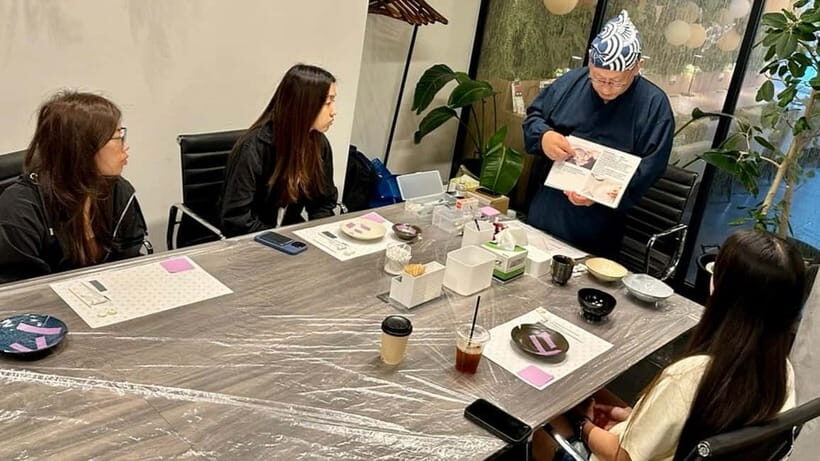
- Inside the cozy workshop: small group energy and the instructor vibe
- Your repair kit: ceramic, synthetic lacquer, and metallic powder
- The actual flow of the workshop (what happens during your 90 minutes)
- Take-home souvenir reality check: what to do (and not do) with your repaired ceramic
- Price and value: is $75 reasonable for a Tokyo Kintsugi class?
- Who this Ginza workshop is best for (and who should skip it)
- Tips to get the most out of your Kintsugi session
- Should you book this Ginza Kintsugi workshop?
- FAQ
- How long is the Kintsugi workshop near Ginza Station?
- Where exactly do I meet for the Tokyo Kintsugi class?
- What materials and a ceramic piece are provided?
- Is this workshop using traditional gold Kintsugi?
- Can I use the repaired ceramic in the microwave?
- Is the class small, and what languages are offered?
- What are the cancellation and payment options?
Key things that make this Ginza Kintsugi workshop worth your time
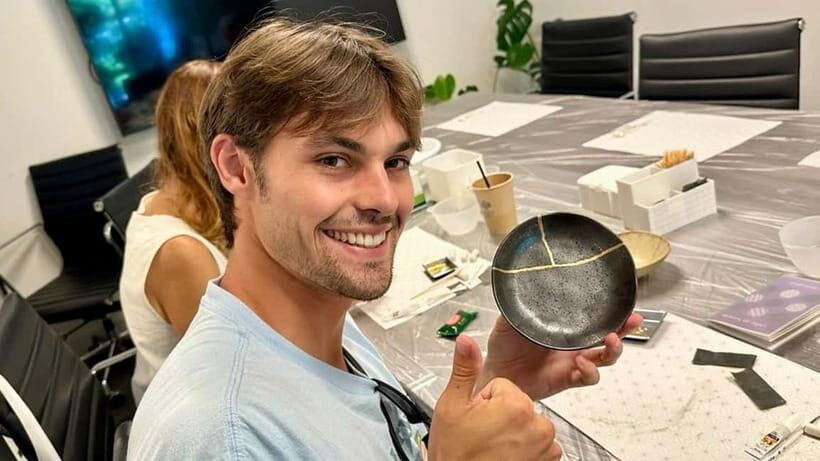
- 90 minutes, not a month: you complete the repair and take it home the same day using synthetic lacquer and metallic powder
- Small group (max 8): you get real attention while you work, not just a quick demo
- A cozy private room by Ginza Station: convenient for your day, without losing the calm of a focused class
- You start with a ceramic piece to restore: no hunting for supplies, just show up and create
- Packaging for luggage: they pack your repaired item so it stands a better chance on the trip home
Kintsugi in Ginza: what this 90-minute class actually delivers
Kintsugi is the Japanese art of repairing broken ceramics in a way that celebrates the break instead of hiding it. In this Ginza workshop, the big win is that you get the core experience without the long wait of traditional methods.
You’ll work directly on a ceramic piece during the session. The instructors guide you step-by-step, and the class is paced so you can complete your repair in the allotted time. That matters in Tokyo. You’re busy. Your time is money. This is a format built for real travel days.
One important detail before you commit: traditional authentic Kintsugi usually takes about a month to complete. This workshop speeds that up by using synthetic lacquer and a metallic powder substitute for gold, so you can finish and take your piece home within 90 minutes.
You can also read our reviews of more tours and experiences in Tokyo.



Where to meet at Cafe AOU Ginza forest (and why that location helps)
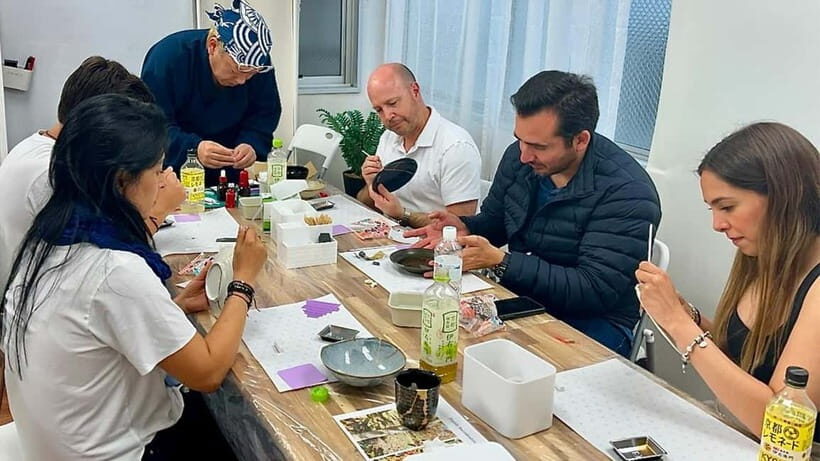
Meeting point is Cafe AOU Ginza forest, on the ground level of the Daiwa Ginza Building. It’s also described as about a three-minute walk from Ginza Station, which is exactly the kind of convenience I look for when I’m trying to fit a cultural class into a packed day.
There’s also a small logistics note to respect: the venue can change depending on availability and number of reservations. If that happens, you’ll get an email with updated location details one day before the workshop. It’s not common enough to panic about, but it’s worth watching your inbox the day prior.
No hotel pickup or drop-off is included. That’s fine. The location is designed for people who can handle a short walk and want to control their schedule.
Inside the cozy workshop: small group energy and the instructor vibe
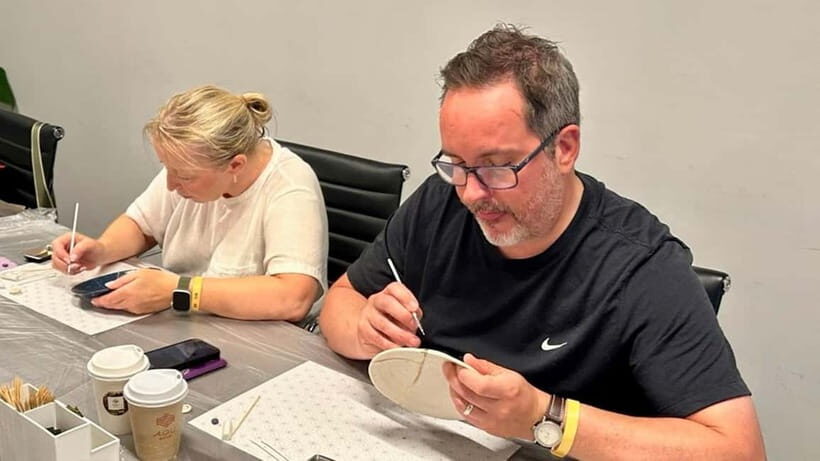
This class runs as a small group limited to 8 participants. That’s not just a comfort detail. It affects the whole experience. With fewer people, the instructor can correct technique, check your progress, and answer questions as you work.
You’re in a private room near Ginza’s busy streets, tucked away from the noise. That calm makes the workshop feel less like a “thing to do” and more like time you can use well. Kintsugi is tactile and detail-focused. If you’re trying to learn it, you want a setting where you can concentrate.
The tone of instruction seems to hit a sweet spot: practical steps plus conversation. Multiple instructors are associated with this experience, including Tatsu and Teki Sensei. You can expect storytelling and guidance, not just a silent worksheet and a timer.
Your repair kit: ceramic, synthetic lacquer, and metallic powder
You don’t show up empty-handed. The workshop includes a ceramic piece to restore, plus all the necessary tools and materials. That’s a major value point because buying specialty supplies in Tokyo can be a pain, and hunting down the right materials for a short class is not what you want on vacation.
Here’s the key technical difference from traditional Kintsugi: the workshop uses synthetic lacquer instead of natural lacquer, and metallic powder instead of real gold. That’s why the whole process can finish within 90 minutes. It also means your results are made for a travel-friendly timeline, not a long curing schedule.
In your session, you’ll follow clear, step-by-step instructions to apply the lacquer and build up the repaired lines in a Kintsugi style. You’re focused on the creative process, and the class provides what you need so you can concentrate on doing the work well.
If you’re lucky (or maybe if it’s the day’s setup), you may also get a choice of options for what you repair. One common format described is choosing between two colored cracked plates.
The actual flow of the workshop (what happens during your 90 minutes)
You can think of this class as three phases: start with the idea, repair the piece, then finish with take-home care.
First, you get an introduction to what Kintsugi means aesthetically. The goal is more than “fix the crack.” It’s about treating breakage as part of the object’s story. You’ll also get a clear explanation of how the repair is done using the workshop’s materials.
Second, you get hands-on. This is where the class earns its high marks. You work directly on your assigned ceramic piece, guided through the steps and kept on track by the instructor. Because the group is small, you can get help if you get stuck rather than waiting your turn.
Third, you finish and leave with your repaired ceramic. One of the most praised parts of this experience is that your piece is packed up for travel so you can transport it safely home. That sounds minor until you’ve tried to move fragile art through airport chaos.
You’ll also receive a complimentary soft drink during the workshop. It’s a small comfort that helps you settle in and focus on the making.






Take-home souvenir reality check: what to do (and not do) with your repaired ceramic
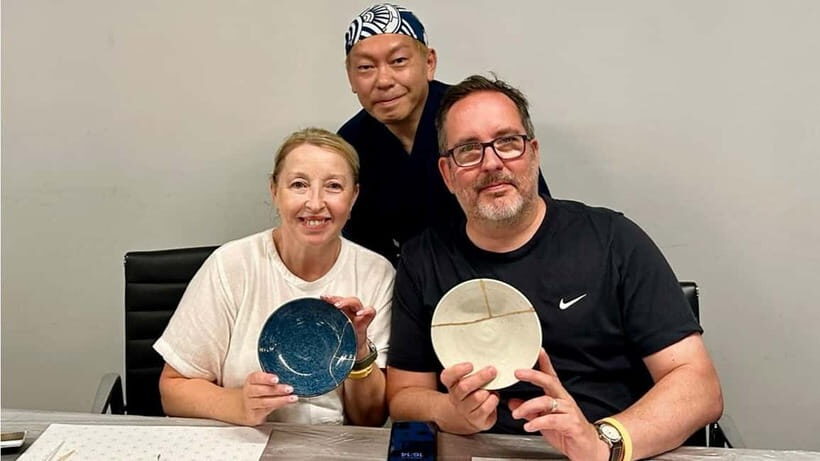
This is one of the best reasons to book. Most cultural classes in Tokyo end with a photo. This ends with an object that carries meaning because you made it.
That said, treat it like a repaired ceramic art piece, not a normal dish you toss into daily life.
Two big care rules are spelled out:
- Use the restored piece for decorative purposes only.
- It’s not microwave-safe, and there’s a risk of ignition.
So if you’re dreaming of using it every day at brunch, adjust that plan now. Keep it as a display item, a desk accent, or a meaningful gift.
Price and value: is $75 reasonable for a Tokyo Kintsugi class?
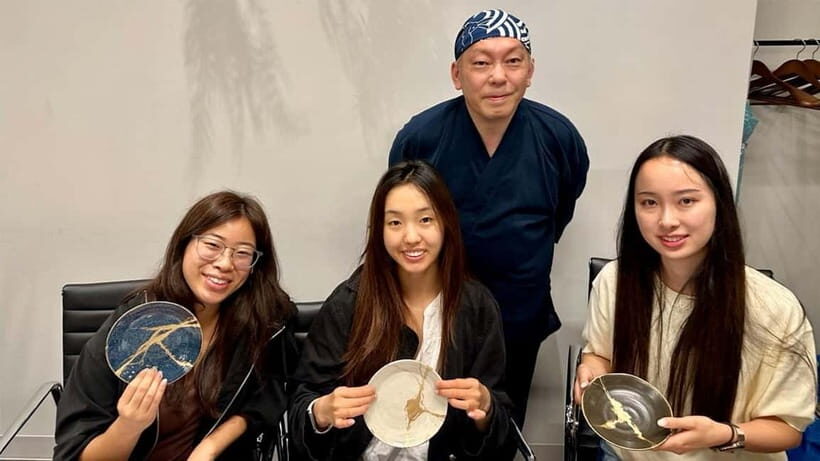
At $75 per person for a 90-minute hands-on workshop, the value comes from what’s included, not the hourly rate.
You’re paying for:
- the instructor’s guidance through the process
- all tools and materials
- a ceramic piece to repair
- the time to complete the repair in one session (thanks to synthetic lacquer)
- a complimentary soft drink
- and, based on actual experiences, protective packaging so the piece survives your journey
The main trade-off versus traditional Kintsugi is speed. Traditional methods take about a month, while this one is built for visitors who want a finished souvenir today. If you value time and want an authentic-feeling process without the waiting, this price makes sense.
If you’re the kind of person who wants only natural lacquer and traditional curing timelines, you might find this less “pure.” But for most travelers, it’s the right compromise: you still learn the philosophy, you still make something one-of-a-kind, and you still get to take it home.
Who this Ginza workshop is best for (and who should skip it)
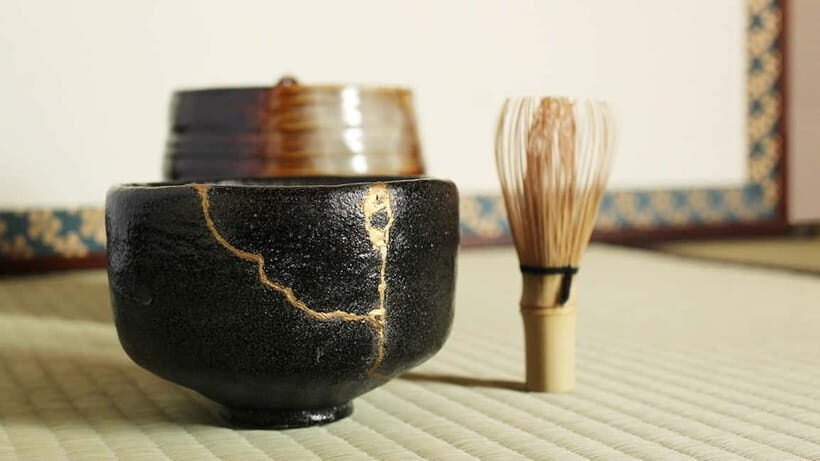
This experience is a good match if you:
- want a hands-on Tokyo activity that’s not just watching
- like crafts and the idea of learning a Japanese aesthetic in a practical way
- want a meaningful take-home object from Ginza without long travel out of the city center
- prefer a small group setting where the instructor can help in real time
On the other hand, it may not be a fit if you’re:
- traveling with children under 10
- dealing with mobility impairments
- coming down with a cold
- bringing a baby under 1
- hearing-impaired
If you fall into any of those categories, it’s best to look for a different kind of Tokyo cultural experience.
Tips to get the most out of your Kintsugi session
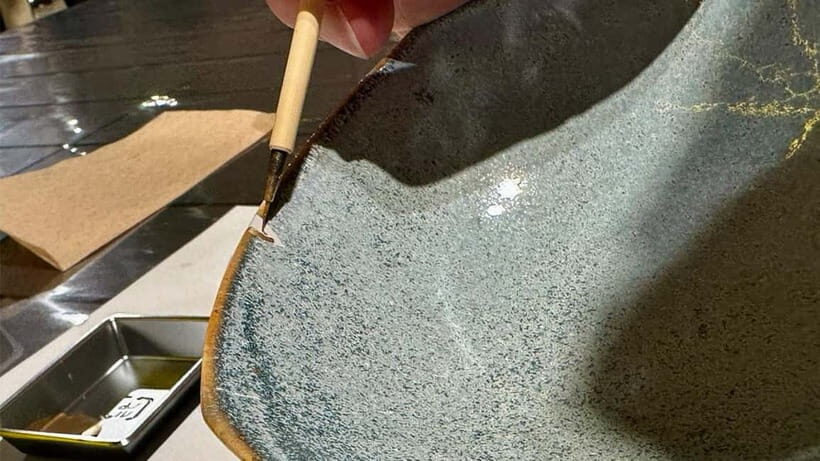
Kintsugi rewards patience. You don’t need to be an artist, but you do need to give the process your attention for the full 90 minutes.
A few practical ideas:
- Wear clothes you don’t mind getting a little messy. This is a hands-on lacquer craft.
- Plan your day with a little breathing room afterward. Your piece is fragile and you’ll want to handle it carefully.
- Treat your repaired ceramic as decor only. The microwave rule matters more than you’d think once you see how fragile things can be.
- Double-check the meeting point day-of. If the venue changes, you’ll get an email one day before, so keep an eye on that message.
Should you book this Ginza Kintsugi workshop?
If you want a hands-on cultural class with a real finish, I’d book it. The private-room location near Ginza Station makes it easy to fit into your day. The small group size helps you actually learn the process. And the ability to take your repaired ceramic home the same day is the kind of practical win that makes the experience stick.
I’d hesitate only if you’re chasing the long, month-long traditional curing method with natural lacquer and real gold. This workshop is built for visitors, and it uses synthetic lacquer and metallic powder to get you a complete souvenir in 90 minutes.
If that compromise fits your travel style, this is one of the more memorable ways to spend a Tokyo afternoon.
FAQ
How long is the Kintsugi workshop near Ginza Station?
The workshop duration is 90 minutes.
Where exactly do I meet for the Tokyo Kintsugi class?
The meeting point is Cafe AOU Ginza forest, located on the ground level of the Daiwa Ginza Building.
What materials and a ceramic piece are provided?
All necessary tools and materials are included, along with a ceramic piece for you to restore. You also get expert guidance from the instructor.
Is this workshop using traditional gold Kintsugi?
No. Traditionally, authentic Kintsugi takes about a month, but this workshop uses synthetic lacquer instead of natural lacquer and metallic powder as a substitute for gold so you can finish within 90 minutes.
Can I use the repaired ceramic in the microwave?
No. The repaired item is not microwave-safe due to the risk of ignition. It’s recommended for decorative purposes only.
Is the class small, and what languages are offered?
The group is limited to 8 participants. The instructor works in English and Japanese.
What are the cancellation and payment options?
You can cancel up to 24 hours in advance for a full refund. There is also a reserve now & pay later option, so you can book your spot without paying today.