REVIEW · TOKYO
Tokyo: Edo Castle Ruins & Imperial Palace East Garden Tour
Book on GetYourGuide →Operated by DeepExperience, Inc. · Bookable on GetYourGuide
A big castle story, told right where it happened. This tour strings together the Edo Castle remnants and the Imperial Palace East Gardens into a clear, guided route through gates, moats, and key spots tied to shoguns and emperors. I like that it’s structured but not rushed, and I also like the mix of practical sightseeing plus the meanings behind what you’re seeing, from the Wadakura Fountain to the Ninomaru Garden koi pond. One thing to keep in mind: you can’t enter the inner palace grounds or palace buildings, so if you’re expecting interior access, your focus will be the gardens and historical ruins instead.
If you want someone to make the place click, the guides here can do that. In the reviews, guides like Mari san and Isao are praised for being friendly, answering questions patiently, and sharing history in an engaging way. My only caution is that a few people expected more stories focused tightly on the palace itself; if you just want a casual stroll, you might feel you could do parts on your own.
In This Review
- Key Things I’d Actually Pay Attention To
- First, Know What This Tour Really Is
- Meeting Point: How to Start Without Stress
- Stop-by-Stop: What You’ll See and Why It Matters
- 1) Wadakura Free Rest Area and the Story Starter
- 2) Wadakura Moat: Learning “Defense” Without a Military Lesson
- 3) Otemon Gate: The Grand Gate Moment
- 4) Ote-San’no Gate Ruins and the Guardhouse Culture
- 5) Edo Castle Ruins and the Honmaru Area
- 6) Tenshu-dai: Panoramic Views That Put History in Context
- 7) 都道府県の木 and 諏訪の茶屋: Smaller Stops, Cultural Texture
- 8) Imperial Palace East Gardens: The Open-Garden Version of Palace Life
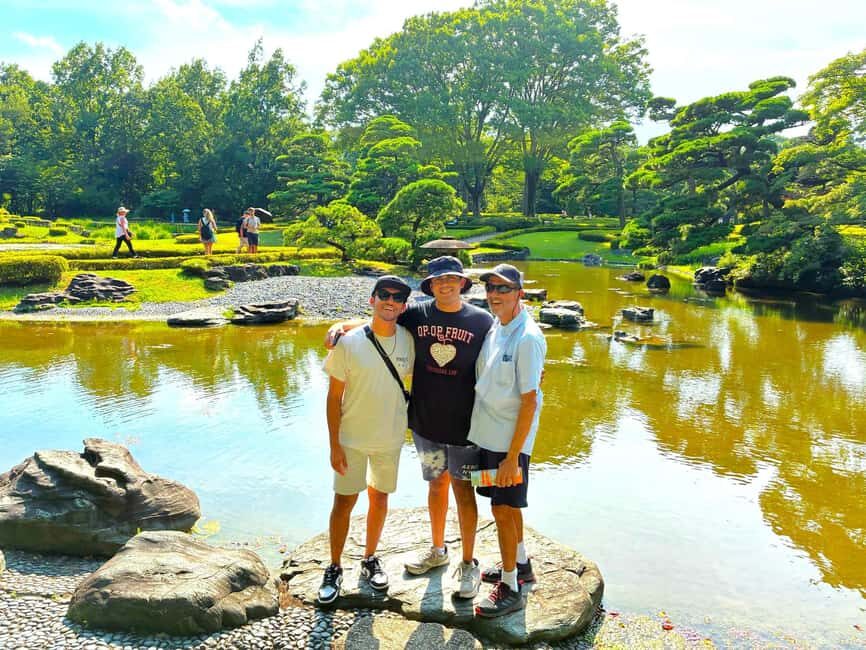
- 9) Ninomaru Garden: Koi Fish and a Real Mental Reset
- Price and Value: What $37 Buys You in Tokyo
- Who This Tour Suits Best
- Tips to Get More Out of the Walk
- Should You Book It?
- FAQ
- How long is the tour?
- Where do I meet the guide?
- What language is the tour guide?
- What’s included in the price?
- What’s not included?
- Can I enter the inner grounds or palace buildings?
- What should I bring?
- What are the rules for photography and smoking?
- Is there free cancellation?
- Is this tour suitable for everyone?
Key Things I’d Actually Pay Attention To
- Wadakura Fountain: a royal-wedding commemorative stop that sets the tone early.
- Otemon Gate and gate ruins: you’ll learn what defensive architecture was trying to prevent.
- Doshin Bansho and Hyakunin Bansho: guardhouse points that explain how order worked in the castle.
- Tenshu-dai views: a panoramic moment that helps you understand the geography.
- Ninomaru Garden koi pond: a calm reset after gates and stone-and-story details.
First, Know What This Tour Really Is
This is a guided 2-hour walk that links two major areas: the old Edo Castle footprint and the Imperial Palace East Gardens. It’s not about checking off every structure like a checklist. It’s about understanding how power shifted between shoguns and emperors, and how Edo Castle was built to keep control.
The best value part is that you get a live English guide plus admission to both sites, not just someone waving you around. For $37, that’s usually where the math works—especially in Tokyo, where ticket lines and time costs can add up fast. You’ll also get a commemorative photo opportunity, which sounds minor until you realize you won’t have to hunt for a perfect shot yourself.
The other key reality: you’re not going inside the palace buildings, and you can’t enter the inner palace grounds. The tour is designed around what’s open—gardens, views, and Edo Castle ruins—so your payoff comes from reading the landscape rather than stepping through rooms.
You can also read our reviews of more tours and experiences in Tokyo.



Meeting Point: How to Start Without Stress
Meet outside the Wadakura Free Rest Area, in front of the entrance, with your guide holding a yellow sign. This matters more than people think. Tokyo meeting points can be easy to miss if you’re unsure where the entrance is or what direction the sign is pointing.
Plan to arrive a little early so you can settle your basics: comfortable shoes, your camera ready, and water. Flash photography isn’t allowed, and smoking isn’t allowed either. That combo is common in Japanese historic gardens, but it’s still worth flagging so you’re not surprised halfway through.
Stop-by-Stop: What You’ll See and Why It Matters
1) Wadakura Free Rest Area and the Story Starter
The tour begins at the indoor Wadakura Free Rest Area. This is where you get context before you start walking. For many people, that context is what turns photos into comprehension.
You’ll learn about the Wadakura Fountain—specifically that it was built to commemorate a royal wedding. Even if you’ve seen fountains in other cities, this one works differently because it’s tied to court symbolism. You start looking at water, stone, and pathways as part of status, not just scenery.
A practical benefit: this early stop gives you a chance to ask baseline questions before you move into the gates and ruins.
2) Wadakura Moat: Learning “Defense” Without a Military Lesson
From there, you’ll head to the Wadakura Moat for a short guided look. A moat can sound like a boring archaeology word until you connect it to a job: slowing movement, shaping access, and buying time.
This is where a good guide earns their fee. You’re not just seeing a stretch of water—you’re learning how Edo Castle’s layout influenced what people could do and where trouble could start. Expect the explanation to be compact; the pace keeps things moving through multiple stops.






3) Otemon Gate: The Grand Gate Moment
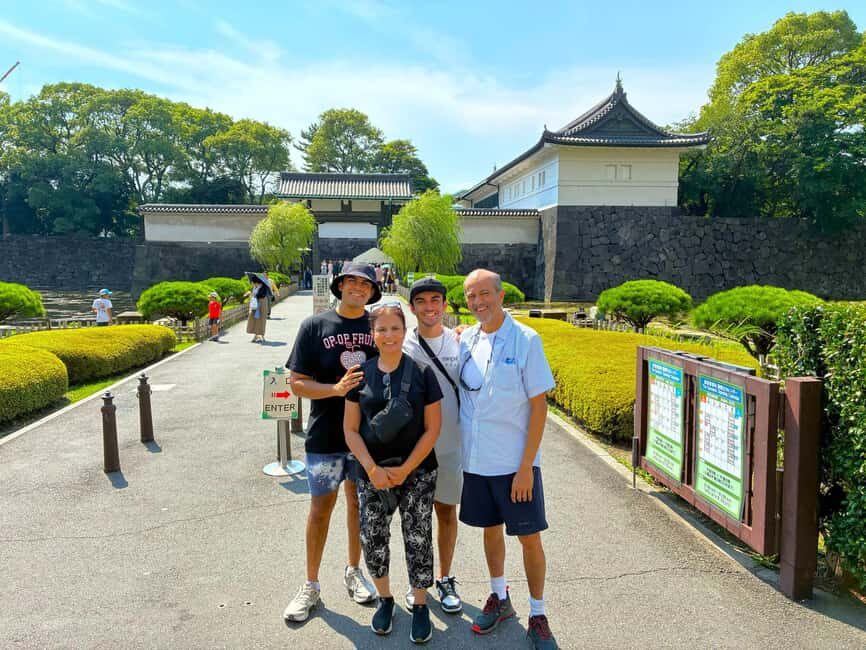
Next is the Ote-Mon Gate. Gates are where castles announce themselves. They’re also where you learn to spot the logic of entrance control: where people would gather, where passage would be managed, and how architecture reinforced authority.
This stop is one of the big photo moments. Even without entering anything, you’ll get the feeling of scale and intention. In a city full of modern buildings, seeing a historically purposeful entrance helps you calibrate what power looked like on the ground.
4) Ote-San’no Gate Ruins and the Guardhouse Culture
After the main gate, you’ll explore historic remnants like the Ote San-no-mon Gate Ruins, plus the Doshin Bansho and the Hyakunin Bansho Guardhouse areas.
Here’s what makes these stops more than “standing in front of stones”:
- Gate ruins show what was built and what was left when time took over.
- Bansho spaces connect to how people monitored and controlled access.
Hyakunin Bansho is especially relevant because it points to a system of security and duty. You might not need every technical term, but you’ll understand the bigger idea: the castle didn’t run on courage alone. It ran on procedure.
Also, the guide part matters. In the feedback, guides like Mari san and Isao are praised for staying upbeat and answering questions. That’s useful here, because questions naturally pop up when you’re looking at guard and gate locations.
5) Edo Castle Ruins and the Honmaru Area
Then you move into Edo Castle Ruins, followed by the site of Edo Castle Honmaru (the Main Hall). The Honmaru area is the kind of stop where your brain starts filling in the missing buildings. Even if you know Japan’s history in broad strokes, this is where it gets spatial.
You’ll see a Tenshu reconstruction model as well. That model helps you “read” what you’re looking at. Without it, you’d be trying to imagine the scale from ruins alone. With it, the ruins become more informative.
6) Tenshu-dai: Panoramic Views That Put History in Context
The Tenshu-dai is your panoramic viewpoint. This is one of those stops that can feel like a break from stories, but it actually supports the stories. From higher ground, you can better picture how the castle’s position affected surveillance and movement.
The view also explains why certain routes and barriers mattered. You’ll likely notice how the surrounding area shapes sightlines and approach paths. That’s a big part of why guided tours like this are worth it—someone tells you what to look for, and suddenly the landscape stops being anonymous.
7) 都道府県の木 and 諏訪の茶屋: Smaller Stops, Cultural Texture
You’ll also visit 都道府県の木 and 諏訪の茶屋 as part of the route. The itinerary doesn’t frame these stops as “major history monuments,” but they add everyday cultural texture to the walk.
In practical terms, this is where the tour shifts slightly from military/political architecture into garden-space atmosphere. These are the kinds of stops where you slow down for a moment and notice how the Imperial Palace East Gardens function as a managed public landscape.
8) Imperial Palace East Gardens: The Open-Garden Version of Palace Life
At this point, you’ll enter the Imperial Palace East Gardens, guided for about 15 minutes. This is where the tour’s boundaries become clear: you won’t see the inner palace buildings, because they’re not open to the public.
Instead, you focus on the gardens and the historical connections. Think of it as learning what the palace grounds communicate through design and space—pathways, sightlines, and calm areas that contrast with Edo Castle’s defense-oriented layout.
If you’re hoping to tour rooms or enter palace structures, this is not that tour. But if you want a guided understanding of the setting where the court continues today (while the public can see specific areas), it’s a good fit.
9) Ninomaru Garden: Koi Fish and a Real Mental Reset
Finally, you’ll reach Ninomaru Garden, guided for about 15 minutes, with time to enjoy the koi fish in the pond. This is a satisfying close: after gates, ruins, and defensive explanations, you get something gentle and slow.
I like this part because it gives you a chance to switch modes. In the earlier stops, you’re looking at stone, structure, and access. In Ninomaru Garden, you’re letting your attention rest on water and movement.
It’s also an easy way to remember the tour as more than a history lecture. Gardens are part of Tokyo’s daily rhythm, and this one feels deliberately peaceful.
Price and Value: What $37 Buys You in Tokyo
$37 for a 2-hour guided experience that includes admission to Edo Castle and the Imperial Palace East Gardens is usually fair value—especially because Tokyo can charge you time and transport cost when you try to piece together sites yourself.
Where the money really goes:
- Live guide time through multiple gate and ruin points
- Site admission included in the price
- A commemorative photo opportunity
- A route that keeps the “what am I looking at?” question from draining your energy
That said, there’s a trade-off. If you’re the type who loves reading signs on your own and already knows Japanese history well, you might feel the tour could be replicable. One caution from the overall feedback is that some people found it like a walk in the park with a guide present. If you fall into that category, you’ll get more value by actively asking questions during the earlier stops.
Who This Tour Suits Best
This is a strong choice if you:
- Want a guided framework for Edo Castle’s remnants instead of random photo stops
- Enjoy English storytelling with time for questions
- Like mixing history with a calm garden finish
- Prefer small-group or private settings (when available)
It’s not ideal if you:
- Need wheelchair access or have mobility limitations, since the route includes walking areas and you’re not entering indoor palace buildings
- Want entry into the palace buildings (they aren’t open to the public)
- Have very young children (it’s not suitable for children under 6)
Tips to Get More Out of the Walk
Bring comfortable shoes and water. You’ll be walking enough to need both, and you’ll feel it more in warm or humid weather.
Your camera is important, but remember: flash photography isn’t allowed. If you’re photographing gates and ruins, use natural light and avoid trying to overpower dim spots with flash.
If you care most about a particular angle—shoguns vs emperors, castle defense, or garden design—tell your guide at the start. The best results come from matching your curiosity to their explanations, and the guides here seem geared to answer questions.
Should You Book It?
Book this tour if you want a clean, guided route that turns Edo Castle ruins and Imperial Palace East Gardens into a coherent story with real viewpoints and a relaxing finish. For $37, the value is in the guide-led connections between gates, guardhouse concepts, and how the gardens fit into the larger palace setting.
Skip it or consider self-guided planning if:
- You’re only interested in interior palace buildings (you won’t access them)
- You dislike walking tours that feel more like guided sightseeing than deep lecturing
- You already know the history well enough to interpret ruins on your own
If your goal is to leave with a better sense of how Tokyo’s power centers worked—and to end with koi fish and quiet garden air—this is a very sensible way to spend a couple hours.
FAQ
How long is the tour?
It lasts about 2 hours.
Where do I meet the guide?
Meet outside the Wadakura Free Rest Area, in front of the entrance, with the guide holding a yellow sign.
What language is the tour guide?
The tour is offered in English.
What’s included in the price?
The price includes a live tour guide, admission to Edo Castle and the Imperial Palace, and a commemorative photo opportunity.
What’s not included?
Hotel pickup and drop-off, food and drinks, and personal expenses are not included. Entry to the Imperial Palace’s palace buildings is also not included because they are not open to the public.
Can I enter the inner grounds or palace buildings?
No. You can’t enter the inner grounds of the Imperial Palace, and the palace buildings aren’t open to the public. This tour focuses on the gardens and historical ruins.
What should I bring?
Wear comfortable shoes, bring a camera, and bring water.
What are the rules for photography and smoking?
Smoking isn’t allowed. Flash photography isn’t allowed.
Is there free cancellation?
Yes. You can cancel up to 24 hours in advance for a full refund.
Is this tour suitable for everyone?
It’s not suitable for children under 6, wheelchair users, or people with mobility impairments.