Tokyo can feel like it never slows down. This tour is a simple way to slow it down with three major-but-not-all-day shrines and a morning rhythm that makes photos and spirituality work together. You start at Meiji Jingu, detour to a rare mix of Shinto and Buddhism at Toyokawa Inari, and finish at Senso-ji in Asakusa.
I like that this is built for real small-group pacing (max 20) and clear value: admissions at the main stops are free, and you still get guided storytelling. I also like that the experience is designed around what many people come to Tokyo for—great views for your camera, plus a food stop that ends the walk on a comfortable, local note.
One thing to think about: the whole thing is only about 3 hours, so if you want long, quiet time inside each site, you’ll need to add extra time on your own after the tour ends.
In This Review
- Key things that make this tour worth your morning
- The 9:00 am plan and why it matters for Tokyo
- Meiji Jingu: the best kind of pause in central Tokyo
- Toyokawa Inari: the fox-statue stop that feels genuinely different
- Senso-ji in Asakusa: finishing at Tokyo’s big classic
- The “whole tour” feel: three stops, a plan, and a smart pace
- Price and value: what $84.92 really buys you
- What you’ll eat and why the ending is more than a snack
- Who this tour fits best
- Tips to make the most of your walk
- Should you book Tokyo Hidden Shrine and Temple Tour?
- FAQ
- How long is the Tokyo Hidden Shrine and Temple Tour?
- What is the meeting point and where does the tour end?
- What time does the tour start?
- Which temples and shrines are included?
- Are admission tickets required for the stops?
- How much does the tour cost?
- How big is the group?
- Do I need to bring a paper ticket?
- Is the tour near public transportation?
- What is the cancellation policy?
Key things that make this tour worth your morning
- Meiji Jingu’s calming start: a popular shrine with a nature-walk feel that helps you shake off the city noise fast.
- Toyokawa Inari’s fox-statue focus: a rare blend of Buddhism and Shinto that’s different from the usual temple photo ops.
- Senso-ji as the finish line: iconic gate energy plus the Asakusa shopping street area to keep exploring after.
- Free admission at every listed stop: you pay for the guide and planning, not entry tickets.
- Small group size (max 20): easier movement and less time lost waiting around.
- Guide flexibility (Ryu is a standout name): planning around crowds has shown up as a real strength, including on busy days.
The 9:00 am plan and why it matters for Tokyo
Start time is 9:00 am, and that’s a big deal in Tokyo. Morning pacing gives you calmer entry conditions at major religious sites, and it makes the route feel more like a guided walk than a race.
You’ll meet at Meiji Jingu Ichino Torii (Jingūmae, Shibuya) and end at Senso-ji Temple in Asakusa. That end point matters because Senso-ji sits in a neighborhood where you’ll likely keep going right after you’re done—shopping streets, snack stops, and all the easy follow-on wandering you’d want in that area.
Also, the format uses a mobile ticket, so you can travel light and skip the paper-searching game. Confirmation is received at booking, and average advance booking is about 9 days, so reserving before the last minute is smart.
You can also read our reviews of more tours and experiences in Tokyo.



Meiji Jingu: the best kind of pause in central Tokyo
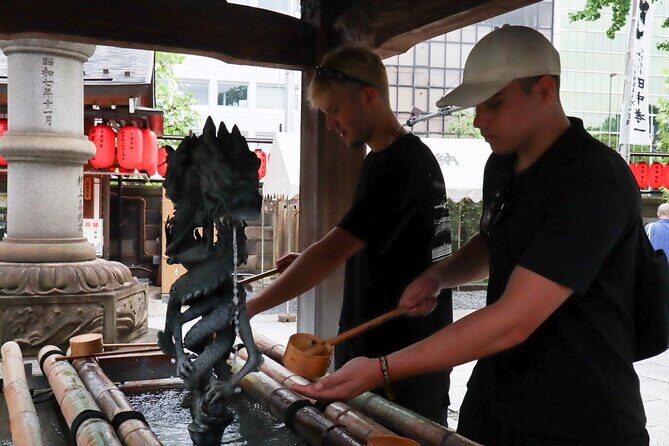
Your first stop is Meiji Jingu Shrine, and the time block is about 40 minutes. It’s one of the city’s best examples of how Tokyo can feel quiet even when you’re in the middle of it—this shrine experience leans heavily into calm, plus a nature-walk vibe that helps you reset your senses quickly.
What I like about Meiji Jingu here is the balance. It’s popular, yes, but the tour doesn’t treat it like a quick drive-by. With a dedicated chunk of time, you’re not just catching the gate in a rush—you can actually read the mood of the place.
A practical tip: go into this stop expecting walking and atmosphere, not a checklist of monuments. If you want photos, aim to shift your angle a few times rather than taking the first shot you see; the shrine grounds create natural framing opportunities.
Potential drawback: if your idea of a shrine visit is long meditation time, 40 minutes may feel short. This is a tour built for movement and variety, so plan to add your own time if you want silence.
Toyokawa Inari: the fox-statue stop that feels genuinely different
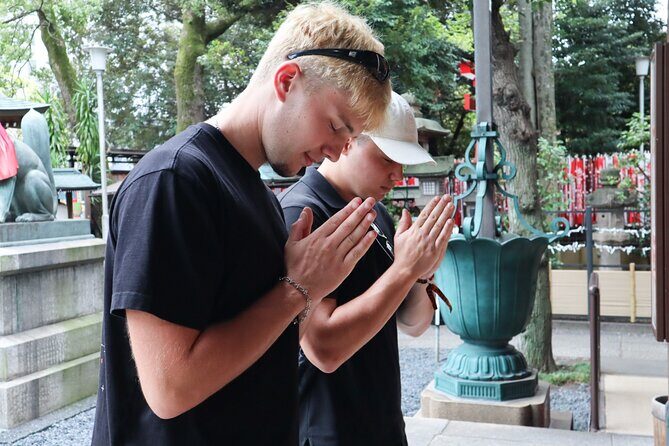
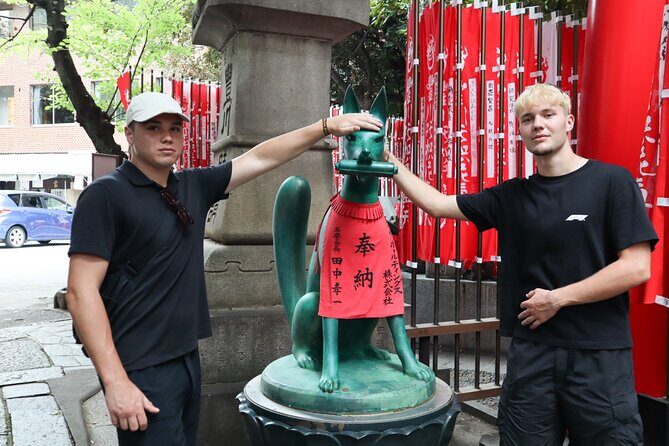
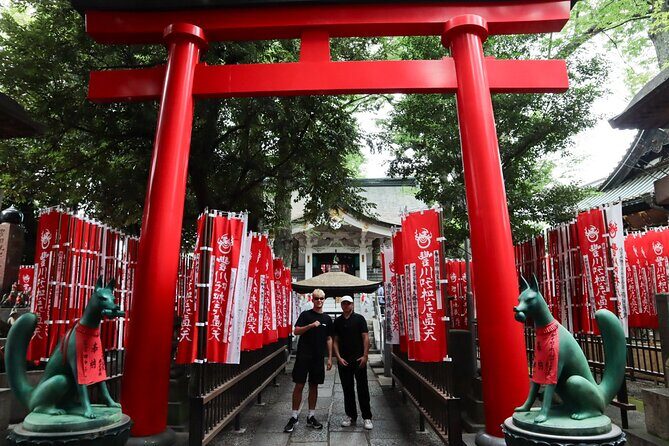
Next is Toyokawa Inari Temple for about 30 minutes, and this is where the tour gets more interesting fast. Toyokawa Inari is known for fox statues, but the bigger reason it’s memorable is the way it blends Buddhism and Shinto traditions—something you won’t always see so clearly on a standard Tokyo itinerary.
That “rare mix” is exactly why this stop earns its place. You’re not just seeing another temple name and moving on. You’re learning how Tokyo’s religious landscapes can layer traditions in ways that feel local and lived-in.
Photo-wise, fox statues usually give you more visual variety than stone gate shots. But don’t treat it like a photo factory. Spend a few minutes letting the details catch up—pose your camera, then pause your phone and look around. It’s the difference between collecting images and actually understanding what you’re looking at.
Potential drawback: 30 minutes can pass quickly here, especially if you want to linger with the statues. If this is your favorite stop (it often is), you’ll probably want to come back later or extend your day in that style of sightseeing.
Senso-ji in Asakusa: finishing at Tokyo’s big classic
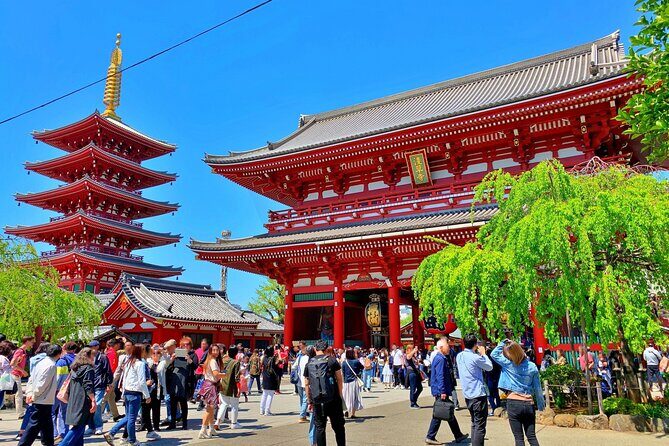
Your final stop is Senso-ji Temple for about 45 minutes, and it’s also where the tour ends. Senso-ji is Tokyo’s oldest temple and one of its most famous, so it comes with all the energy you’d expect from a landmark that many people know.
The practical upside: the iconic gate area and the surrounding Asakusa shopping street are right there. That means you can turn the tour into a full half-day without extra planning. The guide gets you through the key experience parts, and then you’re free to keep exploring when you’re ready.
This stop is also ideal for photography. You’ll have both the dramatic temple entrance setting and the “everyday Tokyo” street activity around it, which works if you want a mix of religious site shots and street-life shots in one stretch.
Potential drawback: because Senso-ji is famous, it can feel crowded depending on the day and time. The good news is you’ll be finishing here, so you’re not forced to sprint to a later location—if you want a calmer moment for photos, you can step back and reposition as the crowd shifts.
The “whole tour” feel: three stops, a plan, and a smart pace

This is about 3 hours total. That time length is a sweet spot for a lot of travelers because it’s long enough to feel like you saw something meaningful, but short enough that you can still do other things that afternoon.
The itinerary order also helps. You start with a serene, nature-focused experience at Meiji Jingu, move to a more distinctive religious blend at Toyokawa Inari, and end at the most famous and energetic stop at Senso-ji. It’s a natural climb in “visual payoff,” and it reduces the risk that you’ll finish tired.
It’s also a small group experience (max 20), which usually means:
- less waiting around at entrances
- more flexibility if the guide adjusts the route slightly based on conditions
- a better chance you’ll hear explanations clearly
There’s a reason the guide name Ryu comes up in the strongly positive feedback. The notes highlight friendliness and an ability to keep things running smoothly even when crowds spike. On New Year’s Day, that kind of crowd timing isn’t just nice—it can be the difference between a smooth walk and a frustrating one.





Price and value: what $84.92 really buys you
The price is $84.92 per person, and that number feels more reasonable when you look at what’s included. First, the listed admissions are free for Meiji Jingu, Toyokawa Inari, and Senso-ji. So your money goes toward guided storytelling, route planning, and the added elements the tour description promises (photo-oriented stops and a few special moments).
The tour concept also mentions aerial views and boating, plus authentic Japanese flavors, with the day ending on comfort food. The exact details of where those fit aren’t spelled out in the stop list you see up front, so treat that as part of the broader experience design rather than a promise of a specific named attraction at a specific minute. Still, it tells you this isn’t only a “walk and read a map” situation.
Here’s the best way to think about the value: you’re paying for someone local to help you connect the dots—why these shrines matter, what to notice, and how to keep the morning flowing without wasting time. In Tokyo, that kind of planning time is often worth more than a ticket price.
Also, advance booking tends to be around 9 days, which suggests it sells steadily. If your dates are firm, I’d reserve early enough that you’re not choosing between this and a less-managed alternative.
What you’ll eat and why the ending is more than a snack
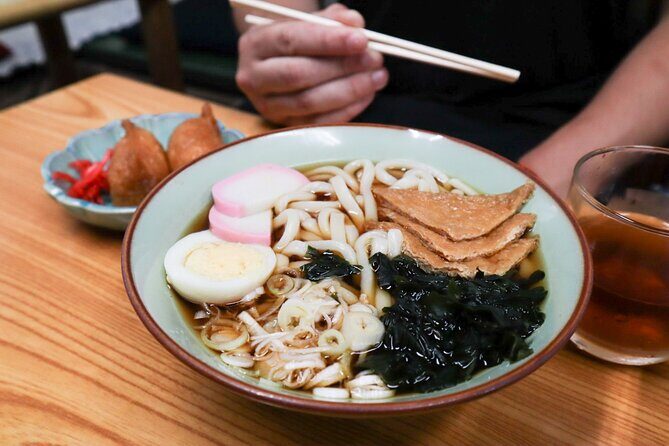
The description says the tour ends with a comfort-food taste and focuses on authentic Japanese flavors during the journey. Even without specific menu items listed here, the structure is a smart one: you finish after your last temple stop when you’re ready for something warm, filling, and easy to enjoy.
I like tour endings like this because they solve a common Tokyo problem. You arrive with good intentions, but by mid-morning you don’t want to gamble on what looks good. A guided food finish gives you a sensible next step without turning your afternoon into planning homework.
Practical approach: treat the food stop as part of the experience. If you’re photographing a lot before Senso-ji, pace yourself so you can still enjoy the comfort-food moment without rushing.
Who this tour fits best

This one fits best if you want:
- Three meaningful stops in a short window without building an itinerary from scratch
- A guide who can explain what you’re seeing in plain, useful terms
- A morning plan that’s photo-friendly but still focused on actual shrine and temple experience
- A route that works well even on busier calendar days, thanks to guide timing skills mentioned in the feedback
It’s also a good choice if you’re pairing temple time with other Tokyo plans later. Because it ends at Senso-ji, you’re in a convenient spot to keep exploring Asakusa on foot after the tour.
Potential mismatch: if you prefer slow travel, deep quiet time inside each site, or you want a long sit-down meal, you may find the 3-hour window too tight. For that style, you’d likely want to use this as inspiration and then extend your day independently.
Tips to make the most of your walk
You can boost your experience without overplanning. Keep these in mind:
- Wear shoes that handle lots of walking. This is an active morning route.
- Bring a fully charged phone or camera for the photo-focused parts, but also keep time for looking without the lens.
- Arrive a bit early at the Meiji Jingu Ichino Torii meeting point. It makes your start smoother.
- If you’re visiting around major holiday periods, go in expecting crowds at famous sites like Senso-ji. The benefit here is the guide’s crowd-aware planning.
Should you book Tokyo Hidden Shrine and Temple Tour?
I’d book it if you want a compact morning that connects religious sites, standout photo moments, and local food without spending your entire day navigating transit and timing.
Skip it if you’re chasing long stays at each temple, or if you want a fully detailed, minute-by-minute schedule for every activity type beyond the three main stops. Since it’s around 3 hours and built to move, it’s a “good direction” tour more than a slow, reflective retreat.
If you’re on the fence, here’s the simple decision rule: if you like your travel days organized, guided, and efficient, this will feel worth your time at $84.92—especially with free admission at all three listed stops and a guide like Ryu who’s shown flexibility when crowds hit.
FAQ
How long is the Tokyo Hidden Shrine and Temple Tour?
The tour runs for about 3 hours.
What is the meeting point and where does the tour end?
You start at Meiji Jingu Ichino Torii in Jingūmae, Shibuya, and you end at Senso-ji Temple in Asakusa.
What time does the tour start?
The start time is 9:00 am.
Which temples and shrines are included?
The tour includes Meiji Jingu Shrine, Toyokawa Inari Temple, and Senso-ji Temple.
Are admission tickets required for the stops?
Admission is listed as free for all three stops.
How much does the tour cost?
The price is $84.92 per person.
How big is the group?
The tour has a maximum of 20 travelers.
Do I need to bring a paper ticket?
No. The tour uses a mobile ticket.
Is the tour near public transportation?
Yes, the meeting area is noted as near public transportation.
What is the cancellation policy?
You can cancel for a full refund if you cancel at least 24 hours before the experience’s start time.