REVIEW · TOKYO
Tokyo: Mt. Fuji, Arakurayama Sengen Park, Oshino Hakkai Tour
Book on GetYourGuide →Operated by WONDER STYLES CO.,LTD. · Bookable on GetYourGuide
Fuji views usually steal the show here. This tour strings together the best photo spots in the Fujiyoshida area, with big scenery and some calming village stops. I like that it’s designed as a “follow-the-route” day, so you’re not stitching together buses and tickets all on your own.
Two things I really like: the Arakurayama Sengen Park viewpoint with the five-story pagoda and Mount Fuji, and the peaceful water scenes at Oshino Hakkai. The pacing also includes multiple chances for seasonal beauty—cherry blossoms, fall leaves, and winter snow.
One consideration: you’ll do some walking, including stairs and uphill sections, and the day can feel crowded in popular spots. If you’re traveling with mobility needs, or you’re over 70, you’ll want to think carefully before booking.
In This Review
- Key moments that make this tour worth your time
- A Fuji day trip from Shinjuku that runs about 9.5 hours
- Arakurayama Sengen Park: the Fuji-and-pagoda view by season
- Hikawa Clock Shop: a quick cultural/souvenir break
- Oshino Hakkai: spring-water ponds with calm Fuji reflections
- Oishi Park: amazing Lake Kawaguchi views, but weekday-only
- Saiko Iyashi-no-Sato Nenba: thatched roofs and a more restorative pace
- Fujiyoshida Honcho Street: traditional shopfronts with Fuji in the distance
- The walking reality: stairs, uphill sections, and crowds
- Price and value: what about $50 gets you
- Timing by season: when the same stops look totally different
- Should you book this Mount Fuji circuit?
- FAQ
- What time does the tour run and how long is it?
- Where do I meet and where does the tour end?
- Is the Saiko Iyashi-no-Sato Nenba ticket included?
- What languages are available with the guide?
- Do I need cash?
- Are meals included?
- Will I be able to visit Oishi Park?
- Is this tour suitable for seniors or people with mobility issues?
- How much luggage can I bring?
Key moments that make this tour worth your time
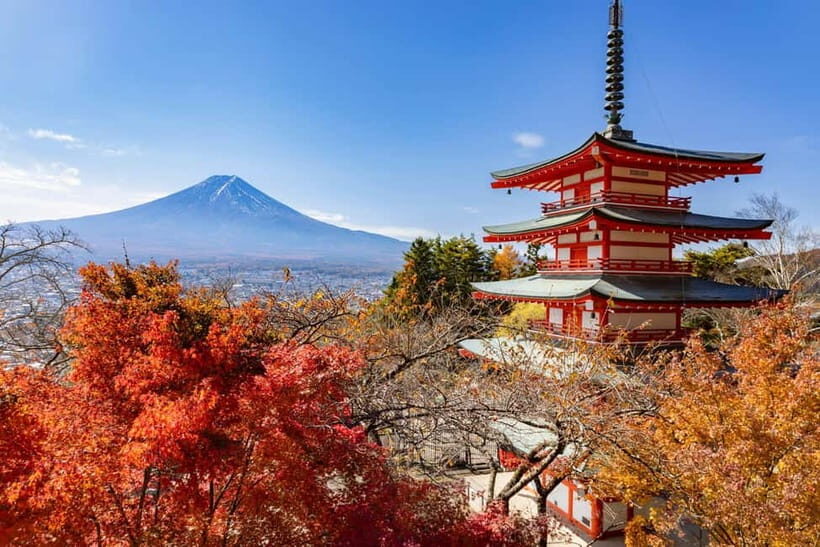
- Arakurayama Sengen Park delivers Mount Fuji with the iconic pagoda, and the look changes dramatically by season.
- Oshino Hakkai gives you clear spring-water ponds and calm streets with Fuji reflections.
- Saiko Iyashi-no-Sato Nenba is built for slow, restorative wandering among thatched-roof houses.
- Oishi Park is weekday-only, so your exact day-of-visit timing matters for seeing Lake Kawaguchi views.
- A guided day from Shinjuku saves you stress and planning, plus your Saiko ticket is handled for you.
A Fuji day trip from Shinjuku that runs about 9.5 hours
This is a full-day circuit starting at the Front of Kogakuin University Shinjuku Station West Exit area. You’ll then ride a bus between stops with stretches of free time to explore on your own. The total duration is 570 minutes (about 9.5 hours), which is a solid amount of time for multiple Mount Fuji–focused viewpoints without feeling like you’re racing.
The route is paced in blocks: a longer scenic period at the first Fuji park, then shorter “break” stops, then the ponds and village sites. You’ll have several chunks of free time where you can take photos, browse the area, and step away from the bus for a bit of breathing room.
You can also read our reviews of more tours and experiences in Tokyo.



Arakurayama Sengen Park: the Fuji-and-pagoda view by season
If Mount Fuji is the reason you came to Japan, Arakurayama Sengen Park is one of the biggest payoff stops on this route. The signature shot is the five-story pagoda with Mount Fuji behind it, and the park’s appearance changes sharply depending on the time of year.
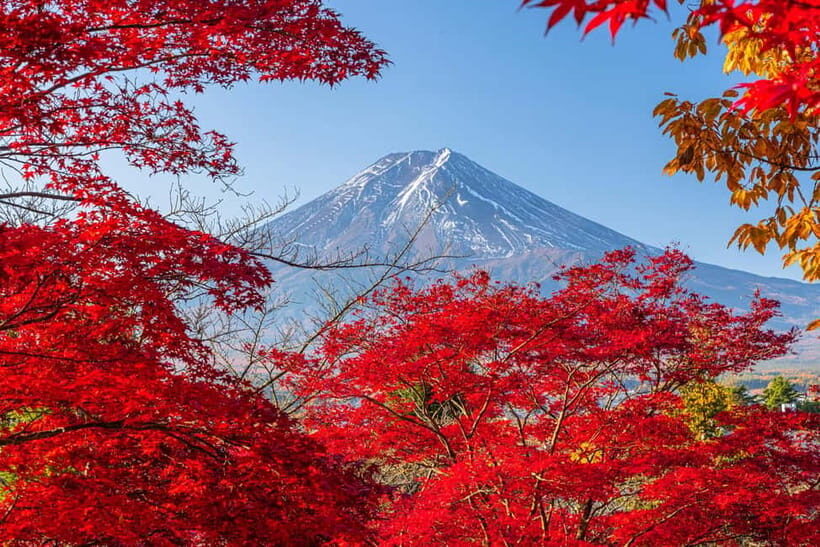
In spring, you get a dreamy postcard scene with about 650 cherry blossom trees blooming around the pagoda. In summer, the hills look greener and the sky often feels clearer for that clean Mount Fuji contrast. Autumn turns the hillside into a red-and-orange spectacle, where the pagoda and maple leaves mix into a romantic photo moment. Winter brings snow—pure white Mount Fuji in crisp air, plus a snow-covered pagoda roof.
Practical tip: bring layers. Even when the weather sounds good in Tokyo, the mountain area can feel colder or windier, and you’ll stand and move around for photos. Also note that this stop includes walking on uneven terrain and can involve stairs and uphill sections, so wear shoes with grip.
Hikawa Clock Shop: a quick cultural/souvenir break
Between the major scenery stops, you’ll have a free-time stop at Hikawa Clock Shop. It’s only about 30 minutes, which makes it a good “reset button” during a long day: stretch your legs, grab a small souvenir, and get something visual that’s different from the outdoor viewpoints.
Because the time is short, I’d treat this as light browsing rather than a must-do shopping mission. If you’re the type who likes practical keepsakes (small gifts, desk-friendly items), this is the kind of stop that can work well.
Oshino Hakkai: spring-water ponds with calm Fuji reflections
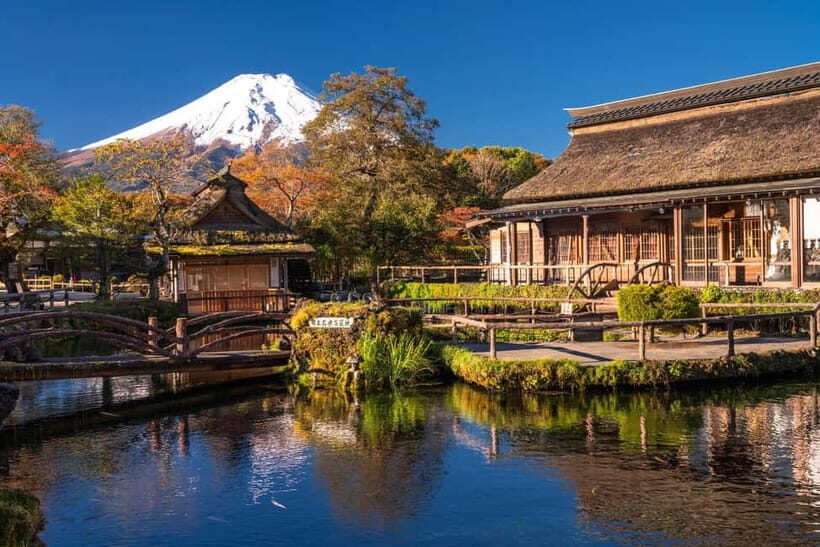
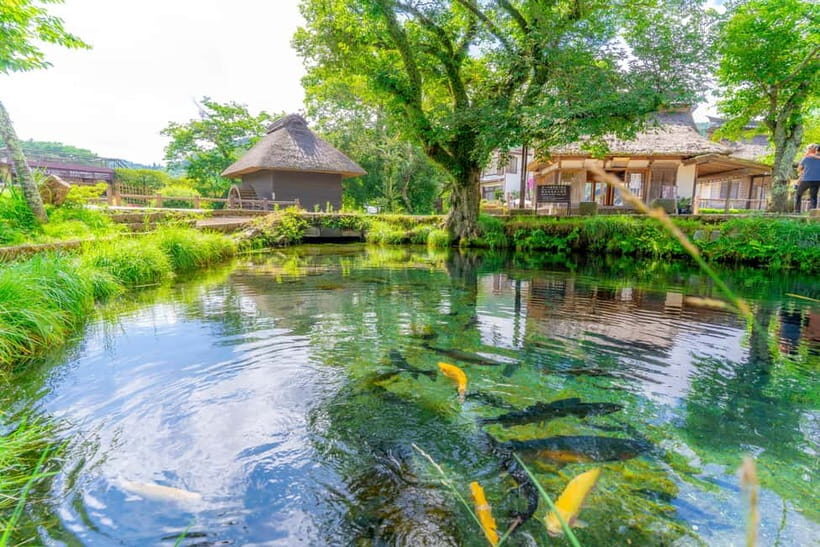
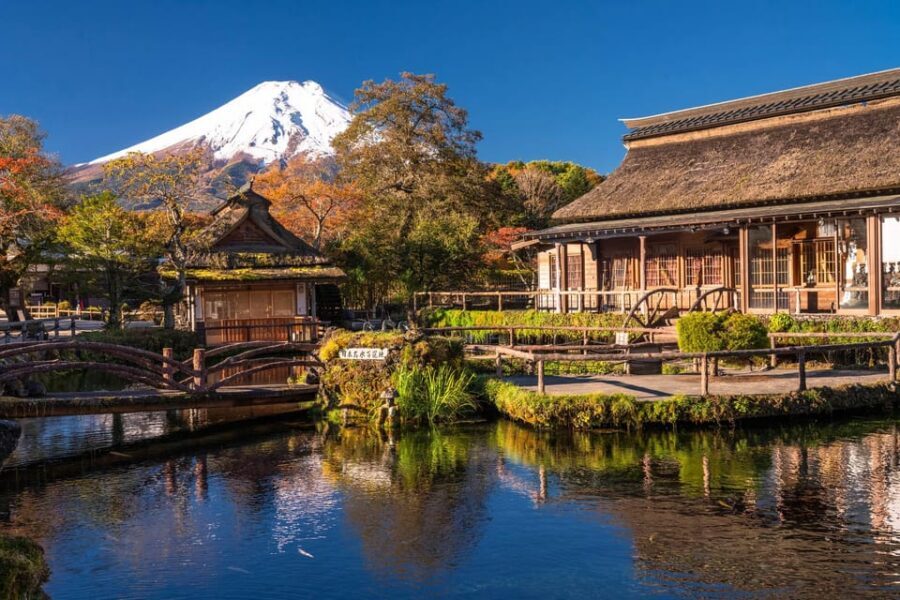
Next up is Oshino Hakkai, a place where the water does most of the talking. You’ll have about 1.5 hours to explore at your own pace, and the main draw is the system of spring-fed ponds with Mount Fuji nearby.
In spring, cherry blossoms can appear along the water, creating a poetic reflection effect. Summer leans cooler and refreshing, with clear spring water mirroring greenery. Autumn adds soft red leaf moments that feel gentle rather than loud. Winter is the most dramatic-looking: snow can blanket the village while the spring water stays crystal clear.
What I like about Oshino Hakkai on a tour like this is the contrast. You get the big Fuji experience, then you drop into calmer surroundings where it’s easier to slow down and just watch the light on the water.
Oishi Park: amazing Lake Kawaguchi views, but weekday-only
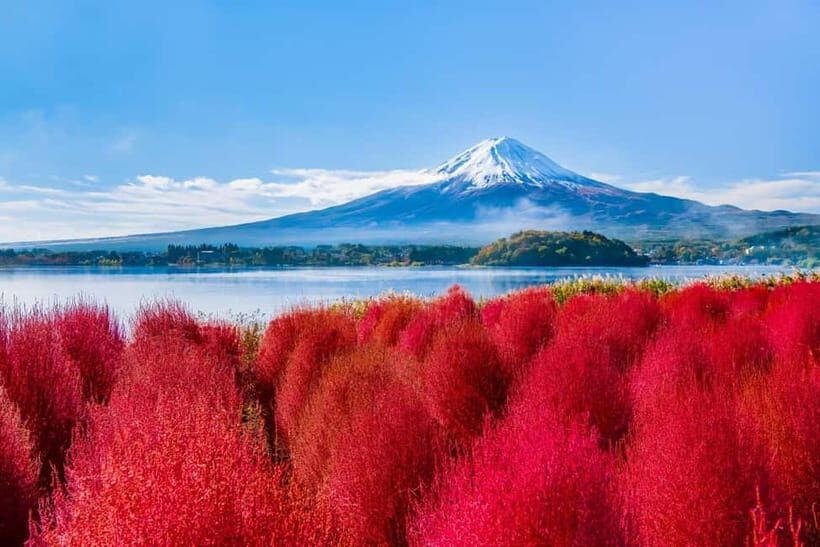
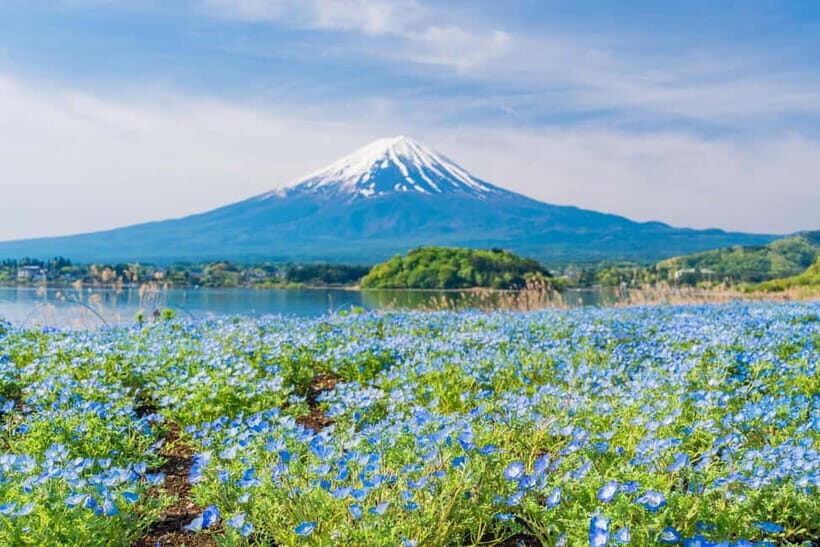
Oishi Park is where the tour leans hard into classic Lake Kawaguchi views with Mount Fuji in the background. The park shines by season: spring brings tulips and moss phlox; summer can feature lavender along the lakeshore; autumn shifts to golden grass with Mount Fuji’s first snow in the distance; and winter can show snowy mountain views reflected on the lake.
But here’s the key detail that affects real-life planning: Oishi Park is open only on weekdays. It’s closed on weekends, holidays, and during Golden Week (April 29 to May 5). Even on weekdays, visits may get canceled if traffic delays make it impossible to keep the schedule.
So I treat Oishi Park like a “bonus if timing works” stop. Even if it doesn’t happen, the tour still covers other strong Fuji scenery and the calmer village areas.






Saiko Iyashi-no-Sato Nenba: thatched roofs and a more restorative pace
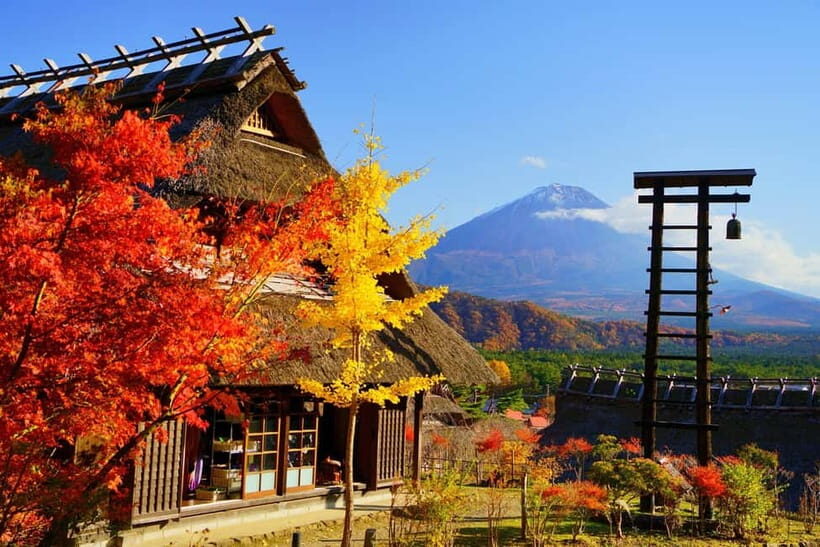
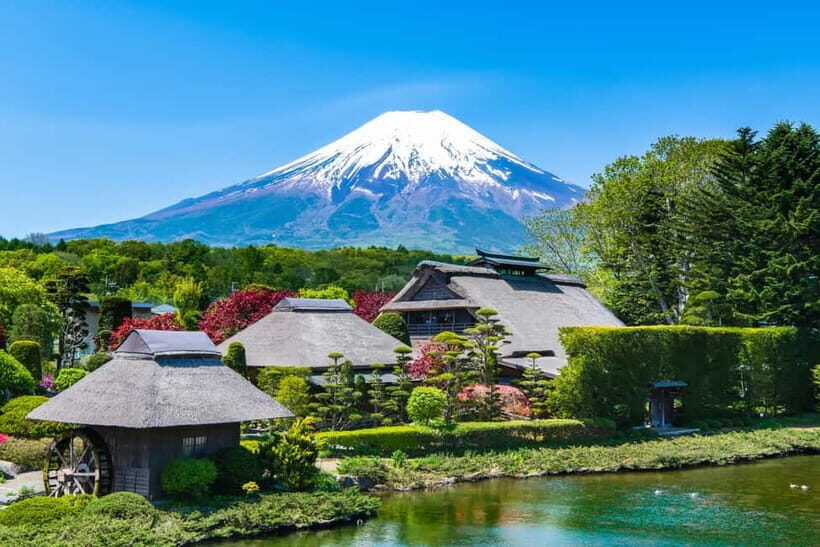
This part is included with a ticket, which matters because it avoids extra ticket hassle at the door. You’ll spend around 1 hour here, and the focus is traditional rural atmosphere—thatched-roof houses and a slower tempo.
The seasonal feel is very clear. Spring mixes ancient houses with cherry blossoms for that strong countryside charm. Summer highlights rice fields and streams with mountain breezes carrying natural scents. Autumn brings red leaves over the hillside, so the village feels like it’s part of a time-warp. Winter turns it into a fairytale scene: snow-covered rooftops and steam rising from hot springs, which adds warmth even in cold weather.
This stop works best if you like taking your time. Don’t rush your photos—let your eyes adjust, then walk the paths like you’re exploring a real village, not just collecting angles for a checklist.
Fujiyoshida Honcho Street: traditional shopfronts with Fuji in the distance
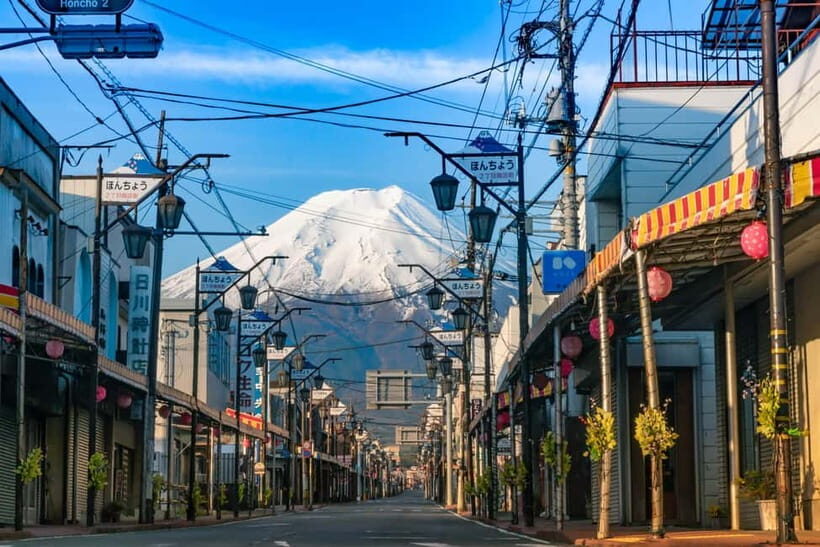
One of the highlights of the Fujiyoshida area is Honcho Street, where you can see traditional Japanese culture and architecture up close. I like that it’s not only about views from a hillside; it’s about the everyday streetscape where you’d actually shop, snack, and wander.
Seasonal cues make this street feel different through the year. In spring, cherry blossoms line the street while Mount Fuji quietly watches at the end. In summer, the vibe shifts toward festivals and lively stalls, with fireworks in the mix. Autumn brings yellow and red leaves, and winter offers crisp early-morning air with the chance of seeing snow-covered Mount Fuji in the distance.
If you get here with energy left, spend a little time walking without forcing it into a photo every second. Honcho Street is the kind of place where a calm stroll often feels more rewarding than sprinting.
The walking reality: stairs, uphill sections, and crowds
This tour is sightseeing, not a sit-and-ride cruise. Some parts of the route have long stairs and uphill sections, so it’s not a great match if you need crutches or have limited mobility. The activity is also explicitly not suitable for people over 70.
Crowding is another practical factor. Major Mount Fuji viewing areas can be busy, especially when seasonal blossoms or fall colors are at their peak. If you’re sensitive to crowding, keep your expectations flexible and plan to move a little slower around the busiest viewpoints.
Price and value: what about $50 gets you
The price is listed at $50 per person, which is usually where you want to pause and ask: what’s included, and what’s not? In this case, you get roundtrip transportation from Shinjuku, an English-speaking guide, and the Saiko Iyashi-no-Sato Nenba ticket.
That’s a meaningful bundle. Mount Fuji day trips can get expensive once you add separate transport and paid entry. Here, the tour also removes the mental load—finding meeting points, syncing schedules, and coordinating multiple destinations across the Fuji region.
What you do pay separately: meals and personal expenses. Bring money for lunch or snacks, and plan on covering small purchases as you go. You’ll also want cash with you, since the tour notes cash as something to bring.
Timing by season: when the same stops look totally different
This circuit is especially strong if you care about seasonal variety, not just one single photo. The tour’s most dramatic “wow” moments—like cherry blossoms, fall leaves, and winter snow—are built into the parks and village settings.
If you’re going for spring: late April to early May is when cherry blossoms around Mount Fuji typically run, though timing shifts with the weather. If you’re going for autumn: the best foliage window is usually late October to early November, again depending on conditions.
In winter, the payoff can be high, but cold weather changes everything: slower walking, more time spent bundling up, and a stronger need for good footwear. If you’re going in any season where weather is unpredictable, keep your schedule flexible in your head. The tour can’t control clouds, wind, or snow on the mountain.
Should you book this Mount Fuji circuit?
Book it if you want a structured full-day Mount Fuji experience from Shinjuku, with a guide and transport included. It’s a good fit for first-timers who want multiple types of scenery in one day—pagoda views, spring-water ponds, a thatched-roof village, and a traditional street.
Skip it or be cautious if stairs and uphill terrain are a problem for you, or if you’re traveling with crutches. Also think twice if you’re set on Oishi Park for a weekend trip, since it’s weekday-only and may disappear if traffic delays knock the schedule off track.
If your main priority is Mount Fuji photos and you like the idea of season-by-season variety, this tour is a solid value for the time you spend. You’ll come away with more than one kind of Fuji memory.
FAQ
What time does the tour run and how long is it?
The tour duration is 570 minutes (about 9.5 hours).
Where do I meet and where does the tour end?
You meet in front of Kogakuin University Shinjuku Station West Exit (near the underground Central West Exit) and look for the Wonder Tour flag. The tour finishes at Shinjuku Station.
Is the Saiko Iyashi-no-Sato Nenba ticket included?
Yes. The ticket for Saiko Iyashi-no-Sato Nenba is included.
What languages are available with the guide?
The tour offers a live guide in Chinese and English. The information also notes that if you travel by Hiace or microbus, the driver provides Chinese or machine-translated English commentary and there is no professional guide included.
Do I need cash?
Yes. The tour notes that you should bring cash.
Are meals included?
No. Meals are not included.
Will I be able to visit Oishi Park?
Oishi Park is open only on weekdays. It can be canceled on weekdays if there are traffic delays.
Is this tour suitable for seniors or people with mobility issues?
It is not suitable for people over 70. Some parts of the route include long stairs and uphill sections, and the tour notes it is not recommended for seniors who require crutches.
How much luggage can I bring?
Each passenger may bring one suitcase with a maximum of 30 kg and 155 cm total. The tour also warns not to store valuables in the bus trunk.
If you tell me your travel month, I can suggest which of the seasonal looks—cherry blossoms, autumn leaves, or snow—is most likely to match what you want to see.