REVIEW · TOKYO
Tokyo:Samurai Training : Swords, Bushido & Mental Discipline
Book on GetYourGuide →Operated by INTERNATIONAL GOSHIN-BUDO ASSOCIATION · Bookable on GetYourGuide
That first step into a Tokyo dojo changes the whole way you think about samurai. This 2-hour class is hands-on training (not a staged show) where you practice etiquette, sword basics, and real combat kata in a small group. I also love that it’s taught in English with clear coaching, so even beginners can keep up.
The main consideration is that this is active training: you’ll do wooden-sword drills, heavy-stick strength work, and balance-focused silent walking, so come ready to move.
In This Review
- Key things you’ll care about
- Kojimachi Dojo: The Setting That Makes It Feel Real
- Samurai Etiquette and Bushido Mindset (Before You Touch the Sword)
- Wooden Sword Basics: Learning Form Without Getting Pulled Around
- Heavy Stick Strength Work and Balance-Testing Silent Walking
- Real Combat Techniques, Kata Practice, and One-on-One Sparring
- Matcha Break, Attire Change, and the Scroll Certificate Keepsake
- English Instruction, Small Group Size, and How Coaching Really Works
- Price and Value: What $83 Buys in a 2-Hour Training Class
- Who This Experience Fits Best (And Who Should Skip It)
- Quick Tips Before You Go
- Should You Book Samurai Training in Tokyo?
- FAQ
- How long is the Samurai Training class?
- Where does the class take place?
- What language is the training taught in?
- Is this beginner-friendly?
- How many people are in the group?
- What should I do about shoes and indoor rules?
- Is the samurai uniform included?
- Is transportation included?
- Is there any food or drink included?
- What do I get at the end of the class?
Key things you’ll care about
- It’s training, not theatre: you work the techniques, not just watch demos
- English instruction in a small group: max 6 people keeps it personal
- Mind + body drills: breathing, meditation, heavy-stick training, and ninja-style walking
- One-on-one sparring: you apply what you learn with an instructor
- You leave with keepsakes: scroll-style certificate, samurai attire, and a photo
Kojimachi Dojo: The Setting That Makes It Feel Real
Tokyo has plenty of samurai-themed experiences, but this one starts with a more serious atmosphere: a traditional dojo in Kojimachi, a district tied to the former inner grounds of Edo Castle. That matters because the vibe is quiet and disciplined. You’re not there to snap photos and speed-run history. You’re there to learn how practice works.
You meet right at the dojo entrance. Look for the nobori flag landmark and you’ll spot a samurai waiting for you. It’s a simple start, but it sets expectations early: this is a “put on the uniform and train” kind of class.
Before anything physical happens, you’ll follow dojo rules: no smoking indoors, and shoes off indoors. If you’ve visited Japanese shrines or temples, you already know the drill—just apply that same respect. The teachers keep the room focused, and it’s easy to slip into that mindset once you’re inside.
One more practical point: you’ll need to tell the organizers everyone’s height and size (S/M/L) so the uniform fits. That’s not a minor detail. With uniforms that fit well, you can move safely and comfortably during drills and sparring.
You can also read our reviews of more tours and experiences in Tokyo.



Samurai Etiquette and Bushido Mindset (Before You Touch the Sword)
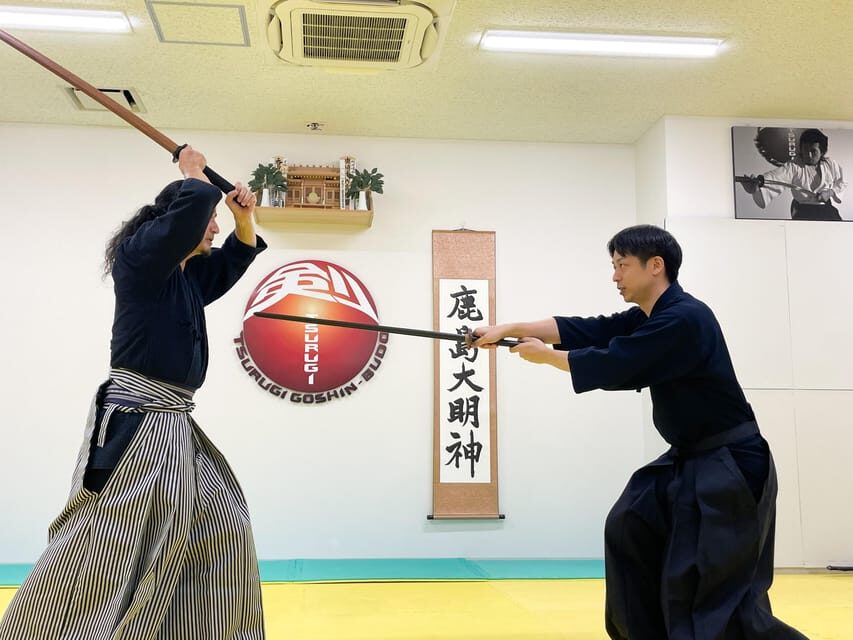
The training begins the way it should: with how to carry yourself. First comes samurai etiquette and the spirit of Bushido—more than a slogan, more like a set of habits. You learn how to behave in the dojo setting and how respect shows up in small actions: posture, attention, and controlled movement.
Then you work on calming tools—breathing techniques and meditation. This part surprised me in a good way because it gives you a practical method, not just “be mindful.” You’re training discipline for the body, and the breathing and mental focus make the later physical work easier to handle.
A real benefit here is that the class teaches you to manage nerves and concentration. Even if you’re the most touristy person in the group (you know who you are), the structure helps. When you’re later doing balance drills or sparring, you’ll understand why they started with mental control.
And yes, you’ll also get some historical context as part of the explanation. That’s useful because it helps you see why the discipline is strict. It isn’t just tradition for tradition’s sake. It’s training built around consistent practice.
Wooden Sword Basics: Learning Form Without Getting Pulled Around
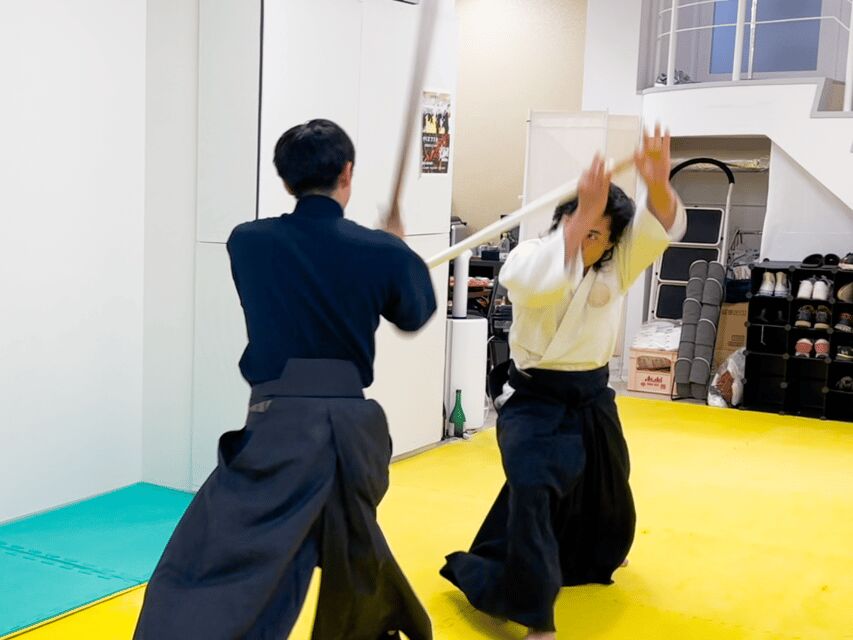
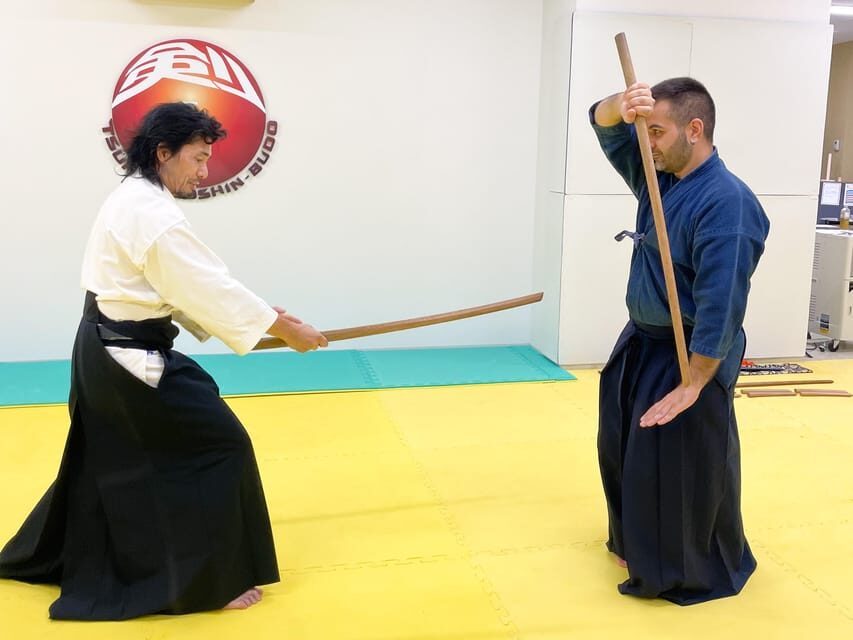
Once the mindset is set, the class shifts to skill: basic wooden-sword work. You’ll start with the fundamentals using practice swords designed for training. The goal is clean movement—control, timing, and safe mechanics.
This is where having a small group really helps. With room for everyone to work, instructors can correct your grip, stance, and the way you bring the sword up and through. If you’ve ever tried to learn sword basics from videos, you know how easy it is to get the angles wrong. Here, you get adjustments while you’re doing it.
The drills aren’t just “swing and hope.” You’ll repeat patterns until your body learns what your brain can’t keep track of. That repetition builds muscle memory, which is what makes the later sparring feel possible.
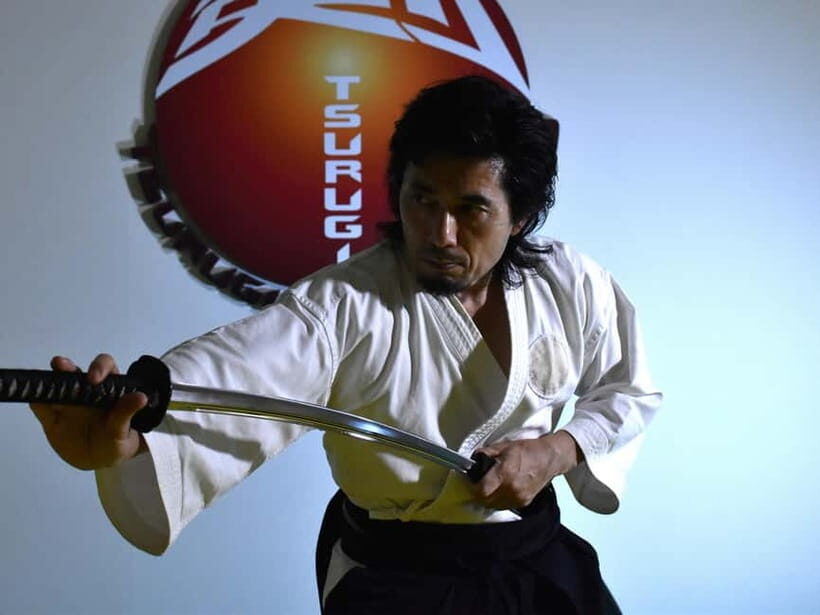
A nice touch: you also get a live sword demonstration. That gives you a reference for how control and form look in motion, so you understand what you’re aiming for. Then you go right back to practice.
If you’re expecting a performance, you’ll feel disappointed in the best way. You’ll be too busy training to care about sightseeing-style spectacle.
Heavy Stick Strength Work and Balance-Testing Silent Walking
Next comes the heavy practice stick segment, which is both physical and surprisingly focused. You’re building strength and control—because sword work is as much about stability and power transfer as it is about the blade.
The stick drills also teach you how to move safely through impact-like motions without rushing. You’re learning timing and posture. Even if you’re not strong, instructors guide you so you can do the movements correctly and still challenge yourself.
Then you switch to silent walking—an exercise that’s all about awareness. You practice moving without noise, which forces you to control weight shift, foot placement, and balance. If you’ve ever stumbled in a quiet room, you’ll understand the challenge. The silence makes tiny mistakes obvious.
This section is a great reason to do the class in the first place. Most “sword” experiences only show combat motions. Here, you learn why warriors cared about balance and readiness. The silent walking is basically a discipline test for your coordination.
And because the group is limited (small enough for individual attention), you’re not just doing your own thing in the corner. You’re part of a guided training rhythm.
Real Combat Techniques, Kata Practice, and One-on-One Sparring
This is the part people talk about because it’s the most tangible: learning realistic combat sword techniques, mastering an authentic samurai combat kata, and then applying it in one-on-one sparring.
After you learn the technique building blocks, you practice one core kata. A kata is like a training script: movements with intent that build timing, positioning, and response habits. Even if you don’t fully “get” every strategic detail right away, the structure trains your body to follow a sequence under guidance.
Then comes sparring with an instructor. This is where your earlier drilling pays off. You’re not doing freestyle chaos. You’re testing techniques with someone who can slow things down, correct your form, and keep you safe.
Two instructor names showed up repeatedly in feedback: Oedo and Yukikaze. The common thread is that the teaching style is friendly and encouraging even when the training stays serious. That combination matters. You want to push yourself, but you don’t want to feel like you’re being thrown into a fight with zero guidance.
One-on-one sparring also helps you learn what to focus on. You’ll probably feel that your body wants to rush. Your instructor will steer you back toward control—stance, spacing, and safe, accurate technique.
For beginners, this is the best kind of “try it” moment: you experience combat training without leaving the structure of disciplined practice.






Matcha Break, Attire Change, and the Scroll Certificate Keepsake
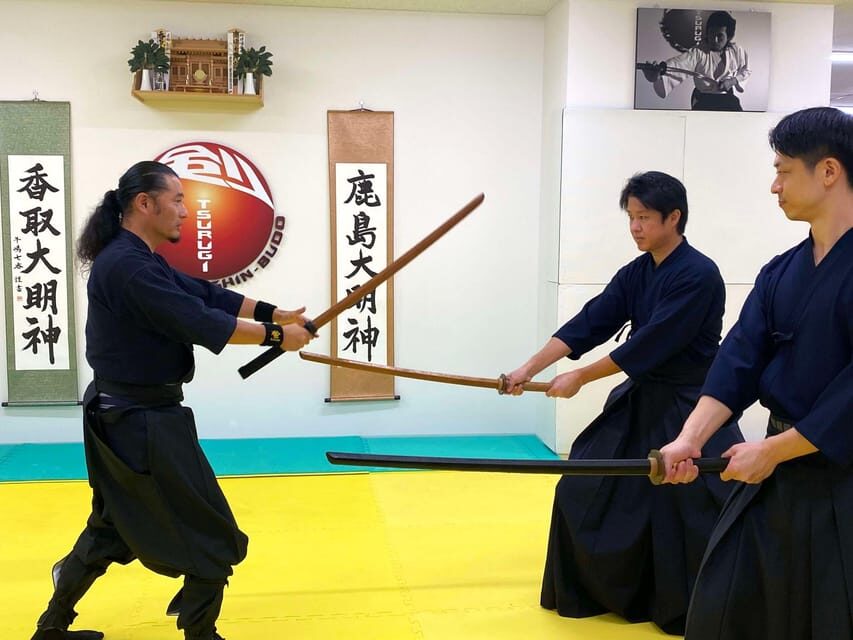
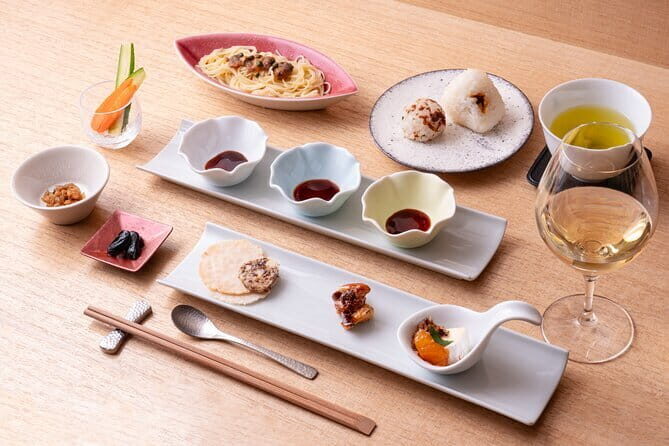
Training ends with a calmer reset: a break where you enjoy authentic matcha green tea and traditional Japanese sweets. It’s not an afterthought. It’s part of the rhythm of the class, giving your body time to come down after active work.
Then you get to wear samurai attire. It’s fun, yes—but it also connects you to what you practiced. When you’re dressed for the role, you understand the difference between playing dress-up and actually moving in proper clothing. The uniform rental is included, and you’ll already feel it fit because you provided sizing in advance.
At the end, you receive a personalized scroll-style certificate with your name and the techniques you learned. That’s a small thing with big emotional value. It’s proof you didn’t just watch a lesson—you did the work and completed the training steps.
You also get a commemorative photo. This is the rare moment where a photo makes sense, because it documents the training experience you just finished, not just the fact that you were near a dojo.
English Instruction, Small Group Size, and How Coaching Really Works
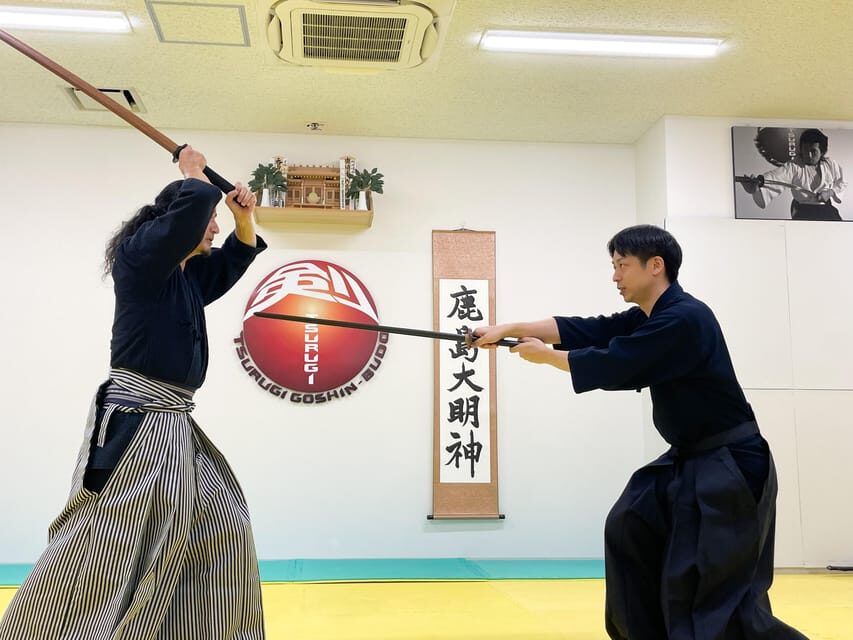
One big practical advantage is the English instruction. Having both English and Japanese from the instructors makes it easier to catch key points fast, especially for terms related to posture, grip, and sequence.
Small group size (limited to 6 participants) is another underrated value. In bigger groups, sword training becomes “everyone waits while someone else gets corrected.” Here, you get more time actually practicing, and instructors can address your specific issues.
In the feedback I’ve seen, the instructors go out of their way to transmit a positive attitude. That doesn’t mean the class is soft. It means you’re guided with encouragement so you can improve without freezing up.
For you, that’s the difference between a fun novelty and a genuinely rewarding skill session. You’ll leave knowing what to focus on if you ever continue training somewhere else.
Price and Value: What $83 Buys in a 2-Hour Training Class
At $83 per person for 2 hours, this isn’t a bargain snack. It’s a skills-and-structure experience. You’re paying for instructors, a traditional training space, and a full lesson format that includes equipment and coached practice—not only demonstrations.
Here’s what you get that supports the price:
- Samurai uniform rental included
- Live sword demonstration by an instructor
- English guide on Bushido, samurai history, and sword skills
- Personalized scroll-style certificate
- Matcha and Japanese sweets
- Commemorative photo
When you add it up, it becomes less like “a tour” and more like a guided training session with cultural elements woven in. If you’re the type who likes doing activities that you can’t easily replicate by yourself, this is solid value.
If you’re trying to keep spending ultra-low, it might feel pricey. But for many people, the one-on-one sparring and the dojo discipline are the main reasons the class is worth it.
Who This Experience Fits Best (And Who Should Skip It)
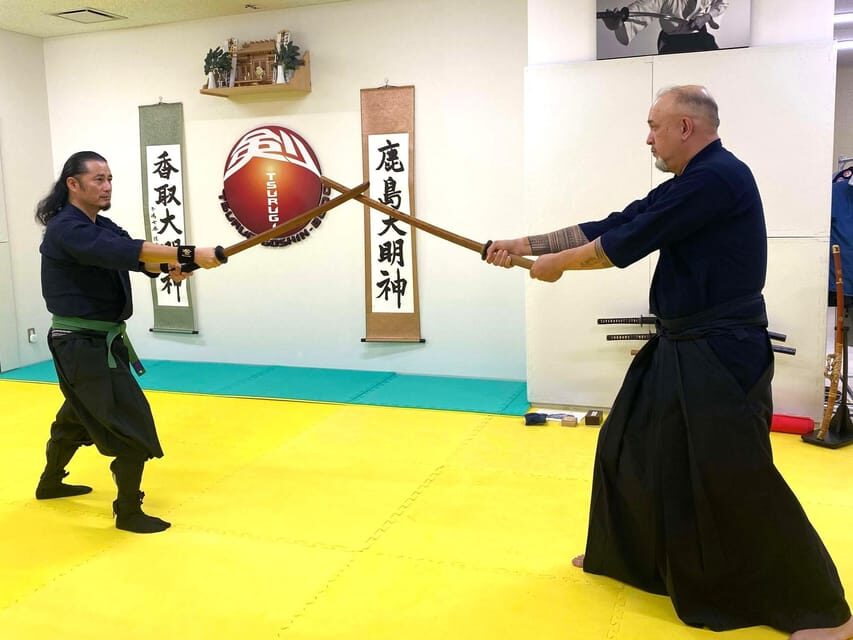
This class is beginner-friendly, and the structure is built to help novices. You don’t need prior sword experience. The training steps move from etiquette and mental control to wooden drills, then gradually to combat technique and sparring.
It’s a good fit if you want:
- A hands-on activity beyond photos
- Clear coaching with a small group
- A cultural experience that includes discipline and etiquette
You should think twice if you’re dealing with physical limits. The class includes heavy-stick strength work, silent walking for balance, and sparring—so it’s active. Also, it’s not suitable for pregnant women and people with a cold.
Also keep in mind the clothing reality: you’ll be in a uniform and training environment where shoes come off. Wear comfortable clothes you can change out of without stress.
Quick Tips Before You Go
Bring the mental expectation that this is training. You don’t need to be fearless, but you do need to be willing to follow instructions and move.
A few practical ideas:
- Plan for a sweaty workout style day, even though it’s indoors
- Tell the organizers your height/size so uniforms fit
- Wear easy, flexible clothing for the change-in/out process
- Expect to focus on control more than speed
And most of all, go with curiosity. The best part is learning how Bushido is practiced as behavior—calm attention, respect, and repeated skill work—rather than just reading about it.
Should You Book Samurai Training in Tokyo?
If you want a Tokyo experience that feels authentic and skill-based, I’d book it. The biggest draw is that you get real training: etiquette, breath control, wooden sword drills, heavy stick work, silent balance walking, kata practice, and then one-on-one sparring. That sequence is how you learn, not just how you pose.
Skip it if you’re sick, if you’re pregnant, or if you’re looking for something low-energy and purely observational. This is about participation.
If you’re in the Kojimachi area and want one standout “do something” moment that goes beyond sightseeing, this is one of the best ways to spend 2 hours in Tokyo.
FAQ
How long is the Samurai Training class?
The duration is 2 hours.
Where does the class take place?
It takes place at a traditional dojo in Tokyo’s Kojimachi district.
What language is the training taught in?
The experience is conducted in English, with instructors also speaking Japanese.
Is this beginner-friendly?
Yes. The class is described as beginner-friendly.
How many people are in the group?
It’s a small group limited to 6 participants, with a minimum of 2 participants required.
What should I do about shoes and indoor rules?
Shoes are not allowed indoors. Smoking indoors is also not allowed.
Is the samurai uniform included?
Yes. Samurai attire rental is included, and you’ll provide height and size (S/M/L) ahead of time.
Is transportation included?
No. Transportation is not included.
Is there any food or drink included?
Yes. You’ll have a matcha green tea break with traditional Japanese sweets.
What do I get at the end of the class?
You’ll receive a personalized scroll-style certificate with your name and the techniques you learned, plus a commemorative photo.