REVIEW · TOKYO
Tsugaru shamisen performance over traditional dinner
Book on Viator →Operated by Arumachi · Bookable on Viator
Asakusa at golden hour is a great idea, and adding a live shamisen show makes it better. This is a small-group evening that strings together classic temple-gate sights and a close-up Tsugaru-shamisen performance, then feeds you with dinner so you do not have to plan anything else. You also start with a quick orientation at the Asakusa Culture Tourist Information Center that helps you understand where you are before the crowds creep in.
I love that the evening is built around zero extra reservations. Dinner comes with a welcome drink, and the concert is scheduled right after, in the same tight restaurant setting that keeps the music from feeling distant or staged. And if you care about getting answers, guides such as Akiko or Yoko san have a way of making the old-town details click fast.
One consideration: you are walking. The route is about a mile with several short stops, plus you’ll sit for dinner and the show afterward, so comfy shoes matter and you should plan for a relaxed pace rather than a sprint.
In This Review
- Key things to know before you go
- Asakusa Culture Tourist Information Center: get your bearings fast
- Kaminarimon to Hozomon: temples, lanterns, and the right kind of quick
- Nakamise Street: a short stroll that can still feed your night
- Senso-ji Temple: old roots, clear context
- The restaurant and Tsugaru shamisen show: intimate by design
- Price and value: why $218.91 can make sense
- Who this tour fits best (and who should think twice)
- Should you book the Asakusa shamisen dinner tour?
- FAQ
- FAQ
- What is the duration of the tour?
- What time does the tour start?
- Where does the tour start, and where do you end?
- Is dinner included?
- How long is the live shamisen concert?
- How big is the group?
- Do I need to arrange any extra reservations?
Key things to know before you go
- Small group cap of 8 keeps the music and Q&A from feeling like a cattle call
- Asakusa Culture Tourist Information Center terrace gives you fast “top-down” orientation
- Kaminarimon and Senso-ji gates are short stops that still help you follow the temple approach
- About a mile of walking makes the evening doable, but not sock-only light
- 40-minute live concert with award-winning performers in an intimate restaurant
- Dinner is included (with one welcome drink) so the plan is simple
Asakusa Culture Tourist Information Center: get your bearings fast
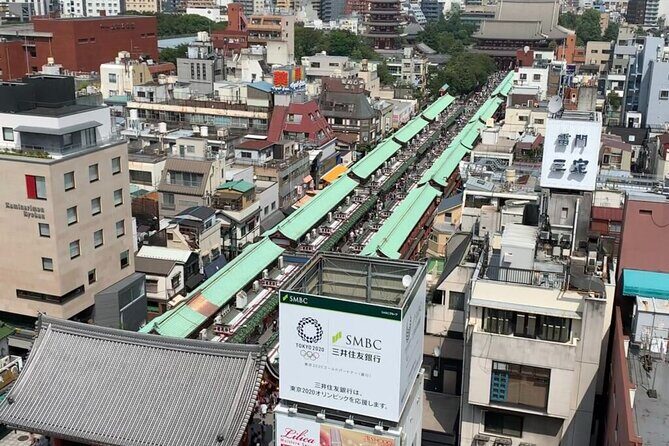
Your evening starts at the Asakusa Culture Tourist Information Center in the Kaminarimon area. It’s one of the newer spots in Asakusa, and the nice move is that you begin with context. Instead of immediately getting swept into street-level chaos, you head to the open terrace Observation Deck on the top floor and take in the layout from above.
Even if you only have a few minutes, that view helps you connect the dots for everything you’ll see later: which way the temple approach runs, where the shopping street leads, and how Asakusa’s old-town feel is organized. It is the kind of “mental map” step that makes later stops feel less random.
This stop is also an easy win because the admission is free, and the time is short. You’re not stuck waiting around for a big museum lesson. You’re setting up the evening so the rest feels smoother.
A few more Tokyo tours and experiences worth a look


Kaminarimon to Hozomon: temples, lanterns, and the right kind of quick
After the deck, you move toward the area’s signature entry point. Kaminarimon, the Thunder Gate, is the gateway to the temple/shrine world in Asakusa, and the giant red lantern is impossible to miss. The tour keeps this as a quick photo-and-orientation stop, which is exactly what you want here. You get the landmark, you learn what it means, then you continue while the momentum is still on your side.
Next up is Nakamise Shopping Street, the famous lane that leads toward Senso-ji. Here’s the useful part: you often expect solemn-and-silent temple scenery. Nakamise feels friendlier than that. You can walk it like a local thoroughfare—shops, snacks, and people moving through—so the temple approach becomes more human and less like a staged postcard.
Then you pass Hozomon, the inner gate. It’s a two-story gate that frames what’s ahead, and it works as a natural pause point. You’re not just rushing from one sight to the next; each gate feels like a chapter marker. The walk stays manageable, and you’re always being told what you’re looking at and why it matters.
Nakamise Street: a short stroll that can still feed your night
Nakamise Street is one of those places where timing changes everything. Early evening means you get energy without the midday crush feeling. The tour’s approach is practical: it’s a brief segment, just long enough to appreciate the street vibe and walk the classic route leading you toward the temple.
If you want to buy a snack, you’ll have the chance. But this tour is not built as a food crawl, so I’d treat eating as optional rather than expected. Think of it as a warm-up stretch before dinner and the show.
Also, because this part happens before the temple proper, you will likely notice how the mood shifts as you get closer to Senso-ji. That contrast is part of the charm of Asakusa, and walking it with a guide helps you notice what you might otherwise ignore.
Senso-ji Temple: old roots, clear context
Senso-ji is Tokyo’s oldest temple, and it’s also one of the most significant religious sites in the city. The stop is brief, but it’s the kind of brief that works when your guide focuses on the few elements that give you the bigger picture.
One detail that can genuinely change how you see the place: the nearby five-story pagoda. It holds Buddha’s ashes presented by the Sri Lanka government and Buddhist society as a goodwill gesture, and that story adds a layer of international connection to a very local-feeling area.
Even with just about five minutes at the main complex, you’re not left staring at a pile of pretty structures. You come away with a sense of what each part represents and how the Asakusa temple approach is meant to be experienced.
This is also a good moment to remember the tour’s overall rhythm. You are out in daylight-like early evening energy for the walking portion, then you shift indoors for the show and dinner. Senso-ji gives you the cultural anchor before the night becomes more intimate and musical.
The restaurant and Tsugaru shamisen show: intimate by design
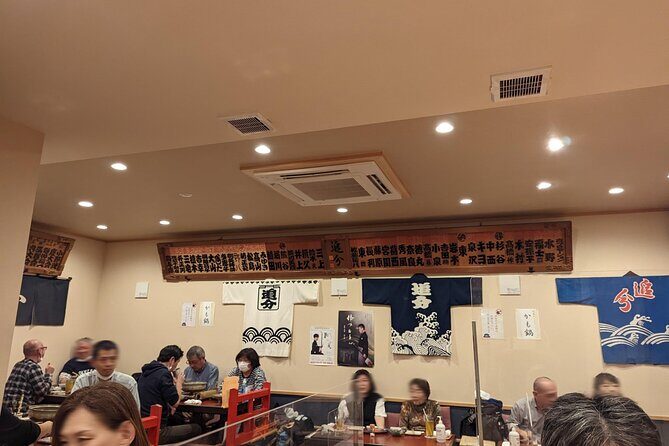
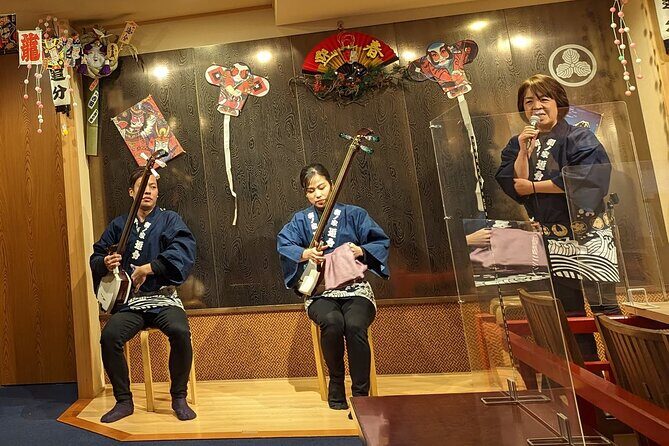
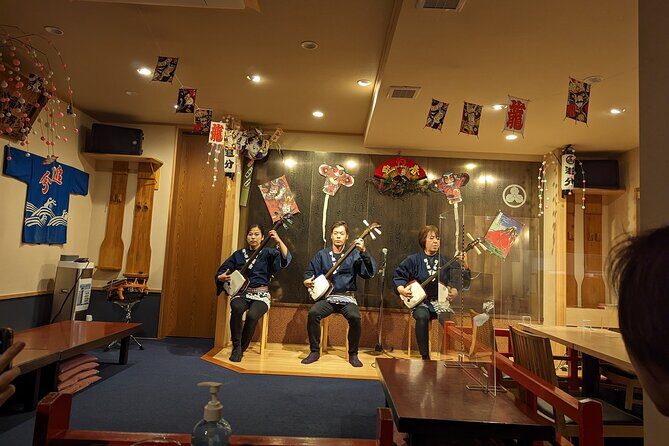
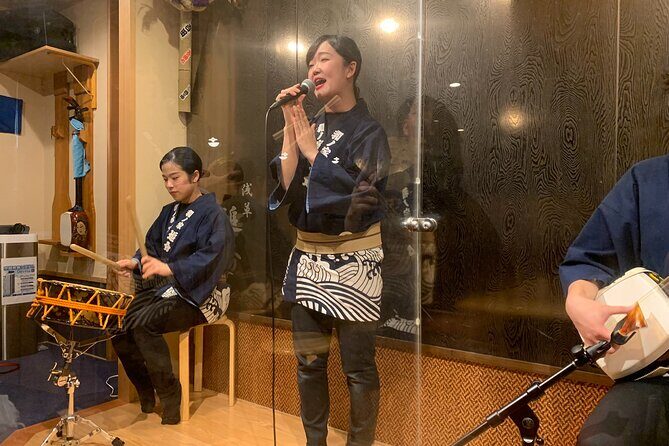
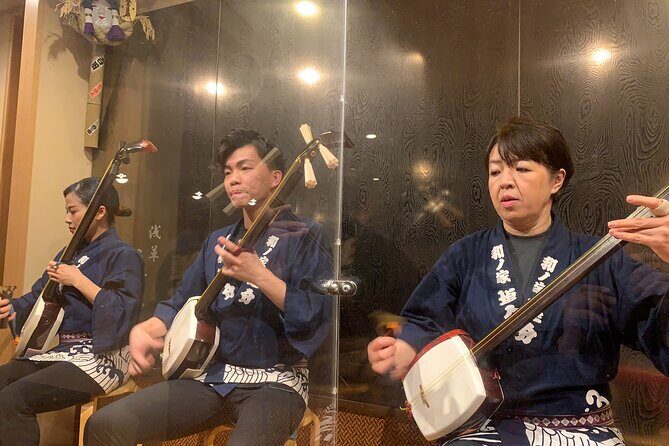
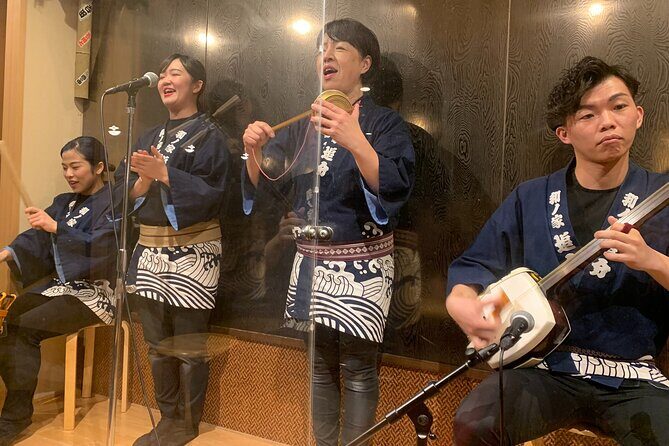
The best part of this whole evening is what happens after you reach the end of the walk. You arrive at a small Japanese restaurant in Asakusa—small enough that the concert is presented in a very close setting rather than a big performance hall.
The tour timing is built around that. You spend around two hours at the restaurant area, and the live concert runs about 40 minutes. Dinner happens as part of the same package, with a welcome drink included. Extra drinks are available but not included in the tour price.
What makes this work for you: you’re not juggling schedules. No separate concert ticket. No trying to figure out which nearby restaurant has the right show time. The performance is scheduled so you can transition smoothly from eating to listening and back.
And because the venue is small, you get that rare travel feeling of being close to the musicians. You’re not watching a distant stage. One of the things I like about this setup is that the music stays part of the evening, not a separate event you rushed to catch.
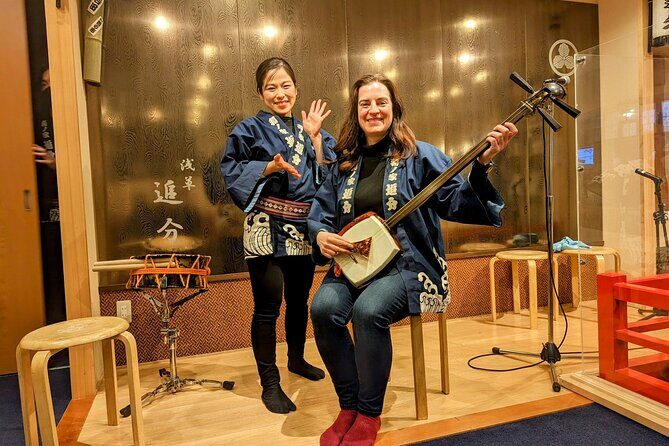
After the concert, there’s also time to meet the musicians. That’s the moment where the experience shifts from entertainment to a real cultural exchange, and it’s a big reason this tour gets such strong marks.
A few more Tokyo tours and experiences worth a look


Price and value: why $218.91 can make sense
At $218.91 per person, this is not a bargain-basement activity. But it also bundles the parts that usually cost time and money separately: a guided Asakusa walk, a 40-minute performance, and dinner with a welcome drink.
Here’s the value math that usually matters on evenings like this:
- You are paying for guided time in central Asakusa rather than DIY route planning.
- You’re paying for guaranteed concert seating in a small restaurant, which can be hard to nail down on your own.
- You’re paying for dinner included with a drink, which offsets at least part of the usual evening expense.
Two practical notes that help you decide if it’s worth it for you:
- Hotel pickup and dropoff are not included. You’ll need to reach the meeting point yourself and get to the restaurant area at the end (the tour ends at the restaurant).
- The tour depends on good weather, so if conditions are bad, you’ll be offered a different date or a full refund.
If you like having a plan—especially on a first trip—this package tends to feel like good value.
Who this tour fits best (and who should think twice)
This works best if you want an Asakusa evening that stays manageable. You’ll see the major temple approach landmarks—Kaminarimon, Nakamise Street, Hozomon, and Senso-ji—without spending the entire night navigating crowds and side streets alone.
It also suits you if you care about traditional music and like being close to performers. The concert isn’t an abstract distant spectacle; it’s designed for an intimate restaurant setting.
One more practical fit: dietary needs. I saw a clear example in the feedback—one vegetarian reviewer said the team made sure she could eat on the tour. That doesn’t mean every dietary request is guaranteed, but it does suggest they take dinner seriously and will try to help.
Who should think twice? If you dislike walking in a compact route, or if you want a long, unscheduled wander time after seeing Senso-ji, this itinerary’s structure might feel a bit scheduled. It’s a plan with momentum.
Should you book the Asakusa shamisen dinner tour?
If you’re coming to Tokyo for the classics but also want one memorable evening that feels local, I’d lean yes. The combination is the point: short, guided temple landmarks in Asakusa, then a Tsugaru shamisen performance in an intimate restaurant with dinner handled for you.
Book it if:
- You want small-group attention (max 8).
- You prefer cultural context over random sightseeing.
- You like the idea of seeing a performance right where you eat.
Skip it if:
- You need long free time to roam and choose your own pace after Senso-ji.
- You are very sensitive to any walking and want a more stationary experience.
FAQ
FAQ
What is the duration of the tour?
It runs for about 4 hours.
What time does the tour start?
The start time is 5:30 pm.
Where does the tour start, and where do you end?
You meet at the Asakusa Culture Tourist Information Center. The tour ends at the restaurant at 5-chōme-37-7 Asakusa, where you watch the live music performance over dinner.
Is dinner included?
Yes. Dinner is included, along with one welcome drink. You can order additional drinks separately for an extra cost.
How long is the live shamisen concert?
The concert is about 40 minutes.
How big is the group?
The tour has a maximum of 8 travelers.
Do I need to arrange any extra reservations?
You do not need to make additional dinner reservations because dinner is included. Hotel pickup and dropoff are not included, though, so you’ll handle your own travel to the meeting point.