REVIEW · KYOTO
Discover Kyoto by Bike Full Day Tour
Book on Viator →Operated by Jaime · Bookable on Viator
Kyoto is best seen at bike speed. This full-day e-bike tour mixes big-name stops like Toji and Ginkaku-ji with quieter areas such as Honen-in and the back lanes near Gion, so you get the Kyoto people come for without feeling trapped in tour-bus traffic. I especially like the relaxed pace with frequent photo pauses and local context from the guide, and I also love how the route uses backstreets and riverside paths that buses simply can’t reach. One drawback to weigh: you’ll ride about 32 kilometers and need to maneuver safely on narrower paths, plus a few famous areas can still be crowded.
You start at a very practical spot (a nearby 7-Eleven), and the tour runs about 7 to 8 hours starting at 9:00 am. It’s a private tour, so your group sets the tone, and you get a mobile ticket for smooth check-in. Also note that the day depends on good weather—if conditions are off, you’ll be offered a different date or a refund.
In This Review
- Key takeaways
- Toji-to-Gion by E-Bike: what this full day really feels like
- Meeting point and timing: start smart at a Kyoto 7-Eleven
- Toji and Umekoji Park: UNESCO pagoda views plus a local breath of air
- Ryukoku University and Nishi Honganji: everyday Kyoto meets a major UNESCO temple
- Riding the Kamo River and the quieter geisha lanes near Gion
- Heian Shrine, the Lake Biwa Canal story, and the engineering-meets-faith angle
- Nanzen-ji and the Philosopher’s Path: big Zen energy without the stampede (mostly)
- Honen-in and Ginkaku-ji: quieter hills and the Silver Pavilion name game
- Gion at the end of the day: geiko and maiko culture in lantern lanes
- Bike comfort and safety: can you handle 32 km and narrow paths?
- The value question: is $128.48 worth it for a private full day?
- Who should book this Kyoto bike day?
- Should you book Discover Kyoto by Bike?
- FAQ
- How long is the Discover Kyoto by Bike full-day tour?
- Where is the meeting point, and when does the tour start?
- What is included in the tour price?
- Is lunch included?
- How much riding will I do?
- Is this tour private?
- What ticket or confirmation do I receive?
- What happens if the weather is poor?
Key takeaways
- E-bike support makes a long day doable, even when the route includes hills and tight turns
- Toji + Ginkaku-ji + Gion plus lesser-known stops like Honen-in gives you range, not just highlights
- Local-guide storytelling helps you understand what you’re seeing beyond photos and facts
- Backstreets and riverside riding mean more calm time, not constant traffic noise
- Plan for 32 km of riding and narrow-path navigation, especially around the busiest sights
Toji-to-Gion by E-Bike: what this full day really feels like
This isn’t a grab-everything checklist tour. It’s a full-day Kyoto rhythm where biking is the connective tissue. The e-bikes take the sting out of distance, letting you spend more time looking up at architecture, pausing in temple courtyards, and drifting along calmer lanes instead of constantly checking bus schedules or fighting for train seats.
What makes it work is the pacing. You get set stops, but you’re also moving often enough that the day keeps a pleasant momentum. In a city where walking can burn your legs fast, that matters. In the reviews, people highlight that you’ll see famous sites while still getting plenty of time through less busy areas, which is exactly what I’d hope for when you’re paying for a whole day.
The tour is small-group in spirit and private in practice—meaning just your group rides together with the guide. That usually helps with navigation and comfort, especially on routes that mix paved paths with narrower sections.
You can also read our reviews of more cycling tours in Kyoto

Meeting point and timing: start smart at a Kyoto 7-Eleven
You meet at 7-Eleven, 44-1 Higashikujō Kamitonodachō, Minami Ward. The start time is 9:00 am, and the tour ends back at the meeting point. That end point is helpful: you don’t have to scramble across the city after an 8-hour day, and you can easily connect to public transportation for dinner plans.
A mobile ticket is provided, which keeps things simple—no paper scrambling right before you roll out.
Because the tour is outdoors for most of the day, I’d treat weather as part of your packing plan. The tour requires good weather, so if you’re traveling in rainy season, think about bringing a light rain layer you can handle while riding.
Toji and Umekoji Park: UNESCO pagoda views plus a local breath of air
You begin at Toji, a UNESCO World Heritage Site known for its five-story pagoda, described as the tallest wooden tower in Japan. This is a strong opener because it gives you a high-impact visual early, before the day gets complex with multiple neighborhoods.
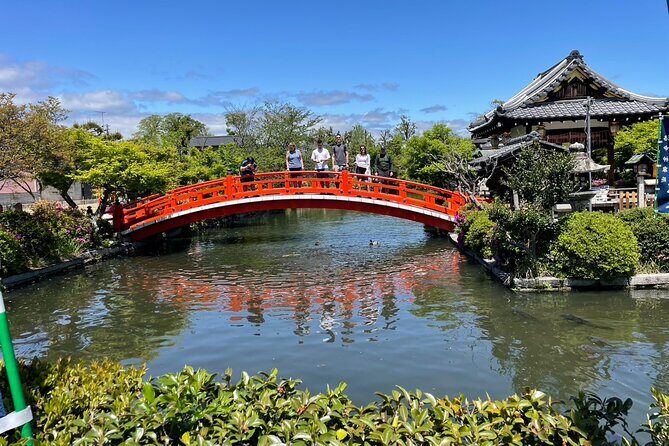
After the temple grounds and that iconic pagoda vibe, the route shifts gears toward Umekoji Park. This is the kind of place that feels like Kyoto takes a deep breath—green space, seasonal flowers, and a pond where you can pause and reset. It’s not an attraction you’d always rush to on your own, and that’s part of the value here: the tour builds in stops that feel like relief, not just more boxes to check.
Ryukoku University and Nishi Honganji: everyday Kyoto meets a major UNESCO temple
Next up is Ryukoku University Omiya Campus. Passing through a university area gives you a glimpse of daily Kyoto life, not only the sightseeing Kyoto. You also get a sense of how Buddhism shapes the campus identity, since the school traces its roots to the Nishi Hongwanji sect.
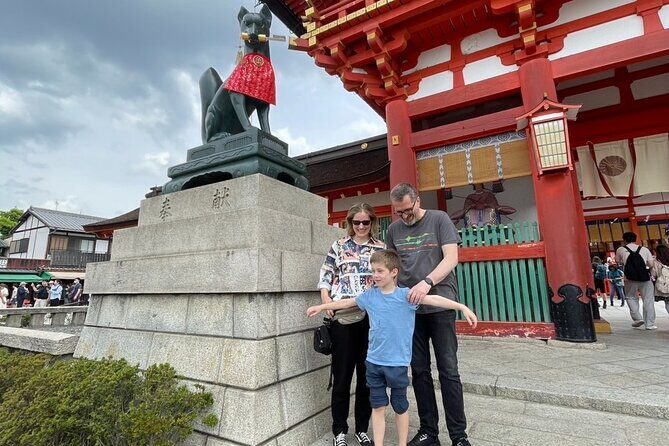
Then you reach Nishi Honganji, another UNESCO site and a major temple of Jodo Shinshu Buddhism. The architecture is the headline—especially its wooden structure and the scale of the courtyard. The guide’s commentary is where this stop can really click: you’re not just looking at buildings, you’re understanding why the layout and the visual design matter.
Even with a temple like this, biking changes how you experience it. You don’t arrive worn out, so you can slow down and actually look—rather than just snap photos and hurry to the next bus stop.
Riding the Kamo River and the quieter geisha lanes near Gion
One of the tour’s best tricks is using the Kamo River riding segment. It’s a favorite spot for locals to relax or jog, so the atmosphere often feels more everyday and less staged than the main sightseeing streets. When you’re on a bike along a river path, you get an easy change in scenery without the stress of big-city intersections.
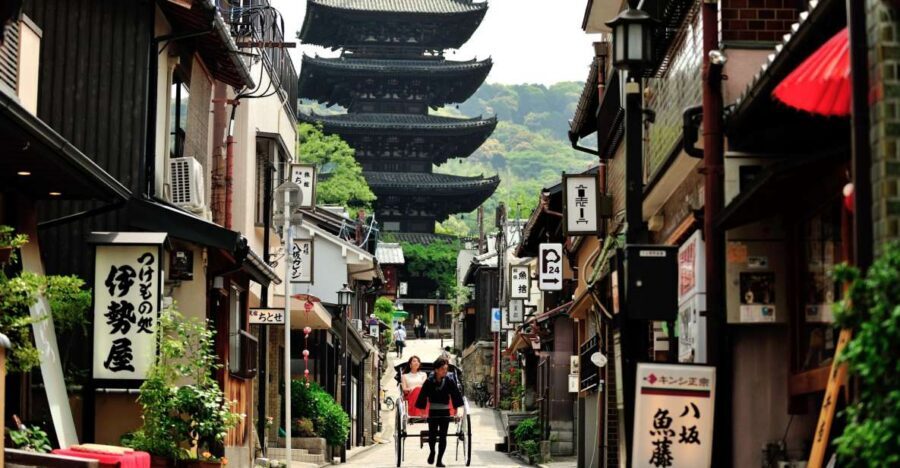
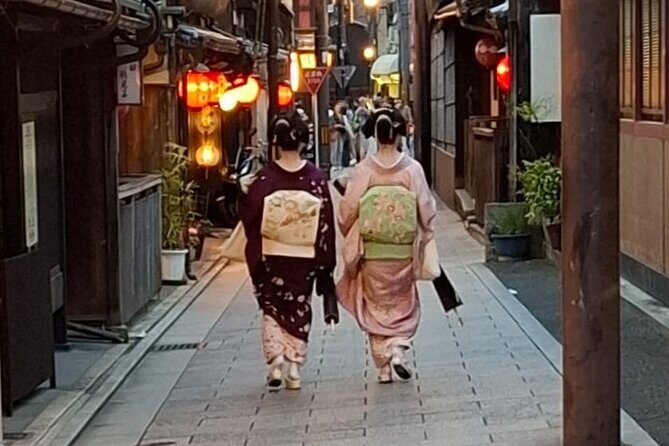
After that, you cycle through a quieter area near Gion, often described as a geisha district with beautiful traditional lanes. This is where you see the “old Kyoto” details that don’t always translate well in crowded pedestrian zones. You’ll ride through alleys where you can take in lantern-lit lanes and traditional machiya-style houses at an unhurried speed.
Just keep expectations grounded: Gion can be crowded even when the route tries to steer you away from the worst of it. Still, the idea is that you get a calmer ride portion between the points that are naturally popular.
A few more Kyoto tours and experiences worth a look

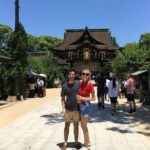
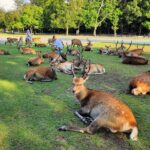
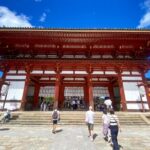
Heian Shrine, the Lake Biwa Canal story, and the engineering-meets-faith angle
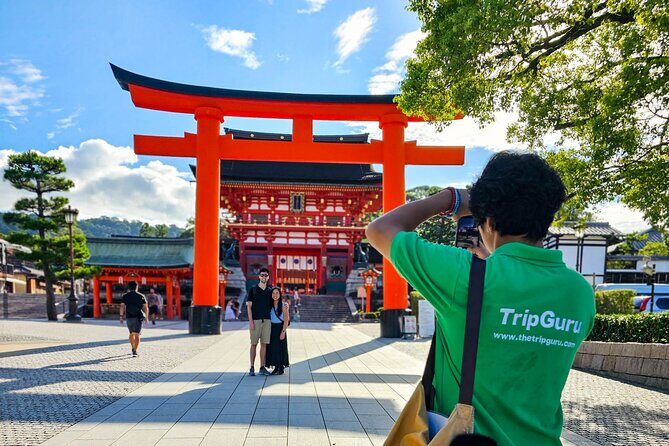
After Gion-area back lanes, you move to Heian Shrine. It was built in 1895 to mark Kyoto’s 1,100th anniversary, and you’ll notice the bright vermilion gate. The buildings are modeled after the ancient Imperial Palace, so this stop feels more ceremonial and formal than some of the smaller temples.
Just down the road, you’ll also spot one of Japan’s largest torii. It’s the kind of thing you might miss if you were only using a map and walking straight through, which is why guided routing matters.
Then comes a stop that adds a different flavor: Lake Biwa Canal at the Biwa Aqueduct Museum. You get a short look at an engineering project from the 1890s that brought water and electricity and helped reshape life in Kyoto after the canal period changes. This is a nice counterbalance to all the religious architecture. It helps you see Kyoto as a city built not only on tradition, but also on major infrastructure decisions.
Nanzen-ji and the Philosopher’s Path: big Zen energy without the stampede (mostly)
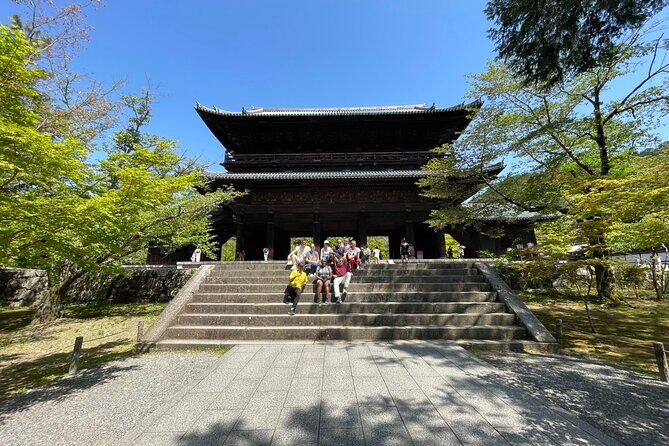
Nanzen-ji is one of Kyoto’s important Zen temples, founded in the 13th century. You’ll have time to appreciate its massive Sanmon gate, quieter Zen garden feel, and the famous red brick aqueduct that runs right through the complex. This is one of those stops that works well in a bike tour because you’re not just hiking from one entrance to another—you arrive, look, and then keep moving before you lose steam.
Next, you’ll walk along the Philosopher’s Path, a stone walkway that follows a canal lined with cherry trees and named after philosopher Nishida Kitaro, who used to walk there while meditating. The canal-side setting can be very peaceful, especially when you arrive before the heaviest crush. In spring, it’s known for cherry views, but even outside peak bloom, the canal walk gives you a gentle change of pace from temple courtyards.
Be prepared for at least some crowding depending on the day, but the structure of the tour usually helps you spend more time riding between stops instead of being trapped in long pedestrian bottlenecks.
Honen-in and Ginkaku-ji: quieter hills and the Silver Pavilion name game
The tour continues into the hills with Honen-in, a quieter temple founded in the 1600s to honor the Buddhist priest Honen and the Pure Land teachings. Expect a calm, contemplative feel with a mossy gate and white sand elements. This stop tends to feel like a breather before the bigger-known sights.
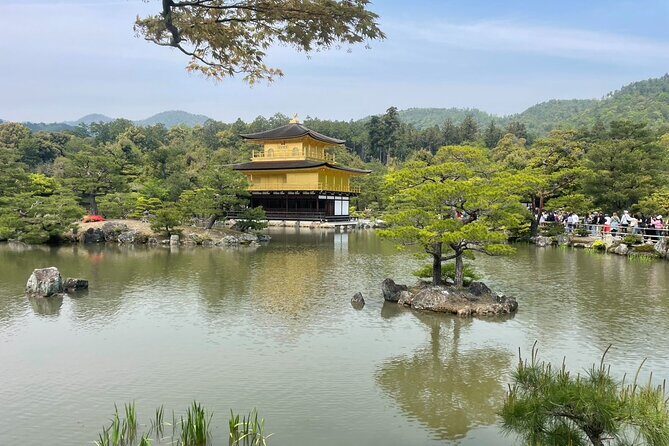
Then you arrive at Ginkaku-ji (the Silver Pavilion). Here’s the fun detail the guide can help you catch: even though it’s called the Silver Pavilion, it was never actually covered in silver. That kind of “name vs. reality” moment makes a difference when you’re looking at a structure with a famous label. You’ll take a short walk around and absorb the atmosphere without rushing.
This segment is also a reminder that biking doesn’t eliminate time to slow down. You still get walking moments where you can stand, look, and take photos with less pressure.
Gion at the end of the day: geiko and maiko culture in lantern lanes
You finish with time in Gion, Kyoto’s most famous geisha district. The area is known for traditional wooden houses and historic charm, and you’ll learn about geiko and maiko culture while riding through lantern-lit lanes.
Finishing near the end of the day is smart. When people are tired, they tend to miss details. Here, the day is structured so you’re fresh enough earlier for temples, and then you end on the streetscape that feels distinctly Kyoto. You can also decide on your own after the tour whether you want to linger for photos or head straight to dinner, since the tour returns you to the meeting point.
Bike comfort and safety: can you handle 32 km and narrow paths?
The tour asks for moderate physical fitness. You need to be fit enough to ride about 32 kilometers and maneuver safely on narrow paths. The good news is that it’s with an E-bike, so you’re not powering the entire route with your legs.
Still, e-bikes are not magic in tight spaces. If you’re not comfortable riding in places with pedestrians, narrow lanes, or quick turns, this is the main thing to consider. Practice in a calm area before the tour day if you can. Also wear shoes with grip and bring a rain layer if forecasts look uncertain.
If you have any mobility limitations, this one may not be the right fit. The tour is built for cycling flow, not slow wheel-on-a-sidewalk sightseeing.
The value question: is $128.48 worth it for a private full day?
At $128.48 per person, the value comes from the combination: a full-day route, an e-bike provided, and access to a structured set of stops that cover both famous and quieter Kyoto areas. You’re also paying for a guide who can connect dots while you’re moving—so you’re not just getting logistics and a map.
A private tour helps too. Your group doesn’t have to adapt to strangers’ pace or preferences, and that can make a long day feel more relaxed. In the reviews, Jaime is singled out as friendly and knowledgeable, and that matters because temple and neighborhood context can turn a photo stop into something you remember.
One note about food: lunch isn’t listed as included. The day is long, so plan on eating somewhere you choose during the gaps. The good sign is that the itinerary is designed with real time for breaks, and people have described their meal experiences positively.
Who should book this Kyoto bike day?
I’d point you to this tour if you want a Kyoto itinerary that feels like local movement rather than only destination checkmarks. It’s great for:
- couples or small friend groups who like biking and want a guided route
- people who want Gion + major temples but also want quieter moments like Honen-in
- travelers comfortable with a long riding day and safe navigation
It may not be your best match if you:
- dislike riding or aren’t comfortable with narrow paths
- want a purely walking-based day
- need a very low-effort itinerary
Should you book Discover Kyoto by Bike?
If you’re the type who likes seeing a city in motion, I think this is a strong choice. The mix of Toji, Nishi Honganji, Nanzen-ji, Honen-in, Ginkaku-ji, and Gion, plus the Kamo River riding and quieter lanes near Gion, gives you variety without losing the plot. The e-bike helps you keep the day fun, and the guide quality (including Jaime’s friendly, knowledgeable approach) makes the stops land better than surface-level photos.
Just be honest with yourself about the bike part. If you can handle 32 km and narrow-path riding, you’ll get a day that feels like Kyoto, not like a series of waiting rooms.
FAQ
How long is the Discover Kyoto by Bike full-day tour?
It runs about 7 to 8 hours.
Where is the meeting point, and when does the tour start?
You meet at 7-Eleven, 44-1 Higashikujō Kamitonodachō, Minami Ward, Kyoto, starting at 9:00 am. The tour ends back at the meeting point.
What is included in the tour price?
The tour includes use of an E-bike and admission for Ginkaku-ji (Silver Pavilion).
Is lunch included?
Lunch is not listed as included.
How much riding will I do?
You’ll need to be fit enough to ride about 32 kilometers and maneuver safely on narrow paths.
Is this tour private?
Yes. It’s a private tour/activity, with only your group participating.
What ticket or confirmation do I receive?
You receive a mobile ticket, and confirmation is received at the time of booking.
What happens if the weather is poor?
The experience requires good weather. If it’s canceled due to poor weather, you’ll be offered a different date or a full refund.