REVIEW · HIROSHIMA
Full Day Hiroshima and Miyajima Tour
Book on Viator →Operated by Snow Monkey Resorts Tours (Machinovate Japan Ltd.) · Bookable on Viator
One day can change how you see Japan. This full-day route pairs the solemn side of Hiroshima with the iconic tori gates of Miyajima, plus a World Heritage Sea Route ferry ride.
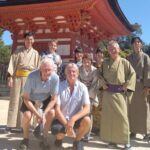
I really liked the mix of stops: Shukkei-en Garden, Hiroshima Castle Ruins, and the Peace Memorial Museum all tell different chapters of the city in one loop. I also loved having a guide like Isabella—energetic, friendly, and good at turning each site into a clear story you can actually remember.
The only real caution: it’s a lot of walking. If your legs are on the short side or you hate standing around, plan for breaks and wear comfortable shoes.
In This Review
- Key highlights (quick, practical)
- Why this one-day Hiroshima and Miyajima route makes sense
- Starting point at Hiroshimaekiminamiguchichikahiroba: get your bearings fast
- Shukkeien Garden: slow down before the serious stuff
- Hiroshima Castle Ruins: where the city’s story gets its shape
- Peace Memorial Museum: what you should be ready to feel
- World Heritage Sea Route ferry to Miyajima: a reset over water
- Senjokaku Pavilion: unfinished, open, and strangely powerful
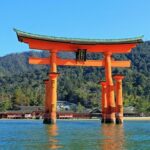
- Itsukushima Shrine Torii: the moment most people remember
- Price and value: is $165.19 a good deal?
- Pacing, walking, and what to pack
- Who should book this tour?
- Should you book the Full Day Hiroshima and Miyajima Tour?
- FAQ
- Where is the meeting point for the tour?
- What time does the tour start?
- How long is the full day tour?
- Is lunch included?
- What is included in the tour price?
- Do I need to bring tickets, or is it mobile?
- Which Hiroshima sights are included?
- Which Miyajima sights are included?
Key highlights (quick, practical)
- Small group size (max 15) keeps the day from feeling like a factory line
- English-speaking guide helps you connect the dots fast
- Admissions included at every major stop means fewer ticket hassles
- World Heritage Sea Route ferry gives you time to reset on the way to Miyajima
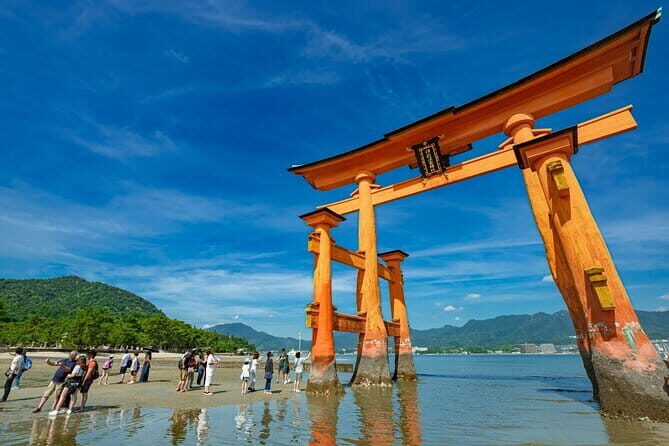
- Itsukushima Shrine with the Torii is the photo-and-feeling moment of the day
- Mobile ticket helps you stay flexible with confirmations and day-of entry
Why this one-day Hiroshima and Miyajima route makes sense
If you only have one day in Hiroshima, you face a basic problem: the city has heavy, meaningful sites and also some of Japan’s most famous scenery nearby. This tour solves that by building a logical loop through the Hiroshima City Center first, then finishing on Miyajima with ferry access.
It also helps you avoid the most common trip mistake: trying to plan everything yourself and then losing time at ticket counters or transit connections. Here, you get an English-speaking guide, entry fees covered, and transportation to Miyajima handled with ferry and train.
The pacing is efficient. You’ll move through garden space, castle remnants, and atomic-bomb remembrance, then switch gears to shrine views and the sea. That contrast is part of the point of the day—and if you’re paying attention, it can make both halves hit harder.
A few more Hiroshima tours and experiences worth a look


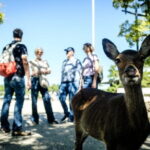
Starting point at Hiroshimaekiminamiguchichikahiroba: get your bearings fast
The day starts from the Hiroshimaekiminamiguchichikahiroba Information Center (9-1 Matsubarachō, Minami Ward). The stated start time is 8:40 am, and you’ll be near public transportation.
Your guide meets you by Hiroshima Station at the Shinkansen Gates under the Tourist Information sign. The reason this matters: in Japan, stations can be huge. Having a clear meeting spot reduces stress and helps you show up ready to walk, not wandering.
Also note the tour uses a mobile ticket. That’s handy because you don’t have to juggle printed paperwork during a busy day.
Shukkeien Garden: slow down before the serious stuff
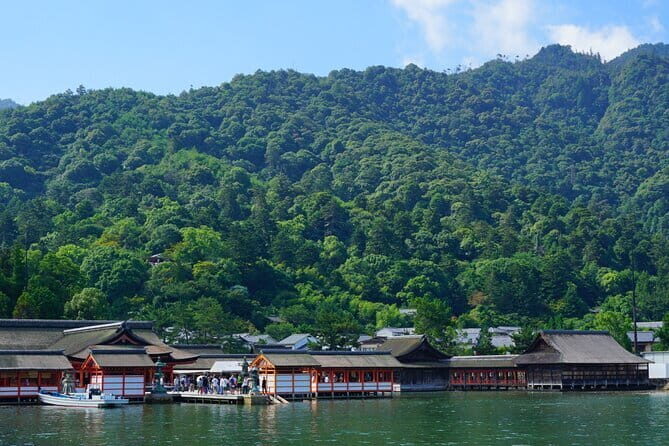
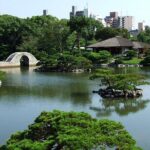
Stop 1: Shukkei-en Garden is a smart opener. It gives you a calmer start to the day before you hit the emotional weight of Hiroshima’s later sites.
This is also a good place to adjust your rhythm. You get around one hour here, which is enough time to see key garden spaces without turning it into a long self-guided marathon. If you’re the type who likes to watch how people move through a place—quietly, with intention—this garden helps set that tone.
Value for you: you’re not just checking off a sight. You’re getting an atmosphere. That makes the next stops feel more grounded, not like random highlights.
Hiroshima Castle Ruins: where the city’s story gets its shape
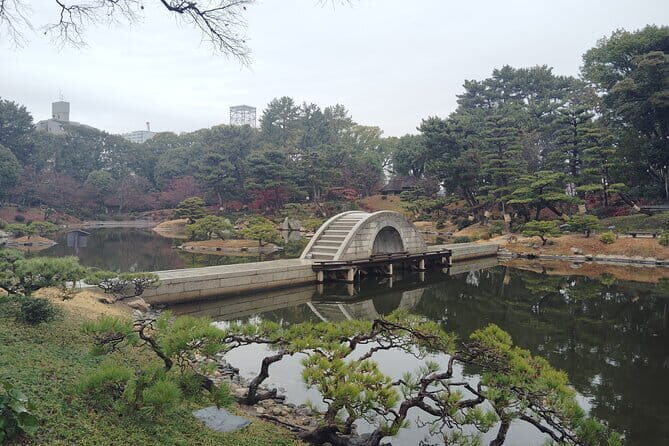
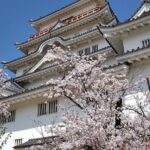
After the garden, you head to Hiroshima Castle Ruins for about 1 hour 30 minutes. Your guide leads you to main areas in the ruins and explains the purpose and significance of what you’re seeing.
Why I like this stop in an organized tour: ruins can feel like, well, ruins. But when someone frames what the castle was meant to do—how it fit into power, defense, and local life—you get a clearer mental map. Even if you only get a partial view of structures, you’ll understand why those locations mattered.
Practical note: you should expect walking on uneven areas around ruins. If you go in with good shoes, you’ll enjoy it more.
Peace Memorial Museum: what you should be ready to feel
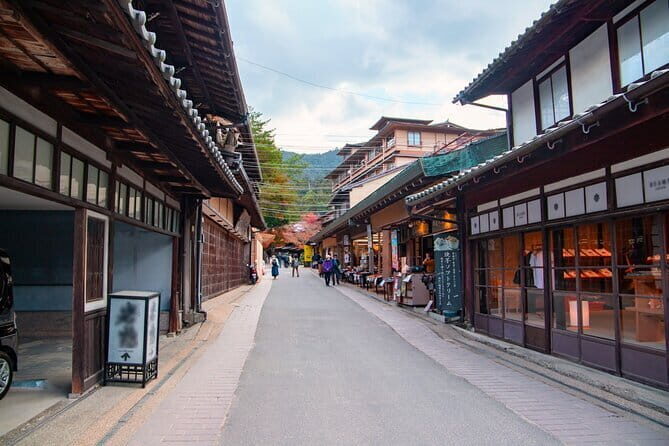
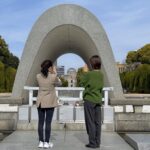
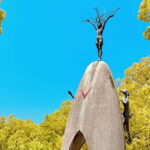
Stop 3: Hiroshima Peace Memorial Museum is the emotional core of the day. You’ll spend around 1 hour 30 minutes, focused on exhibits that include personal belongings left behind by victims of the atomic bombing.
This isn’t a light visit. The museum is designed to make remembrance specific and human, not abstract. A guided format helps here because it gives context for the items you’ll see—so you don’t just look at objects, you understand why they were left, and what they symbolize.
One consideration: you may want a moment to breathe between rooms. The tour schedule will keep you moving, but you can still take short pauses. If you need extra time, this is the kind of place where you’ll feel it immediately.

World Heritage Sea Route ferry to Miyajima: a reset over water

Right after Hiroshima’s museum, the tour brings you to the pier near the museum for a ferry to Miyajima. The ride is about 45 minutes, and your guide points out relevant sights along the way.
This part matters more than you might think. The day goes from remembrance to scenery, and the ferry gives you a buffer. It’s also an easy way to see the coastline from the water without doing extra planning.
You’ll then continue onward for the Miyajima stops, with transportation to/from Miyajima included as part of the tour.
If you care about photos, bring a camera ready before you board. Even without special weather details, ferry rides tend to give you a changing view every few minutes.
Senjokaku Pavilion: unfinished, open, and strangely powerful
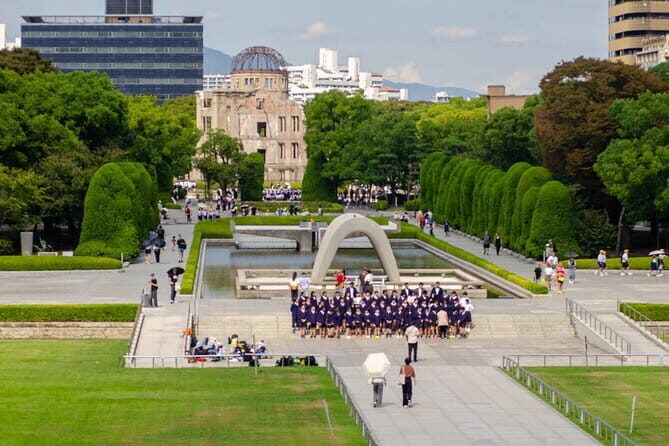
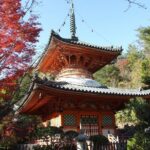
On Miyajima, the next stop is Senjokaku Pavilion for about 30 minutes. This pavilion is a shrine space whose construction was never completed—and it remains unfinished.
That unfinished detail is not just trivia. It changes the feeling of the site. Instead of a finished complex that tries to impress you with perfection, you get a larger sense of scale with something left “in the middle.” For many people, that makes the place feel more honest and a little eerie in a thoughtful way.
This is also one of the shorter stops, so you’re not rushed for long. You can look around, take in the spaces, and get ready for the bigger icon of the island.
Itsukushima Shrine Torii: the moment most people remember
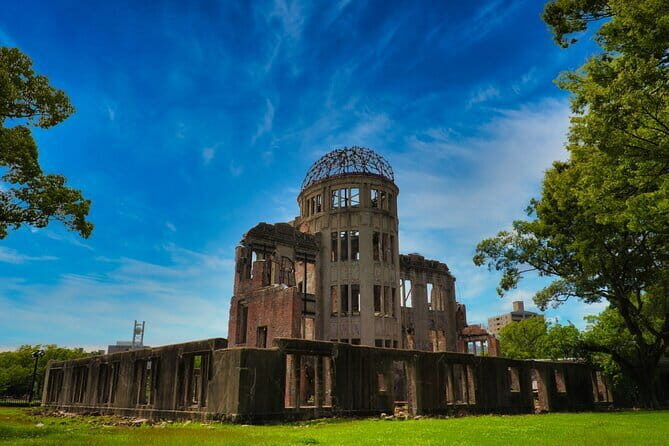
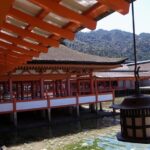
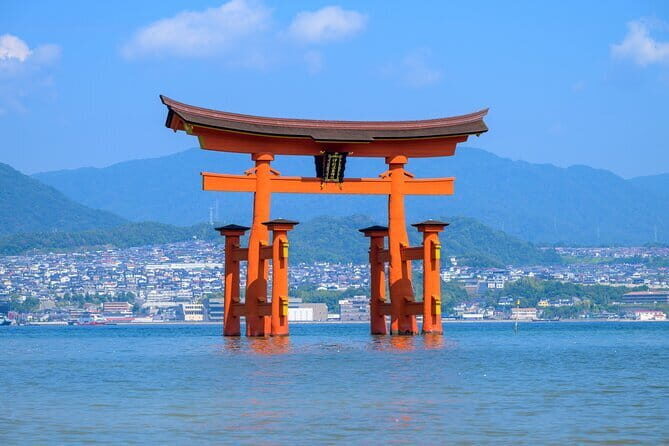
The centerpiece is Itsukushima Shrine, including the view of the Torii. You’ll have about 2 hours 30 minutes, which is a generous block. Your guide will explain Shintoism and the history of the shrine while you walk through the approach areas.
This stop is where the tour earns its keep. The combination of shrine setting, sea proximity, and the famous torii creates that Japan photo many people dream about—and the guide helps you understand why this shrine is treated as more than just a backdrop.
If you want the best experience, go into it with patience. You’ll be moving at tour pace, but the longer time window lets you slow down at the key viewpoints.
Price and value: is $165.19 a good deal?
At $165.19 per person, this tour isn’t the cheapest way to do Hiroshima and Miyajima—but it is a solid value if you want a guided one-day plan that covers the “big ticket” logistics.
Here’s what you’re paying for, based on what’s included:
- English-speaking guide
- Entry fees at all tour locations
- Transportation to/from Miyajima via ferry and train
- A route that strings together Hiroshima’s main city-center highlights and Miyajima’s core sights
What’s not included:
- Lunch
- Accommodation
- Transportation to meet-up point
My take: the price makes more sense if you would otherwise spend time figuring out how to connect multiple paid attractions and transport segments on your own. If you’re the kind of traveler who plans everything down to minute-by-minute, you might be able to DIY part of it cheaper. But if you want less hassle and more meaning per hour, the included admissions and transport are doing real work for you.
Big bonus: the group size is capped at 15 travelers, and that tends to keep the day from feeling chaotic.
Pacing, walking, and what to pack
This tour runs about 8 hours, and the itinerary naturally stacks walking time—garden paths, castle ruins, museum halls, then shrine approaches. Your biggest enemy is usually not distance alone; it’s the mix of short stops and continuous motion.
Bring:
- Comfortable shoes (you’ll thank yourself later)
- Water (especially because you’ll be out for most of the day)
- A small layer you can adjust for weather changes
If you want to photograph well, consider having your phone/camera charged before the meeting time. You don’t want to waste the ferry ride hunting for an outlet.
Who should book this tour?
This is a great fit if you:
- Want Hiroshima and Miyajima in one day
- Prefer a guided explanation over self-reading at each stop
- Like having admissions handled so your schedule stays tight
- Are okay with lots of walking for about 8 hours
It’s also a smart choice if you don’t want to manage ferry and train timing. The tour handles transport to Miyajima and back, and your guide keeps you on track.
If you’re traveling with limited mobility or you can’t handle long standing periods, you should think twice because the day is packed and walking-heavy.
Should you book the Full Day Hiroshima and Miyajima Tour?
I’d book it if your goal is to see the most important Hiroshima-to-Miyajima highlights without turning your trip into a logistics project. The pairing of the Peace Memorial Museum with Itsukushima Shrine gives you both the weight and the wonder of the region in a single, well-structured day.
I would skip it only if walking for roughly 8 hours sounds miserable or if you strongly prefer unscheduled time at one place (the museum and shrine each deserve your attention, but the tour keeps a set flow).
If you do book, aim to arrive on time at the meeting point so you start the day calm, not rushing. And give yourself permission to slow down for the stops that matter most to you—especially when the day turns serious.
FAQ
Where is the meeting point for the tour?
The tour meets at the Hiroshimaekiminamiguchichikahiroba Information Center, located at 9-1 Matsubarachō, Minami Ward, Hiroshima, 732-0822, Japan.
What time does the tour start?
The start time is listed as 8:40 am.
How long is the full day tour?
The duration is approximately 8 hours.
Is lunch included?
No. Lunch is not included.
What is included in the tour price?
The tour includes an English-speaking guide, entry fees at all tour locations, and transportation to/from Miyajima (ferry and train).
Do I need to bring tickets, or is it mobile?
You receive a mobile ticket.
Which Hiroshima sights are included?
In Hiroshima City Center, the tour includes Shukkei-en Garden, Hiroshima Castle Ruins, and the Hiroshima Peace Memorial Museum.
Which Miyajima sights are included?
On Miyajima, the tour includes Senjokaku and Itsukushima Shrine (including the Torii view).