REVIEW · TOKYO
Get to know the secret of Asakusa! Shrine and Temple Tour
Book on Viator →Operated by OTOMO Travel Guide · Bookable on Viator
Luck has an address in Asakusa. This private tour strings together Seven Gods of Fortune stops with a stamp souvenir trail, so you’re not just sightseeing—you’re collecting proof you did it.
What I like most is that it’s exclusively for your party, meaning fewer rushing moments and more time to ask questions. I also like that the route focuses on the religious and cultural sites that shaped daily life in Edo-period Tokyo, with a guide translating the meaning behind what you see.
One thing to plan for: the big meal stop (Raku Ishihama Teahouse) is not included, and you may also pay for optional extras along the way. If you budget loosely, 5 hours 30 minutes can turn into an expensive walk.
In This Review
- Key highlights you’ll actually feel during the tour
- Why this Seven Gods of Fortune tour works in Asakusa
- Private party-only tour: fewer logistics, more attention
- How the stamp souvenir changes the way you walk
- Stop 1: Honryuin Matsuchiyama Shoden and the luck themes
- Stop 2: Imado Shrine, Maneki Neko, and marriage luck
- Stop 3: Hashiba Fudoson and Edo-period architectural vibes
- Stop 4: Raku Ishihama Teahouse for a proper mid-tour pause
- Stop 5: Yoshiwara Shrine and Benzaiten for art and marriage wishes
- Stop 6: Otori Shrine, the big rake, and the rooster market
- Stop 7: Asakusa Shrine and Ebisu (good luck that feels practical)
- Stop 8: Senso-ji Temple, the red lantern, and the main street feeling
- Stop 9: Nakamise Shopping Street (Kaminarimon) with a guide’s direction
- Price and value: what $103.92 buys in real time
- Who this tour suits best (and who might not need it)
- Should you book this Asakusa Seven Gods of Fortune tour?
- FAQ
- What does the tour include?
- Is the tour private?
- How long is the tour?
- Are the shrine and temple admissions included?
- What extra costs should I expect?
- Is there a meal stop?
- What happens if I book on a Wednesday?
- Can I cancel for a full refund?
Key highlights you’ll actually feel during the tour
- A private party-only pace across multiple shrine and temple grounds, not a cattle-car group rush
- Seven Gods of Fortune worship stops, tied to specific deities and wishes
- Stamp collection at shrines and temples, built in as a free souvenir
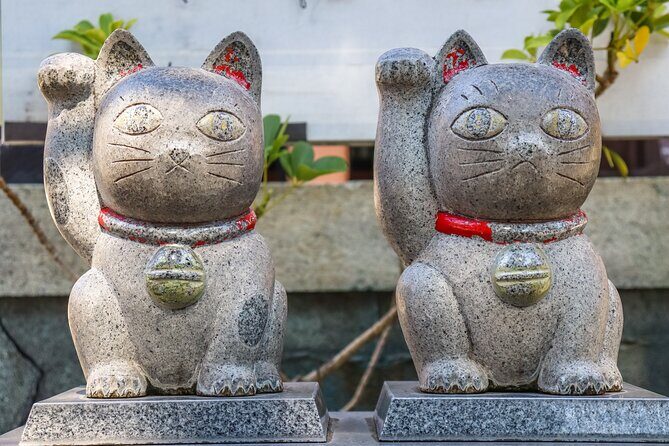
- Maneki Neko origins at Imado Shrine, where the cat-luck story starts
- Otori Shrine’s lucky rake lore, including the rooster market vibe
- Nakamise Shopping Street with guidance, so you buy smarter (and snack sooner)
Why this Seven Gods of Fortune tour works in Asakusa
Asakusa can feel like one long photo stop—until someone explains why each gate, statue, and incense routine matters. This tour fixes that by linking the neighborhood’s most important religious places to the Seven Gods of Fortune, the belief system people use to pray for luck in very specific parts of life.
You’ll start with the big-name religious core (Asakusa Shrine and Senso-ji), but the real payoff is the in-between stops. Temples that look small at first often turn out to be very specific: health luck, marriage luck, good business ties, art luck. A good guide makes those connections feel practical, not academic.
This is also a private tour, so the best parts of Asakusa come through better. You can slow down for details, ask what a symbol means, or take photos without turning it into a negotiation with a big group.
You can also read our reviews of more tours and experiences in Tokyo.



Private party-only tour: fewer logistics, more attention
Meeting point is straightforward: Asakusa Station area (Asakusa Sta. 1-chōme-1-3). The tour ends back near the meeting area, but the provider notes it can be adjusted if you ask your guide—handy if you want to connect to a later plan.
Because it’s private, you’re not trying to keep up with a moving blob of people. You’re walking with a guide who can tailor the day to your comfort level and interests. The experience is also designed for normal participants; it’s “near public transportation,” and the time estimate is about 5 hours 30 minutes—enough to feel like a real tour, not a full-day endurance mission.
From the guide names that have led these kinds of routes (Nanako, Kazumi, Nobu-san, Harada Taketsugu, Tom Harada, Eric), the common thread is clear: people get help with history and with practical on-the-ground stuff like route flow and photography. That matters in Asakusa, where alleys and temple entrances can look similar unless someone points out what to notice.
How the stamp souvenir changes the way you walk
I love that this tour treats stamps as more than a gimmick. You’re collecting them as you move from shrine to temple, which nudges you to pay attention to each location’s identity instead of treating every stop as the same landmark with a different sign.
You’ll also leave with a tangible memory of the route. Even if you later forget one deity name, you’ll remember the feeling of walking temple-to-shrine in sequence, checking off each place.
Tip: keep your stamp expectations realistic. You’re not speed-running. When you slow down for stamps, you slow down for meaning too.
Stop 1: Honryuin Matsuchiyama Shoden and the luck themes
The morning begins at Honryuin Matsuchiyama Shoden. This is one of those stops that sets the tone because it’s tied to clear personal hopes—health, good relations, marital relations, and prosperity for business. You’ll hear about Bishamonten, one of the Seven Gods of Fortune associated with favorable outcomes.
What’s special here is the focus. Instead of vague “good luck,” this temple ties luck to recognizable life areas. If you’re traveling with a purpose—business trip, couple trip, family hopes—this is a good first stop to anchor the day.
Practical note: the stop is about 25 minutes, so it’s enough time to understand what’s going on and take in the architecture without feeling like the day is stuck.
Stop 2: Imado Shrine, Maneki Neko, and marriage luck
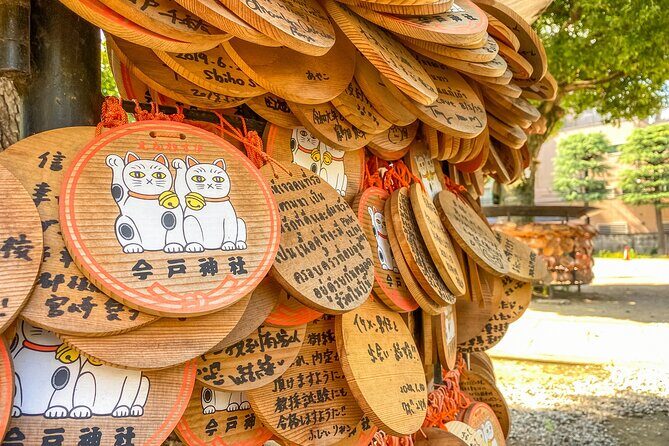
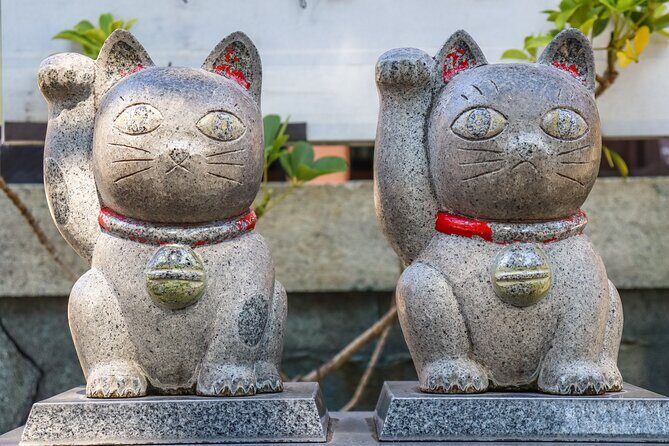
Next comes Imado Shrine, famous as a birthplace story for Maneki Neko—the waving cat that people associate with bringing good fortune. You’ll see Maneki Neko throughout the area, which turns the shrine into an easy-to-follow visual lesson.
The tour also links this shrine to women’s marriage luck, through its connection to the Seven Gods of Fortune deity theme for the stop. That makes the site feel less like a random photo wall and more like a place people specifically return to.
This stop is shorter, around 20 minutes, which works well early in the route. You get the story, you get the visuals, and you move on before fatigue sets in.





Stop 3: Hashiba Fudoson and Edo-period architectural vibes
At Hashiba Fudoson, you’re looking for something subtle: the beauty of Edo-period architectural style. The temple is described as small and simple, which usually means fewer distractions and more attention on the structure and atmosphere.
The luck theme here centers on Hotei-son, one of the Seven Gods of Fortune linked to good fortune. If you like places that feel quiet and a bit “away from the main spectacle,” this is one of the stops you’ll likely remember.
Time is about 15 minutes—a quick but focused reset before the longer tea break.
Stop 4: Raku Ishihama Teahouse for a proper mid-tour pause
Now you’ll hit Raku Ishihama Teahouse (Ishihama Saryo Raku). This is inside the grounds of Ishihama Shrine, and it’s a real breather: about 40 minutes.
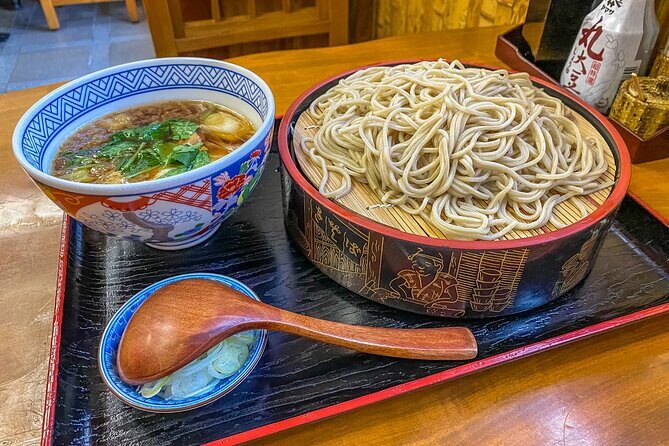
What you can expect from the menu is a mix of comfort foods and classic Japanese options—things like tempura bowl and soba, plus sweets. The key detail for your wallet: admission/meal costs here are not included. The data lists an admission fee for the teahouse at ¥4,800 per person, and an estimated meal cost of 1,000 JPY per person in the tour’s cost breakdown. Depending on what you order, your total here can swing.
Also important: on Wednesdays, this teahouse is closed, so your guide will show you an alternative spot.
My advice: treat this stop as part of the experience, not an afterthought. Plan to use it to refuel so you can enjoy the next shrines instead of power-walking through them.
Stop 5: Yoshiwara Shrine and Benzaiten for art and marriage wishes
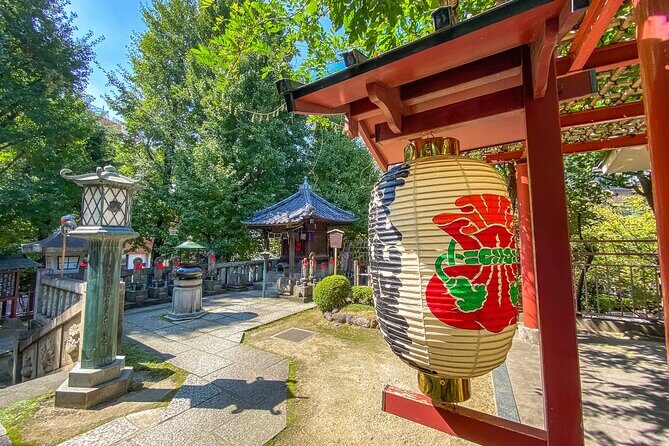
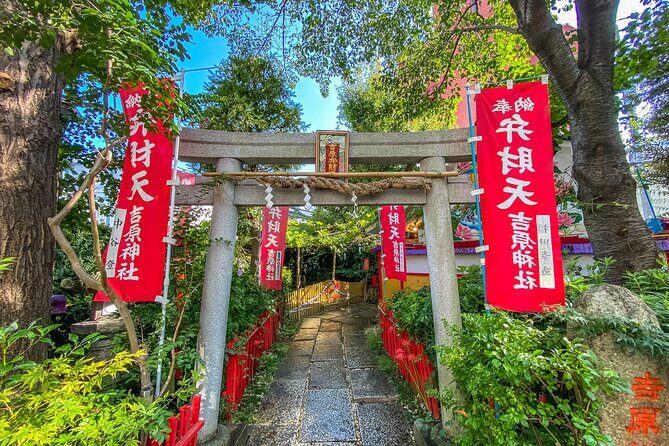
At Yoshiwara Shrine, you’ll focus on Benzaiten, the guide theme for this stop and the Seven Gods of Fortune link. The tour description emphasizes that this is the female deity among the Seven Gods, associated with wishes for women—especially luck for art and marriage.
This is a powerful theme for anyone who likes human-scale meaning in travel. You’ll be looking at worship and tradition through the lens of creativity and relationships, not just broad luck.
Stop length is about 20 minutes, so it’s enough time to understand the deity connection and absorb the atmosphere without dragging the day.
Stop 6: Otori Shrine, the big rake, and the rooster market
Now you get a more playful (and very visual) shrine stop: Otori Shrine. It’s famous for a gorgeous and large rake. That rake connects to the “Rooster Market,” where lucky rakes are sold.
You’ll also hear about the symbol Okame-san, described as the mask used in Japanese Noh. If you’ve ever liked when travel shows you how arts and folk practices overlap in everyday religion, this is one of the best spots on the route.
This stop is about 20 minutes, and it tends to be memorable because the objects are so specific you can’t accidentally forget them.
Stop 7: Asakusa Shrine and Ebisu (good luck that feels practical)
Next is Asakusa Shrine, dedicated to Ebisu, one of the Seven Gods of Fortune. Ebisu is often associated with business and fishermen’s luck in Japan broadly, and within this tour’s context it’s framed as a deep relationship with the larger Asakusa sightseeing core—especially Senso-ji Temple.
This is a bridge stop. It links Asakusa’s shrine culture to the temple culture you’re about to see next, so when the day moves into Senso-ji, it doesn’t feel like a sudden change.
Time here is about 15 minutes, which keeps the flow tight.
Stop 8: Senso-ji Temple, the red lantern, and the main street feeling
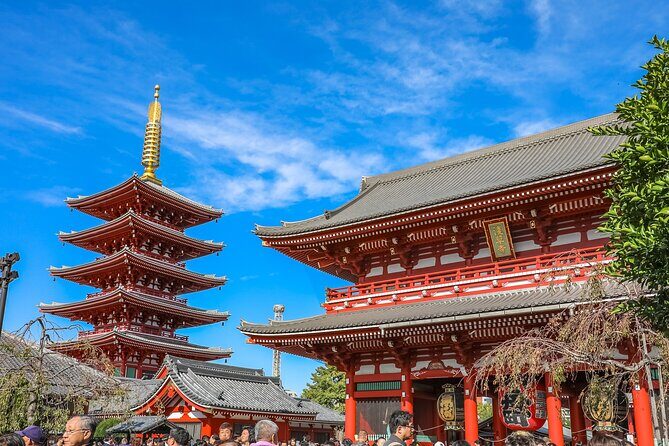
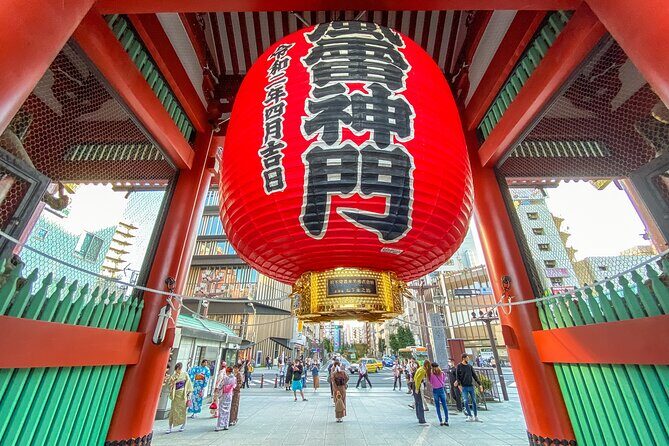
You’ll then arrive at Senso-ji Temple, described as the oldest temple in Tokyo and the place with the iconic big red lantern that anchors the Asakusa skyline. It’s the kind of site most people recognize instantly—then you realize you still need context to understand what you’re looking at.
Senso-ji is a 30-minute stop in this route, which is enough for the core sights without turning it into a full queue-management day. With a guide, you’re more likely to notice the layers: what people do when they arrive, how space guides worship, and why the place is such a centerpiece of Asakusa’s identity.
If you’re coming for photos, go slow here. The best shots often come when you’re not sprinting.
Stop 9: Nakamise Shopping Street (Kaminarimon) with a guide’s direction
After the temples, the day moves into street life: Nakamise Shopping Street, near Kaminarimon. This is where the tour becomes useful for shopping and snacking, not just sightseeing.
The route notes that your guide will guide you through recommended shops where you can buy souvenirs and eat. Nakamise is busy. With no plan, you can end up paying more than you meant to or buying things you don’t really want. With a guide, you can focus on what fits your style—edibles, small keepsakes, and traditional-style souvenirs.
This stop is about 20 minutes. Don’t try to do everything. Think of it as a smart sampler so you leave with a few good choices instead of a full bag of maybes.
Price and value: what $103.92 buys in real time
The tour price is listed at $103.92 per person for roughly 5.5 hours. For Asakusa, that’s not a “cheap walk,” but it can be good value if you care about explanation and not just movement.
Here’s what you’re paying for in practical terms:
- A private guide for a structured route through multiple shrine/temple sites
- A stamp souvenir as part of the experience
- A planned flow so you don’t spend half the day figuring out what’s next
- A guide who can answer meaning questions, not just point at landmarks
What’s not included is where budgeting matters. The data estimates about 4,800 JPY per person in extra costs, with breakdown including transportation (300 JPY) and meal costs (1,000 JPY), plus optional experience costs (3,500 JPY). Separately, there’s the Raku Ishihama Teahouse fee of ¥4,800 per person.
So the cost can swing based on how you handle the tea stop and whether you add optional experiences. If you treat the teahouse as a must-do and choose extras, you’ll spend more than the base price. If you keep it simple—one good meal, a few souvenirs—you can control the total.
My rule: book for the explanation and the route. Decide on the upgrades after you see how tired you are and how hungry you feel.
Who this tour suits best (and who might not need it)
This is a great fit if you:
- Want structured storytelling through Asakusa’s religious places
- Like walking with purpose—especially around the Seven Gods of Fortune themes
- Prefer a private pace where your questions matter
- Want a souvenir that’s more than a magnet: the stamp trail
It might be less ideal if you:
- Only want the famous sights fast (you could DIY Senso-ji and Nakamise easily)
- Hate paying extra for meals/optional stops
- Don’t enjoy walking even with a well-paced route
Should you book this Asakusa Seven Gods of Fortune tour?
If your goal is to understand Asakusa beyond the postcard, this is a strong choice. The route focuses on meaningful places tied to luck themes—health, relationships, business, art—so the day has a brain and not just a camera roll. I also like that the guide role is clearly valued: the experience repeatedly points to helpful, flexible guiding and photo support.
Book it if you want to leave with stamps in hand, stories in your head, and fewer wasted turns in crowded streets. Skip or downgrade the plan if you’d rather do Senso-ji and Nakamise on your own and spend your money elsewhere.
FAQ
What does the tour include?
The tour includes a tour guide, a private tour experience, and the necessary expenses for the guide during the tour.
Is the tour private?
Yes. It is a private tour/activity, and only your group participates.
How long is the tour?
The duration is about 5 hours 30 minutes.
Are the shrine and temple admissions included?
The stops listed include no admission ticket cost for those shrine and temple locations. The teahouse stop has an admission fee and is not included.
What extra costs should I expect?
The estimate provided is 4,800 JPY per person, including transportation and meal costs, plus optional experience costs. The teahouse admission fee is listed as ¥4,800 per person.
Is there a meal stop?
Yes. The Raku Ishihama Teahouse stop includes time to eat, but the teahouse costs are not included. It’s about 40 minutes.
What happens if I book on a Wednesday?
Ishihama Saryo Raku is closed on Wednesday, so the guide will show an alternative spot.
Can I cancel for a full refund?
Yes. You can cancel up to 24 hours in advance for a full refund, based on the experience’s local time. If you cancel less than 24 hours before, the amount paid is not refunded.