REVIEW · TOKYO
Mt FUJI – Panoramic Tour w/ Hoto Lunch, JP Sake & Onsen tatto OK!
Book on Viator →Operated by VAS · Bookable on Viator
Mount Fuji changes with every turn.
This small-group day trip strings together classic viewpoints and lesser-seen corners so you spend less time stuck on a big coach and more time actually looking up at the mountain. You also get a real sense of local life around Kawaguchiko, with snacks, sweets, and plenty of chances to ask questions.
Two things I especially like: the focus on Mount Fuji photo angles (from multiple named spots, not just one overlook), and the hands-on food and drink moments. You’ll sample traditional sake at a local distillery, and guides such as Yayoi-san and Keiko-san tend to keep things patient, organized, and easy to follow even when the weather makes the day unpredictable.
One consideration: you’re on the move all day, and time is fixed at each stop. If clouds cover the summit, you may not get the clean postcard peak, and the lunch quality can be hit-or-miss depending on your taste.
In This Review
- Quick hits you’ll feel all day
- A smarter Fuji day: why this route beats a bus load
- The 7:30 am start from Shinjuku
- Nishikatsura-cho: your first real look at Fuji
- Fujiyoshida plus local sweets
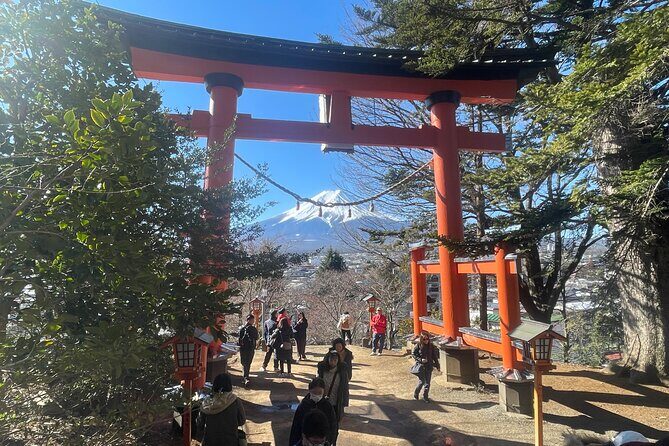
- Arakura Fuji Sengen Shrine: the iconic postcard climb
- Saiko Iyashi-no-Sato Nemba: old-village views and the kimono option
- Kanadorii and Oishi Park: two short stops, two different Fuji moods
- Hottarakashi Onsen: view-first soaking (optional fee)
- Misaka Pass + hoto lunch: where the meal actually fits the day
- Dangozaka Service Area: the bread stop if you missed breakfast
- Sasaichi Shuzo Shuyukan: sake tasting that feels like a real visit
- The return rhythm: Kanto and the long drive back
- Optional extras: kimono, tea experience, and what can cost extra
- Value check: is $172 a good deal for this day?
- Weather reality: Fuji is not guaranteed, but the day still works
- Who this tour fits best
- Should you book this Mt. Fuji panoramic tour?
- FAQ
- How long is the Mount Fuji tour from Tokyo?
- What’s the group size?
- What’s included in the price?
- Is the onsen and kimono experience included?
- Is the onsen tattoo-friendly?
- Where does the tour start?
- What happens if the weather is bad?
Quick hits you’ll feel all day
- Up to 8 people means more guide attention and fewer “standby and hope” moments at photo spots
- Arakura Fuji Sengen Shrine includes a real climb, not just a quick glance at a sign
- Hoto lunch + Japanese sweets keep the day from feeling like a photo marathon
- Sake tasting at Sasaichi Shuzo Shuyukan includes samples of locally produced “virgin” sake
- Onsen in the heights at Hottarakashi, with an optional fee and tattoos marked as OK in the tour marketing
- Long travel legs still include a break rhythm so you can rest and re-energize
A smarter Fuji day: why this route beats a bus load
Getting from Tokyo to Mount Fuji takes time, and big tours often fight over minutes. This one keeps the group capped at 8 travelers, so your guide can slow down when you want explanations—geography, shrine details, or why a specific viewpoint works for photos.
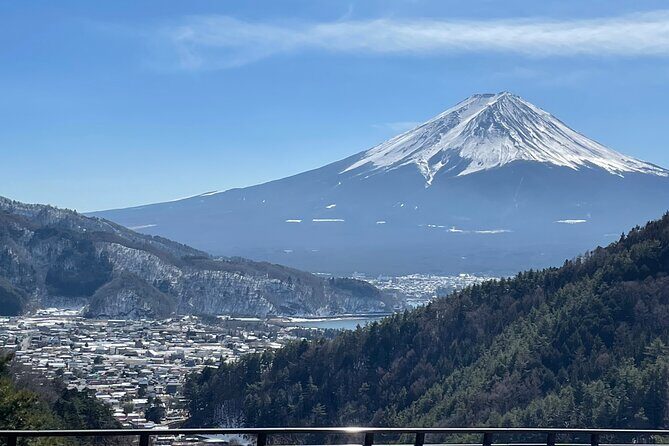
The itinerary also spreads the mountain out across the day. Instead of one “main event” stop, you rotate through areas that each frame Fuji differently—town views first, then shrine angles, then lakeside sightlines, then higher-elevation looks. That matters because the weather can shift quickly in this region, and you want backups ready.
Finally, it’s not just sightseeing. You’re eating along the way (including lunch) and there’s a real tasting stop that feels like a place, not a sales desk. That combination makes the day feel fuller even if visibility isn’t perfect.
You can also read our reviews of more food & drink experiences in Tokyo

The 7:30 am start from Shinjuku
You begin in Shinjuku, at the Shinjuku Post Office, with a 7:30 am departure. Expect a long day: the round trip totals over 400 kilometers, and you’ll spend about 3.5 hours in transit.
The upside of that early start is timing. You’re getting to Fuji region viewpoints while the day is still fresh, which is when you’re most likely to get clear angles. The downside is that you should plan to sleep well the night before and treat this as a full-day commitment (it’s about 10 hours total).
They use a mobile ticket, and the meeting point is near public transportation, which makes it easier to stay flexible if your rail plan changes. The tour notes a moderate physical fitness level—mainly because of the shrine climb and a steady walking pace at multiple stops.
Nishikatsura-cho: your first real look at Fuji
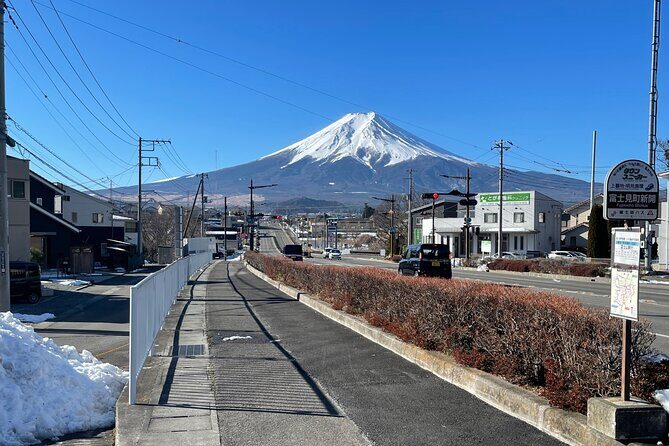
Your first stop is Nishikatsura-cho, around 20 minutes with free admission. This is the “get your bearings fast” stage—an early glimpse that helps you understand where later viewpoints are pulling from.
If you’re the kind of traveler who enjoys learning as you go, this first shot of the mountain helps everything else make sense. You’ll start noticing how Fuji sits against towns and how the viewing angles change as you move closer to the lake and higher passes.
Fujiyoshida plus local sweets
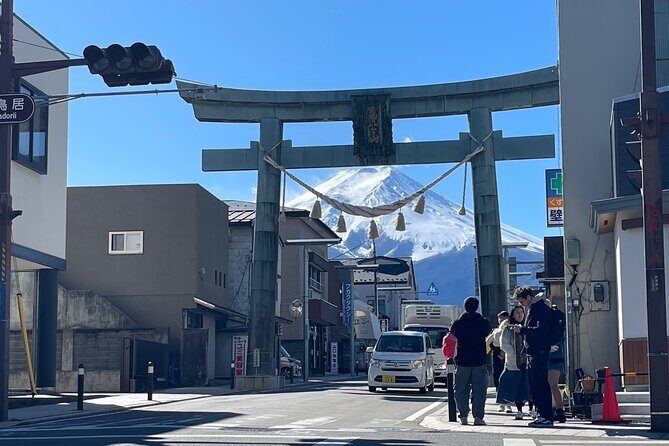
Next, you head to Fujiyoshida for about 20 minutes, again with free admission. This stop is designed to show the contrast: the townscape in the foreground with Mount Fuji layered behind it.
You also get time for local Japanese confectionaries here. That small “snack pause” is more useful than it sounds. After several hours on the road, having a sweet reset helps you stay awake for the more active parts of the day (especially the shrine and onsen breaks).
Arakura Fuji Sengen Shrine: the iconic postcard climb
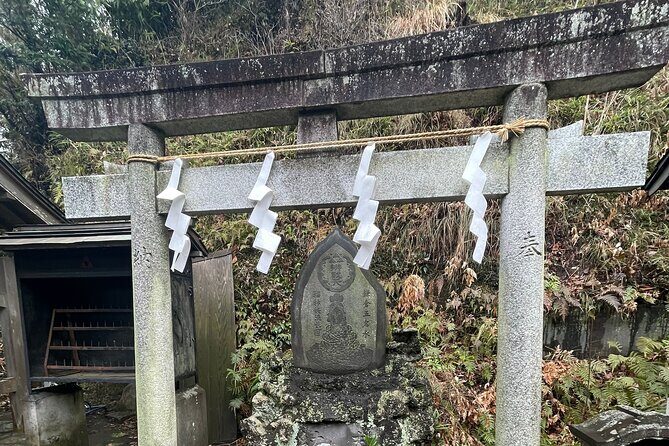
The day’s most active landmark moment is Arakura Fuji Sengen Shrine. You’ll spend about 50 minutes, with admission included.
This is one of Japan’s most famous Fuji-photo settings, and the key detail is that you’re not just standing in one place. You’ll actually climb one of the known postcard areas. That climb is exactly why the view feels different from the earlier photo stops: you’re gaining height, shifting perspective, and getting a more dramatic angle over the surrounding terrain.
A practical tip: wear shoes you trust. You’ll be on uneven surfaces and doing a steady climb. If your plan is mostly photos, you might be tempted to rush—don’t. Take a minute to pause at spots where the angle changes with just a few steps.
A few more Tokyo tours and experiences worth a look

Saiko Iyashi-no-Sato Nemba: old-village views and the kimono option
Then you go to Saiko Iyashi-no-Sato Nemba (a traditional village), with about 40 minutes. Admission is included, and there’s an optional kimono experience (listed as ¥2,500 per person).
This stop gives you the “Fuji from an older, storybook setting” feeling. The village helps frame the mountain as part of lived-in culture, not just a peak in the distance. And if you choose the kimono, it’s a quick way to slow down and make the moment more hands-on—though you should treat it as an optional add-on, not the core of the visit.
One thing to know from how the day is paced: if you add extra time-consuming activities here, you may feel slightly rushed later. If you want maximum Fuji photos, I’d keep your options simple and leave extra room for the onsen.
Kanadorii and Oishi Park: two short stops, two different Fuji moods
After the village, you do two lighter stops that still matter.
- Kanadorii: about 15 minutes with free admission. This is a quick visit to the first torii gates at the base area guarding the shrine route connected to Fuji. Think of it as a “religious waypoint” more than a time-heavy attraction.
- Oishi Park: about 20 minutes with free admission. Here you get Fuji with Kawaguchiko Lake in the frame.
These two stops work because they split the mood. Kanadorii gives a spiritual, gateway feel. Oishi Park shifts you back to open views and easier photography. If weather is unstable, Oishi Park is often where you’ll want to linger a few extra minutes and catch the best clearing.
Hottarakashi Onsen: view-first soaking (optional fee)
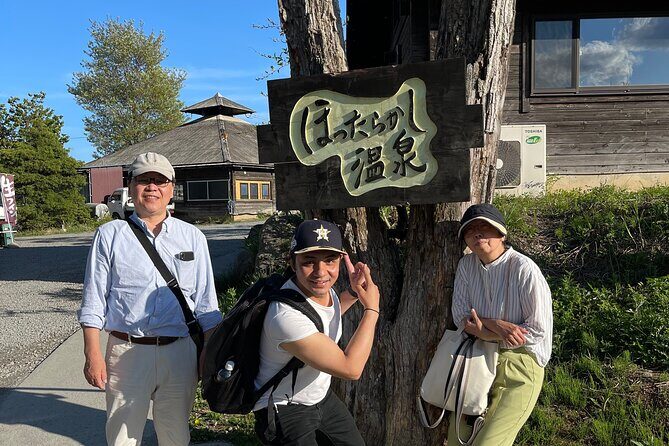
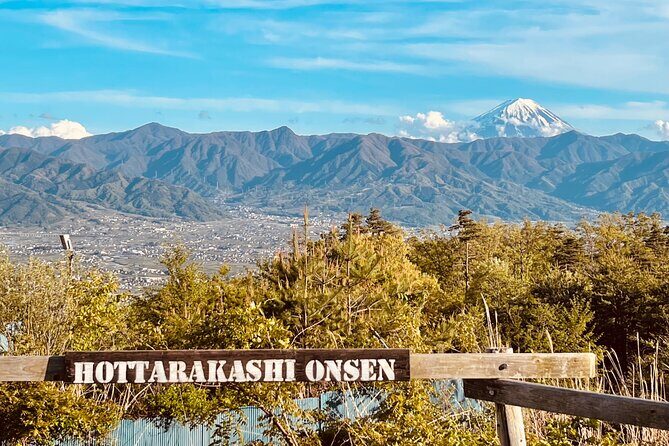
One of the biggest praised moments is the onsen stop: Hottarakashi Onsen, about 50 minutes, with admission included. The tour also lists an optional onsen fee of ¥900 per person.
What makes this part special is the positioning. You’re in the heights, and the main attraction is the chance to see Mount Fuji from afar while you relax. In other words: it’s not a quick wash-and-go. It’s a genuine reset that turns the day from constant movement into a breather.
The tour title marks tattoos as OK for the onsen option. Still, since onsen rules can be strict at the door, I’d treat it as “likely allowed” and be ready to ask the staff on arrival.
If you’re sensitive about extra costs, this is the moment to decide early. If you skip the onsen, you’ll still be at the right place for views—but you’ll lose one of the day’s best “worth it” experiences.
Misaka Pass + hoto lunch: where the meal actually fits the day
After the onsen, you head to Misaka Pass for about 1 hour 10 minutes, with free admission. This is also where you’ll get your Japanese lunch; the tour is specifically advertised as featuring hoto lunch, so you should expect a noodle soup style meal associated with the region.
This is an important pacing decision: lunch after an onsen soak (instead of before) helps you settle in and recharge. It also puts food between you and the next long driving stretch, so you’re not hungry during the later service area and tasting stop.
If your goal is photos of Fuji plus a real meal, Misaka Pass is the sweet spot. It’s long enough to eat without racing, and it keeps the day from feeling like “just snacks between photo stops.”
Dangozaka Service Area: the bread stop if you missed breakfast
Next is Dangozaka Service Area Inbound for about 20 minutes. Admission is free, and the stop is there for a reason: you can grab local Japanese breads if you didn’t eat breakfast.
This is one of those small logistics choices that makes the day smoother. Service areas often become chaotic if everyone tries to eat at once, so use this time efficiently. Buy something you can eat quickly, then keep your schedule moving for the distillery visit later.
Some tours add fun taste moments here; one favorite mentioned is daiginjo ice cream, which lines up with the general idea of sweets-and-snacks breaks across the day.
Sasaichi Shuzo Shuyukan: sake tasting that feels like a real visit
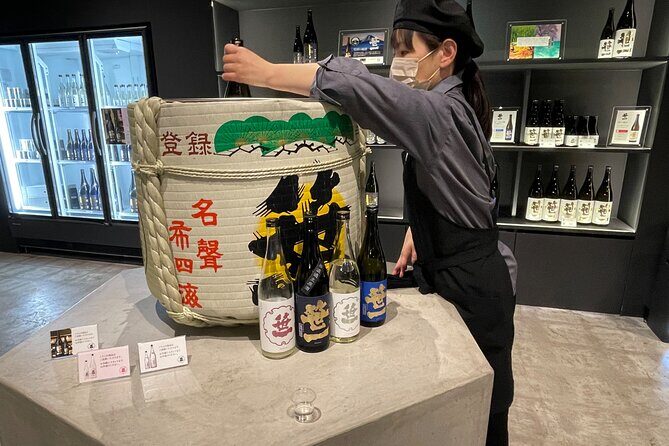
Your final “food and culture” anchor is Sasaichi Shuzo Shuyukan, a sake distillery stop for about 45 minutes, with admission included. This is where you sample locally produced sake, including virgin sake and other liquored products from the area.
This is the kind of stop that can be missed if you travel independently, because you either need a driver or you need to build an itinerary with transport. Here, the tour handles the timing and keeps it structured enough that the tasting feels meaningful.
A practical note: sake can sneak up on you, especially on a day with a lot of walking and driving. If you’re planning to enjoy fully, pace yourself and avoid treating the tasting like a race. Your onsen and later photo stops will feel better if you stay comfortable.
The return rhythm: Kanto and the long drive back
There’s a final stretch labeled Kanto with about 4 hours 5 minutes. Admission is free there, and the big purpose is simple: transit time.
Use it. The tour notes that you can sleep, surf the internet, research future destinations, or ask questions. This is where small-group tours can feel genuinely better than bus tours—your guide is still around, and you can ask about what you just saw while it’s fresh.
Optional extras: kimono, tea experience, and what can cost extra
Not all “cute experiences” are included. Here are the optional add-ons listed:
- Onsen optional fee: ¥900 per person
- Tea experience optional fee: ¥500 per person
- Kimono experience optional fee: ¥2,500 per person
My advice: decide based on your style. If you mainly want Fuji photos and a relaxing soak, prioritize the onsen. If dressing up will make the day more fun for you, do the kimono—but don’t stack too many extras, or you’ll feel rushed.
Also, carry some cash. Even if you don’t know the exact checkout method at each stop, it’s safer than hunting for a payment machine at the wrong moment.
Value check: is $172 a good deal for this day?
At $172 per person, you’re paying for a full-day small-group format with a lot of built-in content: multiple iconic viewpoints, shrine time, a traditional village stop, lunch, and a sake distillery tasting with admission included.
You’re not just buying transportation. You’re buying time saved from managing a complex route and skipping the hassle of connecting spots on your own. Add in that the group is capped at 8 travelers and that you get room to ask questions, and the value starts to look more like a guided experience than an expensive taxi.
What can reduce value for some people is the optional spending. If you add both kimono and tea and the onsen fee, your total goes up. Still, those are choices. If you keep it simple and focus on Fuji views, hoto lunch, sake tasting, and the onsen, the price is easier to justify.
Weather reality: Fuji is not guaranteed, but the day still works
Mount Fuji visibility depends heavily on weather. The experience notes that it requires good weather, and if it’s canceled due to poor conditions, you’ll be offered another date or a full refund.
That matters because a clear summit is the big dream. When clouds roll in, you might get a different kind of beauty—views without the peak, atmospheric layers, and still-solid sightseeing points. Also, when weather is messy, the tour still includes structured stops so you’re not stranded with nothing to do.
Who this tour fits best
This is ideal if you want:
- a small-group day with real guide interaction
- classic Fuji photo spots without hopping through a complicated schedule yourself
- a mix of viewpoints, shrine/culture, and food (hoto lunch + sweets + sake tasting)
- an onsen break with Fuji in the distance
It may be less ideal if you hate long drives or you’re the type who wants to linger slowly at just one or two places. This day is paced. You get variety, not unlimited time at a single spot.
Should you book this Mt. Fuji panoramic tour?
If you’re staying in Tokyo and you want a guided Mount Fuji day that balances photos with culture and eating, I think it’s a strong pick. The small group size is the real advantage: you’ll spend less time waiting and more time understanding what you’re looking at, and the onsen + sake tasting combo gives the day a memorable rhythm.
Book it if you can handle a full day and you want a structured route with named viewpoints. Skip it (or at least keep expectations flexible) if you’re expecting only one perfect cloud-free mountain shot and you hate optional fees—because the weather can change fast, and the tour still moves.
FAQ
How long is the Mount Fuji tour from Tokyo?
The tour runs about 10 hours (approx.).
What’s the group size?
It’s a small-group experience with a maximum of 8 travelers.
What’s included in the price?
Lunch is included, along with parking fees and an air-conditioned vehicle. Some admissions are included at specific stops.
Is the onsen and kimono experience included?
No. The onsen fee is optional (listed at ¥900 per person). The kimono experience is also optional (listed at ¥2,500 per person). A tea experience is optional too (listed at ¥500 per person).
Is the onsen tattoo-friendly?
The tour title indicates tattoos are OK for the onsen option, but you should still expect to confirm the rules on-site when you arrive.
Where does the tour start?
It starts at the Shinjuku Post Office (1-chōme-8-8 Nishishinjuku, Shinjuku City) with a 7:30 am start time and returns to the same meeting point.
What happens if the weather is bad?
The experience requires good weather. If it’s canceled due to poor weather, you’ll be offered a different date or a full refund. You can also cancel for a full refund if you cancel at least 24 hours before the experience’s start time.