REVIEW · TOKYO
Ginza, Tokyo: Sake Experience with traditional vessels
Book on GetYourGuide →Operated by Y COMPANY, LIMITED LIABILITY COMPANY · Bookable on GetYourGuide
Tokyo Bay and a sake tasting is a smart combo.
What makes this experience fun is the focus on how the right vessel changes the taste, paired with clear explanations of sake’s role in Japanese culture from a bilingual, English-speaking team. I also like the intimate small group size (up to 7), because it makes it easier to ask questions and actually understand what you’re drinking. One thing to keep in mind: this is still an alcohol tasting, so it’s not a fit for many medical situations or if you’re sensitive to enclosed spaces or strong tastes.
The setting adds another layer. From Ginza’s JEWEL BOX GINZA area, you can enjoy the Tokyo Bay view while tasting three different types of sake, and the hosts bring it home with practical advice and even trip recommendations for the rest of your stay. In the best moments, you’ll hear host names like Hiyori, Nana, and Rireka pop up in guidance—people who clearly aim to make the learning feel friendly, not like a lecture. The only drawback is also simple: snacks or extra drinks aren’t included, so you’ll want to eat before or you may feel a bit snack-starved during the tasting.
In This Review
- Key highlights you should know
- Sake tasting in Ginza, with Tokyo Bay views
- Finding JEWEL BOX GINZA and getting set up smoothly
- The vessel lesson: why your sake tastes different (on purpose)
- Three pours, one first-time-friendly structure
- What you learn from the bilingual staff (and why it sticks)
- Price and value: is $22 really fair here?
- Timing, group size, and the feel of the bar session
- Practical considerations: who should think twice
- Should you book this Ginza sake experience?
- FAQ
- How long is the sake experience?
- Where is the meeting point in Ginza?
- What’s included in the tasting?
- Are snacks or extra drinks included?
- What language is used during the experience?
- Is it a small group?
- Can I cancel and get a full refund?
- Who might not be suitable for this activity?
Key highlights you should know
- Three sake types chosen for a first-time tasting, not a random sampler
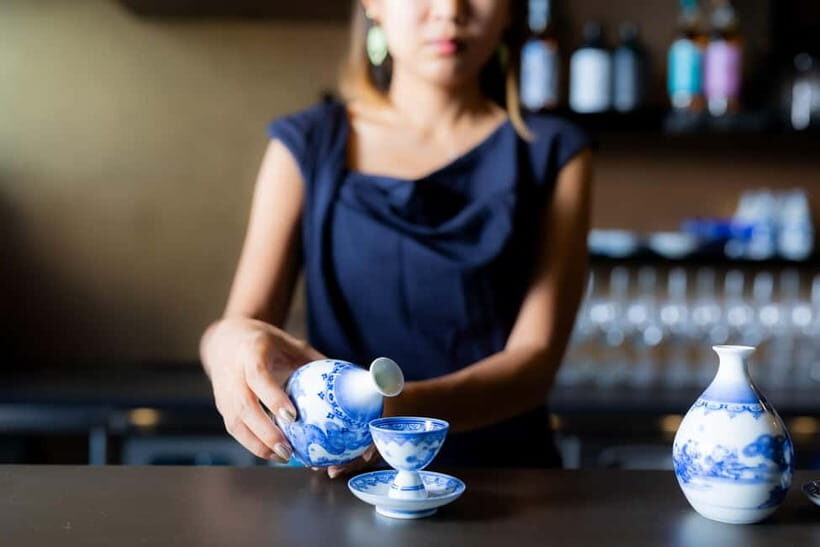
- Vessel-first tasting, including wine glasses and a KINTSUGI style vessel
- Tokyo Bay views from the bar, turning a tasting into a Tokyo moment
- Bilingual, English support that connects the drink to regional culture
- Travel tips from the staff to help you plan the rest of your day in Japan
Sake tasting in Ginza, with Tokyo Bay views
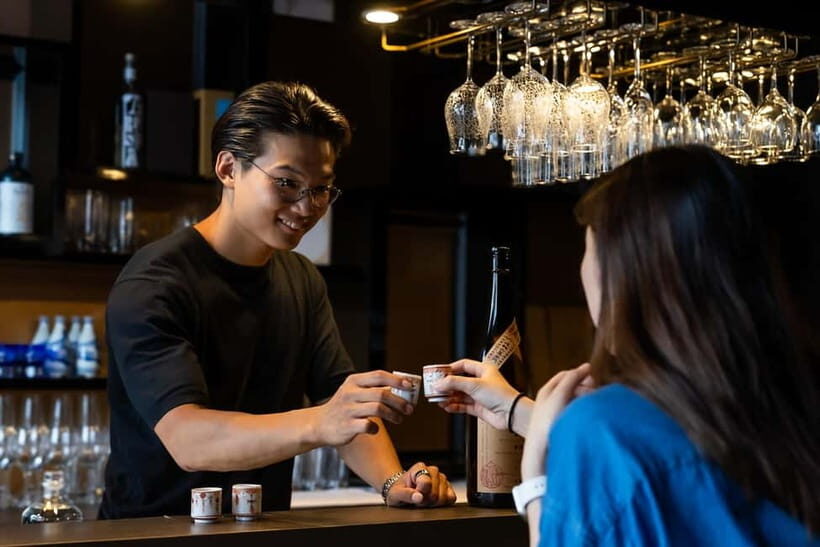
Ginza is the part of Tokyo where everything looks polished—shopping streets, clean lines, and plenty of easy transit. That’s a good match for a sake experience because you don’t have to spend your day figuring out logistics. You can spend the time you have on the actual point: learning how sake works, taste by taste, in a calm setting.
What I like about the view angle here is that it keeps your brain in travel mode. You’re not stuck staring at a wall or a menu board. You’re sipping while looking toward Tokyo Bay, which makes the experience feel less like a quick detour and more like something you’d plan around.
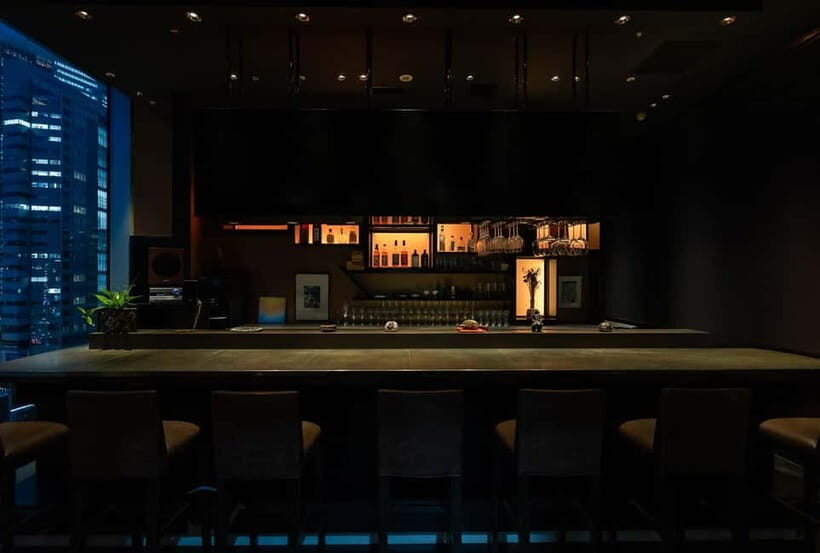
The bar is part of JEWEL BOX GINZA, and the experience happens on the 11th floor. That matters because it keeps the session focused and gives you that “you’re up in Tokyo, looking out” feeling instead of a cramped bar vibe.
You can also read our reviews of more food & drink experiences in Tokyo

Finding JEWEL BOX GINZA and getting set up smoothly
The meeting point is specific: come up to the 11th floor of the JEWEL BOX GINZA building, where there’s Swarovski on the 1st floor. This is helpful because Ginza can be confusing if you jump out at one station and start wandering. If you use that landmark approach, you can get yourself oriented fast.
Once you’re at the right floor, the whole format is set up for a smooth start: small group size, English communication, and a host who can explain what you’re tasting and why. If you’re the type who likes to arrive early just to calm your nerves, this is one of the better activities to do that with—because once you start tasting, you’ll want your focus.
One more practical tip: plan to be ready to listen. This isn’t just a pour-and-go tasting. The hosts explain sake history and culture, and that’s most enjoyable when you’re not rushing through your first sip while thinking about your next train.
The vessel lesson: why your sake tastes different (on purpose)
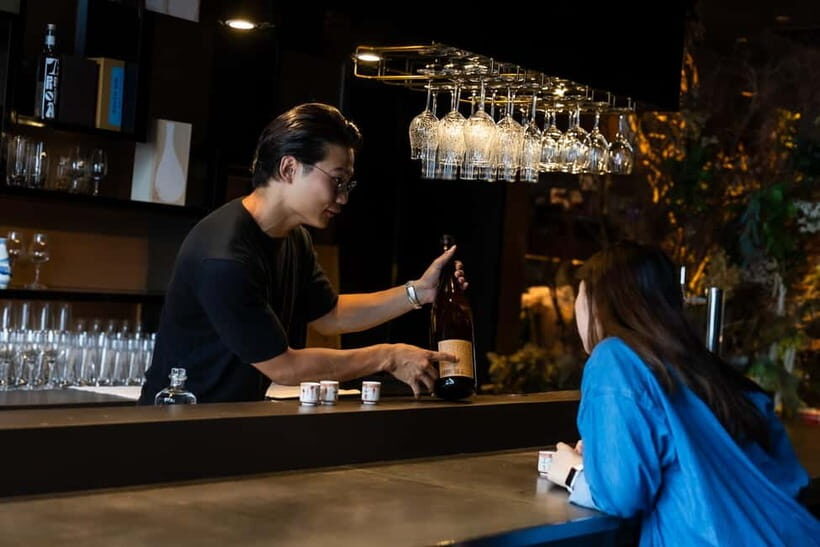
Here’s the core idea that makes this more than a standard tasting: you don’t just sample three sakes—you also learn which vessel helps each one show its best traits.
That matters because sake isn’t a single flavor. It can range with differences in character, texture, and aroma depending on how it’s made and served. The hosts guide you on a simple takeaway: the vessel isn’t just for show. It changes how the drink is experienced.
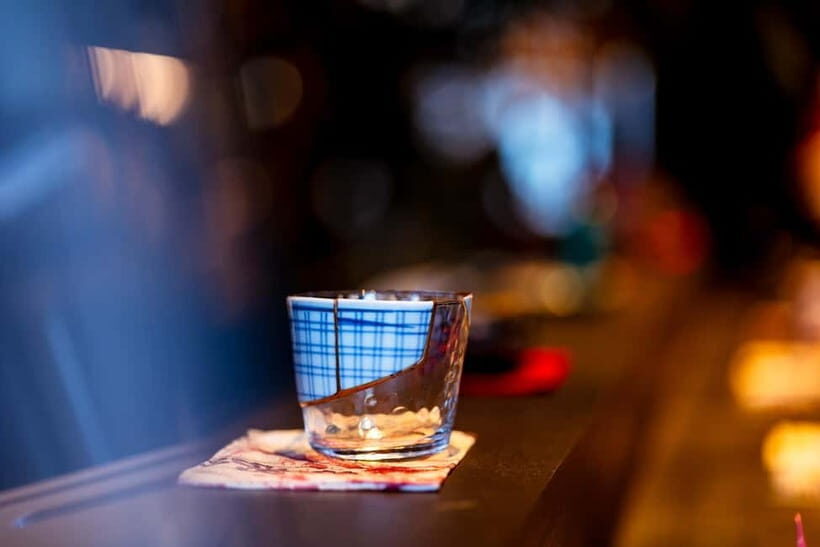
You’ll taste sake with options that include wine glasses for some types, and a KINTSUGI vessel made with 400-year-old Imari porcelain for others. That’s a rare detail, and it’s the kind of thing you’ll remember later when you see sake served at different places around Japan.
If you’re thinking, Should I care about the glass? I get it. You can still enjoy sake in any cup. But this format gives you a reason to pay attention. It turns tasting into learning, and learning is where the value usually hides.
Three pours, one first-time-friendly structure
This tasting is built around three types of sake, selected for a first-time experience. That’s a smart approach, because the hardest part of sake for newcomers is not knowing where to start.
In a typical tasting, you might just sample blindly and hope something hits. Here, the structure is designed to give you a progression—sakes chosen to highlight different characteristics, then matched with the vessel that the staff says works best.
You’ll also notice the hosts explain how sake culture ties back to regions, which helps you make sense of why sake isn’t one-size-fits-all. Japan has a lot of sake breweries—about 1,500—and the point is that sake identity is tied to local traditions and flavors. Even if you don’t memorize brewery names, you’ll leave with a mental model: sake is connected to place.
Also, keep your expectations realistic. This is a tasting, not an all-you-can-drink session. The included portions are what you’re there for, so don’t plan on ordering extra while you’re sitting down.
What you learn from the bilingual staff (and why it sticks)
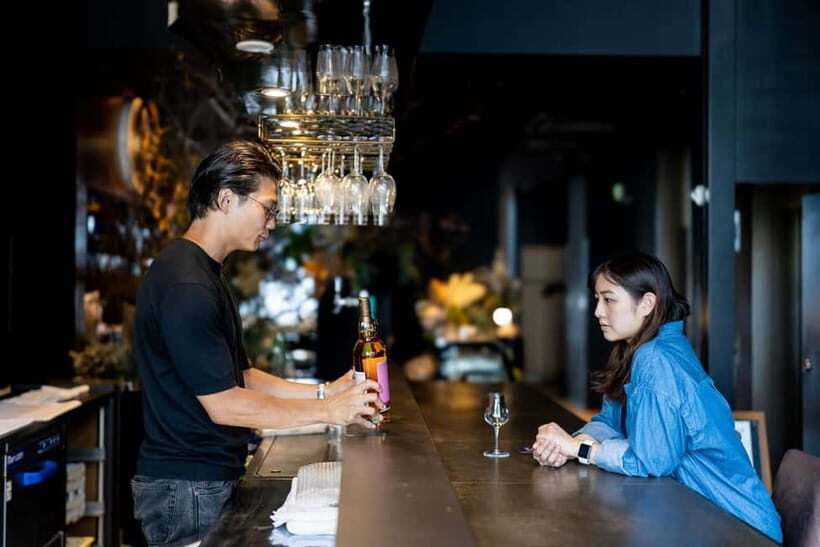
The staff are bilingual and English-speaking, and they focus on sake history and culture as you taste. That means you don’t just get the story after the fact—you get it while your brain is already connected to flavor.
Names you may meet in the experience include Hiyori and Nana, who are described as sweet hosts who explained the process of sake making and guided guests through delicious samples. Another host, Rireka, also shows up in feedback as helpful and friendly. When hosts are this engaged, you’re more likely to remember what you learned because the explanation matches the moment.
The big benefit is clarity. Instead of dumping a lot of facts, the staff use the tasting itself as the anchor. You end up understanding how to think about:
- what you’re tasting,
- how sake making choices can shape character,
- and why Japan treats sake as cultural, not just alcoholic.
And because the staff act as a kind of concierge, you’ll often get travel tips tied to your day in Japan. That’s practical. You’re not leaving with trivia only; you’re leaving with suggestions that can help you enjoy the rest of your schedule.
You can also read our reviews of more drinking tours in Tokyo

Price and value: is $22 really fair here?
At $22 per person for about one day, this is one of those prices that can feel either cheap or suspicious—until you look at what’s included.
You’re not only paying for three sakes. You’re paying for:
- bilingual, English explanations of sake history and culture,
- a small group experience (max 7 participants),
- and, importantly, access to multiple serving formats, including KINTSUGI with 400-year-old Imari porcelain.
That vessel detail is the kind of cost that rarely appears in budget tastings. It also explains the educational angle: if they’re investing in that kind of presentation, the session is designed to teach you something beyond basic drinking.
Is it still worth it if you’re not a sake person? I think yes—if you’re curious. The selection is intended for first-timers, and the staff help you connect taste to context. If you’re already a heavy sake drinker and you want lots of variety beyond three pours, you might find the quantity limited. But for most people visiting Tokyo, three guided tastings with vessel coaching is a strong value.
Also remember: snacks and additional drinks aren’t included. So factor in meals around it. The good news is that makes the experience feel controlled rather than like a late-night drinking binge.
Timing, group size, and the feel of the bar session
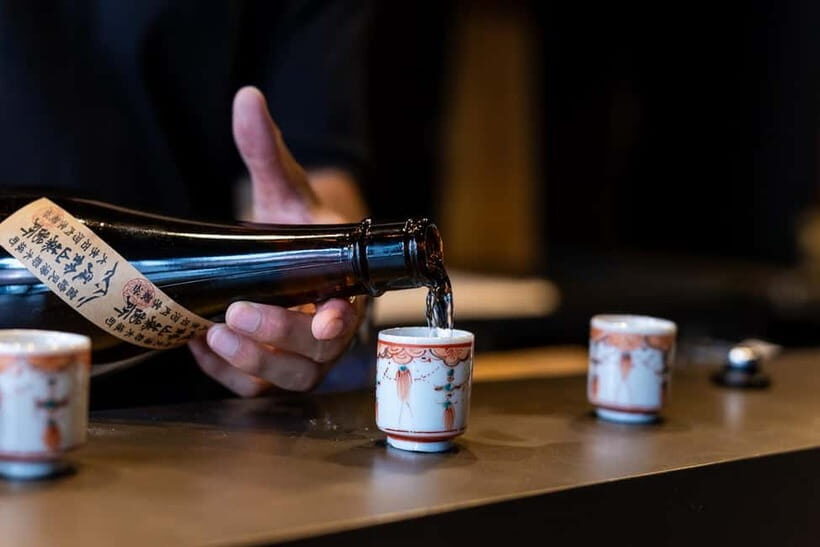
The experience is designed as a small group session limited to 7 participants. That has a real impact on your comfort. In a larger group, you often end up passive—watching, sipping, and hoping you catch the best explanation. Here, you can actually engage.
You should also know that the bar setting includes Tokyo Bay views. That means you’ll likely spend part of the time looking out, part of the time listening, and part of the time tasting. It’s a nice rhythm. No single element dominates your whole attention span.
It’s also offered with an English instructor, so you don’t have to decode a lot of Japanese terminology on your own. For first-time sake drinkers, that’s huge. The fastest way to get turned off by sake is to feel lost. This format keeps you oriented.
Finally, the “valid 1 day” schedule means you’ll choose a time that fits your day. If you’re traveling with a strict plan, choose the time that doesn’t force you to rush afterward. The learning is more enjoyable when you can take it in.
Practical considerations: who should think twice
This is where I’d be blunt: this tasting isn’t a fit for everyone. The activity is listed as not suitable for pregnant women, children under 18 years, and people with claustrophobia, vertigo, heart problems, epilepsy, respiratory issues, diabetes, lactose intolerance, and a range of other pre-existing medical conditions. It also mentions people with recent surgeries and high blood pressure.
If any of those apply to you, don’t treat the tasting as a small harmless add-on. Alcohol plus an enclosed/height factor can be a real issue for some conditions.
Also, because it’s a bar tasting and not a hands-on workshop with food pairing, you may want to manage your expectations if you’re hoping for a full meal or lots of extra pours. You’ll get three sake tastings as part of the included experience, and that’s it.
If you’re sensitive to strong aromas, go in with a calm plan: take smaller sips, listen to the hosts about what vessel pairing is expected to do, and don’t force it. The point is learning, not pushing through.
Should you book this Ginza sake experience?
Book it if you want a Tokyo activity that’s social without being loud, educational without being stuffy, and scenic without being tourist-trap gimmicky. This is especially good for first-time sake drinkers because the experience is designed around three sakes and the staff guide you through how to enjoy each one.
Skip it if you:
- need a snack or full meal included,
- want unlimited sake samples,
- have medical or sensitivity concerns listed as not suitable for the activity,
- or prefer totally self-guided experiences with zero explanation.
If you’re in Ginza anyway and you like the idea of learning how serving vessels affect taste—especially with that KINTSUGI vessel and 400-year-old Imari porcelain—this is the kind of cultural detail that turns a casual evening into a story you’ll still be repeating later.
FAQ
How long is the sake experience?
It’s listed as lasting 1 day.
Where is the meeting point in Ginza?
Meet on the 11th floor of the JEWEL BOX GINZA building, with Swarovski on the 1st floor.
What’s included in the tasting?
You get bilingual staff support, three types of sake to taste, and the specific vessels used for each sake.
Are snacks or extra drinks included?
No. Additional glasses of sake and any other drinks or snacks are not included.
What language is used during the experience?
English.
Is it a small group?
Yes. The group size is limited to 7 participants.
Can I cancel and get a full refund?
Yes. You can cancel up to 24 hours in advance for a full refund.
Who might not be suitable for this activity?
It’s listed as not suitable for pregnant women, children under 18 years, and people with a range of medical conditions and concerns such as claustrophobia, vertigo, heart problems, respiratory issues, epilepsy, diabetes, and lactose intolerance.