REVIEW · KYOTO
Gion at Night: Secrets and Legends of the Geishas
Book on GetYourGuide →Operated by Japandas · Bookable on GetYourGuide
Gion after dark has its own rules. This 150-minute walk focuses on geisha-area stories and quieter corners, with the kind of guided pacing that helps you actually notice what’s going on.
I especially like the small group size (up to 15), because it keeps the atmosphere relaxed instead of herding everyone. And I love that the guide is Spanish-speaking and fluent, with real explanations of local traditions and legends so the sights make sense, not just look pretty.
One thing to consider: Gion can be busy, even at night, so if you’re hoping for a completely empty street, manage expectations.
In This Review
- Key things that make this tour worth your time
- How this Gion night walk feels (and why it works)
- Where you start: Kyōto Minami-za at night
- Tatsumi Bridge: the photo stop that’s also a lesson
- Hanamikoji Street: tea-house lanes with real storytelling
- Gion on foot: “secrets and legends” without the tourist trap
- Yasaka Shrine area: peaceful at night, and a nice emotional landing
- Gion Corner finish: where traditional shows live
- Price and what you truly get for $21
- Group size and the “crowded” factor in Gion
- Who should book this tour
- Practical tips so you enjoy the whole 150 minutes
- Should you book this Gion at Night tour?
- FAQ
- What language is the tour guide?
- How long is the tour?
- Where is the meeting point?
- What’s included in the tour price?
- What is not included?
- How large is the group?
- Can I cancel and get a refund?
- Is the tour wheelchair accessible?
- Where does the tour end?
Key things that make this tour worth your time
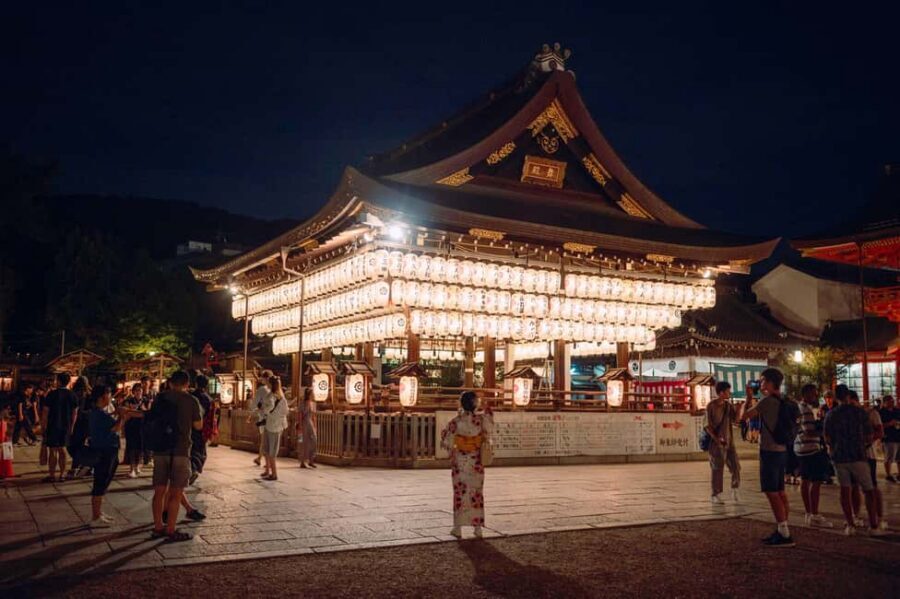
- Minamiza Theater start: you begin at Kyōto Minami-za, a recognizable anchor for the evening
- Tatsumi Bridge at night: a quick stop where photos and atmosphere both land
- Hanamikoji Street with context: not just walking by tea-house facades—learning what you’re seeing
- Guide-led “secret spots”: you’ll be steered toward quieter viewpoints away from the densest areas
- End point near traditional performance culture: you finish at Gion Corner, with the area explained even if show tickets aren’t included
How this Gion night walk feels (and why it works)
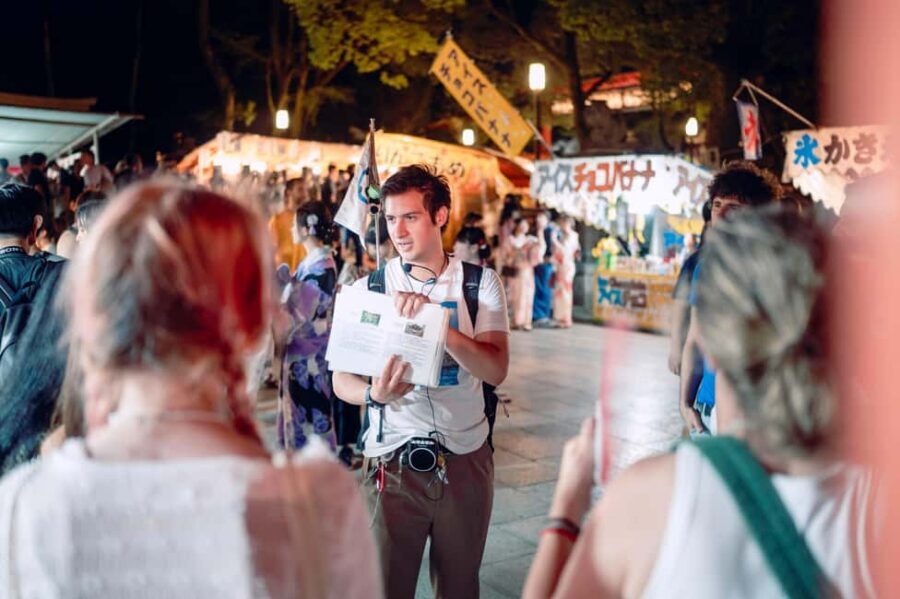
This tour is built like a slow, guided story walk. You’re moving through iconic Gion landmarks, but you’re also getting the meaning behind the lanterns, the streets, and the traditions you’ll hear about along the way.
The value isn’t just the price. It’s that you’re paying for clarity—someone competent is helping you connect the dots between place names and local customs. At $21 per person for 150 minutes, it’s also a format that fits nicely into a Kyoto night without blowing up your schedule.
The small-group limit (max 15) matters more than it sounds. In Gion, crowding is real, and a big group can turn a cultural walk into constant stop-and-start. Here, the pacing is intentionally calmer, which makes your photos better too—because you’re not constantly squeezing between people.
You can also read our reviews of more evening experiences in Kyoto


Where you start: Kyōto Minami-za at night
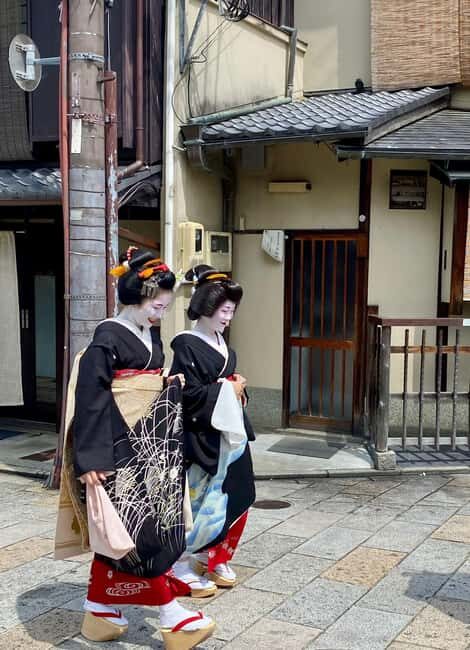
You kick off at Minamiza Theater (Kyōto Minami-za). It’s a strong starting point because it gives you a clear landmark immediately, before the walk pulls you into the maze of Gion streets.
If you’re arriving early, give yourself a few minutes to spot the meeting cue. The guide waits with a blue flag with a panda logo, so look for that first, not for the biggest crowd. The meeting coordinates are 35.0034444, 135.7724632.
The practical win here: starting at a fixed, well-known place reduces stress. In a neighborhood famous for winding alleys, that matters on night one.
Tatsumi Bridge: the photo stop that’s also a lesson
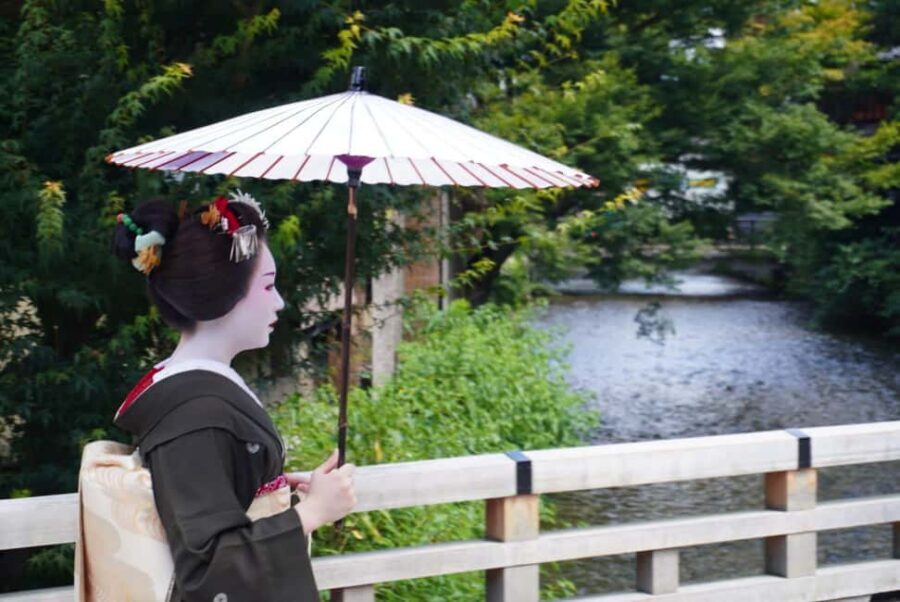
Next up is Tatsumi Bridge. It’s famous for a reason, and even if you’ve seen it in pictures, seeing it at night changes the feel. The lighting and the flow of foot traffic give it a more intimate mood than daytime snapshots.
What makes this more than a generic photo stop is how the guide frames it. You’re not just standing there for a quick click—you’re getting guided context about local traditions and the geisha-area world the tour is focused on.
A small piece of advice: bring your camera settings ready. Night lighting can be tricky, and you’ll want to spend your time composing rather than fighting your phone settings.
Hanamikoji Street: tea-house lanes with real storytelling
Then comes Hanamikoji Street, one of the most recognizable geisha-area streets in Gion. Yes, it’s the kind of place you’ll want photos of—but the better payoff is how the guide talks about tea houses and the tradition of geisha walking through the alleys.
This is where the Spanish guide quality really shows. A fluent guide doesn’t just translate words. They explain what you’re likely seeing and why it matters, including legends and local customs tied to the neighborhood.
Also, this is where etiquette helps your experience. Keep your voice low, avoid blocking doorways, and be polite with cameras. You’re in a living neighborhood, not a theme set.
Gion on foot: “secrets and legends” without the tourist trap
The tour continues through Gion itself, with guided stops that aim to show you the “authentic and hidden side” of the area. That promise is easy to market and hard to deliver. Here’s how you can tell it’s real: you’re walking with purpose, not just drifting through the most famous streets.
The guide’s job is to connect what’s visible to what’s meaningful. Expect stories about the geisha culture and local traditions, plus fun facts meant to give you a handle on the whole scene. You’ll start recognizing patterns—street layouts, landmark roles, and how people move through the district at night.
One practical note: night walking means you’ll want comfortable shoes. The tour is only 150 minutes, but Gion streets can include uneven pavement and small directional turns.





Yasaka Shrine area: peaceful at night, and a nice emotional landing
Near the later part of the evening, you’ll reach Yasaka Shrine, described as lit up and peaceful at night. This part of the tour works as a mental reset. After the busier geisha-area lanes, the shrine atmosphere gives you calmer space to reflect on what you learned.
It also helps break up the walking rhythm. You go from street-level detail (lanterns, storefronts, alley turns) to a more open-feeling sacred landmark moment.
If you’re taking photos, shoot what you can quickly, then spend a minute just watching. In Kyoto at night, the difference between “seeing” and “feeling” can be as simple as slowing down for 30 seconds.
Gion Corner finish: where traditional shows live
You end at Gion Corner. The tour experience includes stopping at the venue area and seeing it as part of the evening’s cultural arc, but tickets to shows are not included, and private tea houses aren’t included either.
That still leaves you with a useful benefit. By the time you arrive, you’re already thinking in context: why Gion is more than a postcard and how traditional performance culture fits into the neighborhood identity.
If you’re curious about attending a show on your own later, this stop is a good opportunity to understand the setting first—so you don’t arrive confused.
Price and what you truly get for $21
Let’s talk value like a grown-up: this isn’t a full-day Kyoto excursion. It’s a focused night walk built for people who want culture without spending hours in transit.
Here’s what your $21 per person covers:
- The Spanish-speaking guide
- All local taxes and handling fees, so you’re not hit with surprise additions during the tour
- The guided walk covering key sites like Minamiza, Tatsumi Bridge, Hanamikoji Street, and the areas around Yasaka Shrine, finishing at Gion Corner
What it does not include:
- Transportation to/from the meeting point
- Food or drinks
- Tickets to shows or private tea houses
So the right mindset is this: you’re paying for the guidance and the walking itinerary, not for performances, meals, or private access. If that matches what you want, the price feels fair. If you’re hoping for show entry included, you’ll need to plan that separately.
Group size and the “crowded” factor in Gion
Small groups are a plus here, with a maximum of 15 travelers. But keep one reality in mind: Gion is popular. Even a well-run tour can run into heavier foot traffic on certain blocks or near photo points.
If you’re the type who gets annoyed by crowds easily, I’d still book—but I’d also come with a calm expectation. This tour’s promise is that you’ll be taken to quieter spots, not that you’ll walk through Gion like you own it.
Who should book this tour
This tour is a strong match if you:
- Want a short, night-time Kyoto plan that doesn’t feel like a long bus ride
- Prefer guided storytelling in Spanish over self-guided wandering
- Like structured sightseeing where the guide explains what you’re looking at
- Want to see Gion’s major landmarks plus some quieter angles
It’s less ideal if you:
- Want every last attraction ticketed and included (shows and private tea houses aren’t)
- Hate any chance of crowding at all
- Need full wheelchair accessibility (it’s not wheelchair accessible)
Practical tips so you enjoy the whole 150 minutes
- Wear comfortable shoes. You’re doing a walking tour at night, and small streets can be slow going.
- Keep your phone handy for photos, but don’t let photography run your whole visit.
- If you want more than photos, bring curiosity. This tour’s best moments are the stories behind the streets.
- If you get a guide named Sime, you’re in for clear, well-paced explanations. (That name came up as a standout in guide quality.)
Should you book this Gion at Night tour?
I’d book it if you want an organized, Spanish-led night walk through Gion’s most recognizable sites, with context that makes the district feel understandable and alive. At 150 minutes and $21, it’s an easy add-on to a Kyoto evening, and the “what to look for” guidance is the part you’ll likely remember most.
Skip it if your top priority is included show tickets, private tea house access, or a nearly empty street. You can still see a lot here, but it’s designed around guided storytelling and landmark walking—not full entertainment packages.
FAQ
What language is the tour guide?
The tour guide speaks Spanish fluently.
How long is the tour?
The tour lasts 150 minutes.
Where is the meeting point?
You meet at Minamiza Theater (Kyōto Minami-za). The guide will be holding a blue flag with a panda logo. Meeting coordinates are 35.0034444, 135.7724632.
What’s included in the tour price?
The price includes the guide, and it covers all local taxes and handling fees.
What is not included?
Transportation to and from the meeting point is not included, and the tour does not include food or drinks. Tickets to shows or private tea houses are also not included.
How large is the group?
The tour has a maximum group size of 15.
Can I cancel and get a refund?
Yes. You can cancel up to 24 hours in advance for a full refund.
Is the tour wheelchair accessible?
No. The tour is not wheelchair accessible, but it is accessible for baby strollers and is close to public transport.
Where does the tour end?
It finishes at Gion Corner.