REVIEW · TOKYO
Go-kart tour Tokyo Tower to Shibuya (IDP&Passport Required)
Book on GetYourGuide →Operated by AIPA Inc. · Bookable on GetYourGuide
Tokyo traffic on foot is one thing. Tokyo traffic at go-kart speed is another. This short tour strings together three of the city’s biggest icons—Tokyo Tower, Shibuya Scramble Crossing, and Shibuya’s surrounding neighborhoods—so you get a feel for how Tokyo moves, not just what it looks like.
I especially like how the experience is set up for cameras and memories: you get a costume, eyewear, a raincoat, and your guide captures photo data during the ride. The second big win is the guide-led flow and safety mindset; you’re not just dropped into the chaos, and you spend your time racing rather than worrying about where everyone went.
One drawback to plan around: the driving requirements can be strict. You’ll need a passport plus an International Driving Permit in the Geneva 1949 physical booklet format, or you could be turned away.
In This Review
- Key highlights at a glance
- Tokyo Tower to Shibuya by go-kart: what you’re really buying
- Tokyo Tower from below: the view you can’t get from the train
- Shibuya Scramble Crossing at speed: the point isn’t the selfie
- Roppongi street scenes and Harajuku style glimpses
- Gear, photos, and safety support that make the ride easier
- Price and value: why $96 can be fair in Tokyo
- What you must bring: IDP rules that can make or break the day
- Clothing rules and the small things that keep you comfortable
- Meeting point at Hamamatsucho and how to time your arrival
- Who should book this go-kart tour (and who should skip it)
- Should you book Aloha Kart Tokyo Tower to Shibuya?
- FAQ
- How long is the go-kart tour from Tokyo Tower to Shibuya?
- What major locations will I see on this tour?
- What documents do I need to drive?
- What IDP format is accepted?
- Do I need a Japanese translation of my license?
- What is the minimum age to drive?
- What footwear is not allowed?
- What’s included in the price?
- Is food or drinks included?
- Where do I meet the tour?
- Can I cancel for a refund?
Key highlights at a glance
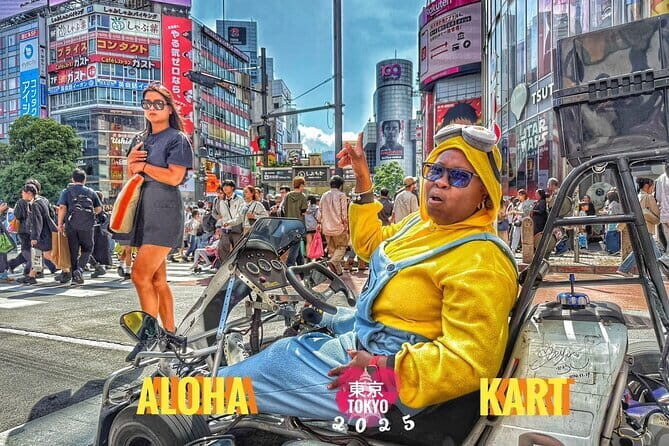
- Tokyo Tower from below: race under the tower instead of viewing it from a distance
- Shibuya Scramble Crossing: experience the world-famous crossing as part of the route
- Small group, max 10: more attention from the guide and less waiting
- Free gear for comfort: locker, costume, eyewear, and a raincoat are included
- City beats plus shortcuts: Roppongi street scenes and possible Harajuku looks along the way
- Photo support: your guide takes photo data, and printed photos may happen
Tokyo Tower to Shibuya by go-kart: what you’re really buying
This is a guided go-kart tour that runs from Tokyo Tower toward Shibuya. The pitch sounds simple—ride, see landmarks, have fun—but the value is in the pacing. You get to cover ground quickly while still hitting headline sights you’d normally need multiple transit trips to string together.
The ride time is listed as 1 hour, though it can feel longer once you factor in prep, gear, and the guided flow. If you want a high-impact Tokyo experience that doesn’t eat a full afternoon, this format makes sense.
The route is designed around recognizable Tokyo moments: Tokyo Tower first, then the famous Shibuya Scramble Crossing, with stops or passes that give you a taste of Roppongi nightlife streets and possible glimpses of Harajuku styles. Even if you only catch parts of those neighborhoods from the kart, the contrast is the point. Tokyo isn’t one mood; it changes every few blocks.
You can also read our reviews of more tours and experiences in Tokyo.



Tokyo Tower from below: the view you can’t get from the train
Most Tokyo Tower photos are taken from afar, from observation decks, or from across the street. Here, you’re under it as part of your ride. That changes the whole feeling. You’ll experience the scale in a way that feels more physical than any skyline shot.
There’s also a practical angle: since this operator positions their shop near Tokyo Tower, the tour starts with less time spent commuting through the city. You’re closer to the action earlier, which matters when you only have about an hour in total.
And yes, Tokyo Tower is photogenic. But you’re not just standing near it. You’ll be moving, stopping, and starting under familiar signage and landmark angles, which tends to create the kind of photos you don’t get from a normal walking stop.
Shibuya Scramble Crossing at speed: the point isn’t the selfie
Shibuya Scramble Crossing is the kind of sight that works on video and on foot—but it really hits different when you’re riding through it. You feel the crossing as a flow of people, lights, and timing instead of a static monument.
The best part is how your guide’s timing helps the group stay together. You’re not only racing; you’re syncing with traffic control moments. One of the strongest themes from the experience is that the guide watches light changes and keeps everyone from splitting up, so you spend your energy on the kart rather than scanning for missing people.
There’s also a psychological payoff. Shibuya on foot can be crowded in a way that drains your attention. At kart speed, you get a tight burst of intensity—still controlled, still guided—so you come away with a real sense of how fast Tokyo can switch gears.
Roppongi street scenes and Harajuku style glimpses

After Shibuya, the route shifts toward the energy of Roppongi. This is where the tour earns its nickname as a Tokyo “night” taste even if you aren’t there at midnight. You get the impression of neon-adjacent streets and busy blocks without needing to plan a separate nightlife outing.
You may also catch glimpses of Harajuku fashion. The key word is glimpses—this isn’t a fashion walk where you stop and browse. It’s more like window-shopping while you move. That’s good if you want the color and atmosphere without the time commitment of a full neighborhood day.
The practical value: these sections help you understand Tokyo’s variety. Tower area feels formal and iconic. Shibuya feels fast and modern. Roppongi reads as entertainment-forward. Harajuku gives you creative street energy. A single hour can’t give you all of it deeply, but it can give you a balanced first impression.
Gear, photos, and safety support that make the ride easier
A lot of go-kart experiences ask you to show up and figure it out. This one does more prep for you.
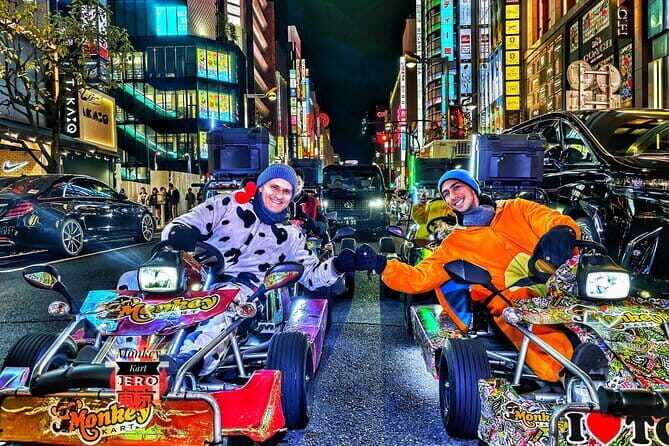
You get a free locker, a free costume, eyewear, and a raincoat. That matters in Tokyo, where weather can change fast and where you might not want to pack extra layers. If it’s wet, having a raincoat supplied reduces the chance your day turns into a slippery hassle.
You also get gasoline included and insurance included. That doesn’t automatically make it safe, but it does mean you’re not dealing with extra add-ons once you arrive.
On top of that, your guide takes photo data during the activity. In practice, that’s huge. Racing is chaotic; trying to film while coordinating pace and safety is hard. Having a guide capture the key moments saves you time and helps your memories feel complete, not accidental.
Safety is clearly part of how this is run. The setup includes a follow-along staff member and a lead guide approach, and the experience is described as well managed during traffic and light changes. If your stress level goes up when group rides get complicated, you’ll appreciate the structured guidance.






Price and value: why $96 can be fair in Tokyo
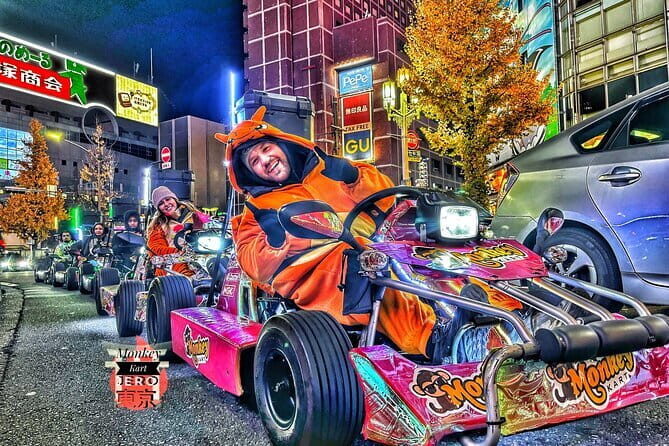
At $96 per person, this isn’t the cheapest thing you can do in Tokyo. But go-karts aren’t cheap anywhere, and Tokyo logistics usually cost real money even before you factor in the experience.
Here’s where the value shows up:
- You’re paying for guidance, not just the vehicle. The guide handles the coordination and the pacing through key areas.
- Gear is included: locker, costume, eyewear, raincoat, and insurance. That reduces your out-of-pocket spending and makes the experience more “complete” when you arrive.
- You’re getting landmark coverage in one hit. You’re combining Tokyo Tower + Shibuya Scramble Crossing in a single guided ride, rather than doing separate transport days.
- Photos are part of the package via guide-captured photo data, which can make the memory feel like more than just a blur.
If you’re traveling with limited time and want a memorable activity that feels uniquely Tokyo, this price is easier to justify. If you’re already planning a slow, detailed neighborhood day—Harajuku shopping, Roppongi dining, Shibuya walking—then this works best as the action segment that balances the rest.
What you must bring: IDP rules that can make or break the day
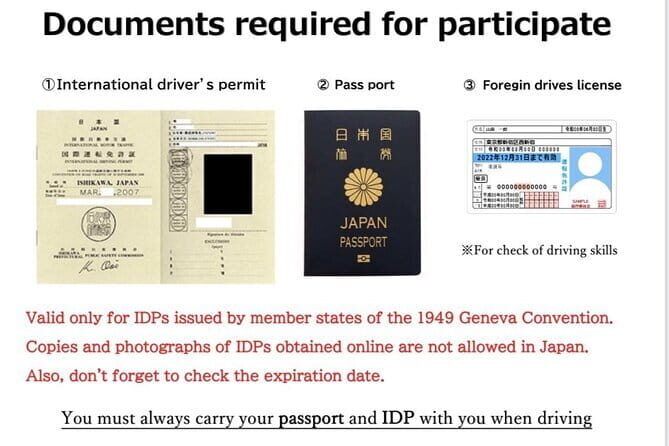
This tour is very clear about driving documents. If you don’t have the right paperwork in hand, you can lose your chance to ride.
You need:
- Passport
- International Driver’s Permit in physical form
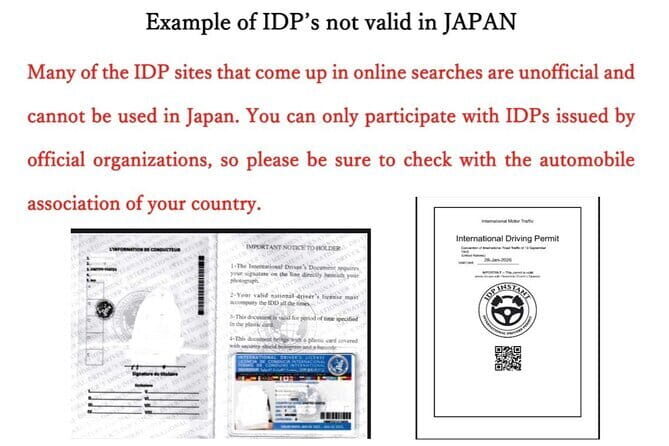
And the IDP format matters. You’re told to bring a booklet type of Geneva 1949 IDP (physical, not a photo or PDF). It’s also not valid if it’s:
- 1968 type
- Photos or digital copies
- A4 paper
- Card type IDP
There’s also country-specific detail. If your driver’s license is issued in Switzerland, Germany, France, Taiwan, Belgium, or Monaco, you must obtain a Japanese translation from JAF and bring that translation document in physical form along with your passport and driver’s license.
And if your license is from a country not covered by the 1949 Geneva Convention (examples listed include Mexico, Kuwait, China, Colombia, Saudi Arabia, and more), the data says you can’t operate in Japan.
So my practical advice is simple: don’t wait until the day before to confirm your IDP format. Check the physical format, check the year/convention type, and if you need JAF translation, get it in advance. This is the biggest “make or break” factor for the tour.
Clothing rules and the small things that keep you comfortable
Tokyo karts are fun, but they’re picky about feet. You’re not allowed to wear:
- High-heeled shoes
- Sandals or flip-flops
You’ll also be in a provided costume and eyewear, and you’ll have a raincoat if needed. So your main job is to show up with footwear that lets you grip and that you can move in comfortably.
If you’re the type who hates wet socks or slipping, the raincoat inclusion is a real plus. And if you worry about hair, the eyewear helps you focus on the ride instead of adjusting accessories.
Meeting point at Hamamatsucho and how to time your arrival
Your meeting point is JR Hamamatsucho Station (South Exit), about a 5-minute walk, or Subway Daimon Station with A1/A3 exits, about a 7-minute walk.
Because the whole ride is only around an hour on the schedule, I’d treat this as an activity where being late can shorten your fun. Tokyo stations can be confusing even for experienced travelers, so build in extra walking time. Arriving early is the easiest way to start stress-free.
Once you find the group, the small group size helps. With a limit of 10 participants, you should feel like you’re part of a real team rather than a numbered ticket.
Who should book this go-kart tour (and who should skip it)
This works best if you:
- Want a fast, guided Tokyo highlight without spending hours in transit
- Like active sightseeing where you move through famous places
- Prefer a small group with English/Japanese guidance
- Care about having photos taken during the ride
It may be a poor fit if you:
- Don’t have the correct driving documents (passport + Geneva 1949 physical IDP)
- Have mobility limitations. The tour is listed as not suitable for people with mobility impairments, wheelchair users, and people over 75.
- Are pregnant.
- Are traveling without a driver’s license. (The tour explicitly says drivers under 18 are not allowed too.)
- Plan to wear sandals or other prohibited footwear.
Also note: food and drinks are not included. If you’re hungry, eat before you go.
Should you book Aloha Kart Tokyo Tower to Shibuya?
If you want one truly different way to experience Tokyo landmarks, this is a strong choice. You’re not just looking at Tokyo Tower and Shibuya Scramble Crossing—you’re moving through them with a guide who manages timing, grouping, and safety. The included gear and photo support make it feel like more than a basic kart rental.
I’d especially recommend it if you’re traveling with limited time and want your “wow” moments packed into a single hour. It’s also a good match for travelers who like clear rules and structured guidance.
Skip it if the IDP requirements feel risky for your situation. The paperwork rules are strict, and the data says you can’t get refunds if you can’t participate due to incomplete required documents.
If you do have the correct Geneva 1949 IDP and passport, and you’re comfortable with the idea of racing through major intersections, I think you’ll feel like you got a memorable Tokyo experience at a fair all-in price.
FAQ
How long is the go-kart tour from Tokyo Tower to Shibuya?
The tour duration is listed as 1 hour.
What major locations will I see on this tour?
You’ll ride around Tokyo Tower, pass through Shibuya Scramble Crossing, experience streets in Roppongi, and you may catch glimpses of Harajuku fashion. The overall route runs from Tokyo Tower toward Shibuya.
What documents do I need to drive?
You need a passport and an International Driver’s Permit (IDP).
What IDP format is accepted?
The tour specifically asks for a booklet type Geneva 1949 IDP in physical form. It also notes it is not available for 1968 type IDP and is not valid if it’s a photo, PDF, A4 paper, or card type IDP.
Do I need a Japanese translation of my license?
If your driver’s license is issued in Switzerland, Germany, France, Taiwan, Belgium, or Monaco, you must obtain a Japanese translation from JAF, and bring it in physical form.
What is the minimum age to drive?
Drivers under 18 are not allowed. You also must have a driver’s license.
What footwear is not allowed?
High-heeled shoes are not allowed. Sandals and flip-flops are also not allowed.
What’s included in the price?
Included items are: an experienced tour guide, gasoline, English/Korean staff, free locker, free costume, eyewear, raincoat, photo data taken by the guide during the activity, and insurance.
Is food or drinks included?
No. Food and drinks are not included.
Where do I meet the tour?
You meet at JR Hamamatsucho Station South Exit, about a 5-minute walk, or Subway Daimon Station A1/A3 exits, about a 7-minute walk.
Can I cancel for a refund?
Yes. Free cancellation is listed as available up to 24 hours in advance for a full refund.