REVIEW · TOKYO
Explore Unique Tokyo Streets / Learn with a Pro Photographer
Book on Viator →Operated by Deniz Demir · Bookable on Viator
Tokyo at night makes you want to shoot everything.
This 2-hour photo walk sends you through Yurakucho and Shinbashi in the evening, when the streets start looking like a movie set. You get pro guidance on camera settings and street-photography choices, led by Deniz Demir, a working photographer (and the kind of person who genuinely talks shop).
Two things I really like: the coaching is personalized with a maximum group size of 6, and you’re not just pointed at sights—you’re taught how to see and how to frame. One thing to consider: it’s an evening walk, so you’ll want to be comfortable moving at a moderate pace for about two hours while focusing on shots.
In This Review
- Key things to know before you go
- Evening Tokyo, Yurakucho, and Shinbashi: why this route clicks at night
- From Shimbashi Station to the first shot: getting your camera to behave
- Small-group coaching (max 6): feedback you can use on the next frame
- What you’ll learn on the streets: settings, lenses, and street-shooting philosophy
- Tripod help, and how to plan for night shots without drama
- Weekdays and salaryman culture: photographing people with context
- Value check: is $128.09 worth it for a Tokyo night photo workshop?
- Who should book this (and who should skip it)
- Booking timing: don’t wait too long
- Should you book this Tokyo evening photography tour?
- FAQ
- Where is the meeting point?
- Where does the tour end?
- How long is the experience?
- How many people are in the group?
- What areas will we explore?
- Is this tour only for weekends?
- Can the guide help with a tripod?
- What camera topics are covered?
- Does the tour use a mobile ticket?
- Can I get a full refund if I cancel?
- Is there any limit on fitness or accessibility?
Key things to know before you go
- Small group (max 6): you get real feedback instead of generic tips
- Evening timing in Yurakucho/Shinbashi: great street contrast for night photography
- Personal coaching from Deniz Demir: settings, lenses, and shooting philosophy
- Hands-on topics: gear basics plus advanced street approaches
- Tripod option: your photographer can bring one if you want
- Weekday culture focus: on weekdays, you’ll learn about salaryman culture up close through photos
Evening Tokyo, Yurakucho, and Shinbashi: why this route clicks at night
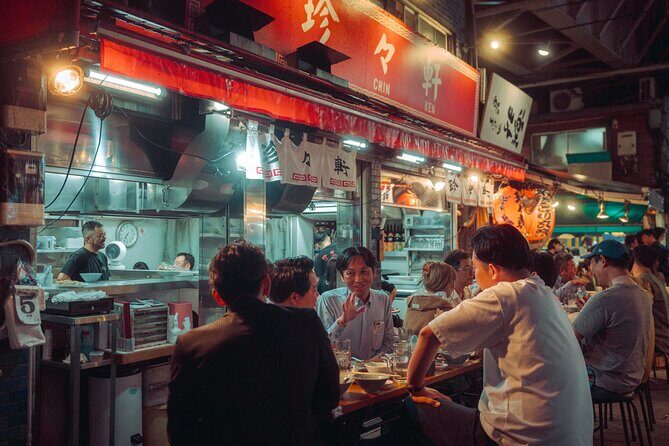
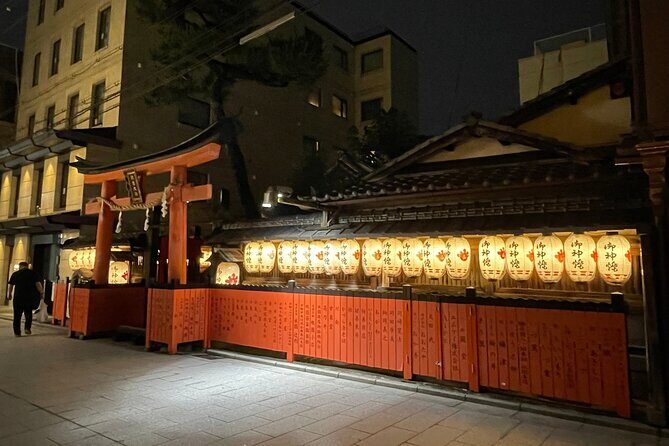
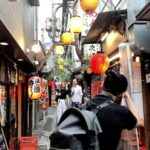
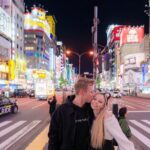
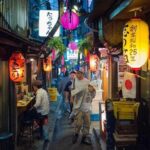
Tokyo’s night look isn’t just lights. It’s the way people move, pause, and pass under signs and storefront glow. That’s exactly why an evening route through Yurakucho and Shinbashi makes sense for photographers. These areas give you a mix of street scenes that feel layered: busy edges, calmer moments, and faces-and-motion moments you can use for storytelling.
And here’s the practical part: nighttime street photography is mostly a game of control. Control of shutter speed, focus, and composition. When you’re walking a focused neighborhood in a short window, you can test what you learned immediately instead of waiting days for the right lighting again.
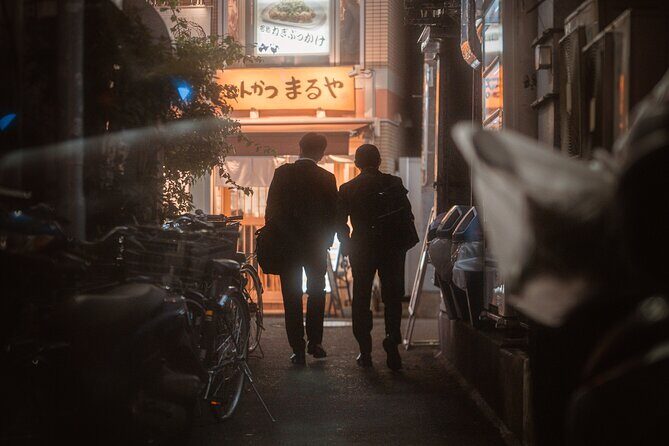
On weekdays, the tour adds an extra layer: the guide can show you Japan’s salaryman culture up close while you take photos. That matters because candid street moments can turn your shots from pretty to meaningful—if you know what to look for and how to frame it without forcing it.
You can also read our reviews of more photography tours in Tokyo

From Shimbashi Station to the first shot: getting your camera to behave
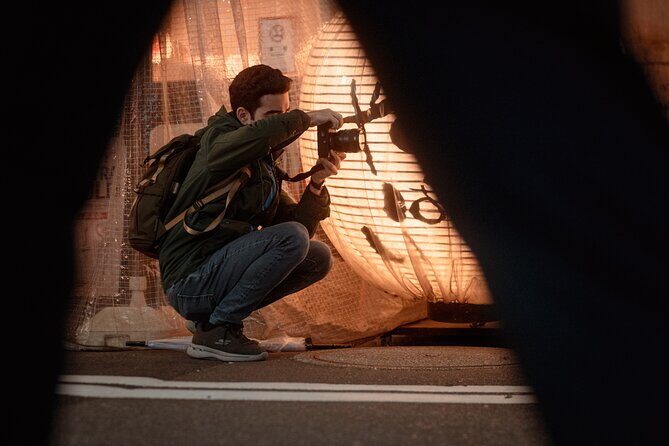
You start at Shimbashi Station (2 Chome-17, Shinbashi, Minato City), and the format is designed to get you shooting quickly. Evening photography can make even experienced photographers freeze, because everything changes: light levels drop fast, and the camera settings that worked earlier suddenly fail.
This is where Deniz Demir’s approach helps. The tour isn’t only about where to stand; it’s about how to set up your camera so the street cooperates. You’ll talk through topics like settings and lenses, and you’ll connect those choices to what you’re actually seeing around you.
Even if you think you already know your gear, night shooting exposes gaps fast: one wrong setting can give you either blurry motion or muddy darkness. The best part of a guided evening is that you can test, adjust, and re-shoot while your location and lighting are still consistent.
Small-group coaching (max 6): feedback you can use on the next frame
With a maximum group size of 6, the tour avoids the usual problem of big-group photo walks: you spend most of your time trying to keep up and not enough time fixing your photos.
In a small group, the guide can actually notice what’s happening with your images—like whether you’re cutting off important elements in your frame, relying on the wrong focus approach, or not taking advantage of nearby surfaces and light sources. That’s what turns instruction into progress.
I also like that the tour frames itself as more than a sightseeing activity. It’s structured like a mini workshop. You’re walking, yes, but you’re also learning a way to make decisions:
- What to shoot
- How to simplify a scene
- When to slow down and aim for a stronger composition
If you enjoy learning by doing, this style fits you. If you hate stopping to adjust your camera, you might find the pace mentally demanding—but you can still take breaks when you need them.
What you’ll learn on the streets: settings, lenses, and street-shooting philosophy
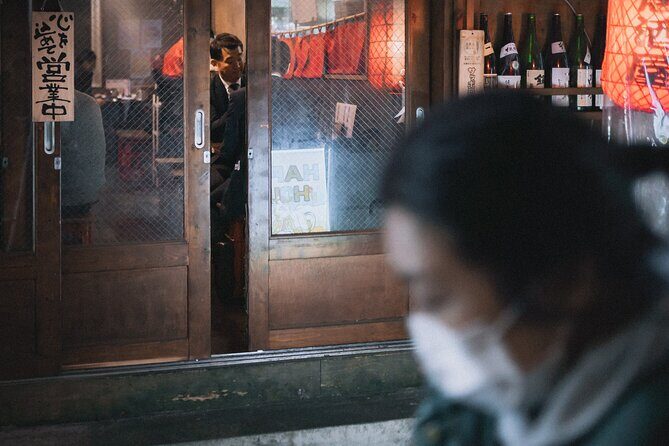
The tour covers both basics and the stuff that separates average street photos from ones you’re proud to share.
You’ll work through basic photography topics such as camera settings, lens choices, and other gear. The tour also mentions gear-related techniques and tools like LEDs and prisms, which signals that you’re not stuck with only one approach to night lighting and effects. (You might not use every item, but it’s useful to know what’s possible and how it changes results.)
Then you move into more advanced thinking, including:
- street shooting philosophies
- what to look for
- framing
- how to use what’s around you to make ordinary scenes feel intentional
That last part is underrated. Night streets in Tokyo can look amazing in real life, but photos can still end up flat. The guide’s role is to help you translate the scene into a frame that holds attention. That’s less about fancy gear and more about choices—like narrowing the subject, finding leading lines, and using light to separate layers in the image.
You also get the benefit of practicing in real time. You don’t just hear about techniques and then leave. You test them immediately while the evening atmosphere is still there.
Tripod help, and how to plan for night shots without drama
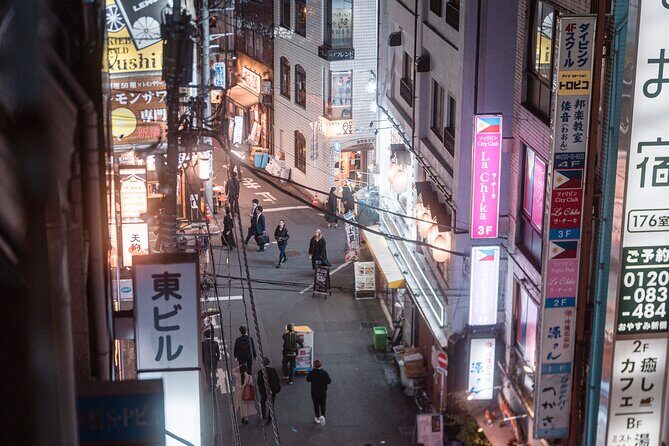
Night photography can be frustrating because light is low and motion is common. A tripod (or at least a steady setup) can be the difference between crisp lines and “why is this blurry?” regret.
The tour note that your photographer guide can bring a tripod if desired, which is a huge quality-of-life detail. If you’re the type who wants sharpness for street scenes, having an option like this makes it easier to experiment without carrying extra gear you didn’t plan on.
That said, think practically about how you’ll shoot. Even with a tripod option, street photography often mixes handheld moments with stabilized frames. Your guide’s teaching approach helps you decide when you need stability versus when you want motion or a more spontaneous look.
If you’re bringing your own tripod, fine. If you’re not, the tour still gives you a way to try steadier shooting setups during the walk.






Weekdays and salaryman culture: photographing people with context
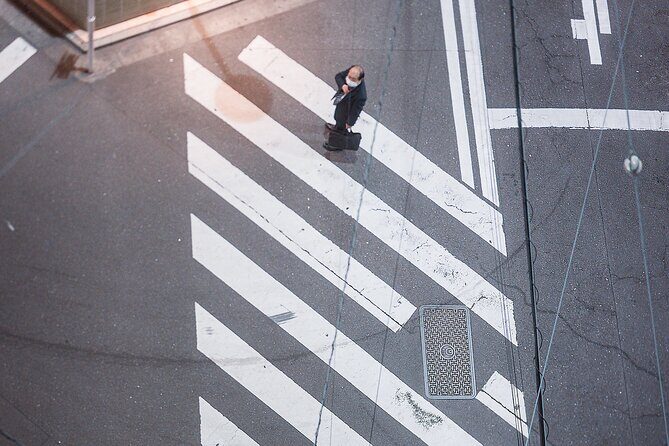
On weekday evening tours, you get to learn about salaryman culture up close as you take photos. That’s not just a cultural stop; it changes your photography mindset.
When you understand a little about how people move through the evening—where they’re heading, how they pause, how groups form or split—you’re more likely to capture images that feel honest instead of random.
Also, photographing people at night needs a plan:
- be aware of your timing
- respect personal space
- compose in a way that doesn’t feel invasive
The benefit of a guide-led approach is that you’re not guessing your way through sensitive street moments. You learn how to frame what you see, and you learn how to look at everyday behavior like it’s part of the photo story.
Value check: is $128.09 worth it for a Tokyo night photo workshop?
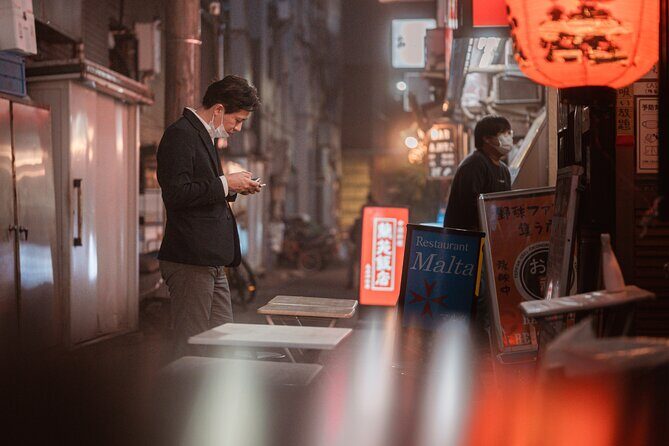
At $128.09 per person for about 2 hours, the value mostly comes down to what you’re buying: guidance plus time in a good shooting environment—not just a walk with a camera.
Here’s why it can be good value:
- You’re getting instruction from a professional working photographer, Deniz Demir.
- The group is capped at 6, so the coaching is less diluted.
- You cover both gear and how to think about street shooting, which is the part people usually can’t fix on their own quickly.
- You’re in Yurakucho and Shinbashi at night, which are the kinds of areas where timing and practice matter.
Price-wise, it’s not a budget stroll. But for a short evening session where you can improve how your camera sees at night, it can be a smart use of travel time—especially if you want photos that actually reflect what you felt in Tokyo.
One more small value detail: the experience is issued as a mobile ticket, and it’s flexible with several evening tour options. More flexibility usually means fewer scheduling headaches and less last-minute stress.
Who should book this (and who should skip it)
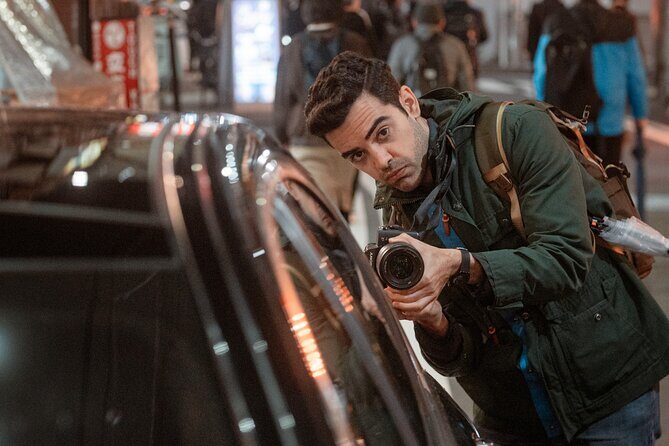
This tour is a great fit if you:
- want to improve your night street photos fast
- enjoy hands-on coaching and immediate practice
- like the idea of learning both camera basics and street-shooting philosophy
- prefer a small group over crowded tours
- want evening scenes with a possible culture angle on weekdays
It might not be your best match if you:
- hate stopping frequently for instruction or adjustments
- expect a pure sightseeing route with lots of landmark time (this is more of a photo workshop on the move)
- are looking for a completely hands-off guide who never gives direction
Also, note the physical requirement: it’s listed for travelers with moderate physical fitness. Two hours may sound easy, but night street shooting involves standing, repositioning, and keeping your attention on your camera.
Booking timing: don’t wait too long
On average, this is booked about 16 days in advance. That doesn’t mean you can’t grab a spot later, but it’s smart to book earlier if you’re traveling during popular weeks. Evening sessions can fill up quickly, especially for small-group formats.
If you’re planning around weekday salaryman culture lessons, lock in your dates early, too.
Should you book this Tokyo evening photography tour?
Yes—if your goal is better night street photography with real guidance. The big strengths are Deniz Demir’s professional coaching, the small group size, and the focus on both technical choices (settings, lenses, and practical gear discussion) and the bigger creative decisions (framing and street-shooting philosophy). You’re also shooting in two neighborhoods that naturally lend themselves to evening scenes: Yurakucho and Shinbashi.
If you’re already a confident night shooter who only wants inspiration from a scenic walk, you might get less out of the instruction-heavy approach. But if you want photos you can point to and say, I understand why this works, this is the kind of Tokyo evening lesson that pays off.
FAQ
Where is the meeting point?
The tour starts at Shimbashi Station (2 Chome-17 Shinbashi, Minato City, Tokyo 105-0004, Japan).
Where does the tour end?
It ends back at the meeting point.
How long is the experience?
It lasts about 2 hours.
How many people are in the group?
The group size is capped at a maximum of 6 travelers.
What areas will we explore?
You’ll explore the Yurakucho and Shinbashi areas in the evening.
Is this tour only for weekends?
No. The tour is offered on different evening options. On weekdays, you learn about Japan’s salaryman culture up close as you take photos.
Can the guide help with a tripod?
Yes. The photographer guide can bring a tripod if you want.
What camera topics are covered?
The tour discusses settings, lenses, and other gear topics, and it also covers street shooting philosophies, framing, and what to look for.
Does the tour use a mobile ticket?
Yes, the tour includes a mobile ticket.
Can I get a full refund if I cancel?
You can cancel up to 24 hours in advance for a full refund. If you cancel less than 24 hours before the start time, the amount paid won’t be refunded.
Is there any limit on fitness or accessibility?
It’s designed for travelers with a moderate physical fitness level, and it’s near public transportation. Service animals are allowed.
If you tell me what camera you shoot with (and whether you’re mostly handheld or using a tripod), I can suggest how to prep so your first night frame already looks better.