REVIEW · TOKYO
Mount Fuji Full Day Customize Private Tour with English Guide
Book on Viator →Operated by Tokyo Luxury Private Tours · Bookable on Viator
A private Fuji day can feel like a shortcut. This customizable private experience from Tokyo is built for speed and convenience, with hotel pickup plus a full 10-hour loop around the Mount Fuji area. You get a suggested plan (5th Station, Lake Kawaguchiko, Oshino Hakkai, shrines, and more), and because it’s private, you can adjust the pace and priorities to fit your group.
What I like most is how efficiently it strings together far-flung highlights in one day, without you wrangling trains or meeting points. The second big win is the flexibility: you can spend more time where the views and photo spots hit hardest and cut the rest short if your group is tired. One possible drawback: some people experience it more like a private driver service than a true guide-led tour, so you’ll want to set expectations early about how much explanation you want.
In This Review
- Key Things You’ll Notice Right Away
- How a Private Fuji Day Really Changes Your Tokyo Plans
- Your Actual Route: 5th Station to Gotemba, With Stops That Make Sense
- Mt. Fuji 5th Station (about 1 hour)
- Lake Kawaguchiko (about 1 hour)
- Oshino Hakkai (about 1 hour)
- Oishi Park (about 1 hour)
- Kitaguchi Hongu Fuji Sengen Jinja Shrine (about 1 hour)
- Chureito Pagoda and Arakurayama Sengen Park (about 1 hour each)
- Narusawa Ice Cave (about 1 hour)
- Gotemba Premium Outlets (about 2 hours)
- Price and Logistics: What You Pay For (and What You Don’t)
- English Guide vs Private Driver: Set Expectations Up Front
- Weather Strategy: How to Keep the Day Worth It
- Who This Tour Suits Best
- Should You Book This Mount Fuji Private Day?
- FAQ
- FAQ
- How long is the Mount Fuji full day customize private tour?
- What is the price, and how many people is it for?
- Is hotel pickup and drop-off included?
- Does the tour include WiFi and an English-speaking guide?
- Is lunch included?
- Do I have to pay an entrance fee at Mount Fuji 5th Station?
- What happens if weather is bad for Mount Fuji sightseeing?
- Is free cancellation available?
Key Things You’ll Notice Right Away
- Hotel pickup and drop-off saves you time and energy before you even reach Fuji.
- Private group up to 3 keeps the day from feeling crowded or rushed by strangers.
- Tight stop windows (mostly 1 hour) mean you’ll see a lot, but you’ll also need to move with purpose.
- Mount Fuji 5th Station has an extra admission fee (¥2,100 per person).
- Weather is the make-or-break factor for Mount Fuji sightseeing.
- Guide quality can vary, so confirm what you’ll get beyond transportation.
How a Private Fuji Day Really Changes Your Tokyo Plans
A Mount Fuji day trip is one of those things that can either feel smooth or feel like you’re sprinting. This setup leans toward smooth. For one thing, you start with pickup and end with drop-off, so your day doesn’t hinge on finding a station on the wrong side of Tokyo traffic. You also get an air-conditioned vehicle and onboard Wi‑Fi, which sounds small until you’re using your phone to navigate, check weather, or manage tickets.
The price is $360 per group for up to 3 people, for about 10 hours. On paper, that’s not “cheap.” In real life, it can be good value if:
- you’re traveling as a couple or trio and don’t want to split into other groups,
- you want a packed highlights route without the hassle of transfers,
- you’d otherwise pay for separate transport between far-apart stops.
That “value math” changes if you’re traveling solo or if you’ll mostly sit in the car. So think of this as paying for time, convenience, and control.
You can also read our reviews of more guided tours in Tokyo

Your Actual Route: 5th Station to Gotemba, With Stops That Make Sense
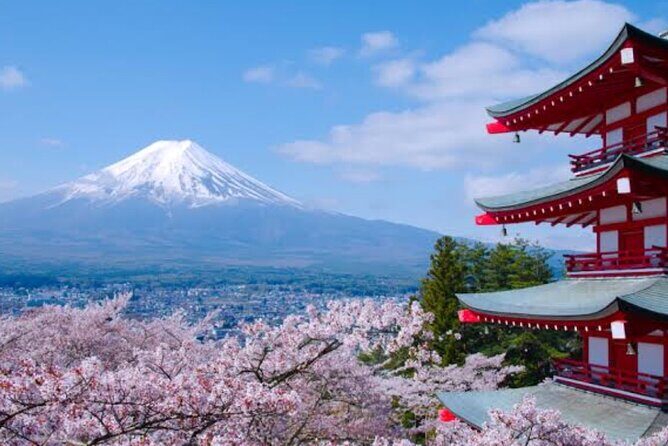
The itinerary runs like a well-paced checklist: first a high-point stop, then lakes, then the shrine-and-view sequence, then a cool lava-cave detour, and finally an outlet stop. Most stops are about an hour, so the day works best if you’re comfortable with quick photo rounds and short walks.
Also note the tour depends on good weather. If the forecast looks grim, you’re gambling—just like everyone else going after Mount Fuji views. The good news is you’re not locked in forever; if the experience is canceled due to poor weather, you’re offered another date or a full refund.
Mt. Fuji 5th Station (about 1 hour)
This is the big “Fuji moment.” The stop at Fujinomiya 5th Station ties into older pilgrimage travel patterns from the Edo period, originally used as a resting place for people heading toward the summit. You’re visiting a spot with meaning, not just a viewpoint.
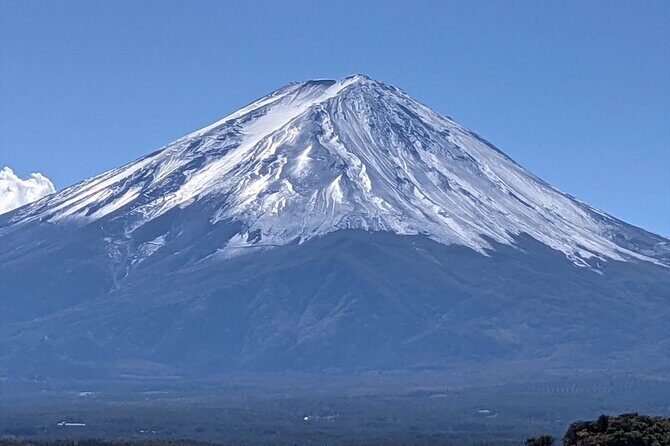
Plan to treat this as a focus stop, because it has an extra cost: ¥2,100 per person for the admission fee is not included. If you hate surprises, budget for it in advance. Also, this is the stop most sensitive to clouds—so if you’re chasing the classic Mount Fuji look, keep your expectations realistic and your timing flexible.
Practical note: admission is ticketed, and you’ll likely want to have your payment method ready well before you arrive.
Lake Kawaguchiko (about 1 hour)
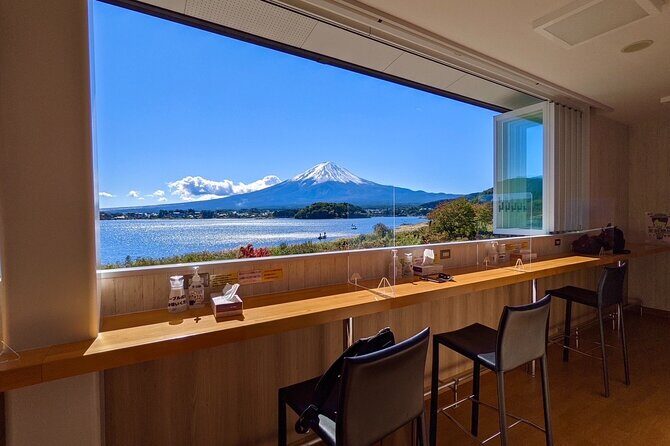
After the station, the day shifts into scenic, calmer territory. Lake Kawaguchiko is one of the five lakes around Mount Fuji, and the tour frames it through long-running history: formation, agricultural development, and later growth as a tourist destination.
This is a good place to breathe and reset. An hour is enough to walk a bit, take photos, and soak up the lake-and-Fuji composition if the sky cooperates. If the weather is moody, the lake still offers a pleasant change from the roadside city-to-views rhythm.
Oshino Hakkai (about 1 hour)
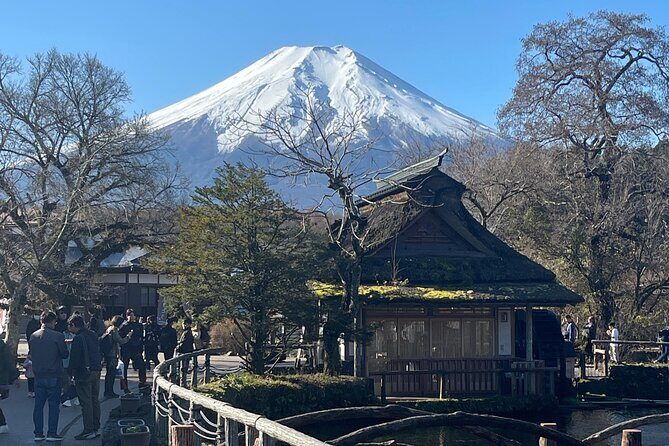
Oshino Hakkai is centered on water—specifically eight pools. The setting is built for easy strolling, with bridges and pathways that let you move around and over the ponds. It’s the kind of stop where your photos depend less on perfect clouds and more on capturing those calm, reflective pools.
This also tends to be a “slow down” hour. If your group is the type that rushes through scenic stops, you might want to push for at least a short walk loop rather than just snapping one quick view.
You can also read our reviews of more private tours in Tokyo


Oishi Park (about 1 hour)
Oishi Park is positioned on the north side of Lake Kawaguchiko, and the point of the stop is nature with a one-day feel that blends outdoors and local character. The tour description highlights its fame for a view—you’ll want to treat it like a photo anchor for the day.
Because it’s only an hour, decide early whether you want maximum time on the viewpoint or time walking around. If you’re planning to chase Mount Fuji through multiple stops, this is likely one of the places where your photos can still work even when the station is cloudy.
Kitaguchi Hongu Fuji Sengen Jinja Shrine (about 1 hour)
If you like your scenery with a cultural backbone, this is the stop. The shrine is described as having roots going back to 100 CE, connected to Yamato Takeru, a legendary prince from the Yamato dynasty. That gives the visit more depth than a quick landmark photo.
It’s also a nice change from pure nature. Even if the clouds are stubborn, a shrine stop gives you something to focus on besides the mountain.
Chureito Pagoda and Arakurayama Sengen Park (about 1 hour each)
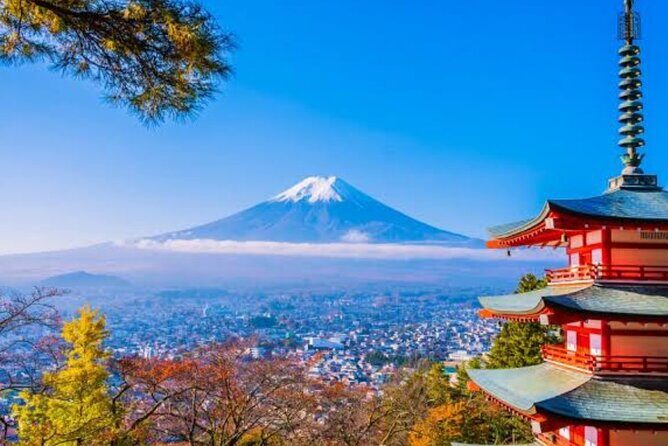
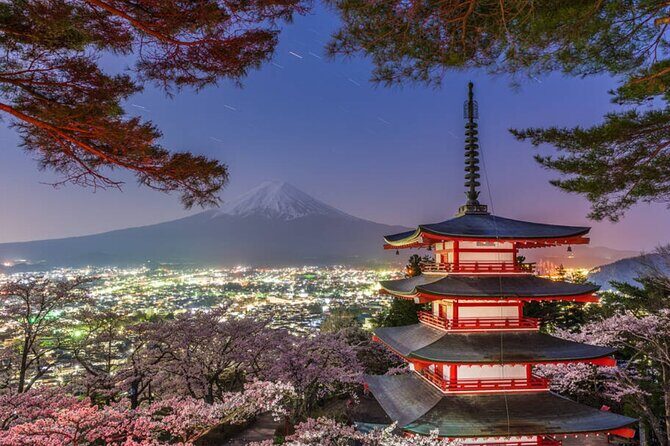
This is the classic “pagoda with Mount Fuji in the distance” style moment. The Chureito Pagoda is a five-storied structure overlooking Fujiyoshida City with Mount Fuji off in the distance, and it’s part of the Arakura Sengen Shrine grounds.
Right after that, Arakurayama Sengen Park adds another layer. The park was opened as a public space in 1959, but the shrine element here goes much farther back—founded in 705 per the tour description. So you’re not just visiting a view platform. You’re moving through a place with long cultural continuity.
Timing matters here. Because these stops are popular, you’ll benefit from arriving with purpose and not treating it like you have all day. This part of the route rewards good pacing.
Narusawa Ice Cave (about 1 hour)
This stop is a smart mid-day break from lakes and shrines. The Narusawa Ice Cave is described as a lava cave formed around 1,150 years ago and designated a Natural Monument in 1929 by the Ministry of Education. That’s a very specific story compared to generic scenic stops.
It’s a good choice if your group wants variety: a natural formation that feels different in both temperature and atmosphere from the rest of the route. In practice, it’s often a more memorable hour than another viewpoint, especially when the weather is doing its usual mountain-staging routine.
Gotemba Premium Outlets (about 2 hours)
Toward the end, you get a shopping buffer at Gotemba Premium Outlets. The tour frames the area through history as an early settlement location dating back about 2,000 years, then pivots to the outlet stop.
This is where you can regroup. Two hours is enough for browsing without it turning into a time sink. If you’re not shopping, you can still use this as a practical decompression stop before you head back to Tokyo.
Price and Logistics: What You Pay For (and What You Don’t)
At $360 per group (up to 3), you’re paying mainly for private transportation, the convenience of pickup/drop-off, and English support. You also get Wi‑Fi on board, and that matters more than you’d think when you’re coordinating your day around traffic and weather.
What’s not included:
- Lunch
- Mount Fuji 5th Station admission (¥2,100 per person)
So the real cost isn’t just the tour price. If you want the least hassle possible, plan your lunch strategy before the day starts. Either eat on the way, grab something near one of the stops, or bring snacks so you’re not hunting while your timing is tight.
One more “logistics reality” point: most stops are about an hour. That schedule is part of the value, but it also means you won’t linger. If your ideal day is slow and contemplative, you’ll need to speak up about adjustments early.
English Guide vs Private Driver: Set Expectations Up Front
Your vehicle is private, and you’ll have English speaking support. But based on real experiences with this style of service, you should clarify what you’re expecting from the person in the seat. Some guides lean into story and timing, and some run closer to a transportation-and-arrival rhythm.
I learned a lot from the names people highlighted, especially Hassy and Rana. In the best cases, they were friendly, timed arrivals to avoid crowds, and explained enough history to make stops feel more than just photo stops. If you get that kind of guide, the day feels like it has momentum and meaning.
Still, there are also reports that the experience can feel like a private transfer with limited guided content. If you want more than that, message your operator in advance with simple requests like:
- Do you provide explanations at each stop, or only while driving?
- Can you help with where to stand for the best views at each location?
- If we’re short on time, can we adjust the sequence rather than rushing through everything?
Also, keep your expectations practical: you’re visiting multiple sites in a single day. Even the best guide can’t turn 1-hour stops into long museum visits.
Weather Strategy: How to Keep the Day Worth It
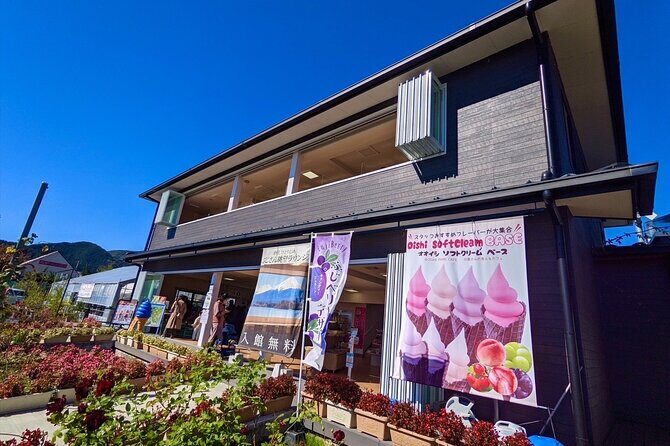
Mount Fuji views can be perfect—or you can get cloud cover that hides the whole thing. This tour is honest about the weather requirement, and the operator builds in a safety net if conditions are poor enough to cancel.
My advice is to treat the Mount Fuji day as two goals:
- Goal 1: see Mount Fuji clearly when possible.
- Goal 2: still enjoy the lakes, shrines, and unique stops even if the mountain is shy.
That mindset keeps the day from feeling like a loss. When the mountain is hidden, the route still gives you variety: water at Oshino Hakkai, cultural stops at the shrines, and the unusual geology of Narusawa Ice Cave.
Who This Tour Suits Best
This is a strong fit if you want:
- a packed day without train hopping,
- flexibility within a pre-built route,
- a private setup for couples, small families, or a trio of friends.
It’s also a good choice if you care about timing. Some guides in this style are especially good at showing up before places get crowded, and that can change your experience fast.
It may be less ideal if:
- you want a deep, museum-style narration for every stop,
- your group hates short time windows,
- you’re traveling solo and the group pricing doesn’t feel worth it.
Should You Book This Mount Fuji Private Day?
If you’re traveling as a group of up to three and you want a high-efficiency Mount Fuji day with hotel pickup, this tour is easy to recommend. The price can feel fair when you compare it to the cost of getting between far-apart sites plus the time you save.
My “book it” decision tips:
- If Mount Fuji is a must, pick this for the structured route and the chance to hit multiple view-related stops.
- If you care about historical context, message ahead to confirm how guided the guide time will be.
- If weather matters to you, keep your calendar flexible and plan for the possibility that clouds will shape what you actually see.
FAQ
FAQ
How long is the Mount Fuji full day customize private tour?
The tour runs for about 10 hours.
What is the price, and how many people is it for?
It costs $360 per group and accommodates up to 3 people.
Is hotel pickup and drop-off included?
Yes, hotel pickup and drop-off are included.
Does the tour include WiFi and an English-speaking guide?
Yes. You get WiFi on board and English speaking support.
Is lunch included?
No, lunch is not included.
Do I have to pay an entrance fee at Mount Fuji 5th Station?
Yes. The Mount Fuji 5th station entrance fee is ¥2,100 per person and is not included.
What happens if weather is bad for Mount Fuji sightseeing?
If the experience is canceled due to poor weather, you’ll be offered a different date or a full refund.
Is free cancellation available?
Yes. You can cancel up to 24 hours in advance for a full refund.