REVIEW · TOKYO
Tokyo downtown bicycle tour Tokyo Backstreets Bike Tour
Book on Viator →Operated by 東京下町自転車ツアー Tokyo Backstreets Bike Tour · Bookable on Viator
Pedal past Tokyo’s everyday faces.
This Tokyo backstreets bike tour is built for people who want more than the headline sights, with a guide helping you cut through central streets without stress and without getting lost. You’ll sample local tastes, roll past temples and traditional crafts, and finish with a classic Tokyo skyline moment by riding right under the Tokyo Skytree.
I especially like two things. First, the tour feels personal: it’s a small group (max 6) and the route can be customized to match your interests. Second, the ride is practical and thoughtful, with a provided bike and helmet, plus water and a traditional sweet shop snack to keep you going.
One consideration: this tour needs good weather, and the bikes are folding models designed for riders 140–180 cm tall (if you’re over 180 cm, you need to inform them ahead). Also, helmets are provided but not required, so if you prefer strict safety habits, bring that mindset with you.
In This Review
- Key highlights you’ll actually feel on the ride
- First impressions: what this bike tour gets right in Tokyo
- Price and value: why $65-ish makes sense for a guided half-day
- Getting started at the Sumida office: bikes, helmets, and your riding comfort
- Stop-by-stop ride guide: from sakuramochi to Skytree
- Stop 1: Yamamotoya for Chōmeiji Sakuramochi
- Stop 2: Honryuin Matsuchiyama Shoden (part of Senso-ji)
- Stop 3: Imado Shrine, a “power spot” for love and marriage
- Stop 4: Edo Taito Traditional Crafts Center (Edo Shitamachi Traditional Crafts Museum)
- Stop 5: Senso-ji, with a ride up to the Kaminarimon gate
- Stop 6: Kyu Yasuda Garden (17th-century Japanese garden)
- Stop 7: Ryogoku Kokugikan (sumo stadium area)
- Stop 8: Oyokogawa Water Park, cycling toward Skytree
- Stop 9: Tokyo Skytree, cycle-under experience
- Stop 10: Kyojima Minami Park and old-fashioned shopping streets
- The guide makes the day: what to expect from Takeshi and the team
- Who this tour is best for (and who should skip it)
- Should you book this Tokyo Backstreets Bike Tour?
- FAQ
- FAQ
- How long is the Tokyo downtown bicycle tour?
- How much does the tour cost?
- What’s included with the tour?
- Do I need to wear a helmet?
- What is the maximum group size?
- What bike type is provided, and who is it for?
- Can I request a tandem bike?
- Is the itinerary flexible?
- Which major sights are included?
- What if the weather is bad?
Key highlights you’ll actually feel on the ride
- Small group energy (up to 6) with room for questions and on-the-fly adjustments.
- Easy pace and off-main-road routing that lets you see local neighborhoods without feeling like you’re wrestling the city.
- Included fuel: water plus a snack from a traditional sweet shop at the start.
- Temple-to-culture stops that mix famous sites (Senso-ji) with calmer, lesser-known corners (gardens, crafts, shrines).
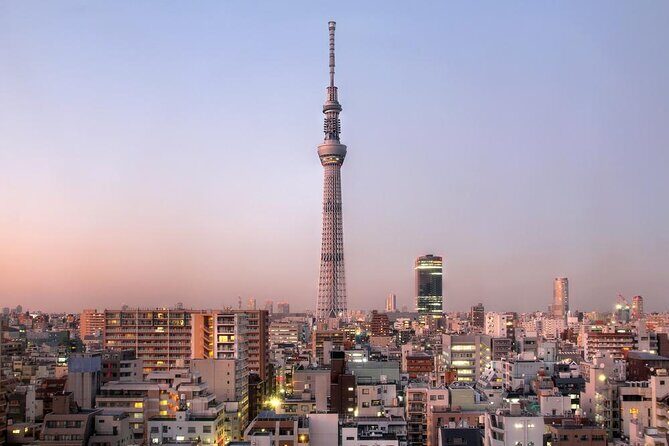
- A real photo moment at Skytree, because you cycle under the tower, not just stand far away and zoom.
First impressions: what this bike tour gets right in Tokyo
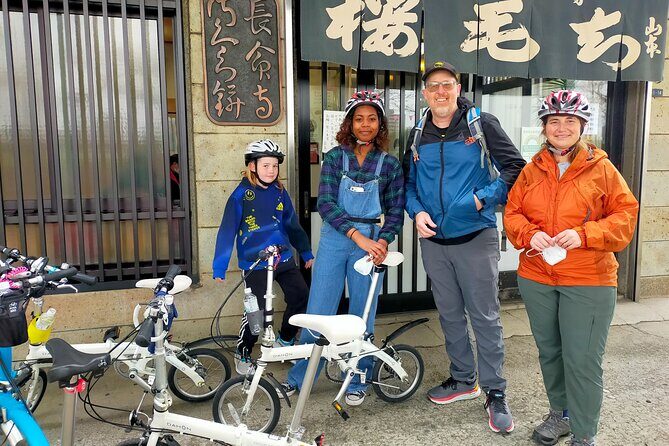
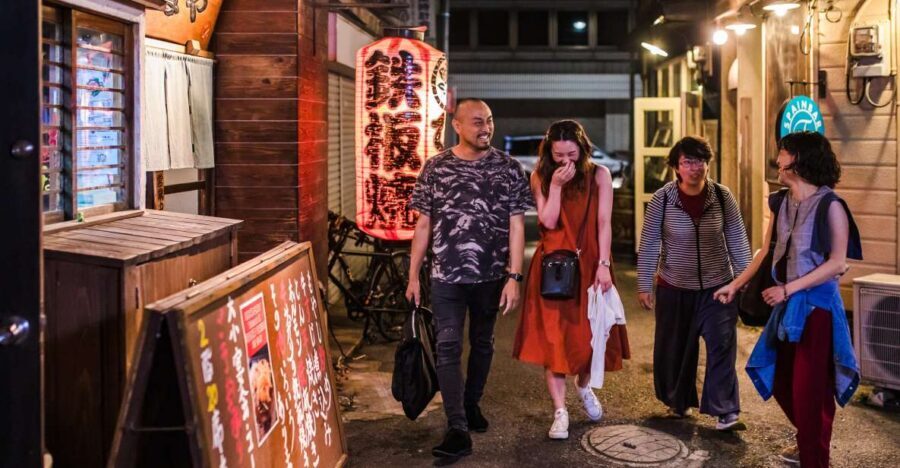
Tokyo can feel like two cities at once: giant landmarks on one side, and quiet daily life just a few turns away. This tour is designed for that second side. You’re on a bike, so you can cover serious ground in a half-day, yet you’re guided enough that you’re not stuck doing map gymnastics.
I like the “small-group with options” feel. When you have a guide, you spend less time figuring out logistics and more time noticing things like how neighborhoods change street by street. The guide also matters here: in the reviews, the guides (often Takeshi) come across as friendly, patient, and good at English explanations, which makes the sights land beyond just photos.
You’ll also get the kinds of details that only show up when someone local steers the route. The schedule has clear stops, but you’re not locked into a rigid checklist where you just get herded through.
You can also read our reviews of more cycling tours in Tokyo
Price and value: why $65-ish makes sense for a guided half-day
This tour costs $65.41 per person for about 4 hours, and it includes the basics that add up fast if you try to copy the day on your own: bike rental, a helmet, water, and a snack. Many day activities in Tokyo look cheap until you price out transport, entry fees, and a guide.
Here, the entry angle is also a plus. Every stop listed on the route shows free admission tickets for you, so you’re not paying to “stack” locations. Even if you skip one stop because you’re tired, your value doesn’t crater the way it might on a tour where everything is paid per attraction.
Add in the small-group maximum of 6 and the fact that the itinerary can be customized, and the price starts to look like a good deal for a first-time Tokyo day. It’s also a sensible way to burn off jet lag: gentle exercise, constant movement, and plenty of visual context.
Getting started at the Sumida office: bikes, helmets, and your riding comfort
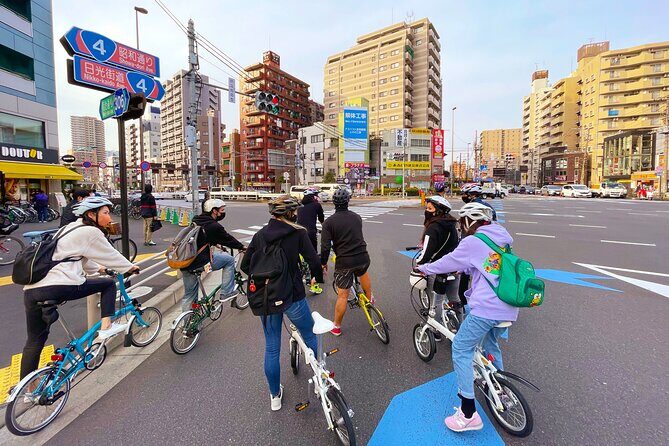
The meeting point is in Sumida City, Higashimukōjima, inside a share office called 「シナプス」 (Synaps) at 2-chōme 24-14. The exact address matters because it’s not one of Tokyo’s massive landmark meeting spots. In practice, this means you should arrive a few minutes early, so you can confirm you’re in the right doorway and avoid that “wait, is this it?” moment.
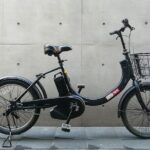
Your ride is a folding bike with 14–20 inch wheels, suitable for riders 140–180 cm tall. If you’re over 180 cm, tell them beforehand so you’re fitted properly. If you want a tandem bike, they ask you to inform them 3 days before booking.
Helmets are provided, but they aren’t mandatory. That’s a real difference in how the tour feels. If you’re the type who always wears a helmet, do it. If you usually don’t, you’re still covered because a helmet will be available.
On comfort: the route is designed to be followable and manageable for a wide range of people, including families in the feedback. One review even notes an about 15 km ride in roughly 4 hours, which gives you a useful sense of effort without pretending it’s a serious training ride.
Stop-by-stop ride guide: from sakuramochi to Skytree
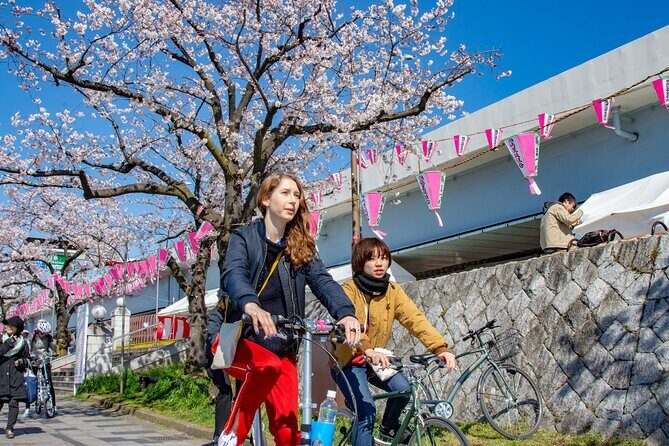
This tour is structured like a scenic loop through Asakusa/Sumida-style Tokyo, moving from taste and temple areas into crafts, gardens, sumo-area landmarks, and then down toward the Skytree region.
Stop 1: Yamamotoya for Chōmeiji Sakuramochi
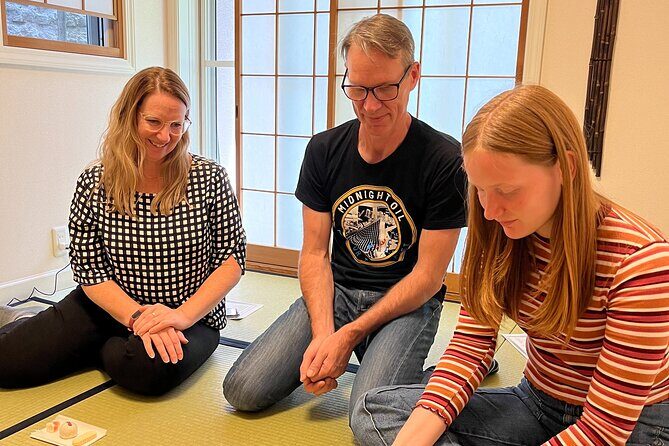
You start with sakuramochi, a cherry cake wrapped in a salt-pickled cherry leaf and filled with red bean paste. Yamamotoya is part of what makes this tour feel fun right away, because you’re not just sight-seeing—you’re tasting something deeply local before you even build momentum.
Practical tip: eat slowly. You’ll be riding soon, and red bean sweets are delicious but can be rich. If you’re sensitive to sweetness, you may want to sip your water alongside it.






Stop 2: Honryuin Matsuchiyama Shoden (part of Senso-ji)
This temple complex is connected to Senso-ji and was founded in 595. One distinctive feature is the presence of images connected to a daikon (Japanese radish) and a pouch symbolically tied to ideas about ignorance and mind.
The value here is not only the building—it’s the symbolism. Even if you don’t read Japanese, you can still enjoy the quiet moment of noticing what the place emphasizes.
Stop 3: Imado Shrine, a “power spot” for love and marriage
Imado Shrine was founded in 1063, and it’s popular as a power spot for people seeking love or marriage partners. You’ll also encounter fortune-related elements like the beckoning cat and fortune cat.
If you enjoy shrines for atmosphere and little symbolic details, this stop delivers. It’s also a good contrast to the big-temple crowds, because the pacing keeps you from feeling rushed.
Stop 4: Edo Taito Traditional Crafts Center (Edo Shitamachi Traditional Crafts Museum)
This is where the tour pivots into making and materials. You’ll see traditional crafts and get a sense of the craftsmanship culture tied to old Tokyo neighborhoods.
The drawback to watch for: museum-style stops can vary by how much you like quiet indoor time. If you’re the kind of person who wants nonstop motion, treat this as a short reset and use it to recharge before the next temple walking segment.
Stop 5: Senso-ji, with a ride up to the Kaminarimon gate
Senso-ji is the big one, and you do it the smart way: you cycle in front of Kaminarimon, leave your bike, and then walk inside the temple area for about 20 minutes.
This timing works for two reasons. You get the famous gate experience without having to treat the entire morning as a slow crowd funnel. And because you’re already in motion by bike, you get a sense of the surrounding neighborhood, not just the temple itself.
If you’re sensitive to crowds, this stop is still where you’ll likely feel the energy. Plan to move with the group and focus on what’s right in front of you rather than trying to chase every photo angle.
Stop 6: Kyu Yasuda Garden (17th-century Japanese garden)
Kyu Yasuda Garden takes you into slower, calmer scenery. The garden is built in the 17th century, and you’ll walk through it for about 20 minutes.
This is one of those “Tokyo needs a breath” moments. The garden pacing gives you a chance to look, not just skim. If the weather is pleasant, this stop becomes a photo highlight because of the layered garden feel.
Stop 7: Ryogoku Kokugikan (sumo stadium area)
You ride past the Ryogoku sumo stadium. There’s a brief stop (around 5 minutes) and a mention that you may have time for photos.
This is short on purpose. It lets you grab the connection to sumo culture without losing momentum in the loop. If you’re a hardcore sumo fan, you might want more time, but the overall tour balance stays intact.
Stop 8: Oyokogawa Water Park, cycling toward Skytree
Instead of another “stand and look” moment, Stop 8 is about movement through a park area toward the Skytree direction. You spend about 30 minutes here, which can feel like a longer stretch compared to some other stops.
The advantage is that it breaks up the denser sightseeing. You get riding rhythm and open space, which also makes the Skytree arrival feel bigger.
Stop 9: Tokyo Skytree, cycle-under experience
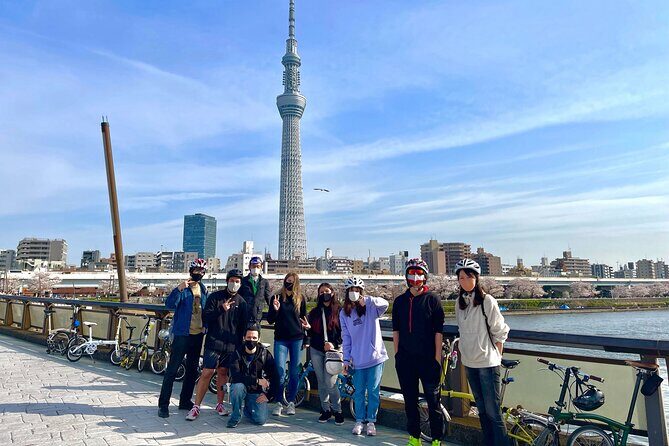
This is the skyline payoff: you cycle under the tower for about 10 minutes. You’re close enough to feel that scale rather than treating it like a distant landmark.
If you’ve seen lots of Tokyo photos, this is different because you’re moving through the location. You get a “where am I” moment instantly when you pass beneath it.
Stop 10: Kyojima Minami Park and old-fashioned shopping streets
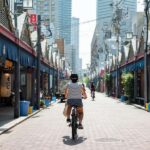
You finish with an old-school neighborhood flavor at Kyojima Minami Park, described as older shopping-mall style streets showing day-to-day life. You spend around 30 minutes here, which is a nice long final stretch.
This is where the tour’s goal shows: you see the parts of Tokyo people don’t build their entire trip around. It’s also a great place to slow down, notice small shops, and understand the neighborhood texture you rode through earlier.
The guide makes the day: what to expect from Takeshi and the team
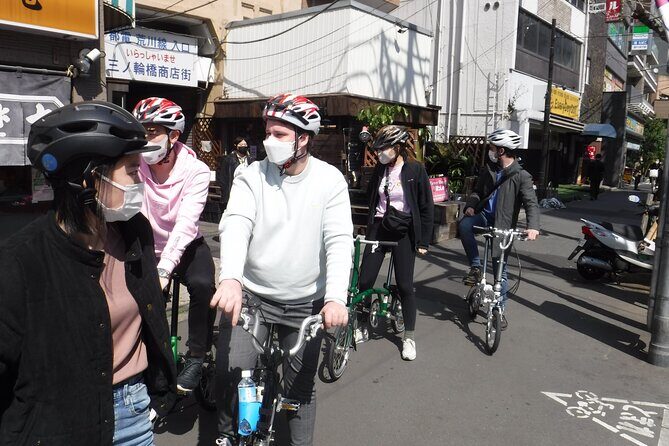
A bike tour lives or dies on the guide. The feedback for this one repeatedly points to friendliness, attentiveness, and clear explanations. In many cases, the guide—often Takeshi—is described as flexible, patient, and ready to adjust the agenda based on what you care about.
There’s also a practical touch: water and a snack are provided at the start. Some reviews also mention the guide took plenty of photos, which can help if you want souvenir shots without asking strangers.
One more real-life benefit: Tokyo cycling can look intimidating on paper, but a guide keeps it calm by choosing routes that feel safer and quieter. Several comments highlight that streets feel fairly quiet and that it’s easy to follow along.
Who this tour is best for (and who should skip it)
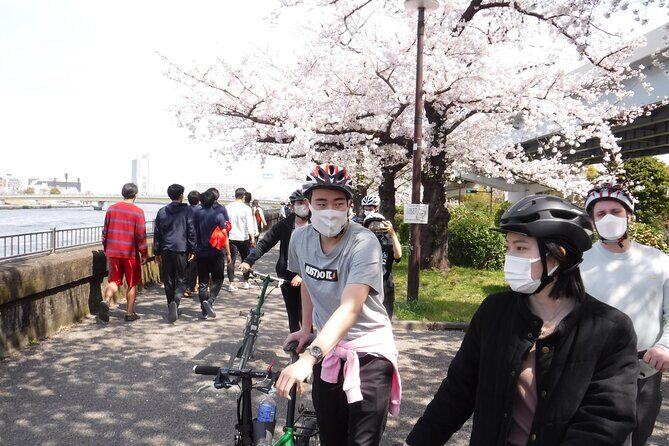
This tour is a strong fit if you want to:
- See major Tokyo landmarks like Senso-ji and Skytree without spending your whole day trapped in crowd lines.
- Get local context for neighborhoods and day-to-day life, not just “points on a map.”
- Use a bike day to fight jet lag with gentle effort and constant scene changes.
- Travel with mixed ages. The tour pacing and easy-to-follow route have worked for families, including kids, and even senior riders in the feedback.
You might want to think twice if:
- You don’t like cycling or you’re uncomfortable with about 4 hours on a bike (even at a manageable pace).
- Your height falls outside the listed bike fit range (under 140 cm or over 180 cm) and you haven’t communicated ahead.
- You’re traveling in conditions that often disrupt outdoor plans. This experience requires good weather, and if weather cancels, you’ll be offered another date or a refund.
Should you book this Tokyo Backstreets Bike Tour?
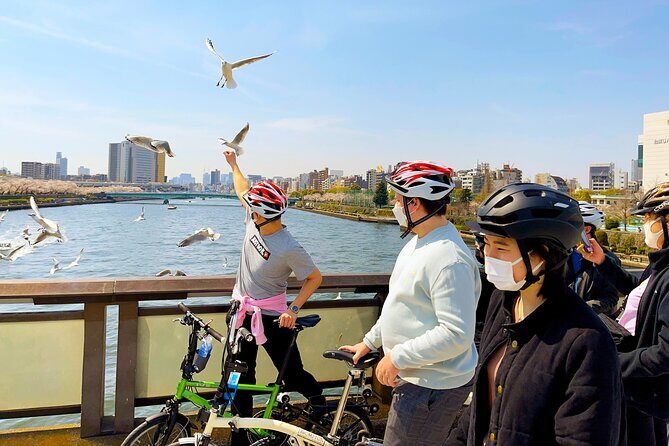
If your goal is more Tokyo per hour and you want authentic neighborhood flavor around famous sights, I’d book it. The value math is strong because you get bikes, helmets, water, a traditional snack, and a guided route that hits big names like Senso-ji and Skytree while still making time for smaller-culture stops.
Book it especially if you like the idea of finishing with old-street life at Kyojima Minami Park rather than ending at another major photo wall. And if you’re booking as a couple or family, the max group size (up to 6) helps the day feel personal.
But if you’re looking for a purely landmark-heavy day with minimal riding, or you only want indoor museum time, you may feel the bike time and outdoor stops more than you’d like.
FAQ
FAQ
How long is the Tokyo downtown bicycle tour?
It’s about 4 hours.
How much does the tour cost?
It’s listed at $65.41 per person.
What’s included with the tour?
Bikes and helmets are provided, and you also get water plus a snack from a traditional sweet shop.
Do I need to wear a helmet?
Helmets are provided, and they are not mandatory.
What is the maximum group size?
The tour has a maximum of 6 travelers.
What bike type is provided, and who is it for?
They provide folding rental bikes with 14–20 inch size, suitable for people between 140–180 cm tall. If you’re over 180 cm, you should inform them priorly.
Can I request a tandem bike?
Yes, but you need to inform them 3 days before the day you booked.
Is the itinerary flexible?
Yes. The itinerary can be customized to suit your needs.
Which major sights are included?
The route includes Senso-ji Temple and Tokyo Skytree, plus several other cultural stops like shrines, a traditional crafts center, and a Japanese garden.
What if the weather is bad?
The experience requires good weather. If it’s canceled due to poor weather, you’ll be offered a different date or a full refund.