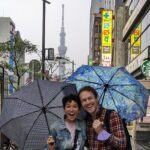
Neon Tokyo feels different after dark. This private Tokyo night tour is for your group only, with photo stops that let you see the city’s most famous lights without spending your evening trapped in logistics. I really like the mix of skyline icons like Rainbow Bridge and Tokyo Tower plus the street-level glow of Shibuya and Shinjuku. One caution: it’s a car tour, so traffic can slow the vibe if you’re expecting nonstop walking.
My favorite perk is the smooth start with pickup and a comfortable van where your guide handles route choices and parking. Guides such as Zu and Kana have been singled out for clear communication and making the first night in Tokyo feel easy, while others like Douglas and Richie emphasize pacing and picture help. Bring a coat for the breezy Rainbow Bridge area, especially when the temperature drops.
In This Review
- Key things to know before you go
- Tokyo after dark: why this route feels worth it
- Price and logistics: what $496.17 per group really means
- Meeting up, pickup, and the rhythm of a night photo tour
- Rainbow Bridge at night: your first neon frame over Tokyo Bay
- Ginza after dark: architecture and a walkable-feeling drive
- Tokyo Tower: the glow-up close (and admission not included)
- Tokyo Central Railway Station: nostalgia photo energy
- Daiba and the neon ferris wheel show in Odaiba
- Roppongi: nightlife energy from the car windows
- Omotesando: a tree-lined boulevard with seasonal light potential
- Shibuya Crossing and Shinjuku: the neon-and-crowd finale
- Shibuya: giant screens and the world-famous scramble
- Shinjuku: Kabukicho lights and photo-friendly corners
- The human factor: drivers who help you get the shot
- Who this night tour fits best
- So, should you book it?
- FAQ
- How many people can join this private Tokyo night tour?
- How long does the tour take?
- Is pickup offered?
- Will I get a mobile ticket?
- What are the main stops on the route?
- Is Tokyo Tower admission included?
- Are baby or child seats available?
- What happens if the weather is bad?
- Can I cancel for a full refund?
Key things to know before you go
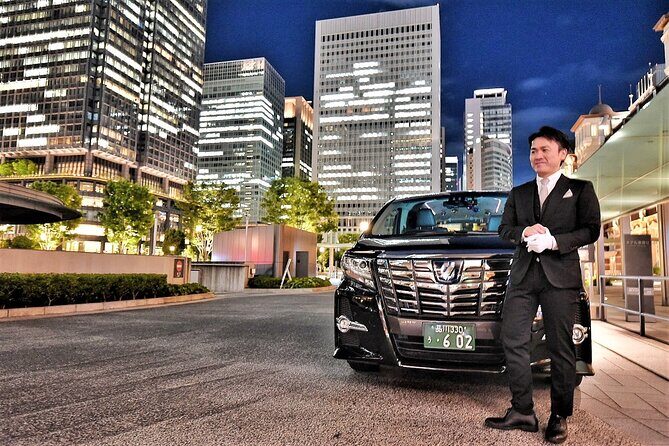
- Private for your group (up to 9), so the pace and photo stops can match your mood
- Icon-to-icon night route: Rainbow Bridge, Ginza, Tokyo Tower, Tokyo Station, Daiba, Roppongi, Omotesando, Shibuya, Shinjuku
- Great for first-night orientation, especially if you want a fast way to decide where to return
- Tokyo Tower is a photo stop and admission is not included
- Many stops are free, which helps keep the overall cost predictable
Tokyo after dark: why this route feels worth it
Tokyo at night is not just prettier. It’s different. Neon signs glow on wet pavement (even when it’s not raining), stations look more dramatic, and distances feel shorter when someone else is doing the driving.
This tour works because it links neighborhoods that would be a hassle to hop between on your own after dark. You get a full-credit night out: big views, famous intersections, and a few heritage-style photo moments, all within about 3 to 4 hours.
You can also read our reviews of more private tours in Tokyo


Price and logistics: what $496.17 per group really means
The price is $496.17 per group (up to 9). That’s not cheap if it’s just you two—but it can be excellent value when you split it across a small group.
Here’s the simple way to think about it:
- Two people: you’re paying for convenience and direct access to photo-friendly spots
- Four to six people: the per-person cost becomes much more reasonable for a private car tour
- Up to nine people: you’re effectively buying a tailored night program for a whole crew
You’re also paying for the “someone else handles it” part: getting from Ginza to Tokyo Tower to Shibuya on time, in the dark, without wrestling trains or figuring out where to park.
Meeting up, pickup, and the rhythm of a night photo tour
You’re offered pickup, and you’ll use a mobile ticket. The tour also runs on specific evening windows that shift by season, with evening start times ranging from 6:00 PM to 10:00 PM in one date range, 6:00–7:00 PM during late December, and 4:00–7:00 PM during a later January-to-December stretch.
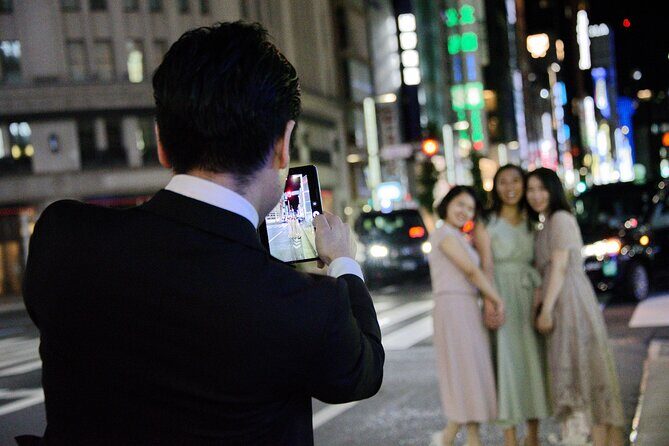
Plan your mindset like this: you’re not doing museum-style lingering. You’re getting quick, high-impact stops where your guide can pull over safely and help you frame shots. Most stops are 10 to 40 minutes, which keeps the tour moving even when Tokyo traffic gets heavy.
One more practical tip: if you run cold easily, bring layers. A guide-guided night tour still includes time standing outside for photos.
Rainbow Bridge at night: your first neon frame over Tokyo Bay
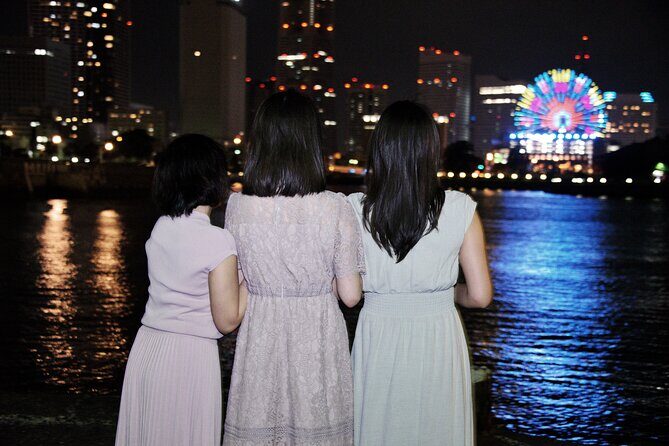
You start with a smooth drive across Rainbow Bridge, lit up over Tokyo Bay. The payoff here is the first real “wow” moment: the bridge’s glow plus water reflections give you that classic Tokyo skyline look without needing to climb anything.
This stop is short at about 10 minutes, and admission is free. That brevity is actually helpful. You get the shot early, when the light is still fresh, and you’re not rushing later when you’re tired.
Ginza after dark: architecture and a walkable-feeling drive
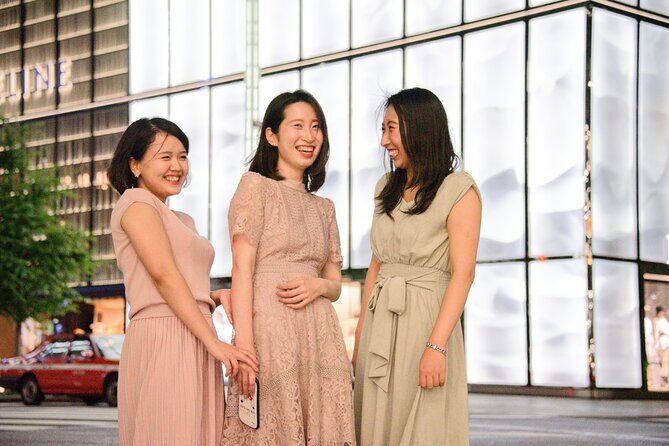
Next up is Ginza, Tokyo’s famous shopping, dining, and entertainment district. You’ll spend around 30 minutes, and the stop is free.
What makes Ginza feel special at night is the mix of polished storefronts and striking building designs. Even when you’re mostly driving through, Ginza’s architecture can look almost stage-lit after sunset.
This is a great place to tell your guide your style. If you want sleek city photos, Ginza tends to deliver.
You can also read our reviews of more evening experiences in Tokyo

Tokyo Tower: the glow-up close (and admission not included)
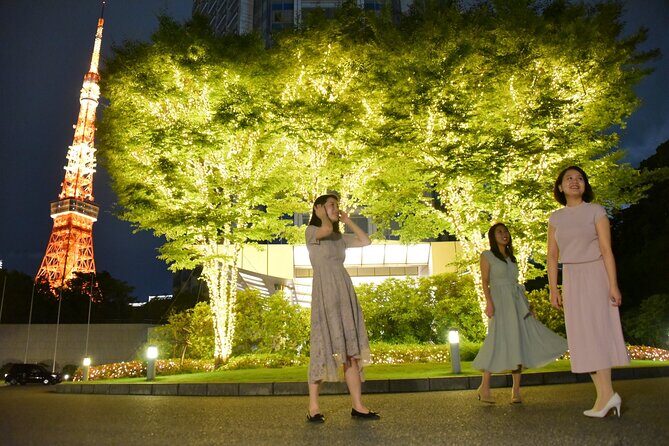
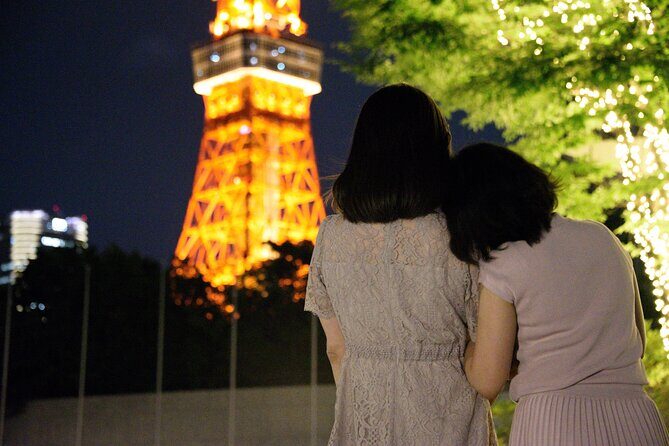
You’ll head to Tokyo Tower for about 20 minutes. The tower is known for its iconic nighttime presence, so even a short stop can feel like a major highlight.
Admission is marked as not included for Tokyo Tower. That likely means you’ll be there for photos and viewing around the base area rather than a ticketed experience up top. If you specifically want to go inside or up, you’ll need to plan for that separately.
If your priority is skyline photos, this stop still makes sense. Tokyo Tower’s nighttime look is the kind of image you’ll remember even if you don’t go any higher.
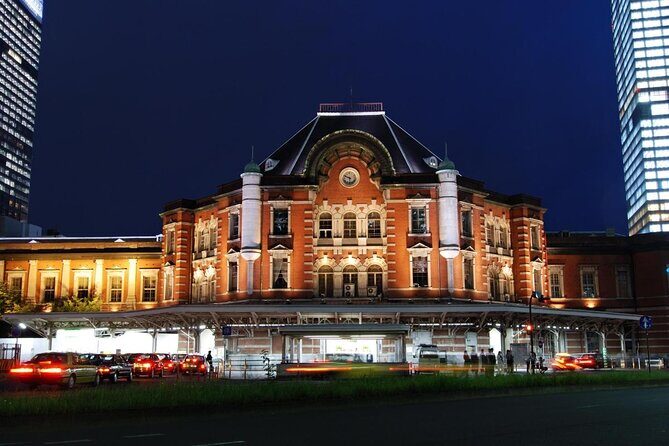
Tokyo Central Railway Station: nostalgia photo energy
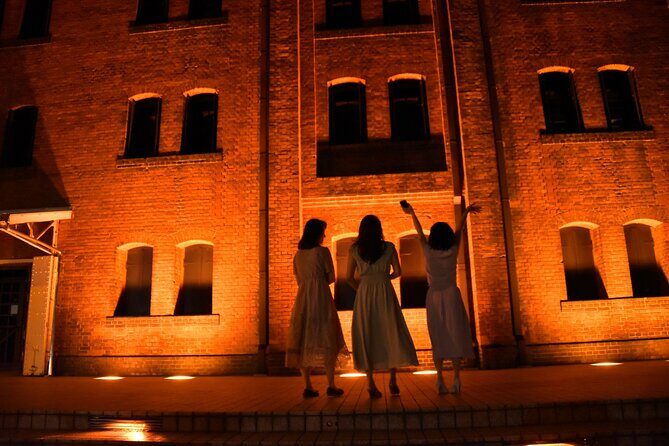
Then comes Tokyo Central Railway Station (Tokyo Station), built in 1914. You get around 15 minutes, and admission is free.
Tokyo Station has that old-world structure that looks great under night lighting. One extra reason this stop works well on a tour like this: it’s a quick “different Tokyo” moment, compared with the neon chaos of later stops.
It’s also a strong choice if you want a photo that feels classic and grounded, not just high-tech screens.
Daiba and the neon ferris wheel show in Odaiba
After Tokyo Station, you shift to Daiba (Odaiba), a popular shopping and entertainment area on a man-made island in Tokyo Bay. Expect around 40 minutes here, with admission listed as free.
The standout detail is the ferris wheel lighting: it’s described as being lit by 120,000 neon tubes programmed to display multiple patterns. Even if you don’t ride, the lighting show is the point. It’s the kind of scene that looks different every few minutes.
This is a good stop for photos where you want a “Tokyo futuristic amusement” feel rather than street-level neon.
Roppongi: nightlife energy from the car windows
Next is Roppongi, known as one of Tokyo’s nightlife areas for both Japanese and international visitors. You’ll spend about 20 minutes, with admission free.
This part of the tour is more about atmosphere than long strolling. From inside the van, you’ll get views of the busy night scene without wasting time hunting for the best angles on foot.
If you like modern Tokyo and nightlife districts, Roppongi is a solid bridge between the bay area lights and the big-city intersections later.
Omotesando: a tree-lined boulevard with seasonal light potential
Then you’ll go to Omotesando, one of Tokyo’s few tree-lined avenues along its length. You get about 20 minutes, and the stop is free.
Omotesando is especially interesting in winter because the avenue is known for annual illuminations. Even if you’re not in the exact season, it tends to look more elegant than the neon-jammed shopping streets.
This is a nice reset moment before the sensory overload of Shibuya and Shinjuku.
Shibuya Crossing and Shinjuku: the neon-and-crowd finale
Finally, Tokyo leans loud and dramatic.
Shibuya: giant screens and the world-famous scramble
You’ll spend about 30 minutes in Shibuya. The highlight is Shibuya Crossing, heavily decorated with neon ads and giant video screens. Admission for this stop is listed as free.
This is the place where Tokyo at night feels like a movie set. The energy comes from scale and signage density. It’s also a strong “memory anchor” stop—one you’ll later compare with other neighborhoods you visit on your own.
Shinjuku: Kabukicho lights and photo-friendly corners
After Shibuya comes Shinjuku for about 20 minutes (admission free). Shinjuku is busy and bright, especially around Kabukicho and Golden Gai.
Golden Gai is described as being filled with hundreds of tiny bars. That’s the kind of alley atmosphere that looks great in photos because it’s packed with small details and lights.
Shinjuku is also a good finale because it gives you variety: neon-ad streets, entertainment energy, and that tucked-away bar-lane feel.
The human factor: drivers who help you get the shot
This kind of tour lives or dies by the guide’s instincts. The reviews you can’t see on the street matter here: guides such as Zu and Kana have been praised for being prompt, friendly, and good at explaining what you’re seeing. Others like Douglas and Richie are known for flexibility and photo-focused driving.
What I think you should look for (and can ask about in advance):
- Whether your guide will adjust the route based on your priorities
- How they handle photo stops and group shots
- Whether they can recommend a simple dinner break that fits the night
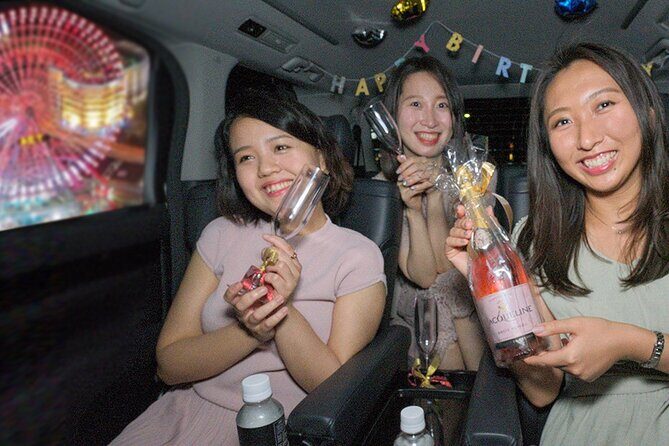
Some guides also go beyond the core route with small touches. For example, one guide mention includes a ramen stop or even dinner planning, and another note mentioned a decorated van plus snacks during a holiday season. These are not guaranteed every night, but they show the general style: helpful, friendly, and geared toward making the evening feel easy.
Who this night tour fits best
This is a great match if:
- You’re on your first night in Tokyo and want an orientation that points you toward where you should return
- You want romantic Tokyo at night without planning transit or fighting traffic yourself
- You’re traveling with family or friends and want a private setup with a dedicated driver
It may feel less perfect if:
- You hate sitting in traffic for long stretches
- You want a purely on-foot experience where you control every step
- You plan to chase very specific attractions that aren’t part of a typical night-photo route, unless you confirm your preferences early
So, should you book it?
Yes—if your goal is a high-output Tokyo night that hits the big-name places in one smooth flow. The value is strongest when you’re splitting the group cost and when you care about photo timing and convenience.
Before you book, do two quick checks:
- Decide what matters most: skyline icons, neighborhood vibe, or a balanced mix
- Tell your guide your photo style (classic views like Tokyo Tower and Rainbow Bridge, or street energy like Shibuya and Golden Gai)
If you want a polished first-night experience with a dedicated driver and a strong photo rhythm, this is one of the better ways to do Tokyo after dark.
FAQ
How many people can join this private Tokyo night tour?
It’s a private tour, and the group size can be up to 9 people.
How long does the tour take?
The duration is about 3 to 4 hours.
Is pickup offered?
Yes, pickup is offered, and the meeting point is described as being near public transportation.
Will I get a mobile ticket?
Yes, the tour includes a mobile ticket.
What are the main stops on the route?
The tour includes stops such as Rainbow Bridge, Ginza, Tokyo Tower, Tokyo Central Railway Station (Tokyo Station), Daiba, Roppongi, Omotesando, Shibuya, and Shinjuku.
Is Tokyo Tower admission included?
No. Tokyo Tower is listed as a stop with admission not included.
Are baby or child seats available?
Yes. Baby seats and child seats are available upon your request.
What happens if the weather is bad?
This experience requires good weather. If it’s canceled due to poor weather, you’ll be offered a different date or a full refund.
Can I cancel for a full refund?
Yes. You can cancel for a full refund up to 24 hours in advance of the experience start time.