REVIEW · KYOTO
Itajime Shibori Scarf Class
Book on Viator →Operated by Kyoto Shibori Museum · Bookable on Viator
Shibori dye turns fabric into wearable art. This itajime shibori scarf class is a 30 to 60-minute, teacher-led craft session in Kyoto that ends with a scarf you can take home. I like the hands-on approach and the chance to choose from Japanese fabrics. One thing to consider: the classroom is on the 2nd floor and may be easy to miss from street level if signs are limited.
You also get more than just the scarf. The Kyoto Shibori Museum stop adds context with displays and learning about the dyeing method, plus time to look around while your scarf is drying. The small group size, capped at 10 people, helps the instruction feel personal and not rushed.
In This Review
- Key highlights you should know
- First stop: Kyoto Shibori Museum, where the craft actually has context
- The scarf-making part: what itajime shibori teaches your hands
- Picking your fabric and pattern: your scarf, your choices
- Museum time while your scarf dries: don’t rush the second floor
- Timing, group size, and what that means for your comfort
- Price and value: why $43.60 feels fair for Kyoto
- Getting there: near transit, but check the 2nd floor
- Who should book this itajime shibori scarf class
- My practical booking advice: how to make the most of it
- Should you book the Itajime Shibori Scarf Class?
- FAQ
- How long is the itajime shibori scarf class?
- Where does the class take place?
- Do I get to choose fabrics for my scarf?
- Is the museum part included, or is it only the scarf class?
- How many people are in each class?
- What is the minimum age to participate?
- Will I receive a ticket on my phone?
- Is the workshop near public transportation?
- Is there parking available?
- What is the cancellation policy?
Key highlights you should know
- 30 to 60 minutes of guided itajime shibori scarf making in Kyoto
- Choose from Japanese fabrics before you start dyeing
- Kyoto Shibori Museum admission included, with exhibits to explore
- Hands-on tools and traditional technique, not a demo from behind glass
- Up to 10 people max, so you get real attention during the class
First stop: Kyoto Shibori Museum, where the craft actually has context
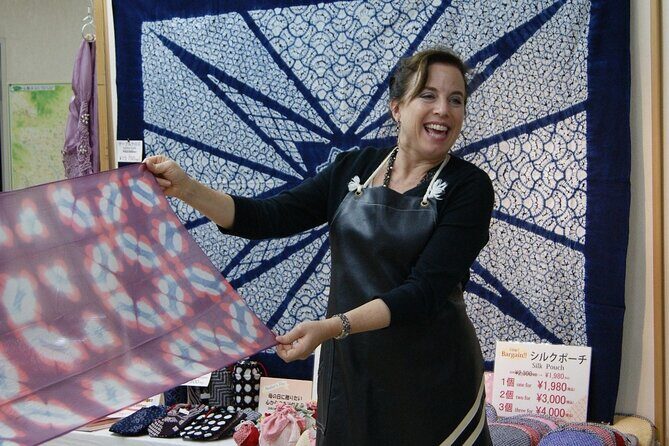
The experience takes place at the Kyoto Shibori Museum, and that matters more than it sounds. You’re not just making a souvenir. You’re learning the technique behind the look, which helps your scarf feel earned, not bought.
A big plus is the museum setup. While you’re in the same place doing the workshop, you can also see shibori as an art form—especially the displays upstairs. There’s even a movie about the process, which helps connect what you’re doing at the worktable with what you’re seeing in the exhibition space.
And it’s a practical location for Kyoto sightseeing. The museum is near public transportation, and it’s reported to be about a two-minute walk from the castle area. That makes it easy to pair with a short walk around the old-streets feel of the neighborhood.
A few more Kyoto tours and experiences worth a look


The scarf-making part: what itajime shibori teaches your hands

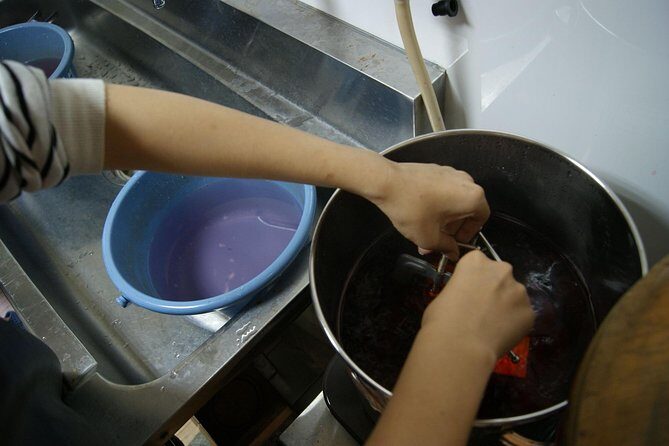
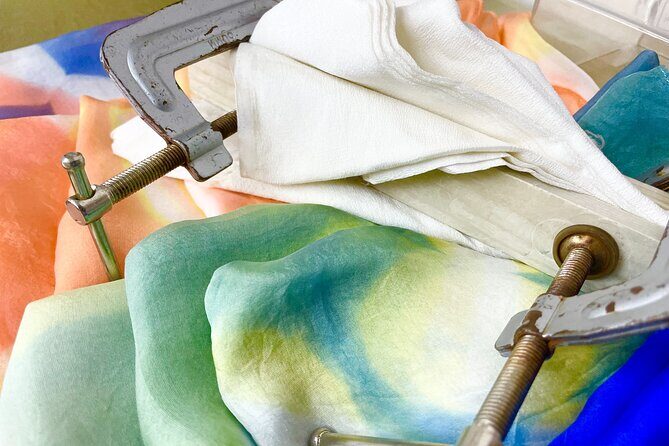
This is a true class, built around doing. You’ll work with traditional tools and fabrics, guided through the process step by step. The goal is to create an itajime shibori scarf using the oldest dyeing approach tied to Japanese shibori traditions.
Here’s what to expect in the vibe:
- The teacher instruction is clear and hands-on.
- You spend real time working on your scarf, not just watching.
- The pacing is relaxed enough that it doesn’t feel like a factory line.
The most satisfying part is usually the reveal phase. Dyeing is half the science and half the suspense. When you see the pattern after dyeing and unfolding, it clicks—why this craft has stuck around for generations.
Also, you’re not expected to be crafty to enjoy this. The class structure and the small group setup help non-artists get through it with confidence. If you’ve ever thought, I’m not artistic, this is one of those activities where your hands do the job and your brain gets the story after.
Picking your fabric and pattern: your scarf, your choices
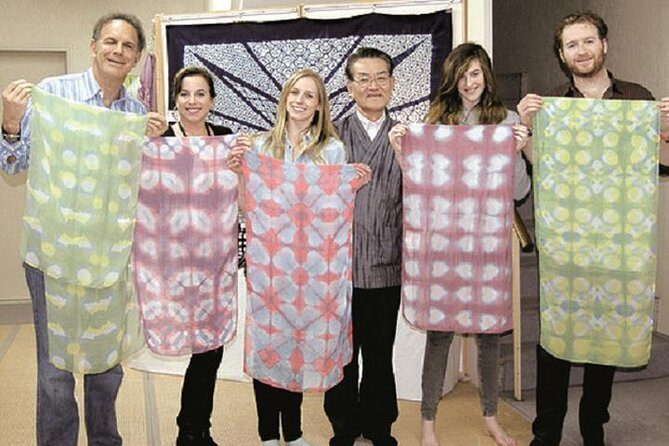
One of the most appealing parts is that you can choose the materials. The class includes time to select Japanese fabrics, which affects how your finished scarf looks and feels.
In a lot of craft workshops, you’re stuck with whatever is available. Here, the selection step is built in. That matters because shibori results depend on fabric and setup, so choosing well helps your scarf match your taste—whether you want something softer and subtle or more graphic in pattern.
If you’re traveling as a couple or with kids, this is also a nice moment to slow down. It turns the experience from a single-person activity into a small group decision—color and style become part of the fun.
Museum time while your scarf dries: don’t rush the second floor
The workshop has an added bonus: you can explore the museum while you wait for your scarf to dry. That’s not just idle time. It’s when the craft starts making more sense.
The displays on the 2nd floor are a standout feature. People often call out how impressive the exhibitions are while they’re waiting. There’s also a movie showing the dyeing process, which helps connect your own scarf-making steps to larger shibori artworks.
This is a smart design. If you only focus on the scarf, you might miss the bigger picture. With the museum portion running alongside the drying time, you get both:
- hands-on making at the table
- visual learning in the galleries
If you like a slower afternoon—tea-drinking Kyoto pace rather than museum-marathon pace—this is a good fit.
Timing, group size, and what that means for your comfort
The class runs about 30 minutes to 1 hour. Admission for the museum stop is included, and the overall experience feels like a calm, contained activity—about an hour is a good planning target.
Group size is capped at 10 travelers, which keeps the teacher-to-student ratio reasonable. In practical terms, that means:
- you can ask questions without waiting your turn forever
- the teacher can help with technique during the messy parts
- you’re less likely to feel like you’re behind
Also, the class is set up for most people. The minimum age is 6 years, and adult pricing applies to all ages. If you’re coming with children, the workshop can still feel exciting rather than complicated, especially because the museum environment keeps it calm.
One more practical detail: you’ll receive a confirmation at booking, and the ticket is mobile. So you can keep it simple on your phone and focus on finding the place.




Price and value: why $43.60 feels fair for Kyoto

The price is $43.60 per person. For a Kyoto craft experience, that’s in the range you’d expect for a guided, hands-on class that includes materials and an included museum component.
What makes the value feel stronger than a basic workshop is the combination:
- you create something you take home (your scarf)
- you learn the method behind the look
- you also get museum admission and upstairs displays
- the class is small enough for real attention
It’s not just a one-off photo moment. You’re paying for instruction plus the time needed to do dyeing properly. That’s the part many cheaper activities skip.
And because the final scarf is something you can actually use—wear, wrap, gift—it’s the kind of souvenir that doesn’t end up in a drawer after the first week.
Getting there: near transit, but check the 2nd floor

Getting to the workshop is generally easy since it’s near public transportation. That’s important in Kyoto, where addresses can be confusing and walking can sometimes be longer than the map suggests.
The one navigation warning is real: the classroom is on the 2nd floor and may not be well marked from the street. If you arrive and don’t see an obvious entrance, don’t panic. Look for the museum access points and be ready to take stairs or follow signs upward.
If you plan to drive, there are two car parking spaces and bicycle parking available. That’s a plus, even if you’ll likely find public transit is the simplest choice.
Who should book this itajime shibori scarf class
This is a great pick if you want a hands-on Kyoto activity that’s cultural without being stiff. I think it’s especially good for:
- people who like crafts but don’t want a steep learning curve
- couples looking for a shared activity that ends with a take-home item
- families with kids age 6 and up who can follow instructions for a short session
- solo travelers who want a calm, supportive setting with plenty to look at upstairs
It may not be the best match if you’re looking for a fast, high-energy checklist of stops. This is a slow, skill-based class. The payoff is the process and the finished scarf, plus museum time while you wait.
My practical booking advice: how to make the most of it
A scarf dye class works best when you show up ready to focus. Wear comfortable clothes you don’t mind getting dye-related residue on from handling equipment around fabric.
Also, build in a little buffer time. The class duration is about 30 to 60 minutes, but drying time and exploring the museum exhibits can make the experience feel longer than a quick workshop. If you’re stacking it right before dinner or at the end of an exhausting day of walking, you’ll feel it.
Finally, take your time during the museum portion. The exhibits aren’t just decoration. They help your scarf make sense.
Should you book the Itajime Shibori Scarf Class?
If you want a Kyoto souvenir with real technique behind it, this is an excellent choice. The combination of teacher-led itajime scarf making plus Kyoto Shibori Museum admission is strong value at $43.60, and the small group size helps the experience feel personal rather than rushed.
Book it if you’re the type of person who likes to learn by doing and wants a takeaway that feels handmade for years, not weeks. Skip it only if you’re craving a short photo stop with zero patience for process. Otherwise, this is the kind of craft day that leaves you with both a scarf and a better understanding of why shibori is such a big deal in Japanese textile culture.
FAQ
How long is the itajime shibori scarf class?
It runs about 30 to 60 minutes.
Where does the class take place?
The class is held at the Kyoto Shibori Museum in Kyoto, with admission included for that stop.
Do I get to choose fabrics for my scarf?
Yes. You can choose from Japanese fabrics.
Is the museum part included, or is it only the scarf class?
The museum stop includes admission, and you can also spend time looking at the museum’s exhibits while your scarf is drying.
How many people are in each class?
The class has a maximum of 10 people.
What is the minimum age to participate?
The minimum age is 6 years. Adult pricing applies to all ages.
Will I receive a ticket on my phone?
Yes. The ticket is a mobile ticket.
Is the workshop near public transportation?
Yes, it is near public transportation.
Is there parking available?
Yes. There are two car parking spaces and bicycle parking spaces.
What is the cancellation policy?
You can cancel for a full refund up to 24 hours in advance. If you cancel less than 24 hours before the start time, you won’t receive a refund.