REVIEW · TOKYO
Kamakura Historical and Cultural Day Trip with Local Cuisine
Book on Viator →Operated by アウテック · Bookable on Viator
Kamakura feels like a time machine. This private day trip from Tokyo combines pickup comfort with major Kamakura sights, so you can enjoy the temples without stress over trains and timetables. It also works well if you want a clean, efficient day: clear stop order, limited backtracking, and time to wander.
My two favorite parts are the Hokoku-ji bamboo setting and the iconic Kamakura Daibutsu at Kotoku-in. You get a real mix here—quiet Zen atmosphere, shrine-state history, and one of Japan’s most famous Buddhist icons—without turning your day into a logistics puzzle. The drive also keeps things easy if you’re tired after Tokyo.
One thing to plan for: admission isn’t included for several key stops (Hokoku-ji, Hase-dera, and Kotoku-in). Budget extra so you’re not scrambling for fees when you arrive.
In This Review
- Key points before you go
- Why Kamakura Works So Well as a Tokyo Day Trip
- Getting There: Pickup, Private Transport, and How the 6–8 Hours Feels
- Temple Stop 1: Hokoku-ji and Its Bamboo Tunnel
- Shrine Stop 2: Tsurugaoka Hachimangu and the Minamoto Connection
- Hase-dera Temple: Sea Views, Seasonal Flowers, and a Giant Carved Figure
- Kotoku-in and the Kamakura Daibutsu Cast in 1252
- Local Cuisine Time: Turning Breaks Into a Real Lunch
- Price and Value for a Group of Up to 9
- What to Expect From Your Guide (Seiko-san, Yosuke, Riley)
- Should You Book This Kamakura Day Trip?
- FAQ
- How long is the Kamakura Historical and Cultural Day Trip?
- Is pickup from Tokyo included?
- What time does the pickup window run?
- Which stops are included in the itinerary?
- Are temple and shrine admission fees included?
- Is this tour private?
Key points before you go
- Tokyo pickup with air-conditioned transportation cuts down on travel friction and lets you focus on Kamakura
- Hokoku-ji (about 2,000 bamboo stalks) gives you a dramatic Zen moment right away
- Tsurugaoka Hachimangu Shrine connects emperor legend to the Minamoto shogunate story
- Hase-dera Temple faces the sea and is known for seasonal flowers and a huge carved-wood statue
- Kotoku-in Great Buddha (cast in 1252) is the kind of sight you’ll keep thinking about
- Bottled water and snacks keep you comfortable between stops
Why Kamakura Works So Well as a Tokyo Day Trip
Kamakura is one of those places where a day feels like a real escape, but you’re not sacrificing convenience. It’s a former capital with deep religious and political layers, yet the big sights are spread in a way that makes a single-day route practical. You’re not trying to “do everything.” You’re doing the highlights that give you the right picture fast.
What makes this tour especially appealing is the structure. You start in Tokyo, get to Kamakura without map-stress, then move through a focused set of temples and shrine grounds. That matters because Kamakura can be busy at peak times, and you’ll enjoy the calm parts more when your timing is guided.
This is also a solid choice if you want to mix sightseeing with breaks to eat. The schedule is built around short, manageable time blocks at each stop, which makes it easier to work in a lunch or snack break whenever you feel ready.
You can also read our reviews of more historical tours in Tokyo
Getting There: Pickup, Private Transport, and How the 6–8 Hours Feels
This is a private tour for up to 9 people, with pickup offered from Tokyo. The big practical win is that you’re riding in air-conditioned transportation, so you don’t have to figure out train transfers, platform changes, or the exact rhythm of local schedules.
Pickup is set in a daily window from 7:00 AM to 9:00 AM, and the full day runs about 6 to 8 hours. That timing usually lands you in Kamakura early enough to enjoy the first stops while the crowds are still settling.
You also get a mobile ticket, which is the kind of small detail that keeps mornings smooth. Less time hunting for paperwork, more time starting the day.
One more logistics bonus: since it’s private, you won’t be squeezed into someone else’s group pace. Your guide can adjust timing a bit based on your questions and how long you linger in quiet areas.
Temple Stop 1: Hokoku-ji and Its Bamboo Tunnel
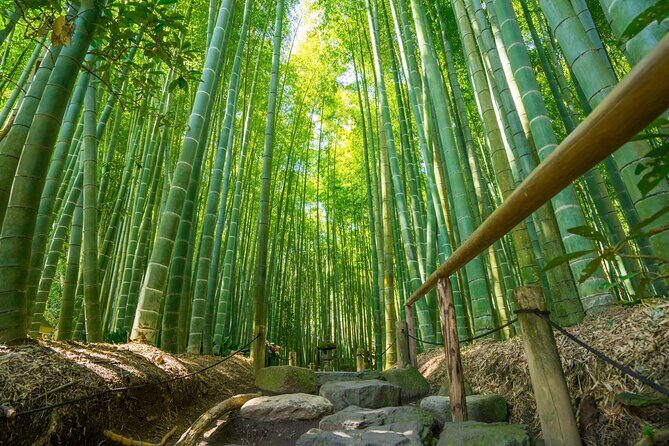
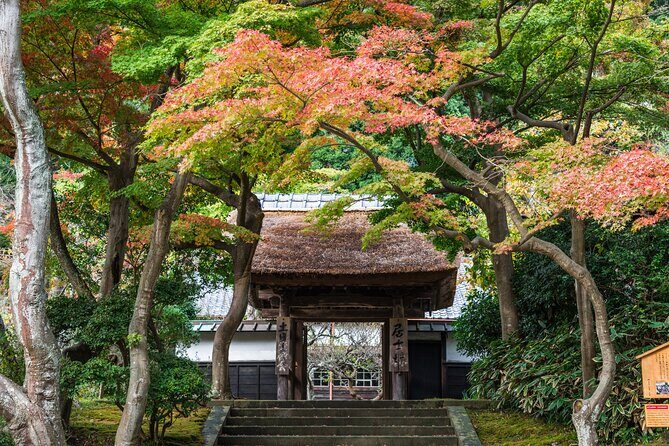
Most people rush past Zen temples in Kamakura and head straight for the famous names. This first stop flips that approach. Hokoku-ji is a Rinzai sect Zen temple built in 1334, and it’s especially famous for its bamboo.
Here’s what makes Hokoku-ji work on a day trip: it’s visually striking in a way that doesn’t require long travel or complicated directions. If you like atmosphere, this is your early payoff. The grounds feature about 2,000 bamboo stalks, and that number matters—this isn’t a token bamboo patch. It’s a full-on bamboo experience.
Time on site is around 40 minutes. That’s enough to see the space properly, slow down, and take in the contrast between calm bamboo shadows and the energy you’ll feel later in more crowded areas.
Admission for Hokoku-ji isn’t included, so plan on adding the entry fee to your day budget. I’d rather you be prepared than surprised.
Shrine Stop 2: Tsurugaoka Hachimangu and the Minamoto Connection
Next comes Tsurugaoka Hachimangu, one of Kamakura’s central shrine sites. It’s dedicated to Emperor Ojin, Ojin’s wife, and Ojin’s mother. That family focus is part of why the shrine feels more than just symbolic—it reflects how legends were organized into real-world worship places.
What really gives the stop depth is its political role later on. It became the head shrine associated with Minamoto Yoritomo, the founder and first shogun of the Kamakura government. In plain terms: this isn’t only a place for prayers. It’s also a clue to how Kamakura became powerful.
You’ll spend about 40 minutes here, and admission is listed as free. That’s a great value moment in the schedule because it gives you a major cultural anchor without extra costs.
If you’re the type who likes to connect art and architecture to real people and real decisions, this stop rewards that instinct. Even without a lecture, you’ll feel the shrine’s role as a crossroads of belief and power.
Hase-dera Temple: Sea Views, Seasonal Flowers, and a Giant Carved Figure
Hase-dera Temple is one of those stops that helps the whole day click into place. It’s known as the only temple in Kamakura facing the sea, which changes the feel of the site. Instead of only relying on the surrounding streets and hills, you get that sense of horizon and distance.
You’ll also find it’s famous for seasonal flowers, so if you’re traveling in a time when blossoms are peaking, the temple can feel especially photogenic and peaceful. Even if flowers aren’t at their most dramatic, the location concept alone gives it a different character from the inland stops.
The standout artifact is a huge carved-wood statue, described as the largest carved-wood statue in Japan, enshrined on the grounds. That’s the kind of detail that makes people linger. You don’t just look—you pause and reset your sense of scale.
Your time here is about 30 minutes, which is enough to enjoy views, absorb the statue, and still keep energy for the big closer stop. Admission isn’t included, so again: budget for at least one more paid entry depending on what you choose to see up close.
A few more Tokyo tours and experiences worth a look





Kotoku-in and the Kamakura Daibutsu Cast in 1252
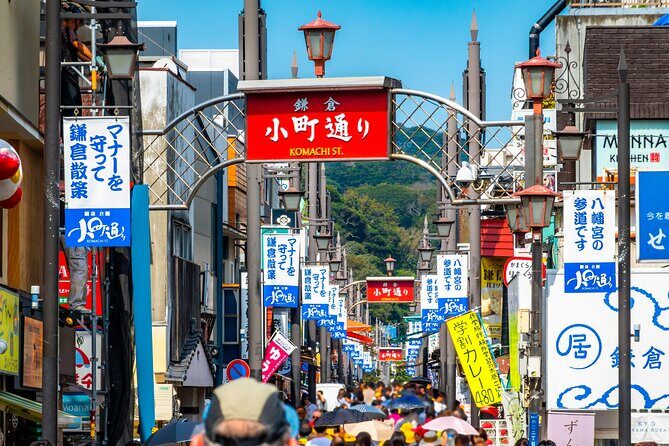
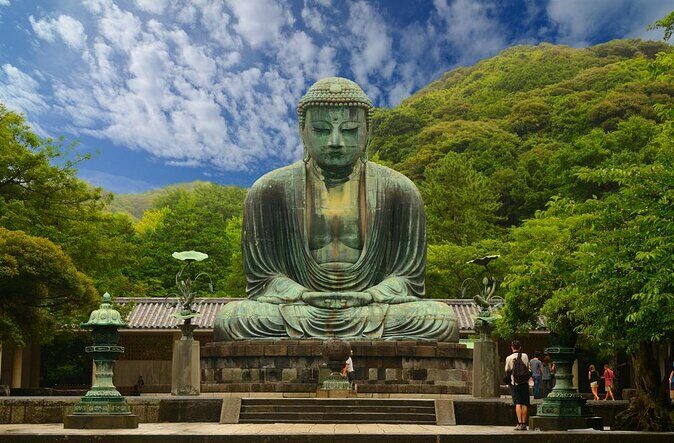
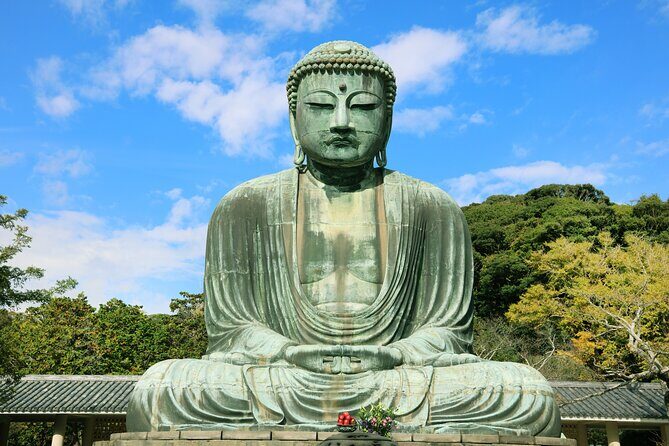
If you only remember one thing from Kamakura, it should be this: Kotoku-in and the Great Buddha of Kamakura. The statue is known as Kamakura Daibutsu, and it’s a bronze Amida Buddha standing on the temple grounds.
The date is what makes it jaw-dropping: it was cast in 1252—centuries before Europeans reached Japan. You might not need the timeline to feel the power of the statue, but knowing it adds a layer of perspective. This isn’t a “nice old thing.” It’s a surviving piece of extremely old craftsmanship.
Time here is around 30 minutes, and admission isn’t included. Still, the time is well matched to the experience: you’ll want short, repeated moments of looking, then time to stand back and re-frame the whole scene.
This is also the stop that tends to bring out the best guide conversations. A good guide can explain what Amida Buddha represents and why this particular bronze statue became such a symbol. You’ll leave with more than a photo—you’ll have something to carry.
Local Cuisine Time: Turning Breaks Into a Real Lunch
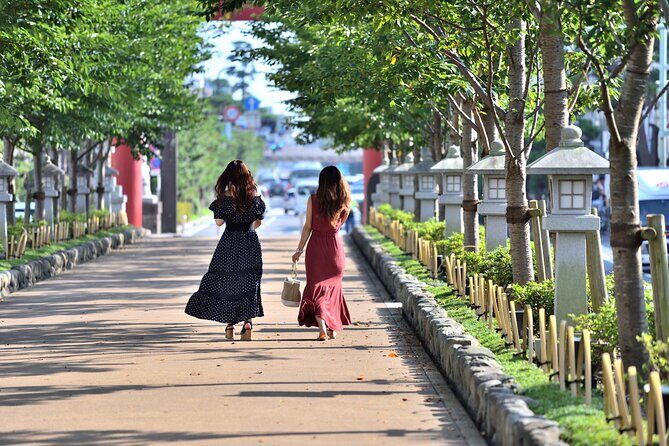
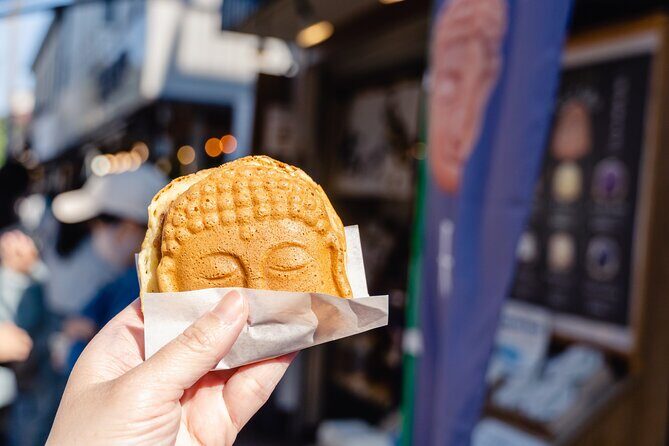
The title of this outing points toward local food, and the way the schedule is built makes it realistic. You’re not stuck in a rigid meal cage. Instead, you have gaps where you can shop, snack, and then choose a lunch spot that fits your pace.
In recent experiences with this service, guides have helped groups find places to eat and kept the day practical—like steering you to a quiet restaurant and then building time for lunch after you’ve walked a bit through local shopping streets. That’s the difference between eating on the run and eating with the day.
Here’s how I’d do it: treat lunch as a flexibility moment. If you’re hungry early, grab something simple. If you’re enjoying the stroll, wait a little longer so you eat while you’re still in the right mood. Either way, you’ll already have bottled water and snacks provided, so you’re not dependent on finding the perfect place immediately.
If you’re picky about dietary needs, this is where chatting with your guide helps most—because you’ll get better guidance than guessing from a menu you can barely read.
Price and Value for a Group of Up to 9

The price is $767.36 per group (up to 9 people). That sounds high if you’re thinking per person, but value depends on your group size—which is exactly how private tours usually work.
Here’s the quick math:
- If you fill the group (9 people), that’s about $85 per person.
- For a smaller group, the per-person number rises, since the cost doesn’t scale down automatically.
So who is this best for? Families and friend groups that want a shared day with minimal hassle. If you’re a solo traveler, you’ll likely want to compare against smaller join-in options, if you can find them. If you can share with 4–6 people, the “private” part starts to feel like a smart deal rather than a splurge.
Also remember what you’re buying beyond sightseeing: pickup, air-conditioned transportation, a guide who handles timing, and entry-time freedom to focus on the right stops in the right order. You’re paying for time saved and stress avoided.
One more practical note: since admissions aren’t included for multiple temples, budget for entry fees on top of the tour price. That’s normal for this kind of itinerary, and it’s one reason I like to go prepared.
What to Expect From Your Guide (Seiko-san, Yosuke, Riley)
The guide experience is a big reason people feel satisfied with this day trip. The guides mentioned in recent experiences—Seiko-san, Yosuke (OUTECH), and Riley—are repeatedly described as friendly and thoughtful, with strong English used to explain what you’re seeing.
What that looks like in real terms: you won’t just be dropped off at landmarks. You’ll get context tied to what you’re looking at—like why Tsurugaoka Hachimangu matters, what to notice at the Great Buddha, and how to pace yourself so you’re not rushing through meaningful spaces.
You’ll also see guides using practical judgment. For example, in one set of experiences, the driver/guide helped locate parking nearby and guided the group back via a local shopping street, then steered them toward a quiet lunch. That kind of on-the-ground flexibility is hard to replicate on public transport.
If your travel style is question-friendly—asking why a shrine is arranged a certain way or what a Buddhist statue symbolizes—this private format is a good fit. You can keep the conversation going or let it be quiet while you look.
Should You Book This Kamakura Day Trip?
Book it if you want:
- a stress-free Kamakura day with Tokyo pickup and air-conditioned transport
- a route built around Hokoku-ji, Tsurugaoka Hachimangu, Hase-dera, and the Great Buddha
- a private guide who can explain what you’re seeing and help with practical choices like lunch
Skip it or compare alternatives if:
- you’re traveling solo and your per-person cost would be high
- you hate paying separate admission fees for multiple stops (since several are not included)
My rule of thumb: this tour is a best-buy when you can share it. If you can get a group together, you’re paying for convenience and guidance, not just seats on a vehicle. And Kamakura is the kind of destination where a calm, well-paced day makes a bigger difference than people expect.
FAQ
How long is the Kamakura Historical and Cultural Day Trip?
The duration is approximately 6 to 8 hours.
Is pickup from Tokyo included?
Yes, pickup is offered.
What time does the pickup window run?
Pickup is scheduled between 7:00 AM and 9:00 AM.
Which stops are included in the itinerary?
The tour includes Hokoku-ji, Tsurugaoka Hachimangu Shrine, Hase-dera Temple, and Kotoku-in (the Great Buddha of Kamakura).
Are temple and shrine admission fees included?
Admission is free at Tsurugaoka Hachimangu Shrine. Admission is not included for Hokoku-ji, Hase-dera Temple, and Kotoku-in.
Is this tour private?
Yes. It is a private tour/activity, and only your group will participate.