REVIEW · KYOTO
Kimono Tea Ceremony at Kyoto Maikoya, NISHIKI
Book on Viator →Operated by Maikoya · Bookable on Viator
Kyoto slows down for tea and kimono. This Kyoto Maikoya Kimono Tea Ceremony in Nishiki pairs a traditional matcha ritual with dressing up, so you get the look and the story in about 90 minutes. I love how they help you choose a kimono and handle simple hair styling for a neat, photo-ready result.
I also love the hands-on matcha process, from understanding the utensils to mixing your own using quality matcha powder, then finishing with wagashi. One catch: children under 7 can’t enter the venue, so this is mainly for grown-ups and older kids.
In This Review
- Key highlights worth planning for
- Where Nishiki fits into Kyoto’s tea-culture map
- Getting to the meeting point without stress
- The kimono part: the fun you’ll remember, plus the photos you’ll want
- The tea ceremony lesson: matcha steps, utensils, and meaning
- Wagashi and the finish: tasting the ceremony’s sweet side
- Price, timing, and value in a central Kyoto setting
- Who this fits best (and who might want to choose differently)
- Should you book the Kimono Tea Ceremony at Kyoto Maikoya, Nishiki?
- FAQ
- How much does the Kimono Tea Ceremony at Kyoto Maikoya cost?
- How long is the experience?
- What’s included in the experience?
- What is not included?
- Where do I meet for the tea ceremony?
- Is the location near public transportation?
- Can children under 7 attend?
- How many people are in the group?
- Is there free cancellation?
Key highlights worth planning for
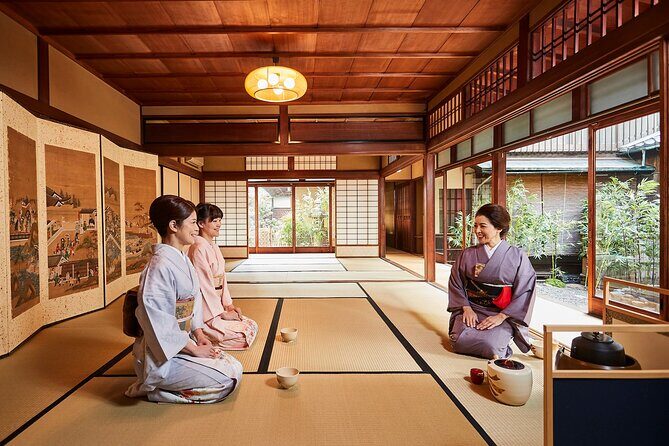
- Kimono fitting done for you: Choose a kimono on-site, and get styling to match (for ladies).
- Matcha you actually make: Learn the steps and tools used in the ceremony, not just watch.
- Tatami-style tea moment: You’ll sit in the traditional setup while your host explains the meaning behind it.
- Wagashi at the end: Sweets come with your tea, so the experience has a full taste arc.
- Central Nishiki meeting point: Easy to reach using public transportation.
- Small bookings, mixed group feel: Your booking can be up to 2 travelers, but other guests may join the ceremony.
Where Nishiki fits into Kyoto’s tea-culture map
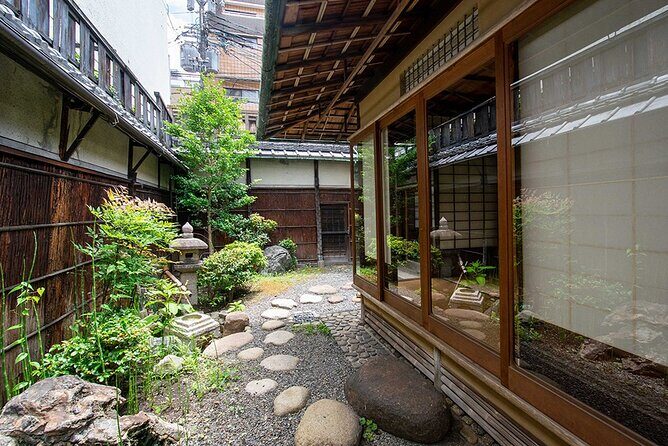
Nishiki is one of those Kyoto areas that keeps pulling you in. It’s central, lively, and loaded with the kind of streets you can walk before and after your reservation. That matters because tea ceremonies aren’t just about tea. They’re about pace, focus, and doing something slow in a city that usually wants to go fast.
What I like about this location choice is that you don’t need a half-day “tea mission.” You show up, change into a kimono, and settle in. Then you get a guided tea ceremony with history and practical steps. Afterward, you’re still in the middle of Kyoto—perfect for a snack run, a walk, or a museum stop.
Also, you’re meeting at Kimono Tea Ceremony MAIKOYA Nishiki, with the address on Ebiyachō in Gokomachi-dori Sanjo-sagaru (easy to plug into maps). It’s near public transportation, so you won’t be trapped in a taxi-only situation.
You can also read our reviews of more tours and experiences in Kyoto.


Getting to the meeting point without stress
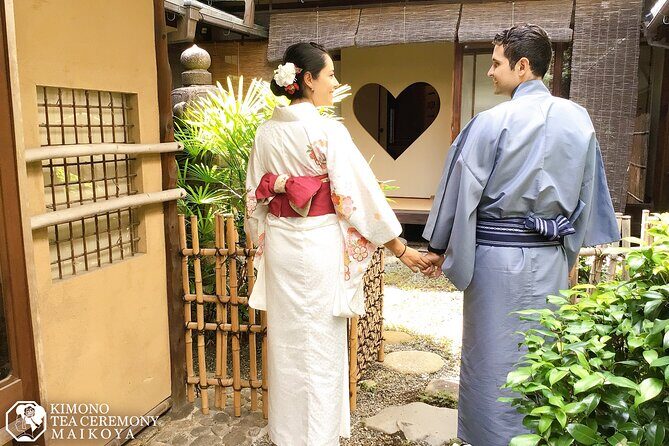
This is a self-arrival experience. That means you handle transportation. Hotel pickup and drop-off are not included, so plan your route like you would for any central Kyoto activity.
Good news: it’s near public transportation. You’ll want to arrive a few minutes early, not because you’re likely to be rushed, but because kimono changing takes coordination. One thing I’d do if you can: build in a little buffer for train-to-street navigation. Kyoto streets can be simple once you’re there, but the first time can still make you double-check where you are.
Also note the time structure. You can book morning or afternoon timings, so you can match it to your day plan. If you’re doing temples in the morning, afternoon tea works nicely. If you want a calmer reset before dinner, morning can be a strong pick.
The kimono part: the fun you’ll remember, plus the photos you’ll want
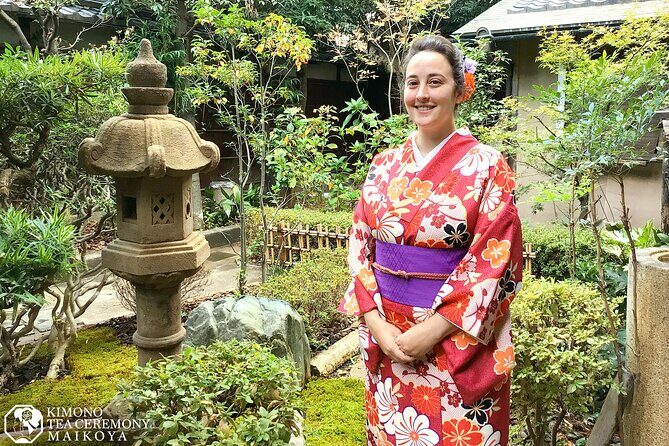
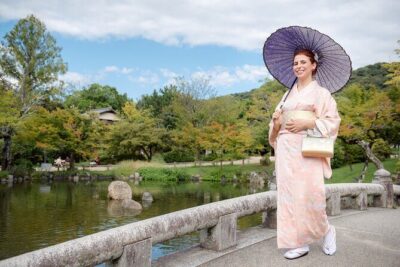
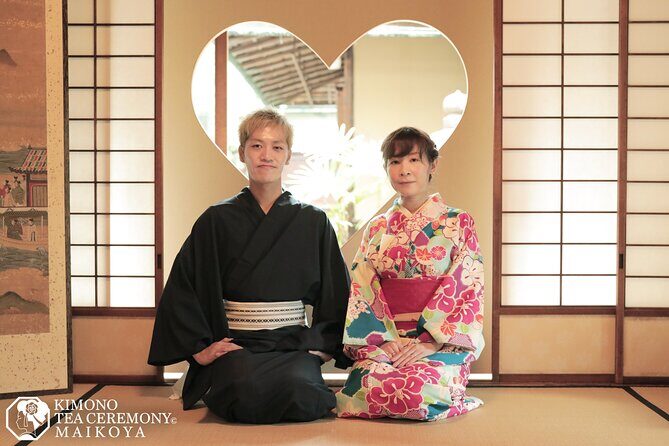
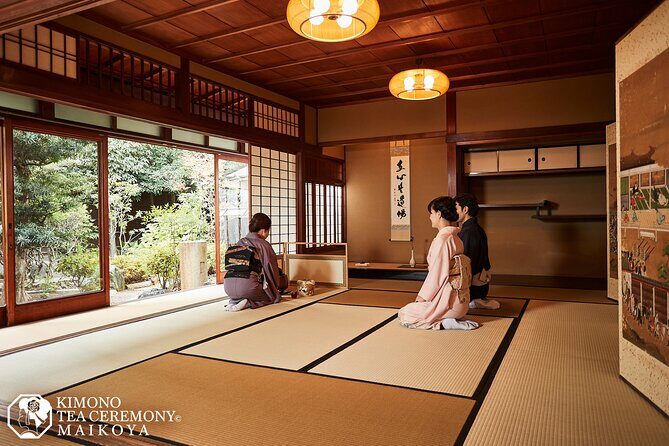
The kimono portion is where a lot of the delight comes from. You arrive, meet your tea master host, then choose from a selection of kimonos. Staff help you get into it properly. For ladies, there’s also hair styling to match your kimono.
In practice, this is the part that lowers the barrier. Kimonos look complicated. They’re not something most people can successfully put on themselves. Here, you get support, and the end result tends to be neat enough for photos without you fighting fabric all day.
A few details that make this feel more complete:
- They help with pinning and overall fit, so you can relax once you’re dressed.
- You’ll be set up for photos, and some time for picture-taking is part of the flow.
- There’s gear for valuables mentioned in the experience descriptions from guests, so you’re not stuck trying to keep track of everything while you change.
One practical tip: once you’re in a kimono, move a bit slower. The clothes look elegant, but they do change how you step and sit. That’s normal. Just plan on it and you’ll feel graceful instead of flustered.
The tea ceremony lesson: matcha steps, utensils, and meaning
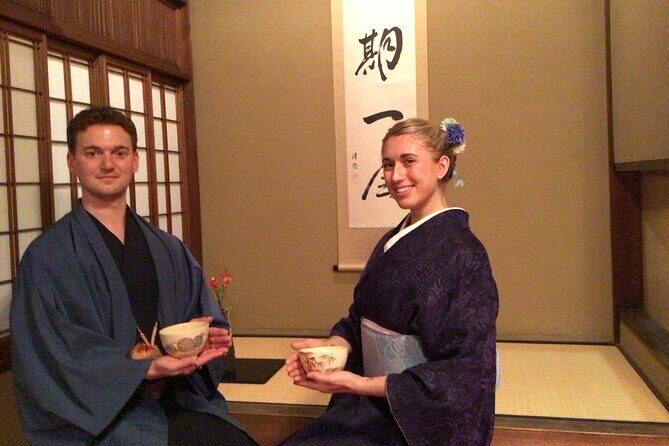
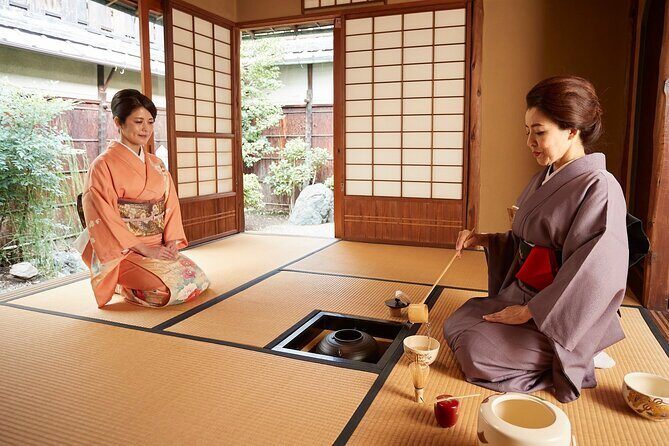
Once you’re ready, you sit Japanese-style on the tatami floor. Then your host walks you through the ceremony. The explanation includes the history and significance of the ritual, plus the meaning behind the utensils and each step.
Here’s what makes this more than a performance. You aren’t just watching a demonstration. You learn how to make your own matcha using high-quality matcha powder. Your host guides you through the process, so you can follow along even if this is your first time.
Hosts like Sono are described as clear and engaging, with explanations that are easy to understand. That matters because tea ceremony customs have specific order and tools, and when the guide is good, you actually learn what you’re doing—not just that it looks pretty.
What you should pay attention to during the lesson:
- The sequence of steps. In a tea ceremony, order is part of the respect.
- The utensils and their purpose. If you listen closely, you’ll start seeing why each tool matters.
- The calm tempo. Even if you’re chatting, the ceremony keeps you in a slower rhythm.
If you like culture that’s practical—not just museum facts—this is a strong match. You leave knowing the basics of what happens and why.
Wagashi and the finish: tasting the ceremony’s sweet side
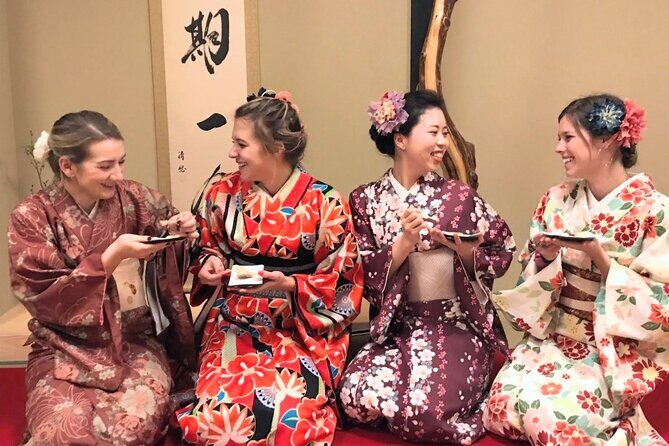
At the end, you sip your tea and enjoy wagashi, Japanese sweets. This pairing is part of how the ceremony balances flavors and textures. Matcha isn’t meant to be swallowed like a soda. It’s meant to be tasted with care.
There are also snacks included as part of the experience. Guests often point out the matcha and sweets as delicious, and that the ceremony feels organized and clean throughout. That combination—good food plus steady logistics—helps the experience feel smooth, not chaotic.
One more detail worth knowing: some guests describe a short meditation-like pause within the flow. Even if you’ve never done anything like that, you can treat it as a quiet moment to reset your brain. It fits the ceremony’s goal: attention, not speed.

Price, timing, and value in a central Kyoto setting
The price is $65.66 per person, and the session runs about 1 hour 30 minutes. On paper, that might sound like “just tea.” But you’re getting multiple components folded into one reservation:
- Kimono costume
- Green tea
- Utensils
- Hairstyling (simple style)
- Snacks
- A guided tea ceremony with explanation of history and significance
That’s what makes the value feel more solid than a basic tea tasting. You’re paying for the instruction, the setting, and the transformation into kimono—plus the tools and the sweets.
Timing also affects value. Morning or afternoon choices let you line it up with your energy level and the rest of your itinerary. If you’re already in central Kyoto, it’s easier to justify spending on something that upgrades the day instead of adding another logistics puzzle.
Cancellation is free up to 24 hours in advance, and the experience requires good weather. If it gets canceled for weather reasons, you’ll be offered a different date or a full refund. That’s the kind of policy that gives you some breathing room when Kyoto weather is doing its thing.
Who this fits best (and who might want to choose differently)
This experience is best for you if:
- You want a hands-on cultural activity, not just a photo stop.
- You’re interested in matcha beyond flavor—more like the how and why.
- You like the idea of wearing a kimono but don’t want to figure it out yourself.
- You want a small-group feel in a central area of Kyoto.
It may not fit if:
- You’re traveling with children under 7 (they can’t enter the venue).
- You only want a quick tasting with no dressing or guided steps.
If you’re the type who enjoys order and ritual, you’ll likely find the ceremony satisfying. And if you’re traveling with someone who wants “one Kyoto cultural thing” that’s different from temples and shrines, this is a strong pick.
Should you book the Kimono Tea Ceremony at Kyoto Maikoya, Nishiki?
I’d book it if your Kyoto trip includes central walking and you want a focused, guided experience that ends with a real taste of matcha plus wagashi. The kimono fitting and hair styling turn it into a memory-maker, and the matcha lesson gives you something tangible to take home: the steps, the utensils, and the meaning behind the ritual.
Book it with confidence if you can handle the main requirements: you’ll self-arrive in Nishiki, you’ll sit through a tatami-style ceremony, and your group includes no children under 7. For everyone else, this is one of those Kyoto experiences that feels thoughtfully put together, calm in tone, and genuinely worth the time.
FAQ
How much does the Kimono Tea Ceremony at Kyoto Maikoya cost?
It costs $65.66 per person.
How long is the experience?
It’s approximately 1 hour 30 minutes.
What’s included in the experience?
Included are the kimono costume, green tea, utensils, hairstyling (simple style), and snacks.
What is not included?
Transportation, and hotel pickup and drop-off are not included.
Where do I meet for the tea ceremony?
The meeting point is Kimono Tea Ceremony MAIKOYA Nishiki, 329 Ebiyachō, Gokomachi-dori Sanjo sagaru, 329 海老屋町 中京区 京都市 京都府 604-8076, Japan. The activity ends back at the meeting point.
Is the location near public transportation?
Yes, it’s near public transportation.
Can children under 7 attend?
No. Children under 7 cannot enter the tea ceremony venue.
How many people are in the group?
This tour/activity has a maximum of 2 travelers.
Is there free cancellation?
Yes. You can cancel up to 24 hours in advance for a full refund.
If you want, tell me what day and time window you’re considering in Kyoto, and whether you’re traveling with kids. I’ll help you choose morning vs afternoon.