REVIEW · KYOTO
Kyoto: Discover Every Bit of Kyoto Imperial Palace
Book on GetYourGuide →Operated by DeepExperience, Inc. · Bookable on GetYourGuide
Imperial Kyoto feels surprisingly human. A guided visit to Kyoto Imperial Palace turns the site into more than pretty buildings by explaining imperial ceremonies and the everyday rhythm of court life.
I like how much context you get in a short time, especially when your guide can answer the questions you’re quietly holding.
A quiet garden moment is part of the deal. I love the focus on serene, traditional grounds, and the interior garden experience can be stunning in a way that makes you slow down.
One drawback to consider: if your guide doesn’t give much substance, this can feel like you paid for walking plus minimal commentary.
In This Review
- Key things you’ll notice on this Kyoto Imperial Palace tour
- Starting at Hamaguri Gomon Gate: why the tour begins there
- Kyoto Imperial Palace after 1869: what changed, and why the tour matters
- Shishinden and the ceremony halls: the parts that feel most meaningful
- Learning daily life in the imperial court: the human layer
- The landscaped gardens of Gyoen National Garden: calm, with guidance
- Duration and pacing: plan your Kyoto day around a short, focused stop
- English live guide, private or small groups: getting value without feeling rushed
- Price and value: is $38 worth it for Kyoto Imperial Palace?
- Who this Kyoto Imperial Palace tour fits best
- Should you book this Kyoto Imperial Palace experience?
- FAQ
- Where does the tour meet?
- How long is the tour?
- Is entry to Kyoto Imperial Palace included?
- Is the tour guided in English?
- Is there a cancellation option?
- Can I reserve without paying right away?
- Are private or small groups available?
- What’s the price per person?
Key things you’ll notice on this Kyoto Imperial Palace tour
- Meet at Hamaguri Gomon Gate with a DeepExperience guide holding a yellow sign
- Ceremony spaces tied to grand imperial events, including the Shishinden main hall
- Daily court life at the Emperor’s personal residence, not just dates and dates
- Gyoen National Garden surroundings with landscaped calm built into the route
- Small-group or private options for a calmer pace and easier questions
Starting at Hamaguri Gomon Gate: why the tour begins there
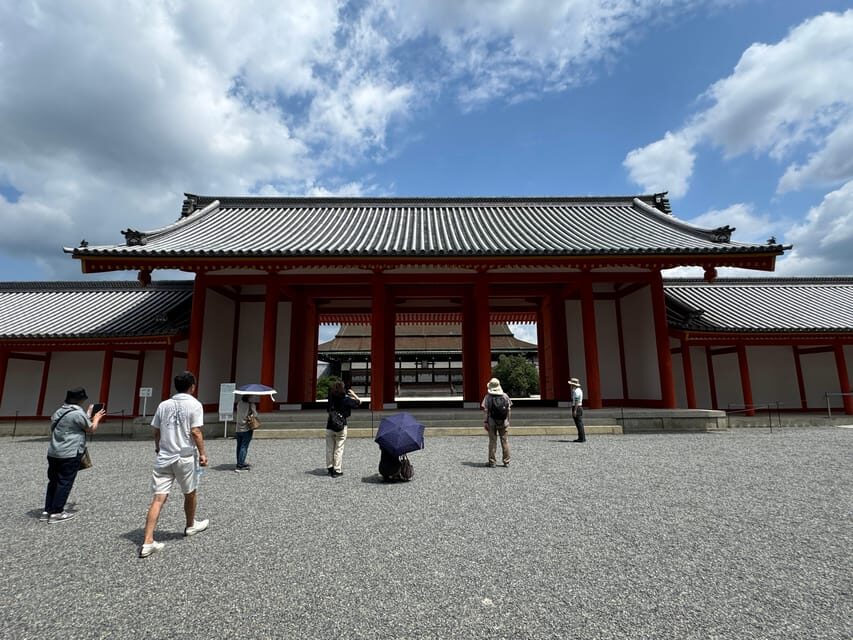
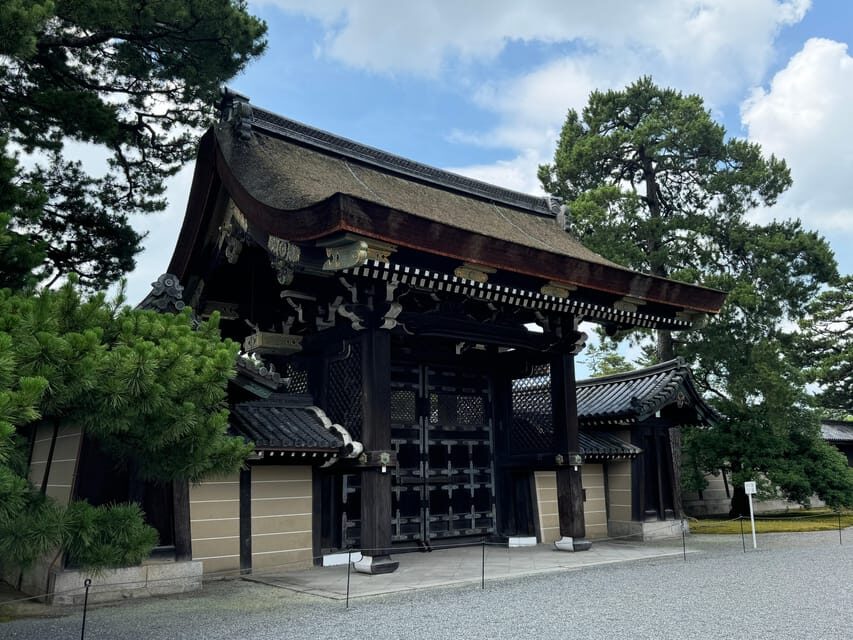
Your tour starts at Hamaguri Gomon Gate, the entry point in Kyoto’s Gyoen National Garden complex. That matters because you’re not just arriving at a landmark—you’re stepping into a specific setting tied to the imperial palace grounds.
Look for the guide in front of the Hamaguri Gate holding a yellow sign that says DeepExperience. If you like to get oriented fast, this start makes it easy. No guesswork, no hunting around.
You can also read our reviews of more tours and experiences in Kyoto.



Kyoto Imperial Palace after 1869: what changed, and why the tour matters
The Kyoto Imperial Palace is remembered as the imperial family’s residence before the capital shifted to Tokyo in 1869. That single historical pivot is more than trivia. It explains why Kyoto still holds such weight in Japan’s national story.
In this guided format, you’re not only seeing buildings and gardens. You’re learning how the palace complex connects to the imperial family’s traditions and history. It’s the difference between watching a performance and understanding the script.
Shishinden and the ceremony halls: the parts that feel most meaningful
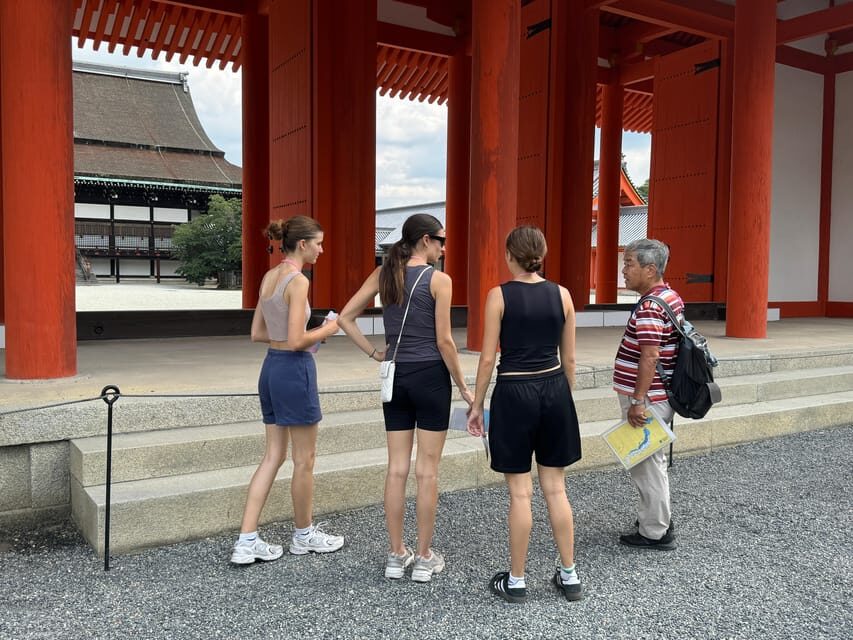
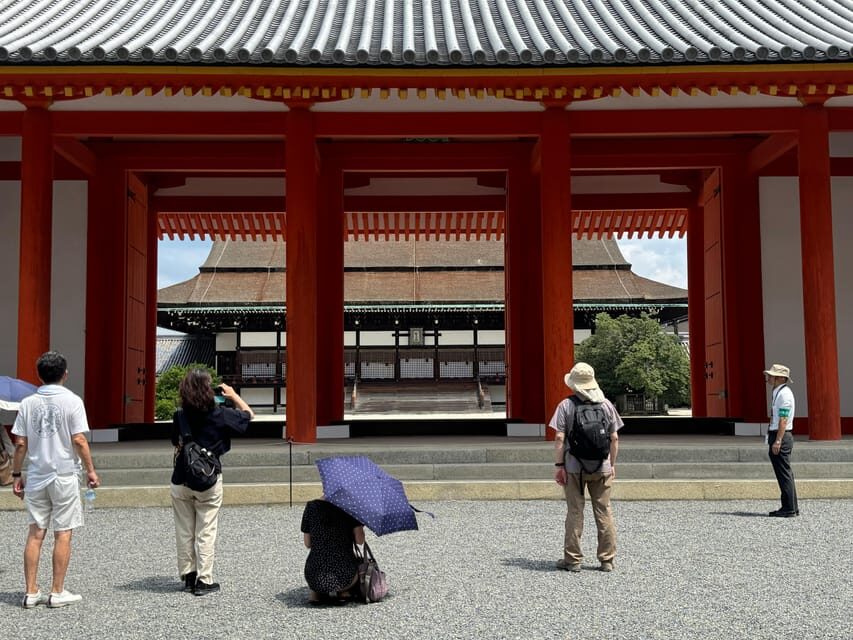
The highlight for many people is the focus on the hall(s) used for major imperial ceremonies. You’ll be taken to the main hall, the Shishinden, plus other structures used for official functions.
What I appreciate here is that the tour doesn’t treat these spaces as museum objects. The guide frames them as working ceremonial rooms—places where emperors conducted important events. Even if you’re not a “stand in every room” type, this helps you look with intention.
One practical note: these are ceremonial spaces, not a theme park set with constant action. Plan to slow your pace. Let the guide’s context catch up to what you’re seeing.
Learning daily life in the imperial court: the human layer
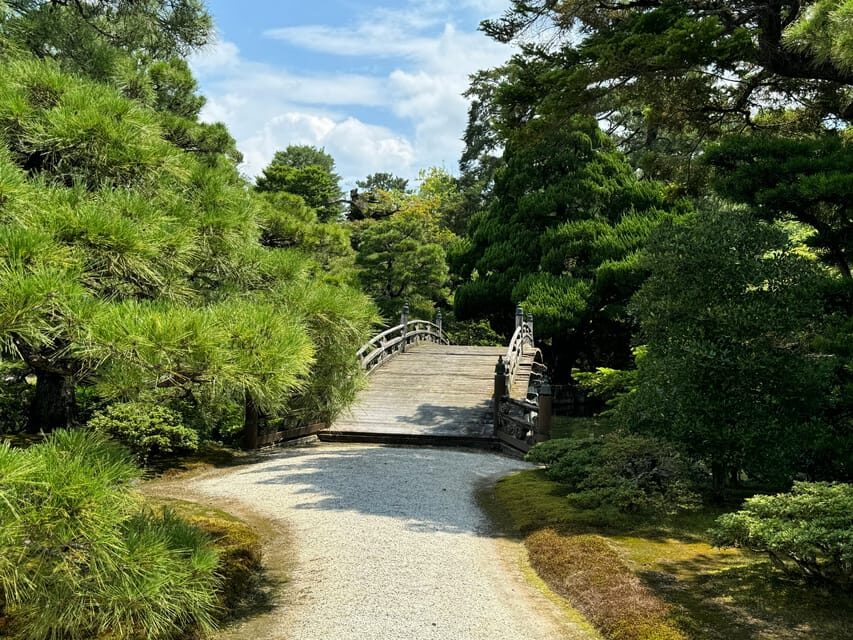
A big reason this tour earns strong marks is the way it connects palace architecture to daily life at the Emperor’s personal residence. Instead of only covering big public events, the tour aims to show what life inside the court system could look like.
That human layer is what makes the whole visit stick. You’re not just collecting facts about the imperial family; you’re getting a sense of how tradition and routine shaped the court environment. It turns the palace into a place with patterns, not just prestige.
If you enjoy Q&A, this is a good match. One standout experience highlighted how a guide named Yoshi handled many questions with a friendly, well-informed approach. That kind of exchange can make the visit feel like a conversation, not a lecture.
The landscaped gardens of Gyoen National Garden: calm, with guidance
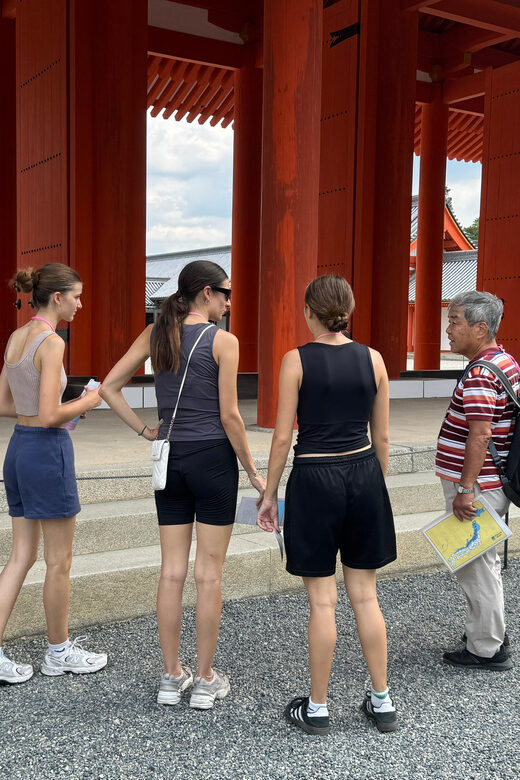
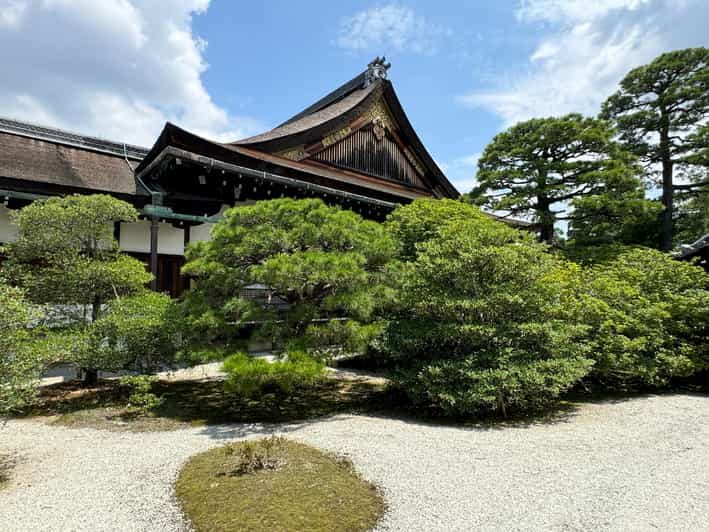
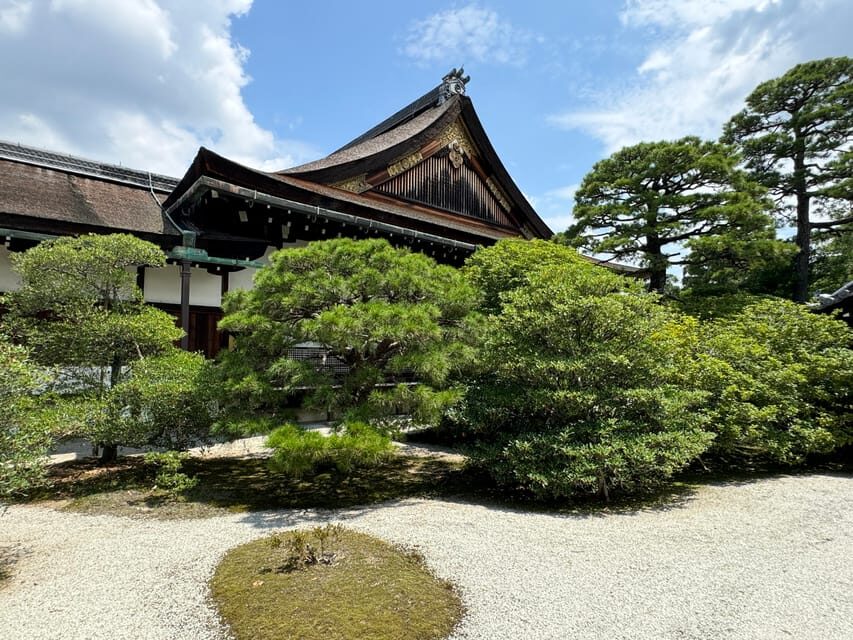
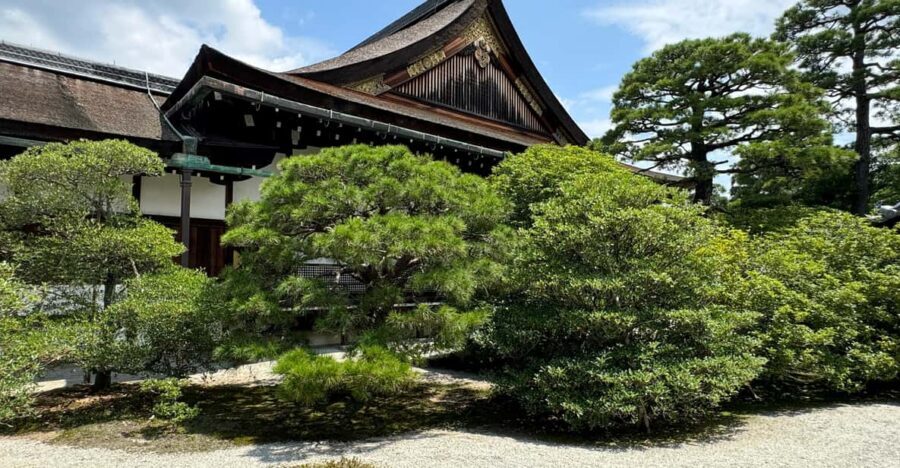
You also get time in the gardens inside Kyoto’s Gyoen National Garden. These grounds are described as serene and beautifully landscaped, and the tour is clearly designed to let you experience that calm rather than rushing straight through.
If you’ve spent your Kyoto day hopping between big sights, this section is a reset. You slow down. You look at details. And because the guide is there, the scenery becomes part of the story, not just a backdrop.
Kyle’s positive experience specifically called out the interior garden as jaw-droppingly beautiful. Whether or not yours hits the same emotional volume, the tour’s emphasis on quiet, traditional gardens makes it feel like a balanced pairing to the ceremony-focused parts.



Duration and pacing: plan your Kyoto day around a short, focused stop
The activity is listed as about 1 hour, while the guided palace visit portion is stated as 1.5 hours. I’d treat this as a sign the pacing can vary slightly depending on timing and group flow.
Either way, it’s not a long, all-day commitment. That’s a plus if you’re building a Kyoto itinerary with multiple stops. It also means the guide’s commentary matters more—there’s less time to “wander and figure it out” on your own.
For best results, come with a couple of questions in mind. For example: what role did these ceremony halls play, or what does the tour’s explanation reveal about court life? When you ask smart questions, the guide’s job gets easier and your experience gets richer.
English live guide, private or small groups: getting value without feeling rushed
This is an English live guided tour. You’re not stuck with a headset or a generic app explanation. You can react in real time, which is especially useful for understanding how the palace buildings relate to tradition and function.
Group size options include private or small groups. I like that because it usually means you can ask follow-ups without feeling like you’re competing with a crowd. Less shouting. More clarity.
Still, there’s one caution worth taking seriously. One negative experience described the guide as providing little information and feeling more like a walk-by than a real explanation. That doesn’t mean every guide will be the same, but it does suggest this tour is best when you get an attentive, talkative guide who actually connects the spaces to history and meaning.
Price and value: is $38 worth it for Kyoto Imperial Palace?
The price is $38 per person, with a guide included and entry to the Kyoto Imperial Palace listed as free. That combination is where the value comes from. You’re paying mainly for interpretation—how to understand what you’re looking at—rather than paying again for admission.
Is it worth it? In my view, yes if you want context for the ceremonial halls and the imperial court life story. In other words, you’re buying time-saving guidance and a clearer “why” behind the “what.”
If you’re the kind of visitor who’s happy reading your own labels and moving at your own speed, you might feel the guide is optional. That same criticism showed up in one review suggesting the experience could be seen without a guide. So be honest with yourself: do you want narration, or do you prefer solo exploration?
Who this Kyoto Imperial Palace tour fits best
This tour is a great match if you fall into any of these groups:
- You’re in Kyoto for the first time and want a structured introduction to imperial-era settings.
- You like history that explains people and institutions, not just dates.
- You enjoy gardens and want a calmer segment connected to the palace story.
- You’d rather ask questions than piece together meaning on your own.
It’s also a solid choice if your schedule is tight. With a short, focused visit length, you can add it without reshaping your whole day.
Should you book this Kyoto Imperial Palace experience?
Yes, I’d book it if you want a guided, explanation-driven visit to the palace’s ceremony halls and court-life angle. The Shishinden focus and the emphasis on gardens make it feel like more than a quick look at buildings.
Skip it if you expect a highly self-directed experience with minimal interpretation. And if you’re picky about guide quality, choose this for the chance of a great guide rather than assuming every guide will deliver the same depth. When the guidance hits, this tour can turn Kyoto’s imperial spaces into something you actually understand.
FAQ
Where does the tour meet?
It meets in front of the Hamaguri Gate (Hamagurigomon) of the Kyoto Imperial Palace. The guide is waiting with a yellow sign that says DeepExperience.
How long is the tour?
The activity is listed as lasting 1 hour, and the palace visit portion is described as a guided tour of about 1.5 hours.
Is entry to Kyoto Imperial Palace included?
Yes. Entry to Kyoto Imperial Palace is listed as free and included with the tour.
Is the tour guided in English?
Yes. The live tour guide speaks English.
Is there a cancellation option?
Yes. Free cancellation is available up to 24 hours in advance for a full refund.
Can I reserve without paying right away?
Yes. It offers a reserve now & pay later option, so you can book your spot and pay nothing today.
Are private or small groups available?
Yes. Private or small groups are available.
What’s the price per person?
The price is listed as $38 per person.