Kyoto goes fast on this day tour, in the best way. You’ll hit the headline sights—like Arashiyama and Fushimi Inari—and also move through streets where you feel the rhythm of the city, using a mix of walking and public bus. It’s built for one day, so you’re not stuck piecing together Kyoto’s famously confusing transit.
I really like the small-group feel (max 10 travelers) and the local guidance. Guides such as Megumi and Masako were called out as patient, funny, and strong at explaining what you’re seeing and how to ride the trains and buses without stress.
One catch: it’s a workout. You should plan for 20,000+ steps, and the lunch is a conveyor-belt sushi stop where vegetarian options may depend on what’s on the menu that day.
In This Review
- Key things to know before you go
- The real value: 10 Kyoto stops in one organized day
- Pricing and what you should budget beyond the tour fee
- Meeting in Arashiyama: start strong, start early
- Stop-by-stop: what each place is like (and what to watch for)
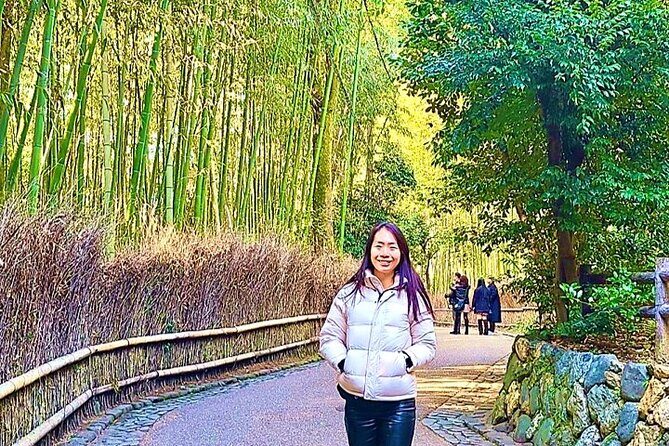
- 1) Arashiyama bamboo forest (and the feeling of mountain Kyoto)
- 2) Kinkaku-ji (the golden temple) for the iconic photo
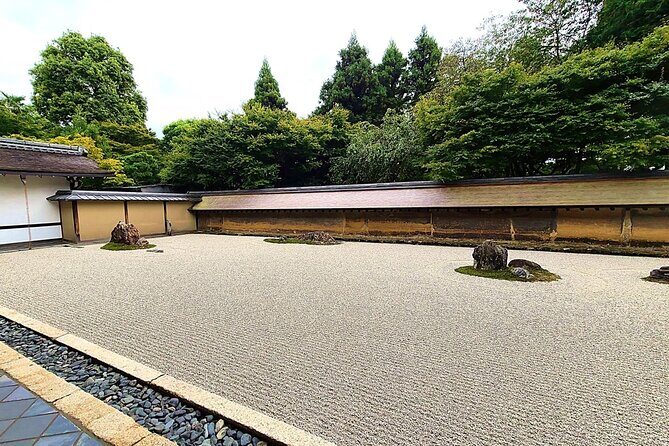
- 3) Ryōan-ji stone garden (simplicity with a legend)
- 4) Fushimi Inari-taisha (1,000+ torii gates and a walk with meaning)
- 5) Kiyomizu-zaka Street (souvenirs and everyday Kyoto flavor)
- 6) Kiyomizu-dera Temple (the nail-less wooden stage)
- 7) Sanneizaka (a local slope that looks like a postcard)
- 8) Hōkan-ji Temple (the Yasaka Pagoda symbol)
- 9) Gion (finishing in the historic atmosphere)
- Transportation: why following the guide saves real time
- The lunch reality: conveyor-belt sushi and vegetarian expectations
- The pace: who this tour fits best (and who should pass)
- Guides make the difference: Megumi, Masako, and “keep up” energy
- Should you book this Kyoto full-course tour?
- FAQ
- How long is the Kyoto full-course tour?
- Where do I meet and where does the tour end?
- What time does the tour start?
- Is transportation included in the tour price?
- Is food included?
- Are entrance fees included for temples and shrines?
- How much walking should I expect?
- How many people are in the group?
- What is the cancellation policy?
Key things to know before you go
- Max 10 people means you’re not lost in a crowd, and the guide can actually manage the group.
- Hard day on your feet: plan for 20,000+ steps and wear shoes you can walk in for hours.
- You’ll ride public transport with a guide who knows the area well, which is the whole point in Kyoto.
- Lunch is conveyor-belt sushi, with some choices like vege-sushi, but vegetarian needs aren’t guaranteed.
- Start time is strict (8:50 start). Late arrivals aren’t allowed in.
- Entrance fees aren’t included for several top stops, so bring extra cash or be ready to pay on-site.
The real value: 10 Kyoto stops in one organized day
Kyoto is beautiful, but it can also be a planning headache. The subway and bus system is not simple, and many “must-see” places are spread out. This tour’s value is that you don’t have to solve the logistics yourself for a whole day—you follow a trained local guide and move efficiently between neighborhoods.
The other value is focus. You get the big-name sights that most first-timers want—Kinkaku-ji, Fushimi Inari, Kiyomizu-dera—plus the street scenes that make Kyoto feel like Kyoto: slope-and-temple streets, classic shopping lanes, and the geisha-styled atmosphere of Gion.
The trade-off is time. You won’t “linger like a local” at every stop. You’ll do your photo, learn the context, and move on. If you only have a short trip (or you want a fast on-ramp to the city before you explore on your own), this style makes a lot of sense.
You can also read our reviews of more tours and experiences in Kyoto.



Pricing and what you should budget beyond the tour fee
The tour costs $98.83 per person and includes the tour fee plus consumption tax, with a mobile ticket. That’s the portion you pay up front.
What you should plan for on top:
- Transportation: about $10 (¥1,340) per person
- Food & drinks: about $6.8–14 (¥1,500) per person, depending on what you order
- Entrance fees: about $11 (¥1,600) total per person for places where admission applies
So the “all-in” day cost is more than just the headline price. Still, for Kyoto, bundling the routing and guiding can be a smart value—especially when you consider the time it would take you to figure out transit and sequencing.
Meeting in Arashiyama: start strong, start early
You’ll meet at JR Saga-Arashiyama Station, with the start time listed as 8:50 (and the meeting area noted around 8:30). The tour ends in Gion shopping street.
This early start matters. Kyoto’s top areas are popular, and your day will run on schedule. The guide system works because you’re all leaving together. If you’re late, you can miss the start and lose your spot—no refunds.
One practical tip: use an IC card like SUICA or PASMO if you have it (the info strongly recommends having one). It’s the easiest way to tap on buses/trains instead of dealing with cash every time.
Stop-by-stop: what each place is like (and what to watch for)
1) Arashiyama bamboo forest (and the feeling of mountain Kyoto)
You start with Arashiyama for about 30 minutes. The highlight here is the bamboo forest with the feel of forested mountain scenery around it. Admission is free for this stop.
What I like about starting here: it’s a quick mood shift from normal city life into something instantly Kyoto—soft light, tall stems, and that “how is this real?” photo moment.
What to watch for:
- Bamboo areas reward slow looking. Try stepping a little off the busiest line for better framing.
- Wear shoes with good grip; you’re moving on foot for much of this day.




2) Kinkaku-ji (the golden temple) for the iconic photo
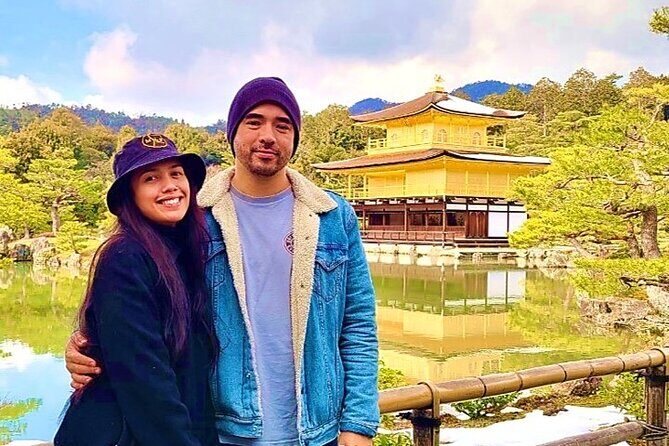
Next up is Kinkakuji Temple for about 30 minutes. This is one you can’t skip if it’s your first Kyoto trip. Admission is not included.
When you arrive, you’ll see why it’s famous: the “golden” look makes a strong visual statement, and it’s the kind of place where details matter—reflections, surrounding greenery, and the classic angles people line up for.
Drawback to plan for: you may not get a long, quiet wander. You’re there in a timed window, so keep your photos moving and use the guide to point out the best angles.
3) Ryōan-ji stone garden (simplicity with a legend)
Ryōan-ji Temple comes next for about 30 minutes. Admission is not included. The garden is famous for its stone layout, and it’s noted that Queen Elizabeth visited and praised it.
This stop works well inside a fast itinerary. Even if you only have a short visit, the garden’s quiet structure makes it feel slower than it really is. It’s also a good “breathing” moment—your brain gets to reset between shinier, busier attractions.
If you’re the type who likes details, this is where you’ll appreciate the guide’s explanations. A short garden time is enough when someone helps you “read” what you’re seeing.
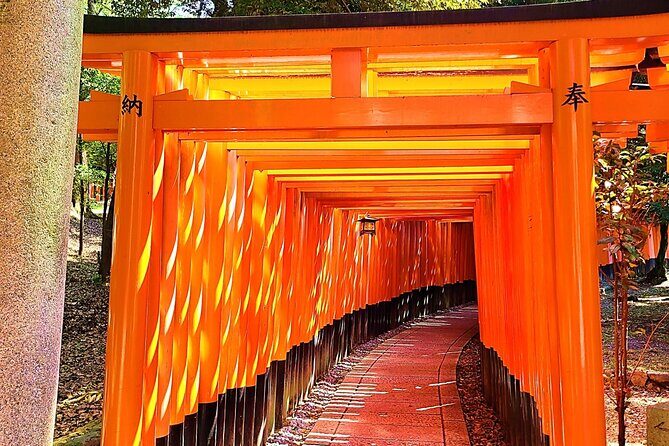
4) Fushimi Inari-taisha (1,000+ torii gates and a walk with meaning)
Then you move to Fushimi Inari-taisha Shrine, again for about 30 minutes. Admission is not included (it’s a shrine visit in practice, but fees can apply depending on what’s covered). This is the No. 1 sightseeing stop on the itinerary and one of Kyoto’s most famous experiences.
Expect more than 1,000 red torii gates lining the path. It’s visually stunning and also oddly calming once you start walking between the gates.
Practical advice:
- Decide early how deep you want to go. With only 30 minutes, going far means fewer photos and less time elsewhere.
- Keep moving. The gates create a tunnel effect—great for pictures, but easy to drift and run out of time.
5) Kiyomizu-zaka Street (souvenirs and everyday Kyoto flavor)
Next is Kiyomizu-zaka Street for about 30 minutes, with admission listed as free. This area is known for souvenir shops and local eateries.
This is the “slow street” block inside a fast day. Even if you don’t shop, you can snack, look at crafts, and feel the tourism layer without losing the Kyoto vibe.
Tip: if you want to buy small gifts, do it here. You’ll pass plenty of temple shops later, but this is one of the easiest places to browse without committing your whole time budget.
6) Kiyomizu-dera Temple (the nail-less wooden stage)
You then reach Kiyomizu-dera Temple for about 30 minutes. Admission is not included. The standout detail here is the wood stage that’s described as not using a single nail.
This stop is the core “classic Kyoto temple” experience. The main deck area is what people travel for, but the temple grounds also give you a sense of how Kyoto’s temple design works with the slopes and views around it.
Because you have a limited time window, I suggest:
- Get the stage photos first.
- Then use the rest of your time for viewpoints and the areas your guide points out.
7) Sanneizaka (a local slope that looks like a postcard)
After Kiyomizu-dera, you visit Sanneizaka for about 30 minutes. Admission is free. It’s described as a beautiful local slope lined with souvenir shops.
Sanneizaka is one of those “in-between” stops that actually matters. Temples get all the attention, but the slopes are where you feel the street texture: old-style pathways, shop fronts, and a slower walking pace even while the tour keeps moving.
8) Hōkan-ji Temple (the Yasaka Pagoda symbol)
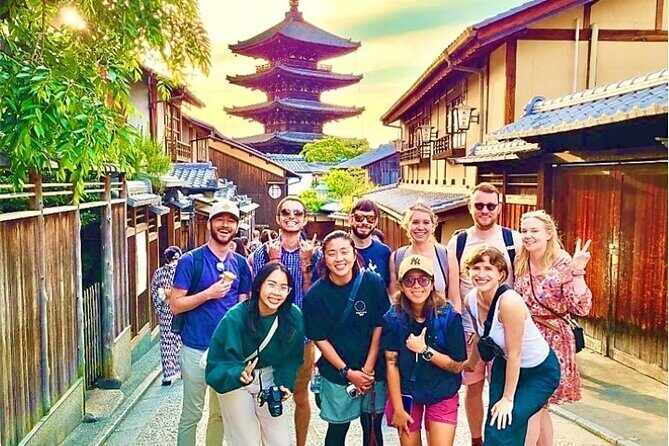
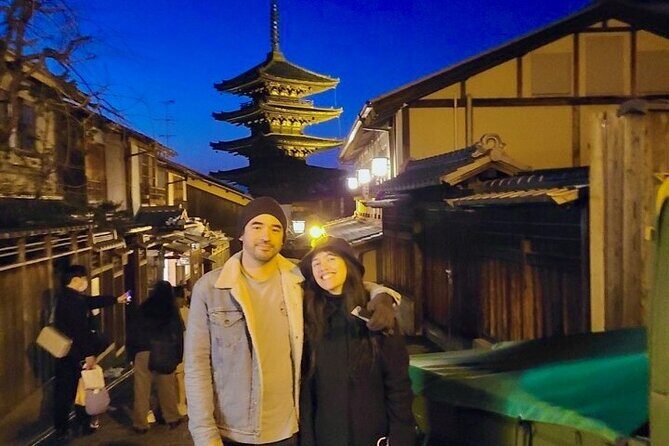
Next is Hokan-ji Temple for about 30 minutes. Admission is free. This is your “Kyoto landmark” moment: it’s tied to the Yasaka Pagoda, one of the city’s recognizable symbols.
This is a great stop because it gives you a specific “you’ll see that later in photos” reference point. Even with a brief visit, you’ll understand why the pagoda shows up everywhere in Kyoto marketing.
9) Gion (finishing in the historic atmosphere)
Your final stop is Gion for about 30 minutes. Admission is free.
Gion is a fitting end because it’s not just a landmark—it’s an atmosphere. This is where Kyoto feels polished, old, and quietly theatrical. You’re also finishing at Gion shopping street, so you’ll have options right after the tour to keep exploring on your own.
If you have energy left, wander the edges rather than trying to “do everything” in one final sprint. This is your transition point from guided highlights to independent exploration.
Transportation: why following the guide saves real time
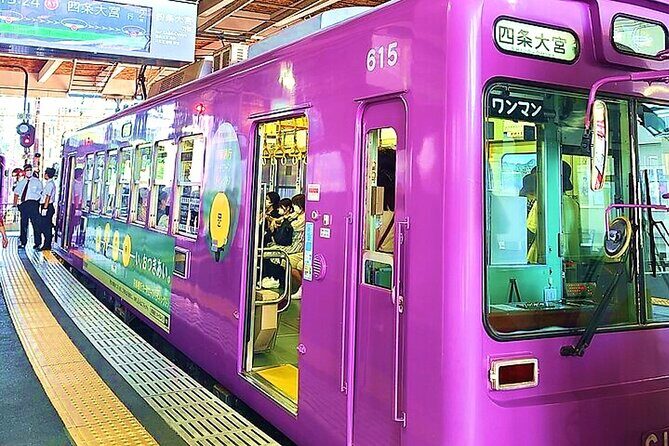
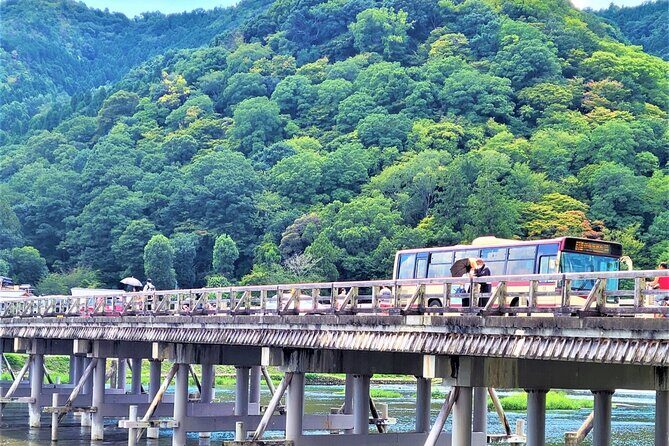
Kyoto’s transit is complicated enough that many visitors feel stuck. That’s exactly where this tour helps. The experience plan mixes walking with bus/public transport, and the guides are described as trained local experts who’ve lived near the areas they cover.
If you try to do this itinerary alone, you’ll spend your first day doing what Kyoto punishes: second-guessing routes, waiting times, and transfers. In a one-day plan, that eats your sightseeing time fast.
With the guide, you’re basically paying to remove uncertainty. You tap in with your IC card, follow the group, and let someone else worry about timing.
The lunch reality: conveyor-belt sushi and vegetarian expectations
Lunch is included in the day’s plan as a conveyor-belt sushi meal, with menu variety noted in the highlights: sushi, vege-sushi, ramen, kara-age, beer, and mochi.
Here’s the balanced truth: conveyor-belt restaurants can be great for variety, but they’re also not the same as ordering a custom vegetarian meal every time. One issue was noted about vegetarian catering not meeting expectations for at least one group. On the flip side, the itinerary description suggests there are vegetarian-friendly options like vege-sushi.
My advice:
- If you’re vegetarian, be ready to choose from what’s actually on the belt.
- Bring a flexible attitude for what’s available that day.
- If you have strict dietary needs, you should be extra cautious and consider eating before or after the tour meal if possible.
The pace: who this tour fits best (and who should pass)
This is not a gentle stroll tour. With the explicit note to expect over 20,000 steps, you need moderate physical fitness and comfortable shoes.
It’s a great fit if:
- You only have a short time in Kyoto (like a couple of days) and want a fast overview.
- You want someone else to handle the routing so you can enjoy the sights.
- You like learning context while you move—temples and shrines with explanations, not just checklists.
It’s a tougher fit if:
- You want a slow, sit-down, pick-your-own pace day.
- Your mobility is limited, or you’re sensitive to long walking stretches.
- You need guaranteed vegetarian meals with zero surprises.
Guides make the difference: Megumi, Masako, and “keep up” energy
The strongest praise in the feedback centers on the guides. Names like Megumi and Masako show up repeatedly, with people calling out how well guides explain things, keep the group on track, and stay communicative.
That matters because this itinerary is time-compressed. Without a guide, you’d spend your energy on where to go next. With a guide, you spend it on what you’re actually seeing.
Also, pay attention to the note about following the host: if you step away, the guide can’t go looking. The tour is designed around a group flow.
Should you book this Kyoto full-course tour?
If you want a first-day introduction to Kyoto and you’re okay with a physically demanding schedule, I’d say this tour is a strong choice. For the price, you’re buying access to a tight routing plan, local guidance, and a curated run of the most famous sights plus key street scenes in between.
Book it when:
- You’re short on time and want to maximize a single day.
- You can handle long walking and public transport.
Skip it if:
- You want a calm day with long temple pauses.
- You have strict dietary needs and can’t risk a conveyor-belt-style menu.
If you do book, plan like a pro: comfortable shoes, an IC card ready, some cash for entrances and meals, and a mindset that the day is fast. You’ll come away with a Kyoto “map” in your head—and that makes planning your next days easier.
FAQ
How long is the Kyoto full-course tour?
It’s listed as about 9 hours 30 minutes.
Where do I meet and where does the tour end?
You meet at JR Saga-Arashiyama Station. The tour ends at Gion shopping street.
What time does the tour start?
The program starts at 8:50, and late arrivals won’t be allowed to participate.
Is transportation included in the tour price?
No. Transportation expenses are not included and are listed as about $10 (¥1,340) per person.
Is food included?
Lunch is part of the plan, but food and beverages are not fully included in the tour fee. You should budget about $6.8–14 (¥1,500) per person depending on what you order.
Are entrance fees included for temples and shrines?
No. Entrance fees are not included and are listed as about $11 (¥1,600) total per person.
How much walking should I expect?
You should expect over 20,000 steps, and the tour requires moderate physical fitness.
How many people are in the group?
The maximum group size is 10 travelers.
What is the cancellation policy?
It’s non-refundable and cannot be changed for any reason, and you won’t receive a refund if you cancel or request an amendment.