REVIEW · KYOTO
Kyoto near Fushimiinari Wagashi making&Small Group Tea Ceremony
Book on Viator →Operated by Japanese cooking class & walking tour · Bookable on Viator
A quiet moment beats another shrine selfie. This small-group Kyoto tea ceremony combines a hands-on wagashi class with a matcha tea session in a real home setting. I especially liked learning the steps you can repeat at home and the calm, respectful pace in a room that feels lived-in. One catch: you’ll be on tatami (or you can request a chair), and you must wear socks—bare feet aren’t allowed.
You’ll start in the kitchen area with an English-speaking host and instructor, then move into an authentic Japanese-style room where etiquette is explained clearly. In the tea area, you’ll also hear what the hanging scroll means, and you’ll watch—and then do—ceremonial matcha preparation. If you don’t like caffeine, this may not be your best Kyoto stop, since matcha is the main drink.
I went in expecting a quick show. I left with practical skills: you’ll make one kind of wagashi, whisk matcha yourself, and have a souvenir that’s actually useful when you host friends later. The vibe is friendly too; the kind of session that feels like being invited over, just with proper form.
In This Review
- Key highlights you’ll care about
- A Kyoto tea ceremony that feels like a real invitation in Fushimi
- Meeting point and what to wear (yes, socks matter here)
- Step 1: Head into the kitchen and make wagashi hands-on
- Step 2: Walk into the tea room and learn how etiquette works
- Step 3: Eat what you made, then learn how to drink matcha
- Step 4: Learn ceremonial matcha prep from the host, then do it yourself
- What’s actually included for your $52.26
- Why the setting near Fushimi-Inari is a smart pairing
- Who should book this Kyoto tea ceremony (and who might want to skip)
- Should you book this Kyoto wagashi and matcha experience?
- FAQ
- How long is the Kyoto near Fushimi-Inari Wagashi making and small-group tea ceremony?
- What’s included in the price?
- Do I make the wagashi myself, or is it just a demonstration?
- Is there a chance to prepare matcha yourself?
- Do I need to wear socks?
- Can I sit in a chair instead of on tatami?
- Is hotel pick-up or drop-off included?
Key highlights you’ll care about
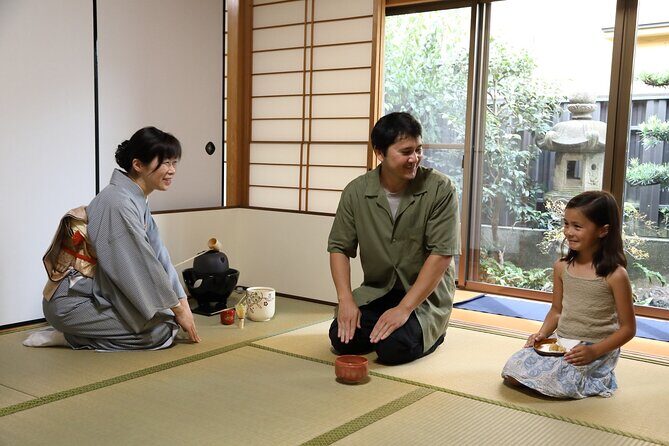
- Max 8 people keeps the pace personal and the instruction easy to follow
- Hands-on wagashi: you don’t just watch; you make one kind of Japanese sweet
- Tatami tea room + scroll meaning gives context, not just choreography
- Two bowls of matcha plus the sweets you made for a full, satisfying experience
- Close to Fushimi-Inari while still feeling like a local neighborhood
- English-speaking licensed guide interpreters help you understand every step
A Kyoto tea ceremony that feels like a real invitation in Fushimi
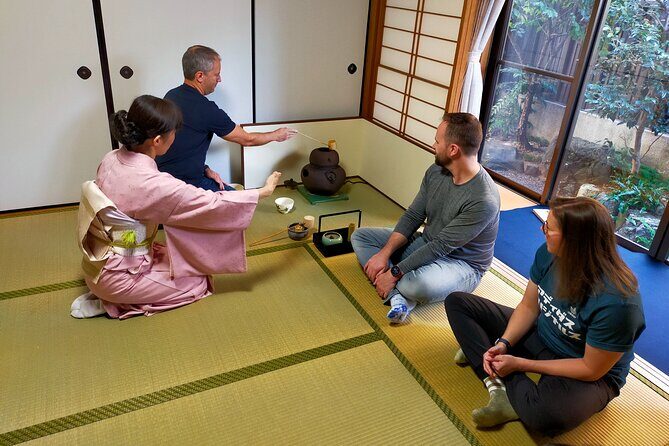
Kyoto can feel like a blur—temples in the morning, crowds by midday, and checklists that never end. This experience is different because it slows time down on purpose. You’re hosted in an authentic Japanese-style room at a local house, with a teaching style that mixes formal tea-ceremony rules with the warmth of someone showing you how things are done.
The location is part of why it works. You’re in Fushimi, and you can still reach the famous orange torii gates at Fushimi-Inari Taisha on foot in about 10 minutes. That means you can do something calmer and more local between shrine time and dinner time. You’re not just hopping from one landmark to the next.
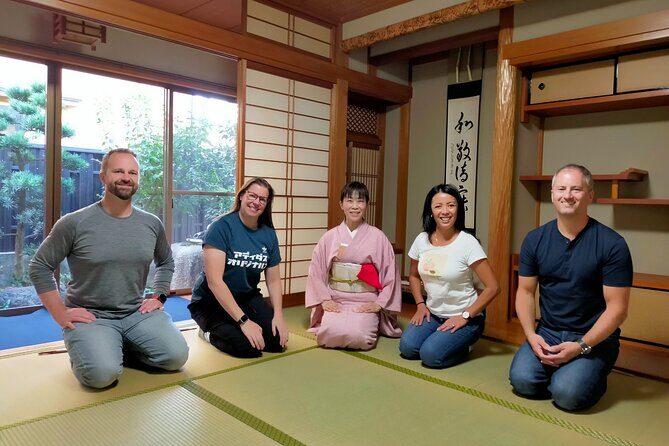
And because the group is capped at 8 people, you get enough attention to actually practice. You’ll be able to ask questions and get corrections—especially during matcha whisking, where technique matters.
You can also read our reviews of more tours and experiences in Kyoto.



Meeting point and what to wear (yes, socks matter here)
The session meets at 38-4 Fukakusa Watamorichō, Fushimi Ward, Kyoto, 612-0022. Start time is 9:45am, and it finishes back at the meeting point.
You’ll want to plan your clothing like you’re entering someone’s home. Socks are required, and bare feet aren’t allowed in the room. The host also recommends easy shoes that you can take on and off without wrestling your way through your daypack.
If you don’t want to sit on tatami, you can request chairs in advance. Just tell the provider how many chairs you want when you book. That flexibility is a big deal if you’re traveling with knee pain, or if you simply know you won’t enjoy long floor seating.
Also note one practical item: you’ll be served matcha (it’s included), so this isn’t the best choice for someone who avoids caffeine.
Step 1: Head into the kitchen and make wagashi hands-on
Your session starts when you arrive at the house. The English-speaking host guides you to the kitchen area first, where the class begins with wagashi.
This is not a “look and learn” stop. You’ll learn how to make one kind of wagashi yourself. Expect it to be hands-on and a bit messy. One review called it fun but also a little sticky—exactly the kind of detail that matters because wagashi can be delicate, and you’ll be working with textures that want to cling.
You’ll also learn the basics behind what you’re making. Even if you don’t speak Japanese, the instruction is structured so you can follow along clearly. That’s where having licensed guide interpreters helps: the meaning isn’t lost in translation, and you’re not left guessing.
Why this part is worth your time: wagashi gives you the “why” of the tea ceremony. Tea is part of a whole ritual experience—food, drink, and manners all connect. When you make the sweet yourself, the later matcha part feels more understandable instead of like a random performance.
Step 2: Walk into the tea room and learn how etiquette works
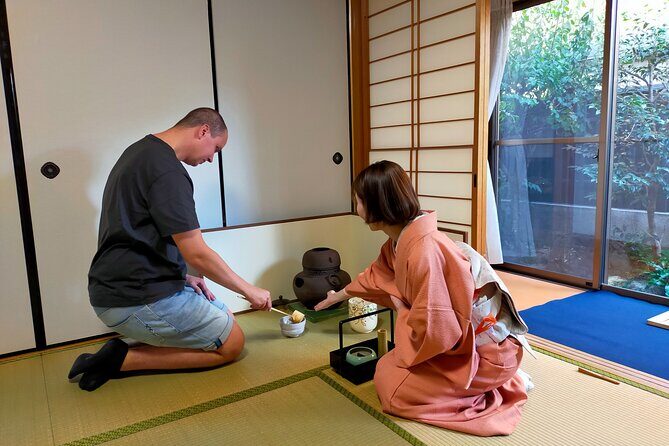
After the wagashi class, you transition into the tea ceremony itself. The host explains how to attend, then you go outside and walk through a small garden—only entering the authentic Japanese-style room when it’s not raining.
That short walk matters. It’s like a mini reset. In a country where formality can feel heavy, this tiny step prepares you mentally: you’re switching modes.
Inside, you’ll sit on the tatami floor unless you requested chairs. Then the instructor explains the history and meaning behind tea ceremony, including what a hanging scroll on the wall represents. That scroll detail is a classic touch, and it’s also a helpful way to understand that tea rooms aren’t just for aesthetics—they’re designed to focus your attention.
The instruction tone is formal, but not cold. The experience is described as feeling like being invited for tea by a friend in Japan. That balance shows up in the pacing: you’re taught, but you’re also guided gently so you don’t feel lost.
Step 3: Eat what you made, then learn how to drink matcha
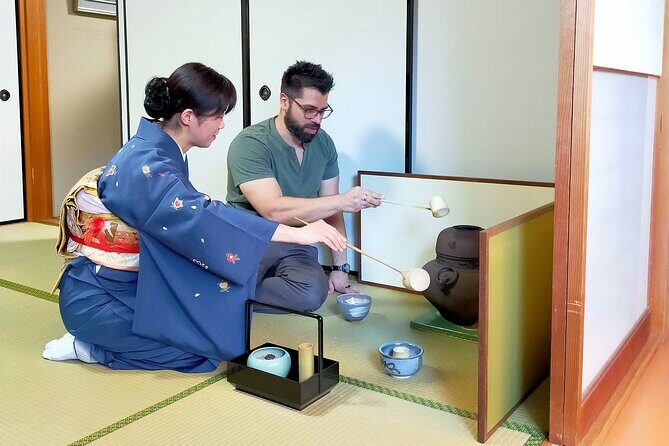
Once you’re seated, you’ll savor the Japanese sweets you made during the wagashi class. This timing is smart. You’re using your hands and your senses while you’re still learning the rules, so everything stays connected.
Then your instructor demonstrates how to drink a bowl of matcha. This is where a lot of tea experiences stop—show you the correct way, let you take a sip, done. Here, the explanation is more complete, and you’ll get the foundation you need before you start preparing your own bowl.
If you’ve never tasted matcha before, you may be surprised by how different it can feel depending on temperature and whisking technique. That’s why the ceremony style is more than ritual. The method changes the drink.





Step 4: Learn ceremonial matcha prep from the host, then do it yourself
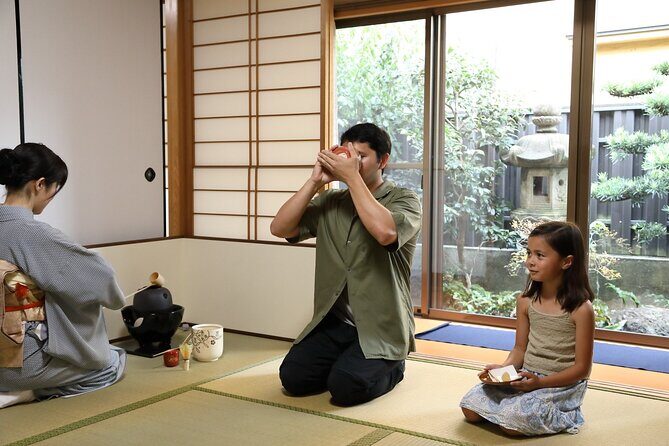
Next, you’ll meet the host and watch the ceremonial preparation of matcha. In a review, the hostess name was Miho, and she’s mentioned as friendly and speaking English very well. That kind of communication matters here because matcha prep isn’t just about whisking—it’s about doing it in the right sequence.
After the demonstration, you get the chance to prepare matcha yourself. This is one of the best parts of the whole experience because you leave with a repeatable skill, not just memories.
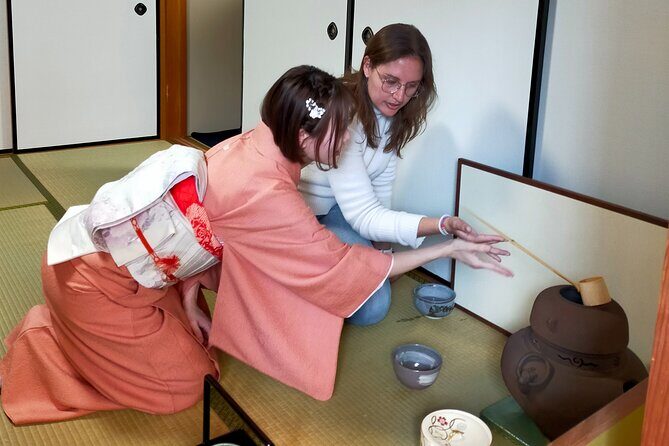
Practically, expect the instructor to guide your hand position and whisking actions. If your first try doesn’t look perfect, that’s normal. The goal is not to be a tea master in 75 minutes; it’s to learn the steps well enough that you can explain them later to friends.
And yes, you’ll drink matcha you prepared as part of the experience. The tour includes two bowls of matcha total, plus traditional Japanese confectionaries.
What’s actually included for your $52.26
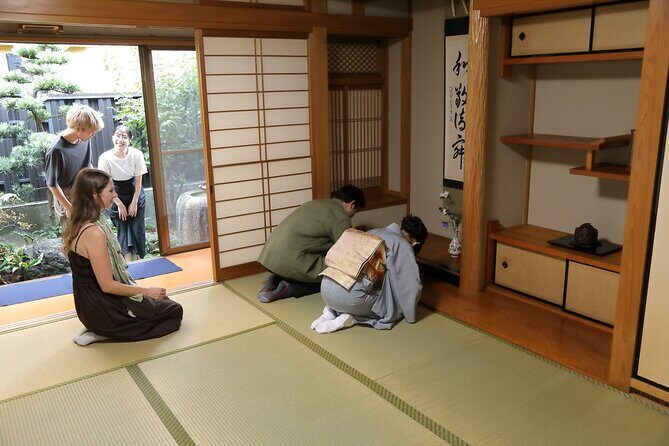
This experience costs $52.26 per person for about 1 hour 15 minutes. The price is easier to justify when you look at what’s truly covered:
- English-speaking instructor
- All fees and taxes
- Two bowls of matcha
- Japanese traditional confectionaries
- Coffee and/or tea
The part that makes it feel like value is the hands-on format. You’re paying for a class where you actively make both components—wagashi and matcha—with a small group and English instruction. Many tea experiences are basically a short demonstration in a crowded space. This one builds time for practice, and the room setup supports learning.
Not included: gratuity, and there’s no hotel pick-up or drop-off. You’ll handle your own way to the meeting point.
Why the setting near Fushimi-Inari is a smart pairing
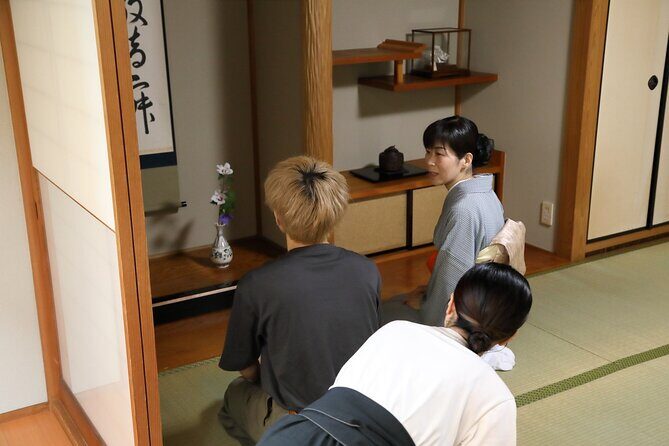
You could do Fushimi-Inari first and call it a day. Or you could do the opposite: start with tea in a calmer local setting, then walk to the torii gates afterward.
Either way, the neighborhood pairing works because it gives you contrast. Fushimi-Inari is iconic, and the orange torii is unmistakable. But a tea ceremony nearby in a real home gives you something you won’t get from a photo stop: a slower rhythm, a lived-in atmosphere, and a sense of Japanese daily culture that isn’t aimed at mass tourism.
It also helps if you want a break from walking. A 75-minute tea session is a gentle reset for your legs, especially if you’ve been doing temples the whole morning.
Who should book this Kyoto tea ceremony (and who might want to skip)
This is a strong match if you want:
- a hands-on cultural activity in Kyoto, not another passive museum-style visit
- small-group attention (max 8 people)
- an English-friendly experience with licensed guide interpreters
- a souvenir you can actually use later: a bowl of matcha-making skills plus wagashi know-how
It may be less ideal if:
- you avoid caffeine (matcha is included, and the session is specifically centered on it)
- you don’t want to deal with socks and shoe changes (though chair seating is available on request)
- you’re expecting a fast, casually informal walk-through. This has formal tea ceremony structure, even when it’s friendly
For families: children aged 8 to 12 need at least one adult to participate. Children aged 7 and under can’t join this session. That’s important if you’re planning a mixed-age day.
Should you book this Kyoto wagashi and matcha experience?
Yes—if you’re looking for something in Kyoto that’s calm, hands-on, and genuinely practical. You’ll make wagashi, learn ceremonial matcha preparation, and come away with a skill set you can share at home. The small group size and English instruction are big advantages, and the location near Fushimi-Inari makes it easy to pair with a classic Kyoto day.
If caffeine isn’t your thing, or if you can’t do tatami (and don’t want to request a chair), then skip it. Otherwise, this is the kind of experience that gives you more than a nice photo.
FAQ
How long is the Kyoto near Fushimi-Inari Wagashi making and small-group tea ceremony?
It’s about 1 hour 15 minutes.
What’s included in the price?
English-speaking instruction, all fees and taxes, coffee and/or tea, two bowls of matcha, and Japanese traditional confectionaries.
Do I make the wagashi myself, or is it just a demonstration?
You make a kind of wagashi hands-on in a class setting.
Is there a chance to prepare matcha yourself?
Yes. You’ll watch ceremonial preparation, then you’ll have the opportunity to prepare matcha yourself.
Do I need to wear socks?
Yes. Socks are required, and bare feet aren’t allowed in the room.
Can I sit in a chair instead of on tatami?
Yes. Chair seating can be prepared if you request it when you book, and you should tell them how many chairs you want.
Is hotel pick-up or drop-off included?
No. You’ll need to reach the meeting point on your own.