REVIEW · KYOTO
Kyoto: Newly Opened Tea Ceremony – Sanjo Chasuian
Book on GetYourGuide →Operated by Sanjo Chasuian · Bookable on GetYourGuide
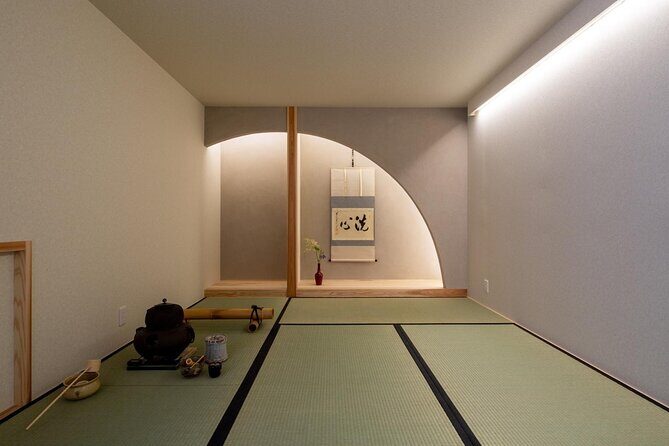
A calm hour in Kyoto starts with a crawl-in doorway. Sanjo Chasuian is a newly opened tea room just a few minutes from Karasuma Oike, and the format is hands-on right away: you’ll watch, learn, then whisk your own matcha.
What I like most is the two-bowl setup (one prepared by the host, one you make), and the way the session balances history plus practice without turning it into a lecture. You also get seasonal sweets from a Kyoto confectioner with over 100 years of history.
One thing to consider: this is a shared session in a serene setting, so if you’re the type who hates quiet rules, or you show up late, it could feel strict. You’ll need socks, and the door locks once the ceremony begins—miss the timing and you won’t join (and there’s no refund).
In This Review
- Key Highlights You Should Know Before You Go
- A 5-Minute Walk from Karasuma Oike to Your Quiet Reset
- What You Actually Get in One Hour (and Why It Feels Like Value)
- The Nijiriguchi Crawl-In Entrance: Where the Ceremony Starts
- How the Session Flows: From Matcha Basics to Your Bowl
- Two Bowls of Matcha: One Teacher Cup, One You Cup
- Wagashi Included: Kyoto Sweets with a 100-Year Lineage
- English Guidance That Doesn’t Waste Your Hour
- Socks, Shoes-Off Rules, and That One Timing Trap
- Optional Uchikake Coat Kimono: Worth It If You Want the Full Look
- Shared Session Vibe: Peaceful, But Not Private
- Price and Value: Why $31 Makes Sense Here
- Who This Kyoto Tea Ceremony Suits Best
- Should You Book Sanjo Chasuian’s Tea Ceremony?
- FAQ
- How long is the Kyoto tea ceremony at Sanjo Chasuian?
- What is included in the $31 per person price?
- Is the tea ceremony taught in English?
- Do I need to bring anything?
- Can I make matcha myself, or is it just watching?
- Is it suitable for children or wheelchair users?
Key Highlights You Should Know Before You Go
- Karasuma Oike location: about a 5-minute walk, easy to plug into a Kyoto day
- Nijiriguchi entrance: the crawl-in entry is part of the ceremony mood-control
- Two bowls of matcha: host makes one, then you whisk the second
- Seasonal wagashi included: traditional sweets tied to the Kyoto confection calendar
- English instruction + small group size: limited to 10 participants for clearer guidance
- Optional Uchikake coat: if you want the dressed-up look, it’s extra (and limited)
A 5-Minute Walk from Karasuma Oike to Your Quiet Reset
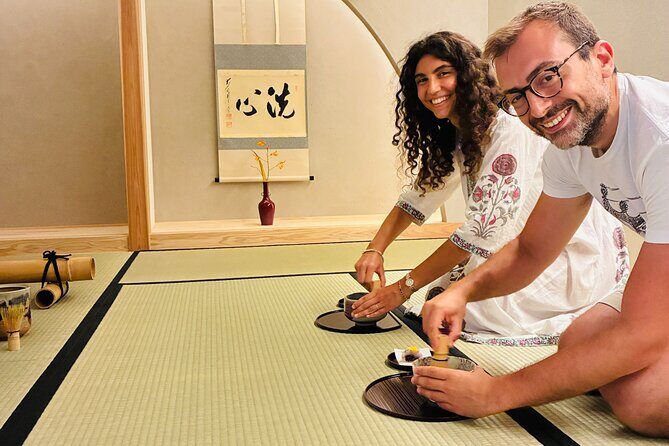
Kyoto can feel like a constant stream of shrines, streets, and crowds. This tea ceremony gives you the opposite: a short walk from Karasuma Oike Station into a space designed to slow your brain down. Even better, the venue is newly opened, so you’re not stepping into a dusty, hard-to-navigate experience.
Sanjo Chasuian also offers sake tasting as part of what the facility does. This particular booking is centered on the tea ceremony, but it’s nice to know the place has more than one cultural activity if you want to build a full night around it.
You can also read our reviews of more tours and experiences in Kyoto.



What You Actually Get in One Hour (and Why It Feels Like Value)
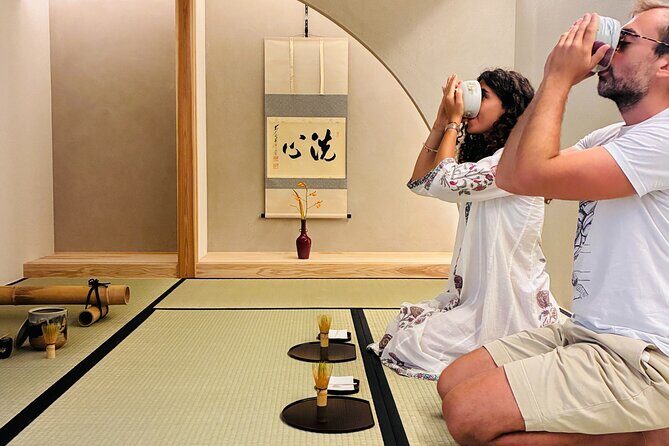
The price is $31 per person, for a 1-hour experience that includes more than a typical sit-and-watch demo. You get:
- Two cups of matcha (one by the host, one you make)
- Traditional seasonal Japanese confectionary (wagashi) included
That two-bowl structure matters. Many tea ceremonies show you the steps, but you only taste what someone else prepared. Here, you’ll feel the whisking rhythm, learn why the steps are so precise, and then drink what you made—so the lesson sticks.
There’s also an obvious practical bonus: matcha, tea bowls, and select items are available for purchase. If your matcha curiosity turns into a real hobby, you can leave with gear instead of just photos.
The Nijiriguchi Crawl-In Entrance: Where the Ceremony Starts
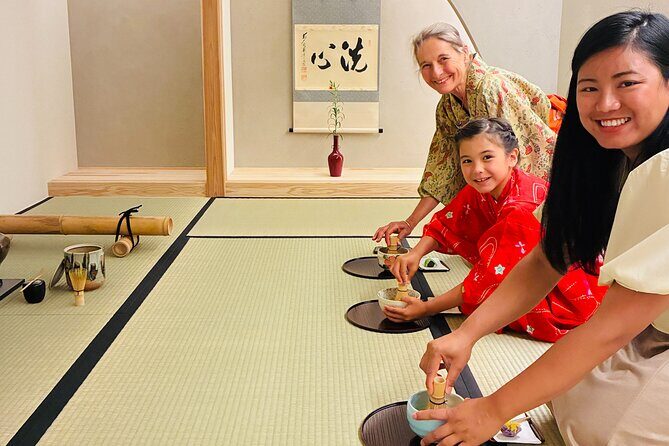
The doorway is not just a doorway. Sanjo Chasuian uses Nijiriguchi, a crawl-in entrance that forces a physical shift—shoulders down, outside noise behind you, and your focus landing on what comes next.
This is one of those small design choices that changes how the whole hour feels. When your body changes position, your mind follows. Also, chairs are available, which helps if kneeling is not your thing.
How the Session Flows: From Matcha Basics to Your Bowl
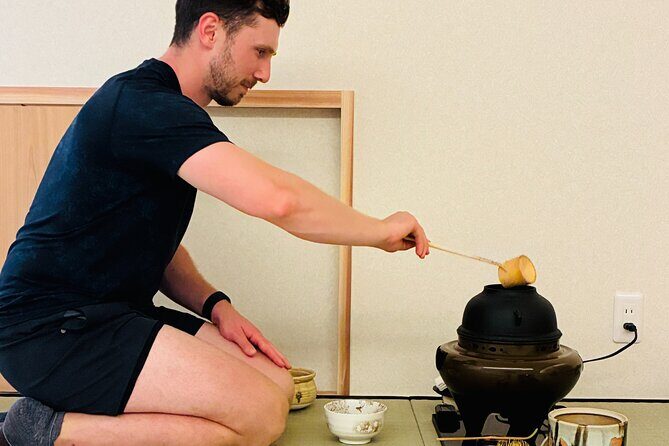
Your time has a clear rhythm. You start with an introduction to the tea ceremony’s background—enough context to understand what you’re doing and why it looks the way it does.
Then you move into the sensory part: you’ll enjoy matcha prepared by the host, followed by seasonal sweets. After that, you’ll make your own bowl of matcha.
The best part is that it’s hands-on learning by doing. You’ll choose a tea bowl and a whisk, watch how the host handles the utensils, and then try it yourself. That moment—when your own bowl starts looking like the real thing—is exactly why this format works.
Two Bowls of Matcha: One Teacher Cup, One You Cup
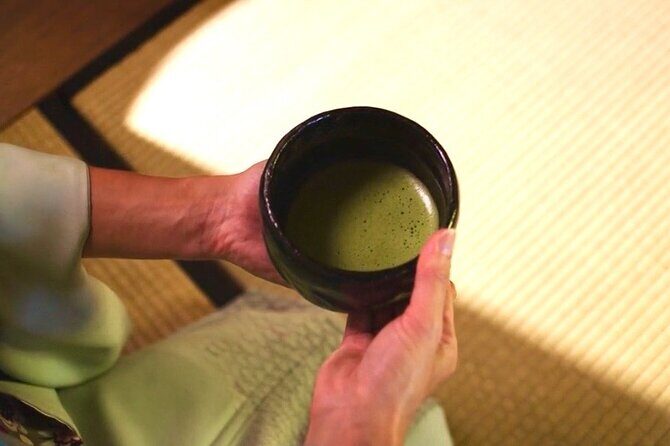
You drink matcha twice, and that’s a huge value lever. The first cup (made by the host) works like a benchmark. It shows you how the tea should look and taste when the steps are correct.
The second cup is where you earn the lesson. You’ll whisk the matcha yourself, and you’ll notice how technique affects the foam, aroma, and overall mouthfeel. Even if you don’t become a matcha expert, you’ll understand the difference between mixing and proper whisking.
Some hosts also help with your confidence in the process. In the experience descriptions, English guidance is clear, and people have praised hosts like Yuko, Reina, and Renna for explaining the ritual step-by-step.






Wagashi Included: Kyoto Sweets with a 100-Year Lineage
Matcha alone can be intense if you’re not used to it. That’s why the seasonal wagashi inclusion is smart. You’re not just tasting green tea; you’re tasting the pairing logic—sweetness and texture balancing bitterness.
The sweets come from a Kyoto confectioner with over 100 years of history, which tells you this isn’t random convenience-shop candy. The sweets are part of the ceremony experience, not an afterthought.
Also, because they’re seasonal, you’re getting a snapshot of what Kyoto considers a good match at that moment in the year.
English Guidance That Doesn’t Waste Your Hour
This experience is led in English, and the session is meant for international visitors. The pacing is practical: you get history and significance, then instruction that helps you perform the movements correctly while keeping the room calm.
One detail I really like is that the host can help you understand what comes next before the ceremony proper starts. That means you can follow along even if you’re not fluent in Japanese ritual language—and it makes it easier to stay quiet when quiet is part of the deal.
Small group size also helps. The session is limited to 10 participants, so you’re not lost in a crowd with a rushed instructor. And yes, some hosts will take photos and videos while you’re making your matcha, so you don’t have to fumble with your phone at the worst possible time.
Socks, Shoes-Off Rules, and That One Timing Trap
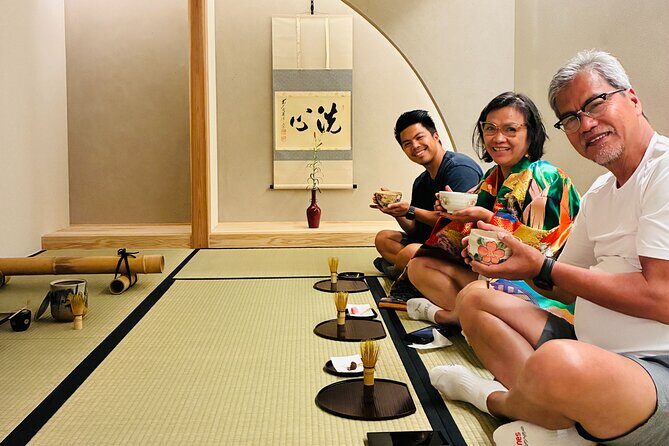
Socks are required. You’ll bring or wear socks for the ceremony, which is part of keeping the space clean and respectful.
Timing is also strict. Entry is allowed from 5 minutes before the start time, and once the session begins, the door is locked. If you’re even a minute late, you may not be able to join.
If you hate last-minute stress, do yourself a favor: plan to arrive early, then slow down nearby so you’re not rushing when it’s time to enter.
Optional Uchikake Coat Kimono: Worth It If You Want the Full Look
Sanjo Chasuian does not offer standard kimono rental. But there is an optional Uchikake (coat-style kimono) experience for ¥1,500 (tax included).
It’s limited in quantity, and you can only arrange it on the day—no advance reservations. If you’re the type who loves photos and wants the ceremony to feel extra ceremonial, it can be a fun add-on. If you just want the lesson and don’t care about wardrobe, you can skip it.
Shared Session Vibe: Peaceful, But Not Private
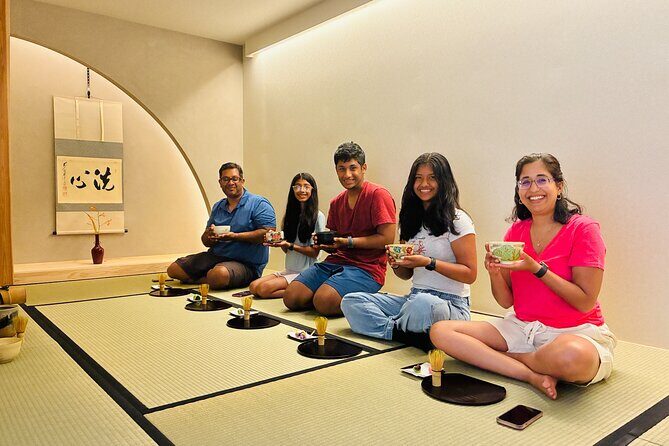
This is a shared plan. You’ll do the ceremony with other participants in the same time slot, and the room is kept quiet to protect the calm atmosphere.
There’s also a note about children: the shared session is not for children under 6 years. For children under 5 or anyone who needs an interpreter, a private plan is required—so you’ll want to choose the right format when you book.
If you’re traveling with very young kids or you need a more tailored communication setup, pick the private option so you’re not stuck at the wrong door.
Price and Value: Why $31 Makes Sense Here
At $31, you’re paying for more than matcha. You’re paying for:
- Instruction in English
- A structured tea ceremony explanation
- Two servings of matcha (one made by you)
- Traditional seasonal wagashi
The big value point is the “you make it” part. If the experience ended after tasting the host’s bowl, it would be a weaker buy. Here, you’ll leave understanding how the whisking and handling are supposed to work.
And since you can buy matcha and equipment, you can turn the hour into something practical for later. That’s where the ceremony can go from a cool activity to a skill you use.
Who This Kyoto Tea Ceremony Suits Best
This is a great match if you want:
- A calm break from Kyoto’s pace
- A clear, instruction-led introduction to tea ceremony etiquette
- A hands-on activity that doesn’t require prior experience
- English guidance in a quiet setting
It may be less ideal if you want a loud, chatty cultural show, or if you’re uncomfortable with strict timing and sock-only rules.
Should You Book Sanjo Chasuian’s Tea Ceremony?
If you’re looking for a Kyoto tea ceremony that feels structured, peaceful, and actually teaches you to do the motions—not just watch—you should book it. The two-bowl matcha format is the selling point, and the Nijiriguchi entrance gives you a memorable start that sets the tone fast.
Book it especially if you want a friendly, English-guided experience led by hosts like Yuko or Reina, known for clear explanations and a calm atmosphere. Just plan your arrival carefully, bring socks, and embrace the quiet hour.
FAQ
How long is the Kyoto tea ceremony at Sanjo Chasuian?
The experience lasts about 1 hour.
What is included in the $31 per person price?
It includes two cups of matcha (one made by the host and one you make) and traditional seasonal Japanese confectionary.
Is the tea ceremony taught in English?
Yes. The instructor provides guidance and explanations in English.
Do I need to bring anything?
You need to bring or wear socks for the experience.
Can I make matcha myself, or is it just watching?
You’ll make your own bowl of matcha. You’ll also enjoy a first bowl prepared by the host.
Is it suitable for children or wheelchair users?
Children under 6 are not suitable for this experience, and it is not suitable for wheelchair users. For children under 5 or anyone requiring an interpreter, a private plan is required.
If you want, tell me your travel dates and whether you prefer sitting (chairs) or kneeling, and I’ll help you pick a time slot that won’t make you sweat the 5-minute entry window.