REVIEW · KYOTO
Kyoto Sushi Making Experience with a Professional Sushi Chef
Book on GetYourGuide →Operated by MagicalTrip · Bookable on GetYourGuide
Make sushi in Kyoto, step by step.
This Kyoto sushi making experience brings you into a real sushi kitchen to learn nigiri and rolling, then it ends with sake tasting and a matcha session in a calm Kyoto-style setting. English support is part of the plan, and in past groups guides such as Ayu and Yuka have handled translation so you can focus on the food instead of guessing what’s happening.
What I like most is the way you’re taught the craft, not just handed instructions. You’ll work with a professional Taisho chef on knife work and shaping nigiri, and you’ll actually sit down to eat what you make, including tempura. Another big plus is the included sake portion, with pairing tips that help you understand why certain bites and sips work together.
One thing to consider: this class isn’t set up for special diets. Vegetarian/vegan and gluten-free requests can’t be accommodated, and while they’ll try to adjust when feasible, you can’t rely on meals being allergy-free. Also, the tour starts on time, and late arrivals won’t be able to join or get a refund.
In This Review
- Key things to know before you go
- Entering the class: meeting near Karasuma Oike and starting at DIESEL 京都
- The wagashi shop stop: the sweet setup for your matcha pairing
- Meet the Taisho chef: nigiri shaping and knife skills in a real sushi setting
- What you’re really learning (beyond sushi trivia)
- Rolling and tempura: the skills that make your meal feel complete
- Sake tasting and pairing tips: how to read the flavors
- Matcha in a Kyoto-style garden: whisking and wagashi pairing
- Price and value: what $161 buys in a 210-minute craft lesson
- Logistics that actually matter: timing, group size, and what to expect
- Who this Kyoto sushi making experience is best for
- Should you book this Kyoto sushi making experience?
- FAQ
- Where is the meeting point?
- How long is the experience?
- Is instruction available in English?
- What will I make and eat during the class?
- Does the tour offer vegetarian or vegan options?
- Can the class handle gluten-free needs?
- Is it okay to arrive late?
Key things to know before you go
- Small-group format (up to 7): more attention while you’re forming nigiri and rolling.
- 9 nigiri + roll sushi + tempura: you leave with a full meal you helped make.
- Sake tasting with pairing tips: you get the “why,” not only the taste.
- Matcha whisking + wagashi: you’ll use the sweets you select earlier as the pairing.
- English instruction and translation: guides like Ayu, Ayuri, or Yuka have supported past groups.
- Tour photos included: you can focus on the class instead of taking pictures mid-motion.
Entering the class: meeting near Karasuma Oike and starting at DIESEL 京都
Your experience begins around Karasuma Oike Station (Exit 5). The meeting point is close enough that you can arrive without a long walk, but still far enough to feel like a local neighborhood start rather than a tourist bus pickup.
The first stop is DIESEL 京都, where your guide gets you oriented for what comes next. Then you head out for a guided visit that includes a shopping moment—specifically for traditional Japanese sweets (wagashi). This matters more than it sounds. You’re not just buying snacks; you’re selecting the sweets that you’ll later pair with your own matcha.
Tip for planning: build in buffer time for trains and getting from the station to the meeting point. The class starts on schedule, and late arrivals won’t be allowed to join, even if you’re close.
You can also read our reviews of more tours and experiences in Kyoto.



The wagashi shop stop: the sweet setup for your matcha pairing
I like this early shopping step because it turns the matcha ending into something interactive. You choose Japanese sweets with your guide’s input, then you’re set up to taste the matcha in a way that feels intentional, not random.
During the guided portion, you’ll get context about the sweets and the role they play in traditional Japanese tea culture. It’s also a chance to reset your appetite before the cooking starts—because once you’re in the sushi mode, you’ll move fast.
A small practical note: the class isn’t designed around vegetarian or gluten-free needs. So if your diet is strict, read the menu expectations carefully before booking.
Meet the Taisho chef: nigiri shaping and knife skills in a real sushi setting
After the sweets stop, you go to the sushi restaurant where you meet the Taisho chef. This is the main reason many people book: you’re learning directly from someone who has mastered the techniques over decades, and you can see that mastery in how the chef handles fish, rice, and tools.
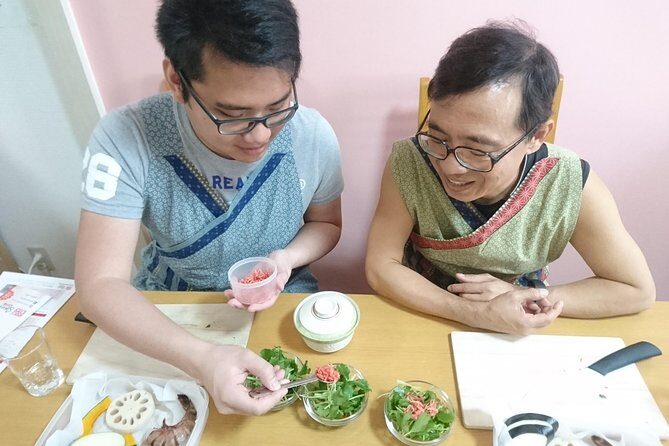
You’ll watch the chef demonstrate precise knife work and the flow of making nigiri—how to portion fish, how to shape rice, and how to balance texture and pressure. Then you switch to hands-on instruction. This is where the small-group size helps. With a group limited to 7 participants, the chef or guide can check what you’re doing and correct issues quickly.
The course includes:
- 9 nigiri sushi
- Roll sushi
- A tempura set made by the chef
So you’re not just doing one skill. You get the tight focus of nigiri, plus the arm work and rolling technique for rolls, plus a separate cooking lane for tempura.
What you’re really learning (beyond sushi trivia)
A good sushi class teaches you ingredients. A great one teaches you texture control. This one is built around that. You’ll practice how sushi should feel in your hands and how it should land on your palate—firm but not packed, glossy but not dry, fish that’s fresh enough to taste cleanly against seasoned rice.
And because it’s a group class, you’ll also learn by watching other people’s attempts. It’s useful. You notice patterns—like where rice sticking happens or when a roll gets too tight.
Rolling and tempura: the skills that make your meal feel complete
Once you’re comfortable with nigiri, you’ll make roll sushi. Rolling changes the rhythm of the experience. Nigiri is about alignment and shaping. Rolls are about consistency across layers, and they test whether you can keep the filling even and the pressure stable.
Then you’ll enjoy tempura made by the chef as part of the set. Tempura is a nice contrast to sushi—it brings crunch and warmth to the meal, so the tasting experience doesn’t become repetitive. It also helps you understand Japanese “bite balance.” Sushi can be delicate; tempura is more bold and forgiving.
One more practical note: the class is designed for all skill levels. You don’t need prior cooking experience to enjoy it, and the pacing is meant to keep you progressing instead of waiting around.




Sake tasting and pairing tips: how to read the flavors
You get two drinks, and the highlight for many people is the sake tasting. What makes this portion valuable is that you’re not just trying sake types blindly. You get pairing tips that connect taste changes—how sake can soften sharp flavors, lift the sweetness in rice, or make fish taste cleaner.
Sake can feel intimidating if you haven’t tried it before, but this is set up to be approachable. If you’ve ever wondered why people in Japan talk about sake alongside food, this part helps you understand that it’s not only about alcohol. It’s about timing and contrast.
In past groups, guides like Ayu or Ayuri have helped translate what’s happening so you can ask questions and actually follow along. That’s a big deal for sake tasting because terms can get technical fast.
Matcha in a Kyoto-style garden: whisking and wagashi pairing
The ending is calm and very Kyoto in tone. You’ll unwind in a peaceful Kyoto-style garden, then learn how to whisk matcha and taste it with the Japanese sweets you picked earlier.
This is one of those parts that’s easy to skip in theory—because matcha sounds like a generic “tea moment.” But here, you’re doing two key things that make it more meaningful:
- You control the action by whisking the matcha yourself.
- You connect the flavor to a specific wagashi pairing based on what you chose.
You’ll sit on tatami mats during the matcha experience, and that physical setting matters. It slows you down. You taste more carefully because you’re not rushing through another “stop-and-go” photo moment.
If you’re the type of traveler who likes food education that doesn’t feel like a lecture, this finale is a strong payoff.
Price and value: what $161 buys in a 210-minute craft lesson
At $161 per person for about 210 minutes, this isn’t the cheapest workshop in Kyoto. But it’s also not priced like a quick demo. You’re paying for several things that add up fast:
- A professional sushi chef teaching directly
- A full output meal: 9 nigiri, roll sushi, and tempura
- Sake tasting plus two drinks
- Matcha and wagashi, where you practice the process and then eat what you pair
- Small-group attention (limited to 7)
- Tour photos included, so the experience isn’t constantly interrupted by you running around taking pictures
If you compare it to doing sushi dinner plus a separate tea experience plus a sake tasting add-on, the bundled value starts to make sense. The class is designed to keep you fed the whole time, and it gives you skills—not just a plate of food.
One cost warning, though: this class can’t accommodate vegetarian/vegan or gluten-free requests. If your dietary needs are complicated, you may end up paying for something that doesn’t fit your situation.
Logistics that actually matter: timing, group size, and what to expect
This is a hands-on class, so you’ll want to show up early enough to settle in without stress. The experience starts on time out of respect for everyone, and late arrivals can’t join or reschedule or receive a refund.
You’ll also be in a small group with up to 7 participants, and there may be other participants along with you. The upside is you’re not lost in a crowd. The downside is you’re still sharing kitchen time with others, so don’t expect a one-on-one coaching vibe.
Also, the instruction language is English, which is great. Past groups mention guides translating smoothly, and that translation support can be the difference between a fun meal and a truly educational workshop.
Who this Kyoto sushi making experience is best for
This experience is a good fit if you want:
- A practical cooking lesson focused on technique (not only eating)
- A full meal experience: sushi, tempura, sake, and matcha
- A small-group format where you can ask questions and get corrections
- A Kyoto evening plan that includes something cultural like wagashi and tatami matcha
It may be a poor fit if:
- You’re vegan, vegetarian, or need gluten-free options (these can’t be accommodated)
- You have allergies and need allergy-free preparation guarantees (these aren’t provided)
- You use a wheelchair (not suitable for wheelchair users)
- You’re traveling with someone who isn’t able to follow knife-safety guidance—kids 4+ are welcome, but they must be supervised during potentially dangerous steps.
Should you book this Kyoto sushi making experience?
If you’re aiming for one “food skill” experience in Kyoto, this is a strong choice. The combination of hands-on nigiri and rolling, chef-led tempura, and guided sake + matcha pairings makes it feel like a complete evening rather than a single-technique workshop.
I’d book it especially if you like learning through doing—and if you’re comfortable with a set menu. For most people who eat traditional fish-based sushi, this class is a satisfying mix of craft, culture, and a meal you made yourself.
If your diet is strict or allergies are a concern, don’t force it. Search for a class that can truly meet your needs, because this one doesn’t promise that flexibility.
FAQ
Where is the meeting point?
It meets near Karasuma Oike Station Exit 5.
How long is the experience?
The duration is 210 minutes.
Is instruction available in English?
Yes, the instructor is listed as English.
What will I make and eat during the class?
You’ll make 9 nigiri sushi and roll sushi, and you’ll also enjoy a tempura set. The experience includes sake tastings, matcha, and Japanese sweets (wagashi).
Does the tour offer vegetarian or vegan options?
No. It can’t accommodate vegetarian or vegan requests.
Can the class handle gluten-free needs?
No. Gluten-free requests can’t be accommodated.
Is it okay to arrive late?
The tour starts on time. Late arrivals can’t join, reschedule, or receive a refund.