REVIEW · KYOTO
Kyoto: Try Nishijin Weaving in the Oldest Geisha District
Book on GetYourGuide →Operated by DeepExperience, Inc. · Bookable on GetYourGuide
Handmade textiles in old geisha streets. This 3-hour experience pairs Kamishichiken’s story with Nishijin weaving you do yourself, starting at Kitano Tenmangū. I love how the tour connects craft, place, and local entertainment district life, and I love that you leave with a one-of-a-kind handmade piece.
The only thing to watch is your time expectations. A big chunk (about 1.5 hours) is hands-on weaving, so if you want a long wander for photos, the Kamishichiken stroll is intentionally shorter and focused on the key spots.
In This Review
- Key things you will love about this Kyoto experience
- Entering Kamishichiken: the shortcut to Kyoto’s oldest Hanamachi feel
- Kitano Tenmangū Shrine: where the tour explains the district’s roots
- Nishijin weaving workshop: Tsuzure-ori basics with real craft guidance
- What you actually do
- What to bring mentally
- The Kamishichiken stroll: 400 meters of lattice-townhouse Kyoto
- Guides that make the craft feel personal
- Price and value: what $131 buys you in real time
- Who this tour is for (and who should skip it)
- Should you book Nishijin weaving in Kamishichiken?
- FAQ
- Where do I meet the guide?
- How long is the tour?
- What happens at Kitano Tenmangū Shrine?
- What weaving technique will I learn?
- Do I get to make something, or only watch?
- Is there dango on the tour?
- What are my options if my plans change?
Key things you will love about this Kyoto experience
- Kamishichiken, Kyoto’s oldest Hanamachi district for a real sense of continuity
- Kitano Tenmangū Shrine and how it helped shape the district’s origins
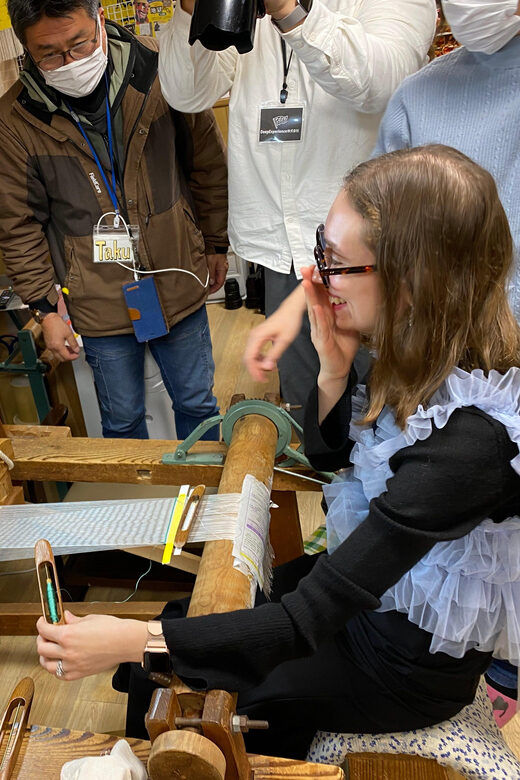
- Nishijin weaving in a working workshop, not a passive demo
- Tsuzure-ori weaving basics tied to textiles that are said to be thousands of years old
- A guided walk through townhouses and latticework on a compact 400-meter street
Entering Kamishichiken: the shortcut to Kyoto’s oldest Hanamachi feel
Kyoto has plenty of pretty lanes. This one hits different because you’re walking in Kamishichiken, described here as the oldest Hanamachi district in the city. Instead of treating the district like a backdrop, the tour frames it as a living cultural setting—one connected to shrine origins, seasonal atmosphere, and the people associated with the area.
What I like about this format is that it starts you in the right mindset. You’re not just told to look up at old architecture; you’re given context for why those streets matter. Then you get the hands-on part: Nishijin weaving. That combo is powerful because your brain can connect the stories you hear to the textile technique you’re practicing.
There’s also a practical advantage. You’re not spending your whole day bouncing between random stops. In about 3 hours, you get a shrine visit, a weaving workshop, and a guided walk through the preserved townscape.
You can also read our reviews of more tours and experiences in Kyoto.



Kitano Tenmangū Shrine: where the tour explains the district’s roots
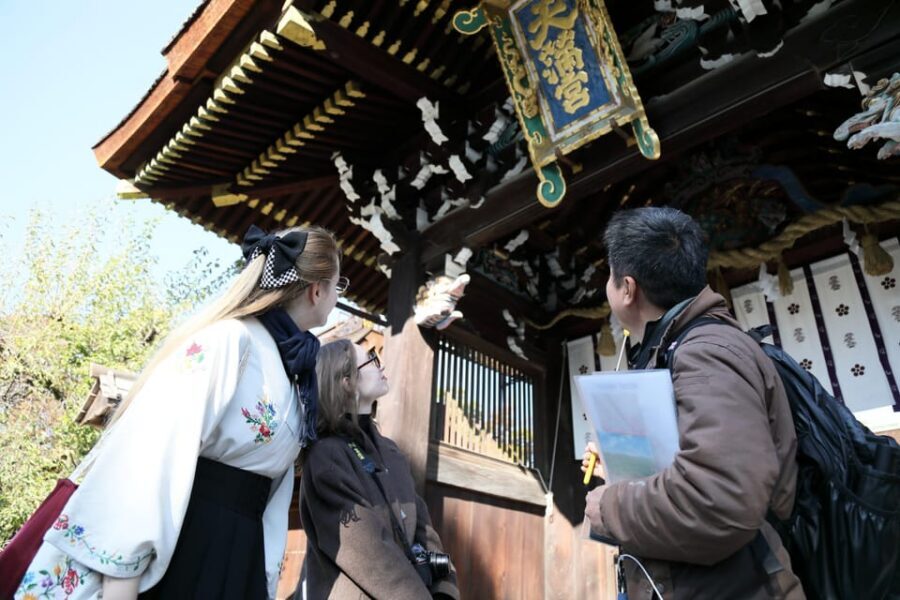
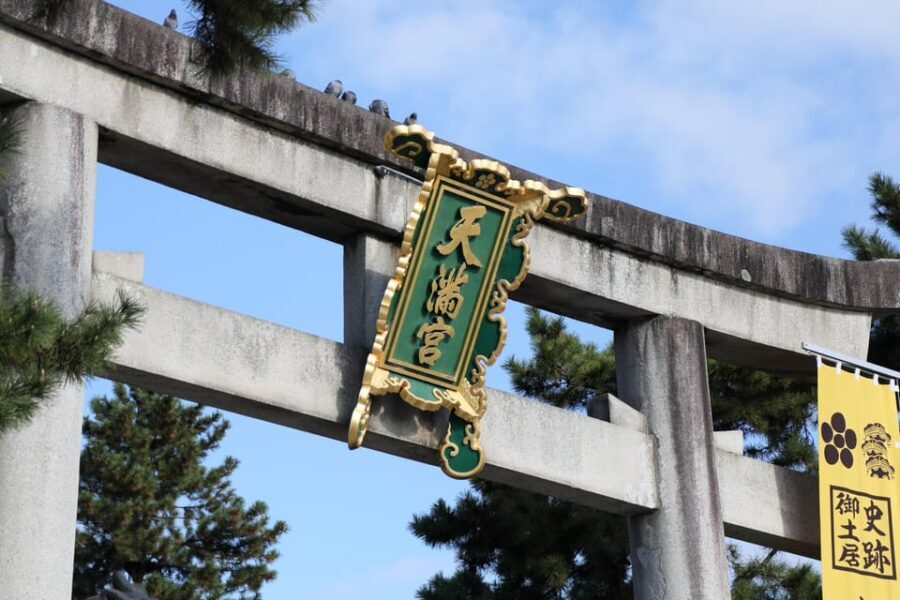
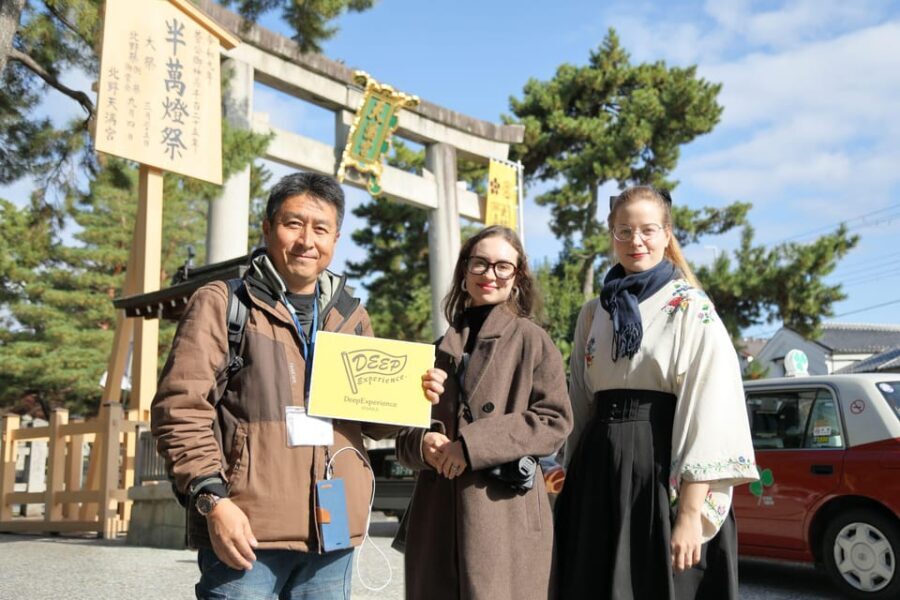
The tour begins at Kitano Tenmangū, meeting your guide in front of the first grand torii gate, the 一の鳥居 (first torii). Your guide holds a yellow sign with the DeepExperience logo, which makes it easier to find the group quickly.
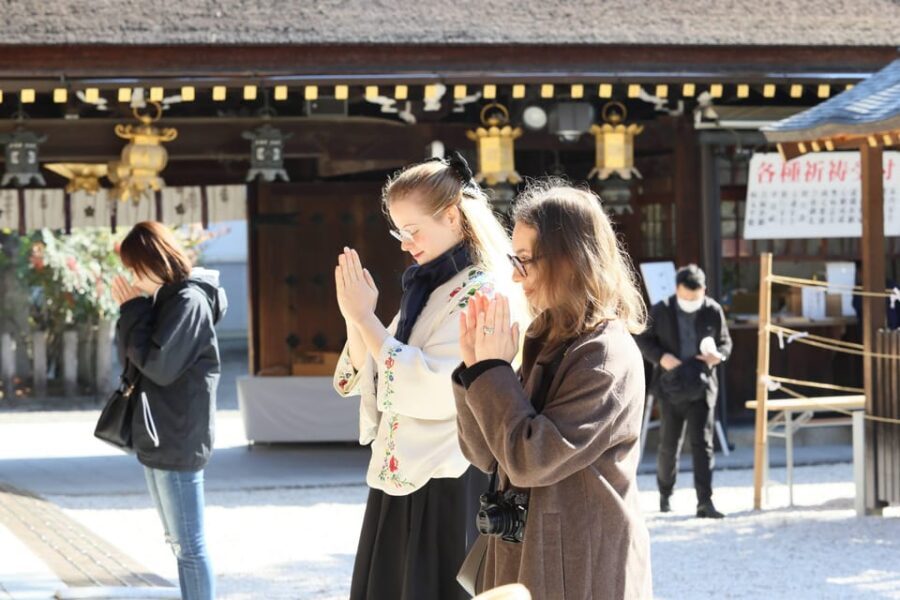
The shrine portion runs about 30 minutes and includes guided time. This is not just a quick photo stop. You pay your respects, and you’ll see important cultural assets and national treasures, including the main worship hall. The tour also highlights the shrine’s role as the guardian of the area and connects it to how the district came together.
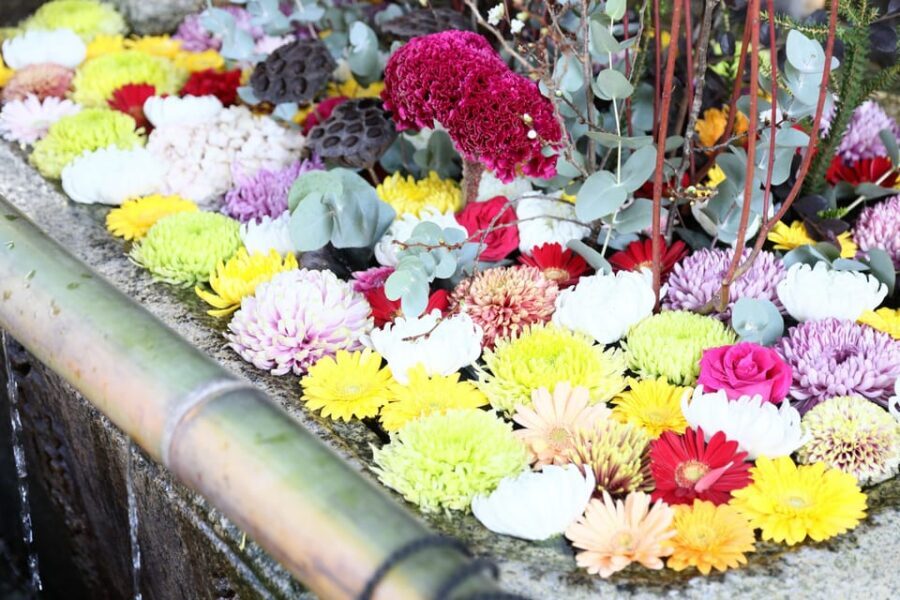
One of my favorite parts of any shrine visit is the way the grounds change with the season. Here, the tour specifically calls out seasonal scenery on the shrine grounds, which is exactly what makes shrine time feel worth slowing down for. If it’s cold or rainy, you’ll probably have the kind of atmosphere that feels a bit moodier and more intimate rather than just wet and annoying. One review noted that chilly, rainy weather added charm to the shrine scenes.
A small detail to plan around: there may be dango tasting, but it’s subject to the store’s availability. So if you’re counting on it as a must-do snack, treat it as a bonus, not a guarantee.
Nishijin weaving workshop: Tsuzure-ori basics with real craft guidance
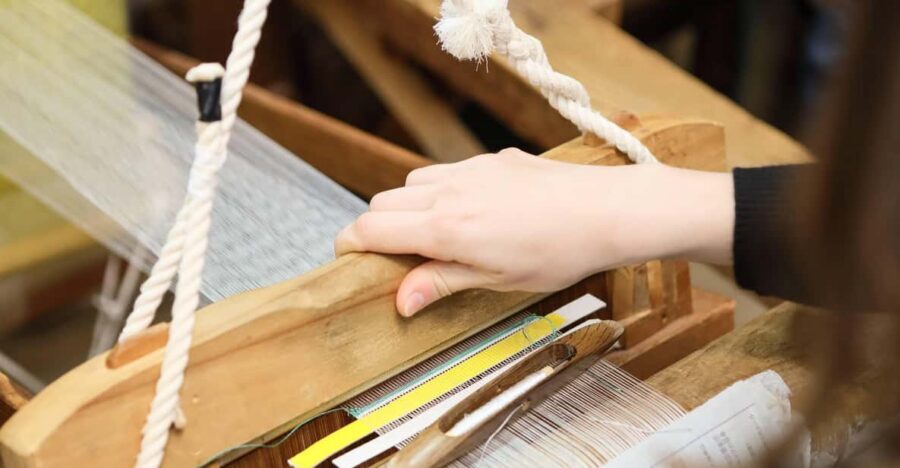
Now the part most people remember: the weaving.
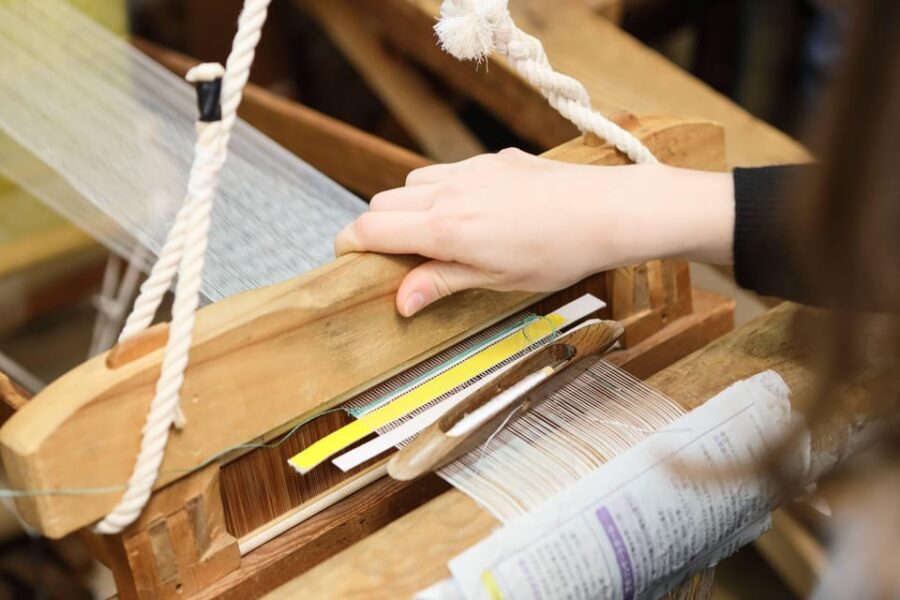
You’ll head to the class portion, listed as about 1.5 hours, where you learn the basics of Tsuzure-ori, described here as a technique said to be 4000 years old and noted as the world’s oldest patterned textile, plus the oldest Nishijin textile technique. That’s a lot of “oldest” wrapped into one term, so here’s how to think about it: the tour uses the age and reputation of Tsuzure-ori to underline why this isn’t a generic souvenir workshop. You’re practicing a method with deep cultural importance.
What you actually do
You’ll get instruction on the fundamentals, then you choose an item from the available selection and make your own piece using traditional techniques. The process happens in a real workshop, under guidance from a traditional craftsman.
From the experience reports, you can expect a warm, patient teaching style. One review specifically praised Hirano sensei as humorous, kind, and knowledgeable, with a lot of patience—exactly what you want when you’re learning something hands-on for the first time.
If you’re a fiber arts person, this is where it shines. You’re not just pressing a button or copying a simple step. You’re learning enough technique to feel you made something with real structure and intent. And if you’re not a fiber arts person, that’s fine too; your job is to focus on the steps you’re given and enjoy the pace.
What to bring mentally
Since the weaving time is central, show up ready to concentrate. Your session is hands-on and guided, but it’s still a craft class. If you’re the type who gets frustrated with fine motor tasks, this might take a few minutes to click. The good news is the teaching seems designed for comfort and learning, not speed.
Also, your final piece depends on the items available in the workshop selection. So your “one-of-a-kind” result comes from your personal choices and your hands-on work, not from unlimited creative customization.






The Kamishichiken stroll: 400 meters of lattice-townhouse Kyoto
After the workshop, you get guided time again—about 30 minutes—to explore Kamishichiken on foot.
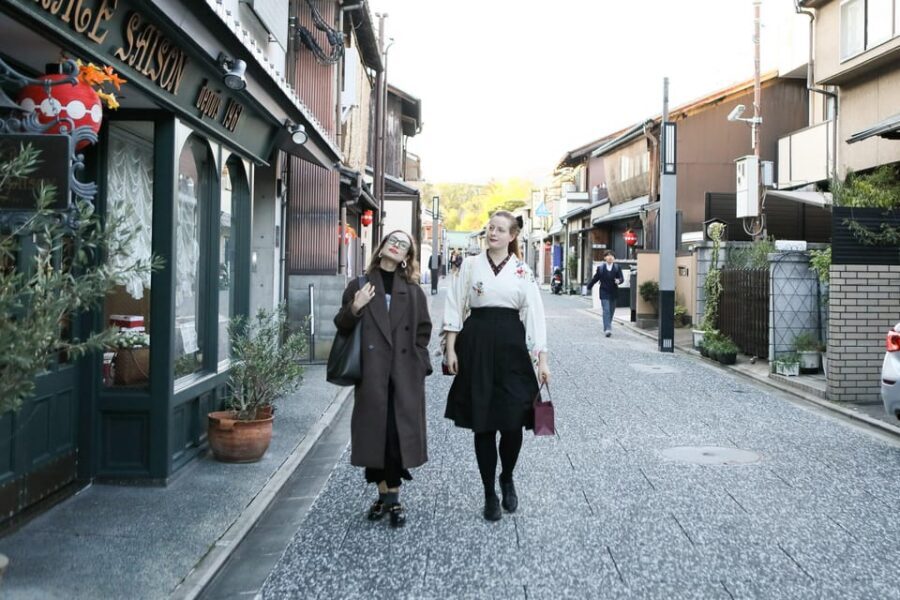
This walk is designed to be compact and meaningful. You’ll stroll through a street described as about 400 meters, lined with townhouses featuring traditional latticework. That matters because lattice isn’t just decoration; it’s part of how these older buildings manage light, privacy, and street presence in the first place.
You’ll also visit spots in Kamishichiken associated with local geiko and maiko. Even if you don’t know every detail of the entertainment-district world, the tour’s guidance helps you look at signs, building shapes, and street corners as meaningful cues instead of random aesthetics.
And you’ll likely feel a real difference from Kyoto’s main tourist congestion. The tour positions the stroll as a tranquil walk through Kamishichiken away from the crowds. That’s a big part of the value here: you’re seeing an area that still feels like a place, not a theme park.
Guides that make the craft feel personal
A great tour doesn’t just move you from point A to B. It makes the information land.
In this experience, guide performance shows up clearly in the feedback you’ll see. Kanako San was described as kind, friendly, natural, and warm. That kind of tone matters in a workshop setting because you’re juggling concentration plus questions. When the guide keeps things relaxed, you’re more likely to absorb the instructions and enjoy the class.
Another report praised Yayoi-san for being very informative, especially around the weaving experience and what the technique can lead to as a possible personal hobby. That matters if you want the visit to do more than entertain you for a couple hours—you want it to point you toward future interest.
For language variety, you might also encounter an interpreter like Juraj, noted for connecting Japanese culture and everyday life, not just translating words. When that translation comes with context, you don’t get lost in the story.
Your guide’s role also shows up at the start: meeting at the shrine with a visible sign helps keep the group together without stress.
Price and value: what $131 buys you in real time
At $131 per person for a 3-hour outing, this isn’t the cheapest thing you can do in Kyoto. But it’s also not just a sightseeing ticket. You’re paying for:
- an expert guide
- a guided Kitano Tenmangū shrine visit
- a Nishijin weaving workshop inside a real setting
- hands-on time with traditional techniques and a craftsman’s instruction
- a guided walk through Kamishichiken
If you compare it to paying separately for shrine entry plus a craft class plus a guided walk, the bundled structure starts to make sense. The key value isn’t the price label. It’s that you’re not stuck doing weaving without context, or doing sightseeing without understanding why it matters.
The other value piece is your time efficiency. You get a full cultural arc—shrine origins, craft technique, and preserved district streets—in one morning or afternoon block.
Who this tour is for (and who should skip it)

This is a strong fit for you if you fall into one of these groups:
- You like cultural experiences where you make something, not just watch
- You want to see Kyoto’s historic entertainment district with real guided context
- You care about craft details and enjoy learning how techniques work in practice
- You’re hoping for a quieter Kyoto moment—a calm walk rather than a sprint through crowds
It may be less ideal if you’re mainly after long free time for exploring on your own. The schedule is built around the weaving class first, and the Kamishichiken walk is intentionally shorter. That’s not a flaw; it’s just a mismatch if you’re trying to maximize wandering.
If weather is bad, keep your footwear and jacket situation ready. Kyoto can be chilly and wet in some seasons, but the shrine grounds and the workshop setting can still feel special even when it’s gray.
Should you book Nishijin weaving in Kamishichiken?
I think you should book this tour if you want Kyoto that feels specific, not generic. The pairing of Kitano Tenmangū with Kamishichiken gives you a story you can follow. Then the Nishijin weaving class turns that story into something physical you understand with your hands.
If you’re the type who enjoys slow street scenes, latticework buildings, and short guided walks with clear points of interest, you’ll get a lot out of the 400-meter district stroll. And if you care about craft, the chance to learn Tsuzure-ori basics and make your own piece is the highlight that justifies the price.
If, however, you want a long, unscheduled itinerary focused on wandering and shopping, you might prefer a different approach. Here, the weaving class is non-negotiable.
FAQ
Where do I meet the guide?
Meet your guide in front of the first grand torii gate at Kitano Tenmangū, the 一の鳥居. The guide will be holding a yellow DeepExperience logo sign.
How long is the tour?
The tour lasts about 3 hours.
What happens at Kitano Tenmangū Shrine?
You’ll visit the shrine with a guided tour for about 30 minutes, paying respects and seeing important cultural assets, including the main worship hall, plus seasonal scenery.
What weaving technique will I learn?
You’ll learn the basics of Tsuzure-ori weaving and make a piece using traditional techniques in a workshop.
Do I get to make something, or only watch?
You’ll choose an item from the workshop selection and make your own one-of-a-kind piece with guidance from the craftsman.
Is there dango on the tour?
A dango tasting is possible, but it is subject to the store’s availability.
What are my options if my plans change?
You can cancel up to 24 hours in advance for a full refund. You can also reserve now and pay later, so you don’t pay today.
If you want, tell me what month you’re going and your weaving experience level, and I’ll help you judge whether the 1.5-hour workshop pacing will feel fun or tiring for you.