REVIEW · KYOTO
Kyoto:Quiet Arashiyama and Sagano Temples
Book on GetYourGuide →Operated by Arashiyama Culture Experience · Bookable on GetYourGuide
Quiet Kyoto beats the tour wave. This Kyoto walk through quieter Arashiyama corners and the temple lanes of Sagano is the kind of outing that makes the city feel human again, not like a checklist.
I like two things a lot: the calm nature rhythm of Arashiyama, and the way the guide turns temple stops into story-based lessons you can feel in your chest. I also love the chance to do short prayer/meditation-style practice at the right moments, not just watch and move on.
You’ll get pulled between nature and spirituality, and the contrast is the point. The guide’s narrative style brings real people into focus, from Heian-period court intrigue to the Kamakura-era stories tied to Honen and lost souls. One possible drawback: it’s a 3-hour walk with multiple temple visits, so it can feel like a brisk pace if you prefer to linger every minute.
In This Review
- Key points to look for
- Why Quiet Arashiyama and Sagano feels different
- Getting started at JR Saga-Arashiyama (and finding your guide fast)
- Adashino Nenbutsu-ji: the heartless field and the 8,000 Buddhas
- Giou-ji Temple: a Heian love story turned into Buddhist rest life
- Saga Toriimoto preserved street: old Kyoto at walking speed
- Sagano bamboo grove views: scenic time without the sprint
- Tenryuji Temple: a longer guided visit for real breathing room
- The hands-on prayer and meditation moment with Masa
- Saga pacing, walking time, and what to pack
- Price and value: $38 for temples plus guided meaning
- Who should book this (and who might want a different plan)
- Should you book? My take after weighing the tradeoffs
- FAQ
- How long is the Kyoto Quiet Arashiyama and Sagano Temples experience?
- Where do we meet the guide?
- What language is the tour guide?
- What is included in the price?
- What should I bring?
- Is the tour suitable for wheelchair users or mobility impairments?
Key points to look for
- You’ll start at JR Saga-Arashiyama (not the other stations) and meet your guide at the ticket gates with a name sign
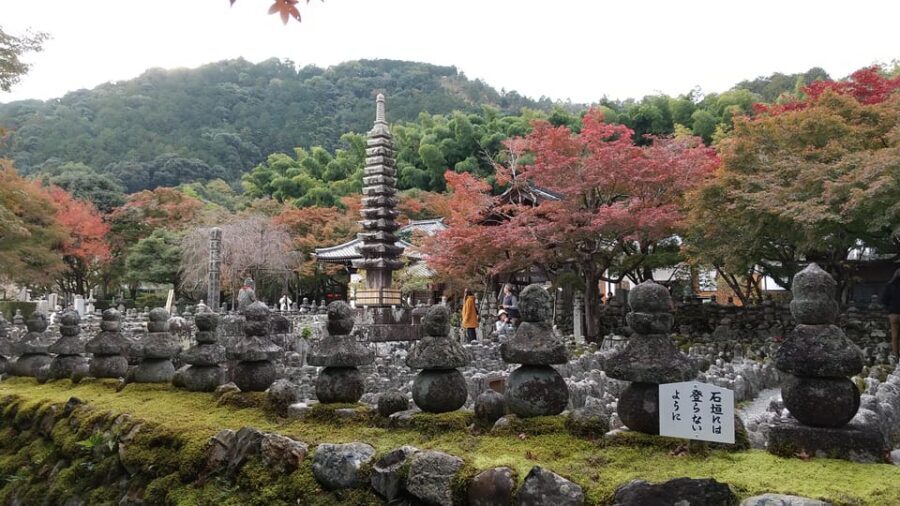
- Adashino Nenbutsu-ji hits hard in a meaningful way, including almost 8,000 stone Buddhas
- Giou-ji Temple connects romance, jealousy, and Buddhist rest life through the story of Giou and Taira no Kiyomori
- Hands-on temple moments include prayer/meditation traditions led by your guide
- Sagano bamboo grove views are part scenic break time, not a sprint through a crowd
- Tenryuji gives you a longer guided temple visit to slow things back down
Why Quiet Arashiyama and Sagano feels different
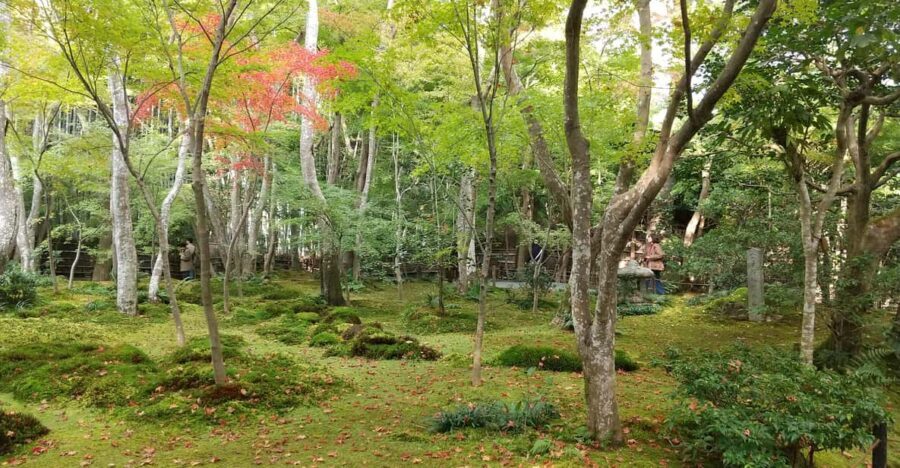
Arashiyama can be busy, but this tour is designed for quieter breathing room. You’re not rushing from one photo spot to the next. Instead, you’re walking through the nature-and-temple rhythm that Kyoto does so well.
What makes this work is the pairing: Arashiyama’s peaceful setting on one side, and Sagano’s temple atmosphere on the other. The route helps you shift gears. You start in the outdoors, then you step into spaces where people have practiced faith for centuries.
And then the stories land. The guide doesn’t treat the temples like backdrops. You hear why these places matter to the lives, faith, and culture of the people who came before you.
You can also read our reviews of more tours and experiences in Kyoto.



Getting started at JR Saga-Arashiyama (and finding your guide fast)
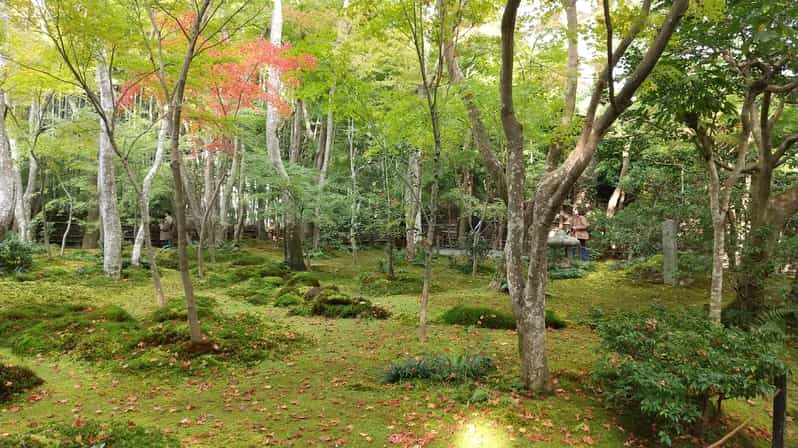
Meet at JR Saga-Arashiyama Station, not the Hankyu or Randen Arashiyama stations. You’ll see your guide holding a sign with your name in the plaza just outside the ticket gates. Arrive about 15 minutes early so you’re not doing a frantic recon mission.
This detail matters more than it sounds. Saga-Arashiyama is one of those places where one wrong station can turn a calm start into a headache. If you take one thing seriously, make it this.
Once you’re paired up, the guide keeps things organized: admissions are handled, and you move as a group with a clear flow. That’s part of the value—your time goes into seeing and understanding, not ticket-line logistics.
Adashino Nenbutsu-ji: the heartless field and the 8,000 Buddhas
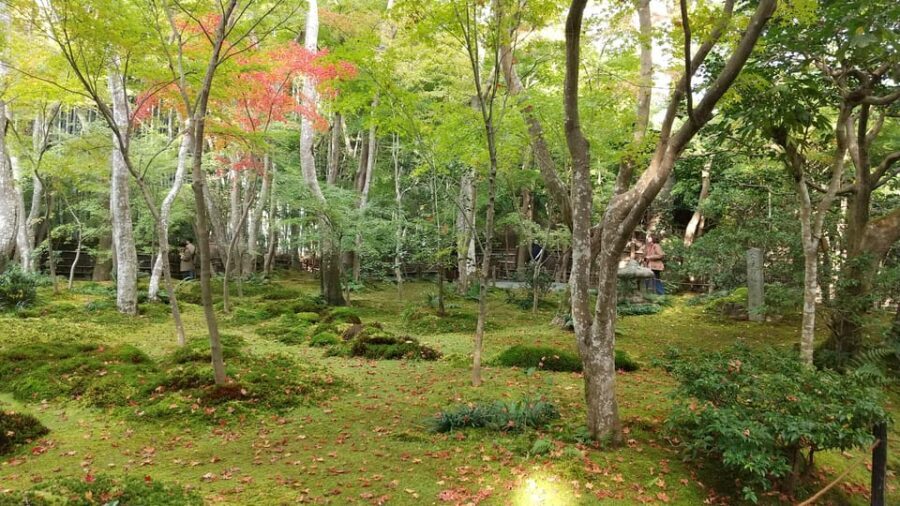
Adashino Nenbutsu-ji is the emotional heavy hitter on this route. You spend about 45 minutes here with guided context, plus walking and scenic views along the way.
The story behind the place sets the tone. Adashino can be understood as a vain or heartless field—an area that once became a place for discarded bodies. That’s the kind of history that doesn’t feel polite, and the tour doesn’t try to soften it.
Then comes the spiritual focus. The temple is tied to Honen (1133–1212), the monk who taught nenbutsu—chanting the sutra. You’ll also hear about Muen Botoke, meaning spirits with no relatives to pray for. In other words, this temple wasn’t only for the living. It gathered and enshrined for the dead, too.
Here’s the practical fact that sticks with you: the temple has almost 8,000 stone statues of Buddha, collected from the area. You’re not just hearing about tragedy—you’re looking at what was physically gathered and preserved.
You’ll also learn about Sentou Kuyo, an annual August ceremony where thousands of candles are lit and flowers are offered. Even if you’re not there in August, it helps explain why the place carries both grief and hope.
Giou-ji Temple: a Heian love story turned into Buddhist rest life
Giou-ji Temple is smaller, quieter, and oddly more personal. You spend around 30 minutes here with guided sightseeing and narrative explanation.
The temple dates to the 12th century in the Heian period. And Giou is more than a name on a sign. The story explains Giou as a woman’s name—connected to a dancer favored by Taira no Kiyomori (1118–1181).
The emotional arc is the point. Kiyomori loved Giou at first, but he shifted his attention to another woman, Butsugozen. Giou was driven away, and eventually she became a nun. The guide connects that turning point to the temple itself, because Giou later lived here for her rest life, together with Kiyomori’s sister and his mother.
Then the story adds another layer: Butsugozen, the rival who was also cast aside, became a nun and lived together with Giou. Four women practiced Buddhism at the house connected with Giou-ji, and the tour nudges you to reflect on what it means when personal life gets rewritten by power.
This is the kind of temple story that doesn’t feel like “history class.” It feels like a human pattern—desire, loss, and then the search for steadier ground.
Saga Toriimoto preserved street: old Kyoto at walking speed
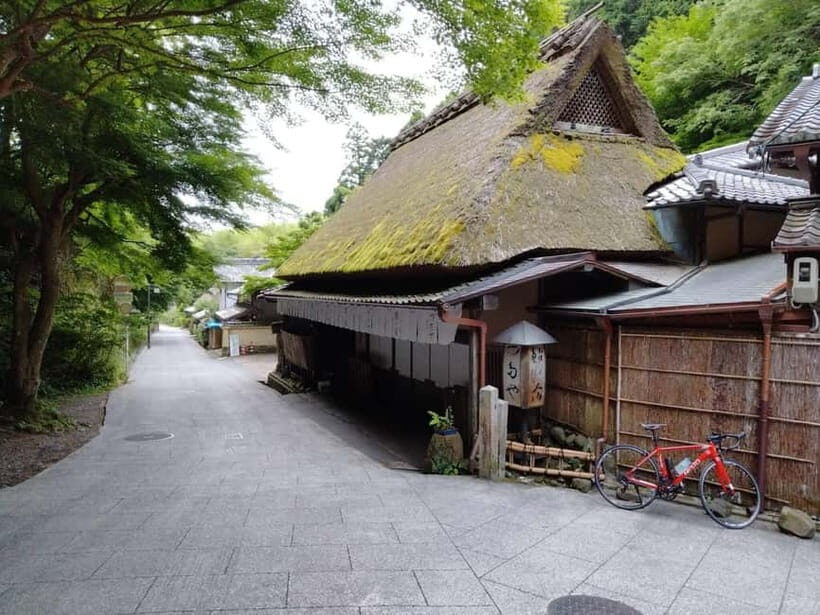
Between temples, you get a 15-minute pass-by of Saga Toriimoto Preserved Street. It’s not a long stop, but it matters because it breaks the emotional intensity and gives you a sense of everyday Kyoto living close to the tourist pull.
You’ll see a mix of farmhouses and machiya houses. That blend helps you picture how the Kyoto city edge (what’s often called Rakugai) has held older building types alongside newer daily life.
Think of this segment as your brain’s palate cleanser. After heavy stories at Adashino and Giou-ji, walking a preserved street helps you reset.






Sagano bamboo grove views: scenic time without the sprint
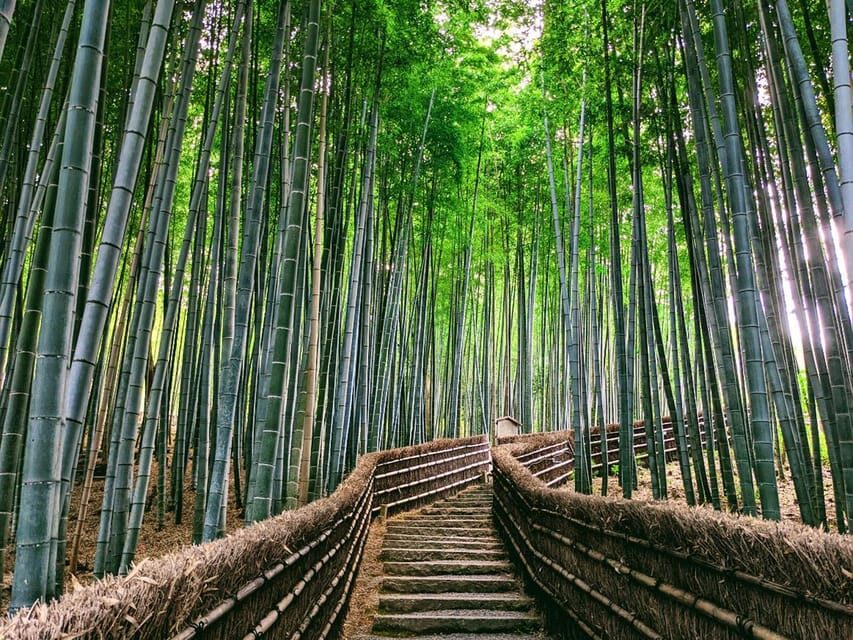
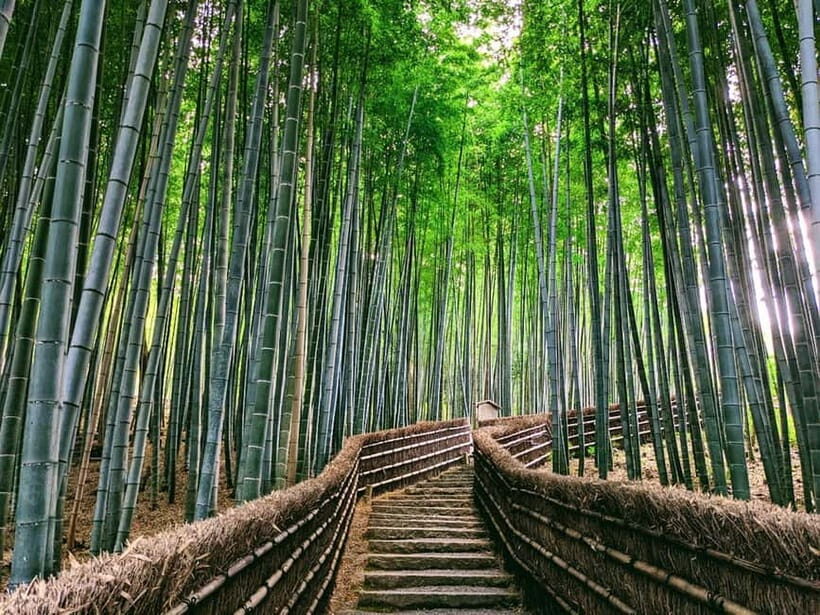
After Giou-ji, the route includes Sagano bamboo grove views on the way, about 30 minutes total. This isn’t presented as a frantic line-to-the-front photo challenge. It’s more like a chance to notice how the bamboo changes the air and the sound of the street.
Even if you’ve seen bamboo groves in photos, the experience is different in person. The vertical rhythm makes you slow down without being told to. You get a scenic stretch, then you transition back toward temple space.
If you’re the type who always wants the exact perfect angle for a photo, you might feel impatient here. For me, the best use is to look beyond the shot and just take in the way the grove frames the walk.
Tenryuji Temple: a longer guided visit for real breathing room
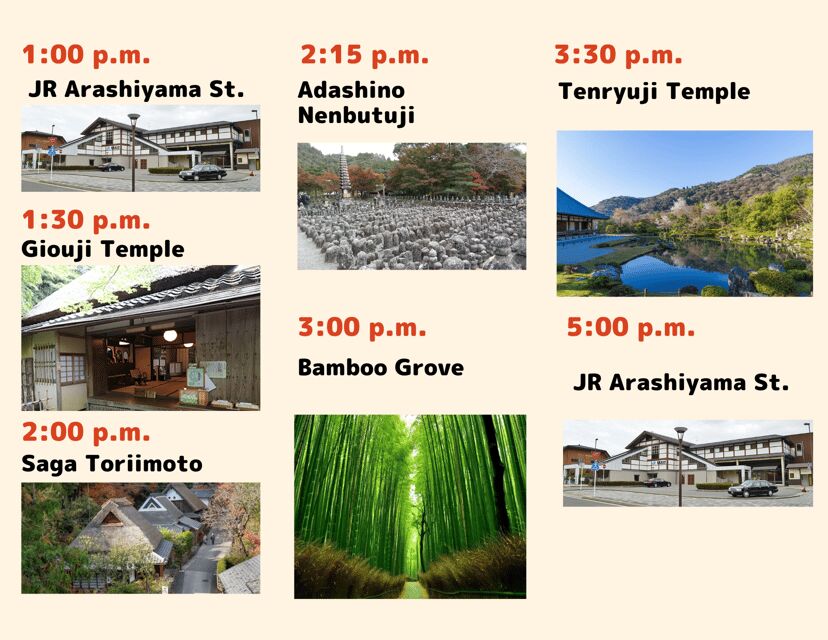
Tenryuji is your final major temple stop, with about 1.5 hours for visiting and a guided tour. This longer time is a good design choice. It stops the day from turning into a nonstop march.
What you’ll get here is guided context and the chance to see how temple space supports reflection. Since your guide has a narrative style, the visit connects back to what you learned earlier—different eras, different kinds of suffering, and how Buddhist practice offered people a way forward.
This is also where you’re most likely to get the hands-on part. The guide may invite you to practice prayer and meditation traditions, demonstrated clearly and led in a way that doesn’t assume you already know what to do.
Even if you keep it simple—stand quietly, listen, and follow the guide—you’ll leave with a different feeling than you would from just snapping pictures and moving on.
The hands-on prayer and meditation moment with Masa
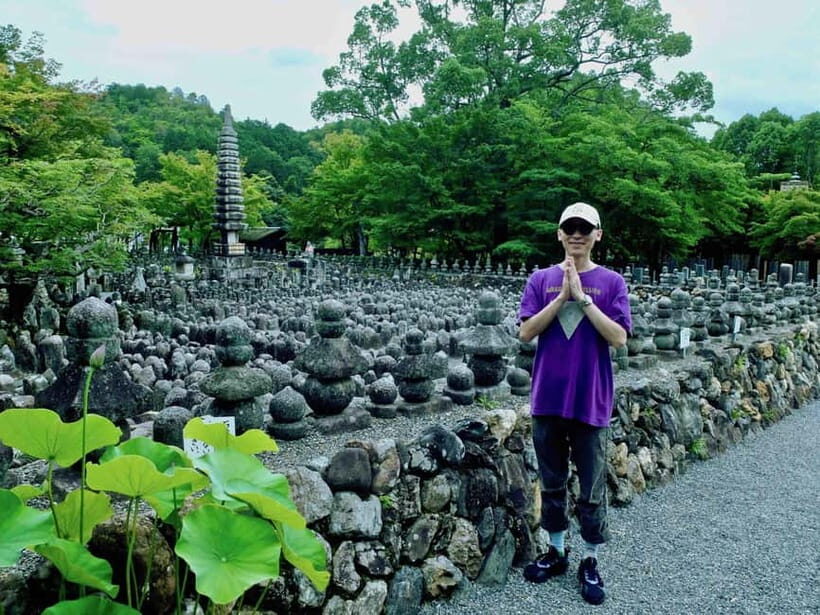
Your guide on this experience is English-speaking, and the guide name that shows up in bookings is Masa. The standout detail is how Masa brings people into the practice instead of treating it like a performance.
In practical terms, you’ll get demonstration and an invitation to try prayer and meditation traditions at the temples. You don’t need to be Buddhist, or even experienced. The point is that you participate in the ritual mindset: be present, be respectful, follow the guidance.
This is one of those travel details that can quietly change your day. It turns “I visited a temple” into “I understood how people have used these spaces.”
Also, if you’re lucky with timing, Masa can help with small extras that make the day feel local—like pointing out artisan shops you might otherwise walk past.
Saga pacing, walking time, and what to pack
The tour runs 3 hours, and it’s a walking-and-temple format. That means your shoes matter more than your outfit. Bring comfortable walking shoes and plan on moving steadily.
You should also pack the basics Kyoto weather demands:
- Water (you’ll want it)
- Hat and sunscreen for sunny days
- Camera if you like photos, plus patience for quiet moments where you might not want to shoot
- Light layers if mornings or evenings feel cool
And yes: it’s not the best match if you use a wheelchair or have significant mobility impairments. The tour is not suitable for that, based on how the walk and temple access are set up.
Price and value: $38 for temples plus guided meaning
At $38 per person, this is priced like a value-focused local experience, not a high-end private driver tour. Here’s what you’re really paying for.
You get:
- A guided tour through Arashiyama
- Admission to all temples visited
- Hands-on experiences at select temples
- Narrative explanations in English
Admissions alone can add up in Kyoto. On top of that, you’re buying interpretation. The guide’s job is turning what could be confusing signage and visual-only sightseeing into a story you can remember: Giou’s Heian tragedy, Honen and nenbutsu teachings at Adashino, and the meaning behind temple practice.
Also, because it’s a private group, the guide can answer questions and keep the pace workable for your party. One small drawback: the itinerary is time-tight, so if you want to slow down at every step, you might want to add extra solo time afterward.
Who should book this (and who might want a different plan)
Book it if you:
- Want meaningful temple stories, not just photos
- Like walking tours with a clear route and a calm pace
- Appreciate a guide who can connect spirituality and history in plain language
- Want a short, focused 3-hour window in Arashiyama/Sagano
Pass on it if you:
- Need very low walking time
- Prefer freeform wandering with no structure
- Want only light sightseeing without the heavier stories tied to Adashino
Should you book? My take after weighing the tradeoffs
If your idea of a good Kyoto day is: nature first, then temples with real human stories, then yes, I’d book this. The biggest strength is the pairing of quiet Arashiyama with temple visits that come with guided context. You leave understanding more than what your camera captured.
Also, the hands-on practice option—prayer and meditation traditions led by Masa—isn’t something you get from every sightseeing walk. It adds a personal layer that makes the day feel lived, not visited.
If you hate walking or you need wheelchair access, this likely won’t be the right fit. And if you’re the type who needs to linger for long periods in one spot, you may want to treat this as the structured core and schedule extra independent time afterward.
FAQ
How long is the Kyoto Quiet Arashiyama and Sagano Temples experience?
It lasts 3 hours.
Where do we meet the guide?
Meet at JR Saga-Arashiyama Station (not Hankyu or Randen Arashiyama Station). The guide will hold a sign with your name just outside the station ticket gates.
What language is the tour guide?
The tour is led by a live English guide.
What is included in the price?
The price includes a guided tour of Arashiyama, admission to all temples visited, and hands-on experiences at select temples, along with narrative explanations.
What should I bring?
Bring comfortable shoes, a hat, camera, sunscreen, and water.
Is the tour suitable for wheelchair users or mobility impairments?
No. It is not suitable for people with mobility impairments or wheelchair users.