REVIEW · TOKYO
Language Exchange : Meet Locals & Expats
Book on Viator →Operated by Tokto International Friends & Events · Bookable on Viator
Life gets easier when conversations rotate. This Tokyo meetup mixes locals, expats, and tourists so you practice Japanese or English without freezing in awkward silence, plus you get game-style prompts that keep things moving. When this session leans into the cultural side, the best-rated part is an English-friendly sake tasting experience guided by Maksim.
What I like most is the structure. You switch seats, you meet more than just the first table you land at, and the pace stays friendly even for beginners. I also like the human vibe: the group typically includes both Japanese participants and international visitors (Japanese about 40%, others about 60%), so you get real cross-cultural back-and-forth, not a lecture.
One thing to consider: this is an event, not a full meal. Coffee/tea and dinner aren’t included, so if you’re hungry or only drink lightly, plan accordingly.
In This Review
- Key highlights you should know
- Arriving at Sakuracafé: a simple start that feels welcoming
- Rotating conversations: how the awkward-silence problem gets fixed
- Seasonal games and surprise rounds: a fun way to learn vocabulary
- The sake-tasting angle people rave about (and why it helps language)
- What a typical flow feels like during the 1 hour 45 minutes
- Group mix and social dynamics: meeting more people without forcing it
- Price value: why $10 can make sense here
- Logistics that matter in Tokyo: location, tickets, and timing
- Who should book this, and who might skip it
- Should you book it? My practical take
- FAQ
- FAQ
- How long is the Language Exchange experience?
- Where does the experience start and end?
- What’s the price per person?
- What does the tour include?
- What is not included?
- Is there a limit on group size?
- What language do I practice?
- What’s the participant mix like?
- What ticket do I get?
- What is the cancellation policy?
Key highlights you should know
- Rotating conversations help you avoid dead air by design.
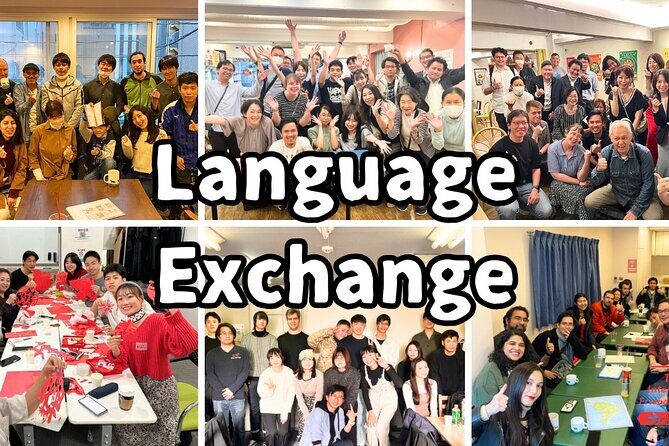
- Local and expat mix (about 40% Japanese, 60% tourists/expats) makes practice feel natural.
- Seasonal games and surprises keep each round different instead of repeating the same script.
- Small group feel with a maximum of 20 participants means you actually talk.
- Maksim-guided sake component (in the version people rave about) combines short explanations with tasting, paced for English learners.
Arriving at Sakuracafé: a simple start that feels welcoming
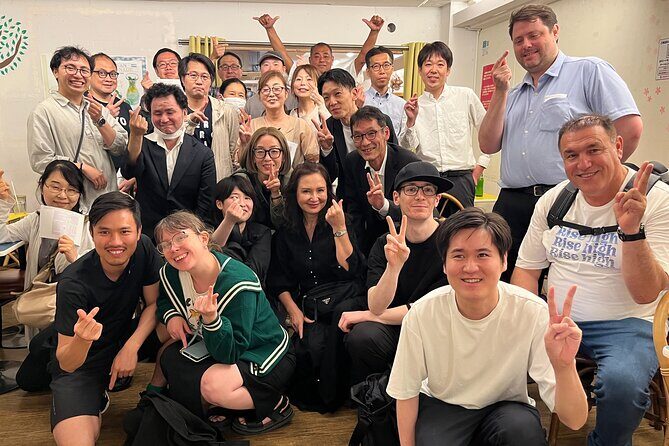
The meeting point is サクラカフェ&レストラン日暮里 in Bunkyo City (Sendagi/Nippori area). It’s the kind of place where you can walk in without feeling lost, because the event is set up around small-group mingling rather than a big theater-style experience. You start and end right back here, so you don’t have to stress about where to go for a last stop.
If you’re the kind of person who worries you’ll be stuck finding your seat, this format helps. You’re not asked to pick one person and cling to them all night. Instead, the night is built for movement: you’ll switch seats and meet more people as the conversation changes.
Also, the event is short by Tokyo standards: about 1 hour 45 minutes. That matters. You can show up after a day of sightseeing, practice language without burning an entire evening, and still have energy left for dinner (which, again, isn’t included).
You can also read our reviews of more tours and experiences in Tokyo.



Rotating conversations: how the awkward-silence problem gets fixed
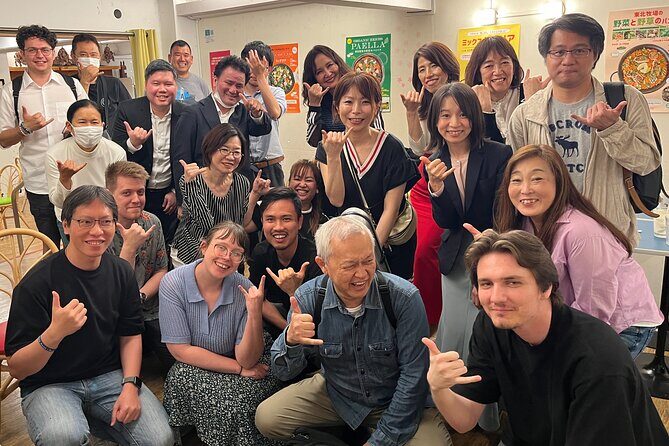
The core concept is easy: no awkward silences. You’ll chat in rotating rounds, so you’re not stuck with a single person while everyone waits for the next question. Practically, this means you’ll get multiple chances to use your Japanese or English, even if your first round is clumsy.
This also helps with confidence. You’ll inevitably repeat a few themes (work, interests, daily life, travel), but you get fresh faces each round. That keeps it from feeling like an interview, and it reduces the pressure to say something perfect. By the second or third switch, you usually start relaxing into the rhythm.
You’ll also meet everyone, not just the loud group at the center. That’s a big deal in language exchanges, where social dynamics can otherwise form quickly. Here, the format pushes you to broaden your circle.
One more detail that makes it workable: the group isn’t huge. It lists more than 10 participants each time, with a maximum of 20. In a crowd, you can lose people. In a small group, you can actually keep up.
Seasonal games and surprise rounds: a fun way to learn vocabulary
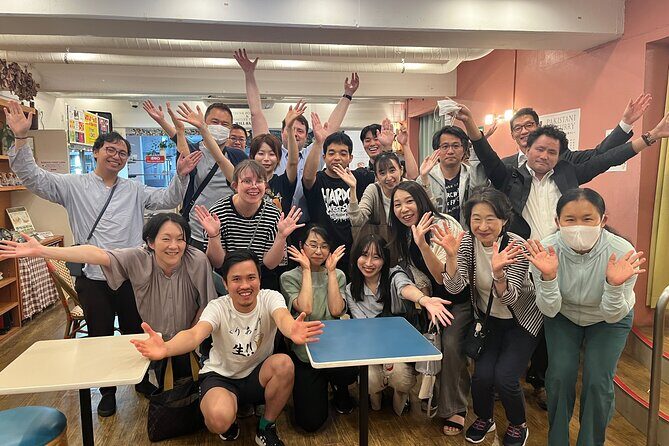
This isn’t just free conversation. You can expect seasonal games and activities that change what you talk about from round to round. That matters because language practice often gets boring when it turns into only small talk.
Games do two useful things:
- They give you a clear prompt, so you don’t have to invent topics.
- They create a reason to talk more than once, because you need to explain, react, and respond.
Think of it like a conversation workout with a referee. You’re still speaking, but the activity structure nudges you forward. Even if you’re shy, you can lean on the task to get the talking started.
If you like learning through doing, this approach usually feels better than worksheet-style study. It also tends to surface useful real-world phrases faster, because you use them in the moment.
The sake-tasting angle people rave about (and why it helps language)
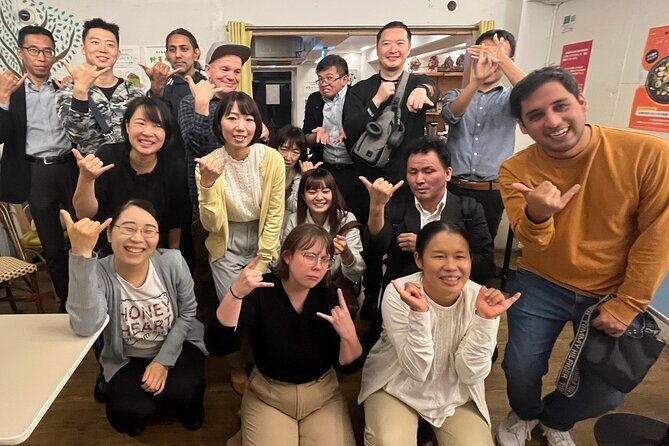
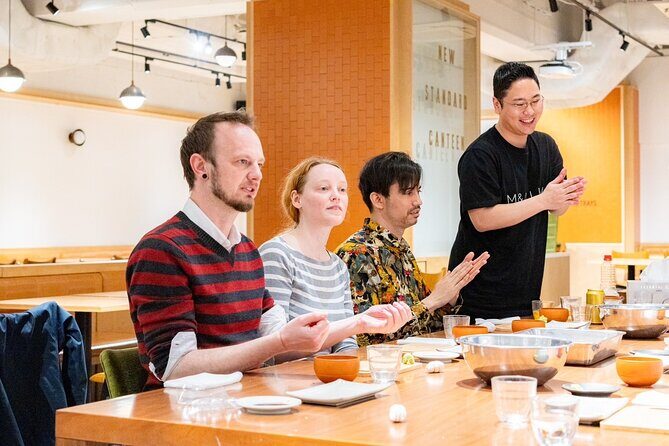
In the most praised version of this experience, the evening includes a sake tasting component led by Maksim. You’re not just tasting—you’re getting an organized introduction with a mix of explanation and sampling. One review specifically calls it beginner friendly in English, with a well-controlled pace.
Here’s why this cultural add-on is more than a bonus:
- It gives you real topics to discuss in both directions (how sake is made, what different types taste like, and why people like them).
- It creates a shared experience you can compare with new friends (sweetness, acidity, fruity aroma, and how each one feels on the palate).
- It makes the language practice practical, because you’ll learn the words you need right when the tasting happens.
The English-friendly format is described as an intro that may include around eight sakes. People also mention trying a variety of different brands, including some that are harder to get. That’s useful: it turns the event into something more memorable than a basic sampler.
If you tend to understand better when facts come with flavor, you’ll probably enjoy this part. Reviews mention the tasting helped them rethink assumptions like sake being only rice-like sweetness. That kind of surprise is great for conversation, because it gives you something to react to and ask about.
What a typical flow feels like during the 1 hour 45 minutes
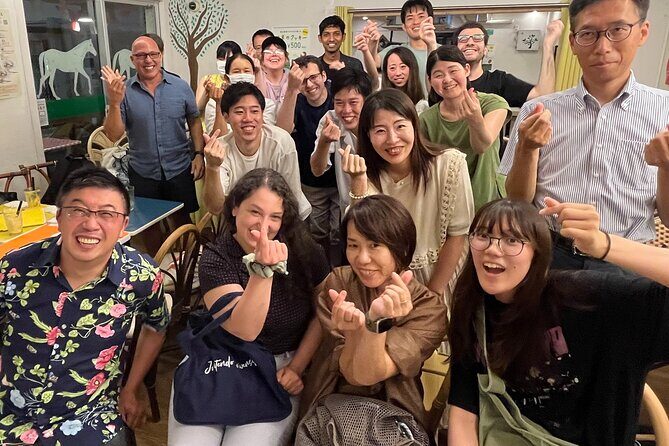
You shouldn’t expect a rigid, classroom schedule. Based on how this event is designed, the flow usually feels like short rounds that keep changing.
You can reasonably plan for something like this:
- Kickoff and getting paired into the rotation. You’ll start with introductions and instructions so you know how to switch seats and interact.
- Round-by-round conversation. Each segment changes people, so you get multiple fresh starts.
- Game prompts. Seasonal activities keep the pace up and give you conversation structure.
- Cultural content plus tasting (in the version with sake). You’ll hear context and then taste, with time to talk about what you notice.
- Wrap-up back at the meeting point. It ends where it starts, so you can leave without figuring out a second location.
You don’t need to memorize anything ahead of time. The format is built to guide you.






Group mix and social dynamics: meeting more people without forcing it
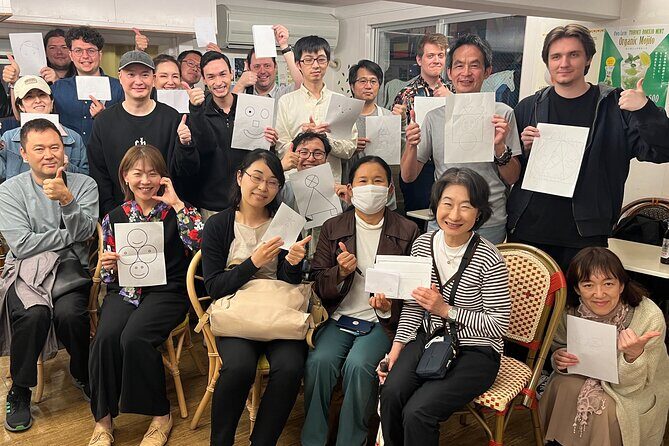
A lot of language exchange events accidentally become cliques. This one aims to prevent that by mixing locals, expats, and tourists, and by rotating seats so you keep meeting new people.
The stated ratio is useful for your expectations: Japanese about 40% and tourists/expats about 60%. That usually means you’ll hear both sides of the language story: people who can naturally guide you, and people who are also practicing and learning.
And since the max is 20, you’re more likely to get actual back-and-forth instead of shouting across a room. If you’ve ever felt invisible at a larger meetup, this small-group size is one of the biggest practical advantages.
One more note: the event has been running for years (over 5 years). That usually translates into smoother facilitation, because organizers have had time to learn what works and how to keep the evening moving.
Price value: why $10 can make sense here
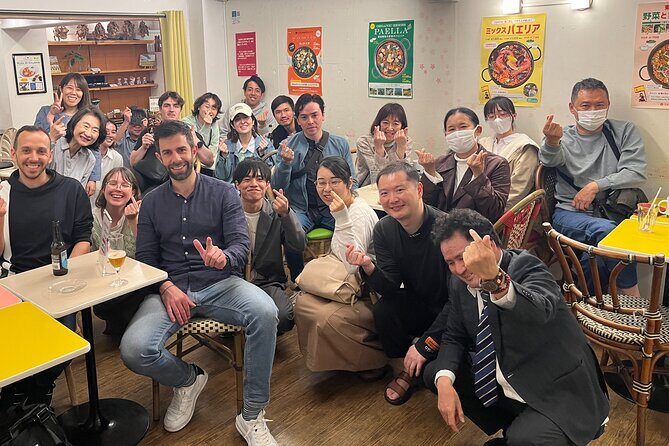
At $10 per person, you’re paying for a structured social event, not a restaurant meal. All fees and taxes are included, which helps keep the price simple.
Is it worth it? Often, yes, because you’re getting:
- A guided activity structure (rotations and games)
- A small-group format (up to 20 people)
- A chance to practice language in a natural setting
- In the best-reviewed version, an English-friendly sake tasting with guidance from Maksim
The tradeoff is the one practical drawback mentioned earlier: coffee/tea and dinner aren’t included. If you drink a lot of alcohol or you arrive hungry, you may want to eat before you go. Also consider bringing small spending flexibility if you want a snack or drink later.
Still, compared with many Tokyo activities that charge much more for a class with limited speaking time, this price can feel like a strong deal—especially if you show up open-minded and ready to talk.
Logistics that matter in Tokyo: location, tickets, and timing
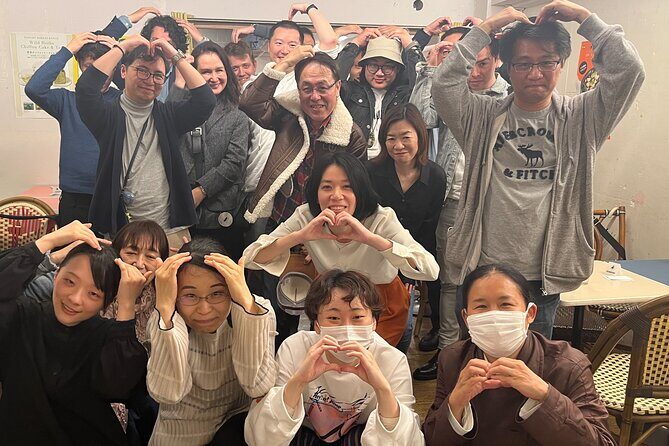
This is a mobile ticket experience, and you should receive confirmation at booking. The meeting point is near public transportation, which is important in a city where “near” can mean the difference between a 5-minute walk and a 20-minute slog.
The tour ends back at the meeting point, so you don’t need to plan a complicated route for departure.
One more value clue: it’s commonly booked about 48 days in advance on average. That suggests it’s popular with people who want language practice without a long commitment. If you want a specific date, don’t wait until the last week.
Who should book this, and who might skip it
You’ll likely enjoy this if:
- You want real conversation practice instead of studying alone.
- You’re comfortable meeting new people and you don’t mind switching tables.
- You’d rather learn through games and interaction than scripted dialogues.
- You’re interested in Japanese culture through a tasting-style format, especially if you like sake.
You might want to choose another option if:
- You’re looking for a quiet, independent experience. This is social by design.
- You need a full meal included in the price.
- You strongly dislike alcohol. (The event name in your materials includes language exchange, but the best-rated version includes sake tasting; you should plan accordingly.)
Should you book it? My practical take
If your goal is to speak Japanese or English in a way that actually creates conversation, I think this is a smart booking. The rotating structure solves the biggest weakness of many language exchanges: the event becomes boring if you don’t know what to do next. Here, the games and seat switching keep the night moving.
I’d especially recommend it if you like cultural context and you learn well when you can taste, compare, and talk. The sake-led version with Maksim sounds like the part that people remember, because it combines explanation with sampling and gives you plenty to discuss.
The main reason not to book is simple: don’t treat it like dinner, and be ready for a social format. If you’re set on that, you’ll probably leave with new friends, a few useful phrases, and a better sense of how people connect in everyday Tokyo life.
FAQ
FAQ
How long is the Language Exchange experience?
It runs for about 1 hour 45 minutes.
Where does the experience start and end?
It starts at サクラカフェ&レストラン日暮里3-chōme-43-15 Sendagi, Bunkyo City, Tokyo 113-0022, Japan and ends back at the same meeting point.
What’s the price per person?
The price is $10.00 per person, and all fees and taxes are included.
What does the tour include?
All fees and taxes are included.
What is not included?
Coffee and/or tea and dinner are not included.
Is there a limit on group size?
Yes. The experience has a maximum of 20 travelers.
What language do I practice?
The format is designed for practicing Japanese or English.
What’s the participant mix like?
Japanese participants are about 40%, and tourists or expats are about 60%. More than 10 participants join each time.
What ticket do I get?
You’ll receive a mobile ticket.
What is the cancellation policy?
You can cancel for a full refund up to 24 hours before the experience starts. Changes inside 24 hours aren’t accepted.