REVIEW · TOKYO
Mount Fuji Full Day Private Tour with English Speaking Driver
Book on Viator →Operated by Sky Star Tours · Bookable on Viator
Mt Fuji in one day, without the stress. This private full-day trip from Tokyo lets you set the pace with an English-speaking driver, moving between classic photo stops and quieter viewpoints. I love the straightforward hotel pickup/drop-off and the way the plan can bend around your timing. One consideration: lunch isn’t included, so plan to eat before you head out or budget for a quick bite.
The best part is how the day is built for variety. You start with lakeside Fuji views, then switch gears to volcanic nature at Oshino Hakkai, and finally go high up to the mountain base-to-viewpoint zone at the 5th Station. You’ll have WiFi on board, an air-conditioned vehicle, and a mobile ticket—handy when you’re trying to move efficiently with minimal friction.
Expect roughly 8 to 10 hours from the 8:00 am start, for a private group up to 6. This is a value-minded way to see a lot without renting a car or dealing with language gaps.
In This Review
- Key things I’d watch for on this Mt Fuji day
- Private Mt Fuji beats the big-bus scramble
- Pickup, timing, and comfort: what makes the day feel easy
- Lake Kawaguchiko: the Fuji postcard with real time to look
- Oshino Hakkai ponds: volcanic history you can see up close
- Mt Fuji 5th Station: what you’re really buying with this stop
- Arakurayama Sengen Park and the 400 stairs effect
- Gotemba Premium Outlets: optional, and best used strategically
- Oishi Park: a calm finish with flowers in the foreground
- Value for money: is $393 per group a smart deal?
- Who this Mt Fuji private day works best for
- Should you book this private Mt Fuji tour?
- FAQ
- How long is the Mount Fuji private tour from Tokyo?
- What’s included in the price?
- Is lunch included?
- What stops do you visit?
- Can I change the order of sights or customize the day?
- Is the outlet mall stop mandatory?
Key things I’d watch for on this Mt Fuji day
- Private, up to 6 people means you’re not stuck with the slowest pace in a big coach group
- English-speaking driver who helps with timing, routing, and practical on-the-ground questions
- Lake Kawaguchiko + Oishi Park for Fuji-in-the-frame views from more than one angle
- Mt Fuji 5th Station gives you that high-elevation look, plus practical stuff like lockers and places to buy supplies
- Arakurayama Sengen Park pairs Shinto shrines with views that reward walking up the stairs
- Gotemba Premium Outlets is optional, so you can trade retail time for extra Fuji time
Private Mt Fuji beats the big-bus scramble
If you care about seeing Mount Fuji without turning the day into a cattle-car schedule, this format is a smart match. The price is for your group (up to 6), so once you fill the vehicle, it becomes a surprisingly practical way to buy time and comfort instead of standing in lines and waiting for strangers.
In real terms, “private and customizable” means you’re not locked into a rigid order where you have 10 minutes at everything. You can typically ask for more walking at a viewpoint, stay longer where the light is good, or adjust the timing around your comfort level. That flexibility is especially useful because Fuji weather can change quickly.
One theme that shows up again and again in driver-focused feedback: guides take their job seriously. Names like Hasan, Moon, Salman, Sohail, and Haseeb come up as attentive, punctual, and patient—especially for families and anyone traveling with a toddler. If you want a day that feels organized but still human, that driver factor matters as much as the sights.
Still, remember this is a full day. You’ll be out from morning until evening, and the day works best when you treat it like a sightseeing plan, not a casual stroll.
You can also read our reviews of more private tours in Tokyo


Pickup, timing, and comfort: what makes the day feel easy
This tour starts at 8:00 am, and hotel pickup and drop-off are included. That single detail can save you from a lot of small headaches: figuring out transport to the Fuji area, coordinating with a group, and trying to be at the right place at the right time without language support.
You’ll also travel in an air-conditioned vehicle with WiFi on board. It’s not glamorous, but it helps. When you’re spending hours in transit, comfort turns into value. The car/van experience shows up in feedback as clean and very comfortable, and the driver help is often described as calm and attentive.
Another practical point: some guides proactively think about traffic. One example mentioned a driver reaching out the day before because traffic had been heavy and asking whether you could leave earlier. That’s the kind of communication that keeps the day from feeling chaotic and helps you arrive with enough time to actually enjoy stops rather than rush through them.
Lake Kawaguchiko: the Fuji postcard with real time to look
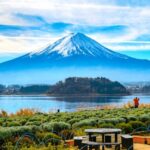
Lake Kawaguchiko is the first major stop on this kind of itinerary, and for good reason. It’s one of the most famous places to see Mount Fuji reflected across calm water, and it’s built for photos. In this schedule, you get about 2 hours here, which is enough time to walk a bit, find a good viewpoint, and wait out a moment when clouds shift.
Why it works on a private tour: you’re not just there to grab one shot and go. A good guide can suggest where to stand and when to move, depending on how visibility is behaving that day. And because you’re not trapped in a big group, you can take a slower pace if the view is worth lingering over.
What to consider: lakeside viewpoints can be crowded in peak daylight. That doesn’t mean the view isn’t worth it—it usually is—but it does mean you’ll enjoy the stop more if you keep your expectations flexible and give yourself time to walk a little.
Oshino Hakkai ponds: volcanic history you can see up close
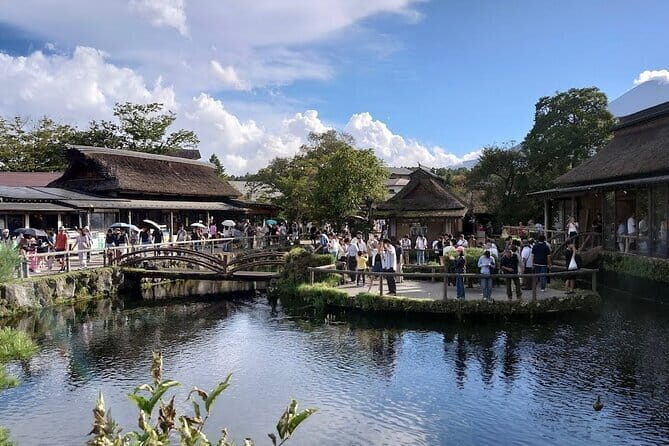
After the lake views, the day shifts to Oshino Hakkai, a set of eight ponds formed from historic volcanic activity. The ponds are fed by an underground reservoir, which is part of what makes the place feel like a living system rather than a simple tourist attraction.
You’ll get about 2 hours here, which is a great match for how you’ll actually experience it. There’s time to stroll, pause for photos, and read the natural story in the water and surrounding lanes. It’s also a nice contrast after the big “Mt Fuji view” moment—more calm, more grounded, and easier on your legs than a staircase-heavy stop.
Practical benefit of this stop: it’s a strong cultural-nature blend without requiring you to climb high. If you’re traveling with kids or anyone who prefers moderate walking, Oshino Hakkai is usually an easier win than higher-elevation viewpoints.
Mt Fuji 5th Station: what you’re really buying with this stop

The 5th Station is where the tour moves from scenic base-area views to something closer to the mountain’s high-altitude world. Here you typically spend around 1 hour, and the environment is practical by design: there’s parking, coin lockers, and restaurants. It’s also where you can buy climbing supplies like hiking sticks and snacks if you’re planning to hike higher.
This is the “reality check” stop. It gives you the high-level look at Fuji’s scale without requiring you to commit to a full climb day. Even if you’re not hiking, you’ll get that different feeling of being much closer to the mountain’s presence—cooler air, more mountain-centered atmosphere, and views that look different from what you saw at the lakes.
What I like about this stop on a private schedule: your guide can decide how long to linger depending on the weather and crowds. If visibility improves, you can stay. If it’s hazy, you can move on without wasting the entire day.
If you’re thinking about footwear or mobility: you’ll be walking around the area, and conditions can shift. Wear shoes you’re comfortable in, and keep a close eye on how you feel at altitude.
A few more Tokyo tours and experiences worth a look

Arakurayama Sengen Park and the 400 stairs effect
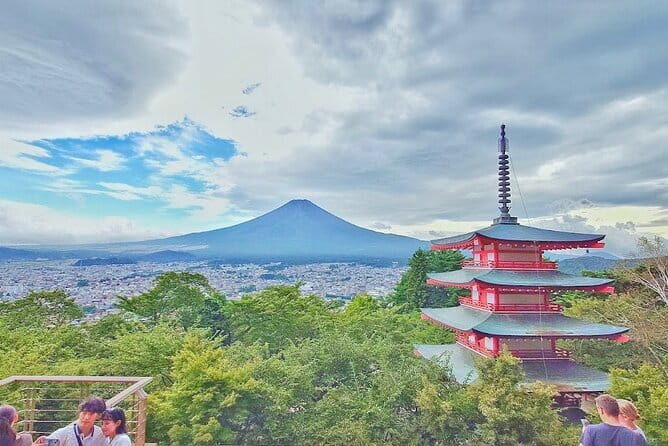
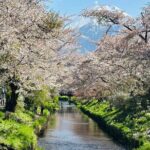
Then comes Arakurayama Sengen Park, a peace memorial setting with Shinto shrines and a staircase climb. The schedule notes up to 400 stairs, and the reward is a set of Fuji views at different elevations. At the top sits the Chureito pagoda, built as a memorial for soldiers.
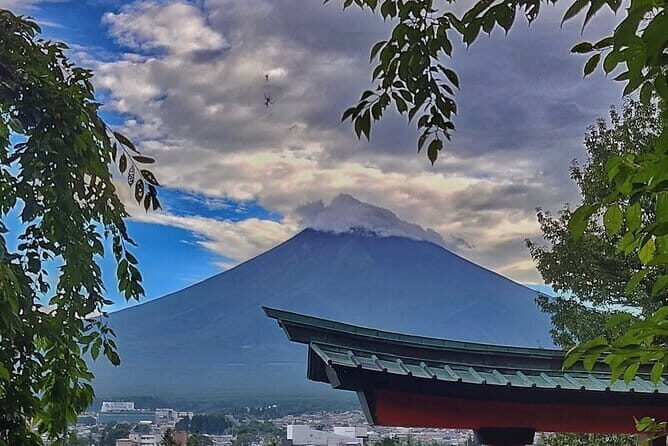
This is one of those stops where the photos make sense after you’ve done the walk. It’s easier to get that “Fuji framed by architecture” look here because the viewpoints come naturally with elevation and path design.
The main consideration is simple: stairs. If your group is comfortable with a climb, it’s an excellent highlight. If stairs are a problem for anyone in your party, you’ll want to manage the pace, split up walking time (if you can), or ask the driver to help you plan a viewpoint strategy so nobody gets stuck with an unpleasant surprise.
What makes it better in a private tour: you can tailor how aggressive you are about climbing. You’re not pressured by a countdown from a bus schedule, and you can take breaks without feeling like you’re slowing everyone down.
Gotemba Premium Outlets: optional, and best used strategically
Gotemba Premium Outlets is an optional stop for about 1 hour, which means you don’t have to treat it like a fixed part of the day. This is one of the best examples of customization built into the plan: if you want retail therapy, you can add it by discussing it with the driver in the morning.
I’d use this stop only if it clearly matches your group. For some people, shopping after Fuji is the perfect way to end the day. For others, it turns prime viewing time into mall time, which can feel anticlimactic if Fuji is behaving beautifully.
A practical way to decide: if the weather is great early and Fuji is visible, you might protect your viewing time and skip the outlets. If Fuji is cloudy or you’re visiting more for the overall experience than for the peak views, adding Gotemba can be a fun, low-effort way to fill the time.
Oishi Park: a calm finish with flowers in the foreground
Oishi Park is the final scenic viewpoint slot and it’s designed for that classic Fuji layering effect: flowers or grasses in the foreground, Lake Kawaguchiko behind, and Mount Fuji framed in the distance. You’ll get about 1 hour here, which is usually enough to walk around, find a good angle, and take photos without turning it into a full second “lakeside marathon.”
This stop is a nice closer because it feels lighter than the higher-energy climbs and it gives you a fresh view of Fuji after Oshino Hakkai and Arakurayama. If the earlier views were good but you want a slightly different perspective, Oishi Park is often where that happens.
Keep in mind: as with all Fuji-view locations, your biggest variable is sky conditions. If the mountain is visible today, this is one of the best places in the day to capture it again.
Value for money: is $393 per group a smart deal?
At $393 per group (up to 6), the value depends on how you fill the vehicle and what you’re trying to buy with your money.
Here’s the quick math mindset:
- If you have 6 people, you’re effectively paying about $65 per person for a full private day of transport plus an English-speaking driver.
- If you travel with only 2 or 3 people, the per-person cost rises—but you’re still getting hotel pickup, private routing, WiFi, and a day structured around major Fuji-area sights.
What makes it feel worth it isn’t only the driving. It’s the time you save and the hassle you avoid. Fuji day trips from Tokyo can be confusing to organize if you’re doing it independently, especially if you want a mix of lake views, volcanic ponds, and viewpoint stops without spending hours planning route logistics.
Also, note what’s included and what isn’t. Included features cover the transportation, driver, WiFi, and pickup/drop-off. Lunch is not included, so if you budget a meal (or plan to eat before you go), you’ll avoid any awkward end-of-day scramble.
Who this Mt Fuji private day works best for
This tour format shines if you’re:
- Traveling as a small group or family and want everyone’s pace respected
- First-timers who don’t want to drive or figure out transit timing
- Anyone who values English-speaking help and smoother communication
- Photo-focused travelers who want more than one Fuji viewpoint in a single day
It can be less ideal if:
- You’re traveling solo and your top priority is lowest cost rather than comfort
- Your group dislikes stairs or longer walking segments, since Arakurayama has a major stair climb
If you’re the type who enjoys a plan—but still wants room to react when Fuji plays nice—this is a very good match.
Should you book this private Mt Fuji tour?
I’d book it when you want structure without stiffness: lakeside Fuji views, volcanic ponds, a high viewpoint stop at the 5th Station, and a memorable climb at Arakurayama, all with hotel pickup and an English-speaking driver. The group size limit (up to 6) keeps the experience personal, and the strong pattern of attentive, punctual drivers—names like Salman, Hasan, Moon, Sohail, and Haseeb—signals that the day is often handled with care.
Skip it if you’d rather travel super lightly and cheaply on your own, or if your group won’t handle a hike-stair stop. And for everyone: remember lunch isn’t included, so plan food before you start your day chasing clouds.
FAQ
How long is the Mount Fuji private tour from Tokyo?
The tour runs about 8 to 10 hours.
What’s included in the price?
You get an air-conditioned vehicle, WiFi on board, an English-speaking driver, private transportation, and hotel pickup and drop-off.
Is lunch included?
No. Lunch isn’t included, so you’ll want to plan your meal during the day.
What stops do you visit?
The schedule includes Lake Kawaguchiko, Oshino Hakkai, Mt. Fuji 5th Station, Arakurayama Sengen Park, and Oishi Park. Gotemba Premium Outlets can be added as an optional stop.
Can I change the order of sights or customize the day?
Yes. Since it’s a private, customizable day tour, your itinerary is a suggestion and you can discuss what you want to focus on with the driver.
Is the outlet mall stop mandatory?
No. Gotemba Premium Outlets is optional. You’ll need to discuss adding it with the driver in the morning.
![[Day trip bus tour from Kanazawa Station] Weekend only! World Heritage Shirakawago Day Bus Tour - Price and what you actually get for $81.30](https://images.thejapantraveler.com/wp-content/uploads/day-trip-bus-tour-from-kanazawa-station-weekend-only-world-heritage-shirakawago-day-bus-tour.jpg)