REVIEW · TOKYO
Mt.Fuji day trip with English Speaking Chauffer
Book on Viator →Operated by BANZAI · Bookable on Viator
Mt. Fuji changes every hour. I like the English-speaking guide who keeps the day organized, and I like the built-in photo/video assistance that helps you get the shot instead of just aiming a phone. This private setup also means you can spend more time where the views and timing feel right.
One thing to plan for: the day depends on weather. The planned Mt. Fuji 5th Station can be affected by snow and conditions, so your guide may need to adjust on the fly—and I’d make sure your top priorities are clear early.
In This Review
- Key highlights that make this day trip worth your time
- Mt. Fuji by private chauffeur: the real advantage in plain terms
- The van, the timing, and how the day stays comfortable (8–10 hours)
- Stop 1: Chureito Pagoda at Arakura Sengen Shrine (the first big payoff)
- Stop 2: Oshino Hakkai ponds (easy, scenic, and quick)
- Stop 3: Mt. Fuji 5th Station access (and why snow can change the plan)
- Stop 4: Oishi Park for Fuji-and-lake views (the calm walking break)
- Stop 5: Saiko Iyashi no Sato Nemba (traditional village vibes)
- Stop 5/6 area: Lake Kawaguchiko for cruising options and crisp scenery
- Stop 6: Fugaku Wind Cave (lava tube fun, not just a photo stop)
- Final shrine stop: Kitaguchi Hongu Fuji Sengen Jinja (quiet meaning at the end)
- Photo/video help: what “hands-on assistance” usually means on a Fuji day
- Price and value: how $462 per group can work (or not)
- Admission reality check: what’s free vs what you’ll likely pay
- How to get the best Mt. Fuji day (without stress)
- Should you book this Mt. Fuji private chauffeur tour?
- FAQ
- How long is the Mt. Fuji day trip from Tokyo?
- How many people can go on this private tour?
- Is pickup offered?
- Is there an English-speaking guide?
- Does the tour include help with photos or videos?
- Which stops have free admission?
- What entry fees are not included?
- Is Mt. Fuji 5th Station part of the plan?
- Is the ticket mobile?
- Can I cancel and get a full refund?
Key highlights that make this day trip worth your time
- Private, air-conditioned van with a chauffeur: you’re not stuck with slow group logistics or packed bus schedules.
- English guide in-person: you get context at each stop and help making quick decisions on the road.
- Photo and video help included: free hands-on assistance if you want photos taken as you go.
- Complimentary bottled water all day: a small detail that matters when you’re walking and stopping often.
- A route that mixes iconic views with quieter experiences: pagoda, shrine stops, ponds, lakeside parks, a lava cave, and more.
- Built-in flexibility for Mt. Fuji season: the plan supports hiking during July to September when trails are open.
Mt. Fuji by private chauffeur: the real advantage in plain terms
Most Mt. Fuji “day trips” from Tokyo feel like a checklist: ride out, stop briefly, rush to the next photo spot, repeat. This is different because you’re traveling in your own climate-controlled vehicle with an English guide and driver. In practical terms, that means fewer time-wasting transitions and more time where it matters: viewpoints, walking areas, and the moments when fog clears.
I also like that the day is built around places that work visually from different angles. You get the classic skyline views, the Fuji-water scenery, and the lakeside atmosphere—without having to choose between them. Plus, with a private van, you can shift the order a bit to suit your group’s pace.
A few more Tokyo tours and experiences worth a look



The van, the timing, and how the day stays comfortable (8–10 hours)
The trip runs about 8 to 10 hours, which is a solid chunk for a Fuji day without feeling like you’re sprinting. You can also choose the vehicle size based on your group: a 6-seater or 10-seater van. If you’re traveling as a small group, that tighter group size helps you keep control of the flow—less waiting around, more “let’s go.”
You’ll have pickup offered, plus bottled water included. That sounds basic, but on Fuji sightseeing days, it’s one less thing to juggle. A climate-controlled car also helps a lot when the weather swings between Tokyo warmth and cooler lakeside air.
One more useful detail: you’ll get a mobile ticket, so you’re not dealing with paper tickets while you’re on the move.
Stop 1: Chureito Pagoda at Arakura Sengen Shrine (the first big payoff)

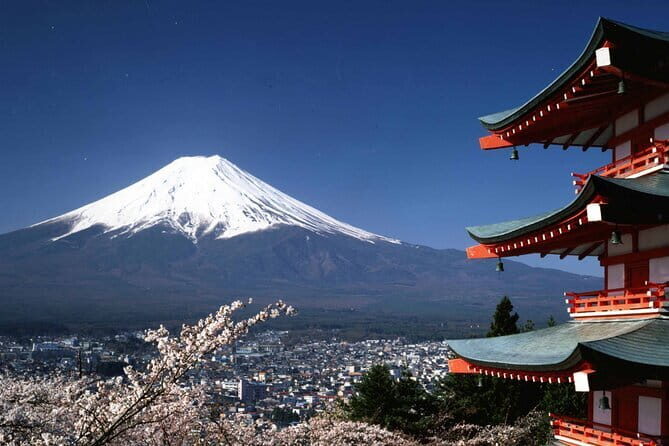
Your first major stop is Chureito Pagoda, part of Arakura Sengen Shrine. This is the five-storied pagoda on the mountainside, famous for showing Mount Fuji off in the distance. It’s the kind of spot where a little timing matters—standing in the right place can be the difference between a postcard view and a “close, but not quite” view.
Plan for about 1 hour here. That’s enough time to get your bearings, take a few photos, and still not feel trapped. If you’re serious about images, this is also a great place to use that built-in help for photo/video. The guide can help you coordinate angles and timing so you’re not just waiting for someone else’s turn.
Stop 2: Oshino Hakkai ponds (easy, scenic, and quick)
Next up is Oshino Hakkai, a set of eight ponds in the Fuji Five Lakes region. What I like about this stop is that it’s visually interesting without demanding a big hike. You’re also learning as you walk: these ponds are on the site of a former sixth lake that dried out.
You typically get around 50 minutes. That’s a practical window—long enough for a proper stroll and photos, short enough to keep the day moving toward the lakes. Admission here is free, which is a nice bonus when you’re planning costs.
Stop 3: Mt. Fuji 5th Station access (and why snow can change the plan)
Mt. Fuji 5th Station is the closest point you can reach by car, and it sits at about 2200 meters. Even if you don’t hike, it can be a meaningful “scale” experience—this is where the mountain starts to feel less like a distant landmark and more like a real environment.
You’ll have about 2 hours allocated, but here’s the catch: entry/admission isn’t included, and conditions can block access. On snowy or bad-weather days, the station may not be reachable, and your guide may adjust the route accordingly. The best move is simple: tell your guide what you want most, then be flexible if weather forces a swap.
Also, if you’re visiting in the July to September window, the tour concept supports hiking when trails are open. If your goal is to walk higher on the mountain, this is the season to plan around.





Stop 4: Oishi Park for Fuji-and-lake views (the calm walking break)
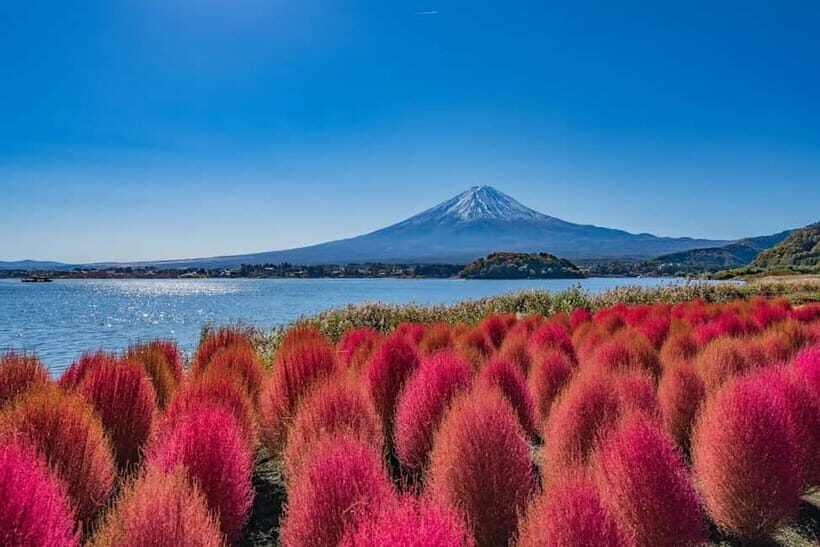
After the summit-area energy, Oishi Park slows things down. It’s on the north shore of Lake Kawaguchiko, and it’s known for a strong Mount Fuji view with the lake in the frame. There’s also a 350-meter walking path lined with flowers, so it’s a nice place to stretch without feeling like you’re doing a full hike.
Expect short, scenic pacing rather than a long stay. The plan lists this as not included for admission, which usually means you’re paying nothing or minimal entry depending on what’s in season and what area access is like, but you shouldn’t assume a free pass for everything.
Stop 5: Saiko Iyashi no Sato Nemba (traditional village vibes)
Then you head to Saiko Iyashi no Sato Nemba, a reconstructed Japanese village. This is one of the stops that feels less about views and more about atmosphere. You can explore the houses and even rent traditional clothing, which can be fun if your group likes dressing up and having a different kind of photo moment.
Time here is about 30 minutes, so treat it like a short cultural stop, not a deep museum day. Admission isn’t included, so budget for tickets if you want to go in. It’s still a good break between lakeside viewpoints and the more nature-focused stops.
Stop 5/6 area: Lake Kawaguchiko for cruising options and crisp scenery
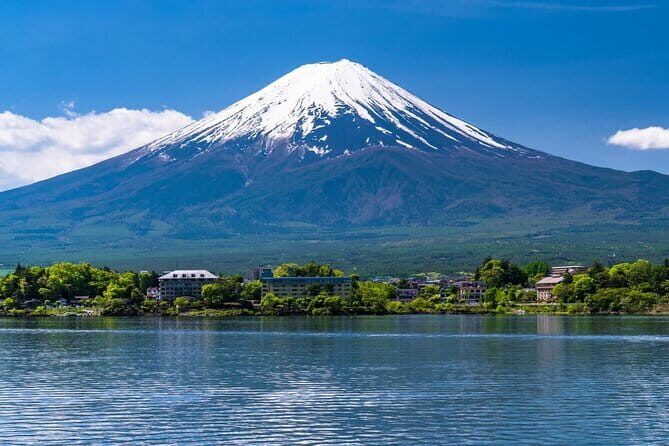
Lake Kawaguchiko is a centerpiece of the Fuji Five Lakes region. The lake sits at an elevation of about 830 meters, which the guide will likely point out because it explains why summers can feel cooler and winters can get icy.
You’ll get about 45 minutes at the lake. That’s enough to walk, enjoy the view, and possibly add a small extra. The plan notes options like a ship cruise or ropeway, and those would be separate since they’re not included. If you want one extra “activity feeling,” this is where it fits—just know you’ll spend your limited time choosing it, not just looking around.
A practical thought: with only 45 minutes, I’d decide early whether you want a quiet stroll or one add-on ride. Your guide can help you pick based on your group’s pace.
Stop 6: Fugaku Wind Cave (lava tube fun, not just a photo stop)
Fugaku Wind Cave is a lava tube at the northern foot of Mount Fuji, in the Aokigahara forest area near Fujikawaguchiko. It’s listed as the largest among the lava tubes found in that forest area. In other words: this is a change of pace—less “look outward” and more “experience a geological feature.”
You’ll have about 30 minutes. Admission isn’t included, so you’ll likely pay on-site or via the experience instructions. If caves don’t sound like your thing, that’s okay; it still adds variety so your day isn’t only lakes and viewpoints.
Final shrine stop: Kitaguchi Hongu Fuji Sengen Jinja (quiet meaning at the end)
To wrap up, you visit Kitaguchi Hongu Fuji Sengen Jinja Shrine. It’s one of many Asama shrines in Japan that enshrine deities connected to volcanoes and Mount Fuji specifically. This shrine is also noted as part of the Mt. Fuji UNESCO area.
Time here is around 30 minutes, which is the right length to absorb the atmosphere without turning it into a long stop. Admission is free, and it serves as a nice “landing” moment after nature-heavy parts of the day.
Photo/video help: what “hands-on assistance” usually means on a Fuji day
The tour includes free picture taking or video making assistance if you want it. I like this because Fuji days are packed with people trying to find the right angle at the right second. Instead of fighting crowds and guessing composition, you can focus on posing and letting the guide/assistant help with setup.
Guide style matters here. In the past, English guide Abdul has been praised for being knowledgeable and funny, and for taking photos throughout the day with a final video compilation shared after. Even if every guide’s delivery varies, the core idea stays the same: you’re not going to be alone with a camera and hoping for the best.
If you care about images, I’d plan to ask for a simple routine: one or two “anchor” shots at each major viewpoint, plus a quick group moment you can share with friends later.
Price and value: how $462 per group can work (or not)
The price is $462.36 per group (up to 5). That sounds high until you translate it into what you’re actually buying: private transport, an in-person English guide, and the convenience of not coordinating multiple tickets and rides on your own.
For a group of 4–5, the cost per person becomes much more reasonable than typical group shuttles. You’re also paying for time and decision-making help—stops adjust, parking is handled, and you get guidance at each location. If you’re the type who hates wasted hours, this sort of private format often pays for itself.
The downside is simple: if you travel solo or as a couple, the per-person value drops compared with cheaper public-transport routes. In that case, you’re paying extra for comfort and a guide’s attention.
On top of that, some entries are not included (notably Mt. Fuji 5th Station, Saiko Iyashi no Sato Nemba, and the wind caves). So your “all-in” total will depend on what you end up paying at those stops.
Admission reality check: what’s free vs what you’ll likely pay
Some stops are free:
- Chureito Pagoda (admission ticket free)
- Oshino Hakkai (admission ticket free)
- Kitaguchi Hongu Fuji Sengen Jinja Shrine (admission free)
Others are not included for admission:
- Mt. Fuji 5th Station
- Oishi Park
- Saiko Iyashi no Sato Nemba
- Lake Kawaguchiko (and any optional cruise/ropeway)
- Fugaku Wind Cave
So yes, the base tour cost covers a lot, but it’s not a “everything is included” package. If you like knowing costs in advance, I’d treat the excluded items as your variable budget.
How to get the best Mt. Fuji day (without stress)
Here are my practical rules for a day like this:
- Decide your priorities before you leave. If Mt. Fuji 5th Station is your top must-do, say it up front and ask how your guide will handle weather.
- Dress for fast temperature shifts. Lakeside air can feel cooler than Tokyo, especially near the lake and at higher elevations.
- Use the photo help early, not after you’ve already spent 40 minutes struggling with angles.
- Keep expectations realistic about timing. A full Fuji day moves quickly, and 30–60 minutes per stop is a normal rhythm.
And if you’re planning around hiking, pay attention to the seasonal window (July to September) when trails are open.
Should you book this Mt. Fuji private chauffeur tour?
If you want a comfort-first Mt. Fuji day with an English guide, photo assistance, and a route that mixes classic sights with a few more interesting stops (like the wind cave and reconstructed village), I’d say this is a strong match. It’s also a good fit for families and small groups who don’t want to spend energy figuring out transport and timing.
Book it if:
- You’re traveling as up to 5 people and want private van convenience.
- You care about photos and want help beyond quick snapshots.
- You’d rather have guidance at each stop than figure it all out yourself.
Skip it or think twice if:
- Your goal is only one or two spots and you’re comfortable using public transport.
- You’re visiting during a likely snowy period and your schedule is strict around Mt. Fuji 5th Station.
FAQ
How long is the Mt. Fuji day trip from Tokyo?
The tour runs about 8 to 10 hours.
How many people can go on this private tour?
The pricing is per group up to 5 people, and the vehicle size depends on group size (either a 6-seater or a 10-seater van).
Is pickup offered?
Yes, pickup is offered.
Is there an English-speaking guide?
Yes, the experience includes an in-person English guide.
Does the tour include help with photos or videos?
Yes. You get free picture taking or video making assistance if needed.
Which stops have free admission?
Chureito Pagoda, Oshino Hakkai, and Kitaguchi Hongu Fuji Sengen Jinja Shrine are listed as free admission stops.
What entry fees are not included?
Admission isn’t included for Mt. Fuji 5th Station, Saiko Iyashi no Sato Nemba, Oishi Park, the wind/ice caves (including Fugaku Wind Cave), and the Lake Kawaguchiko area.
Is Mt. Fuji 5th Station part of the plan?
Yes, it’s included as Mt. Fuji 5th Station (with admission not included). Access can depend on snow and weather conditions.
Is the ticket mobile?
Yes, the tour uses a mobile ticket.
Can I cancel and get a full refund?
Yes. You can cancel up to 24 hours in advance for a full refund. If you cancel less than 24 hours before the start time, the amount paid isn’t refunded.