REVIEW · TOKYO
Mt Fuji & Hakone Private Tour from Tokyo: Return by Bullet Train
Book on Viator →Operated by Xplor Japan · Bookable on Viator
Mt Fuji from Tokyo is one of those trips that can go either way. With this private setup, you get a driver-and-guide day designed around what you want to see, plus help sorting the Shinkansen return. I love the flexible feel of pacing yourself through iconic spots like Chureito Pagoda and Oshino Hakkai, and I also like that you’re not left to manage everything on your own. The main consideration is that a few key add-ons in Hakone cost extra, like the ropeway and the Lake Ashi boat option.
This is a long, full day that starts early and finishes in the Odawara area so you can head back to Tokyo by train. You’ll spend most of your time outside, moving between viewpoints, shrines, and lake scenes that change with the light and the weather.
One small heads-up: some groups note that when the day involves multiple vehicles, the language experience can vary. If English commentary matters to you, it’s worth asking before you go that you’ll have full guidance wherever you are in the group.
In This Review
- Key points that make this tour worth your attention
- How this Mt Fuji and Hakone day stays focused (and not chaotic)
- Morning pickup from Tokyo at 8:00 am
- Chureito Pagoda: the quick Fuji postcard with real payoff
- Kitaguchi Hongu Fuji Sengen Jinja: where Fuji feels spiritual, not just scenic
- Oshino Hakkai: crystal-clear ponds fed by Fuji groundwater
- Lake Yamanaka and Lake Kawaguchiko: two lakes, two vibes
- Lake Yamanaka
- Lake Kawaguchiko
- Hakone Ropeway: pay for the view and do it when you can see
- Lake Ashinoko: the caldera lake and the boat ride portion
- The Shinkansen return: help with tickets, then you go on your own
- Price and value: what you pay for, and what you still cover
- Who this private tour is best for (and who should skip it)
- Should you book the Mt Fuji & Hakone Private Tour from Tokyo?
- FAQ
- What time does the tour start?
- Is pickup included from Tokyo?
- Do I need to pay extra for the Hakone Ropeway and the Lake Ashinoko boat?
- Will the guide ride the Shinkansen with me back to Tokyo?
- What if weather is bad?
- Is the ticket handled digitally?
Key points that make this tour worth your attention
- Private vehicle + professional guide: Comfort and real explanation, not just a checklist.
- Shinkansen ticket support: Less stress on the return to Tokyo.
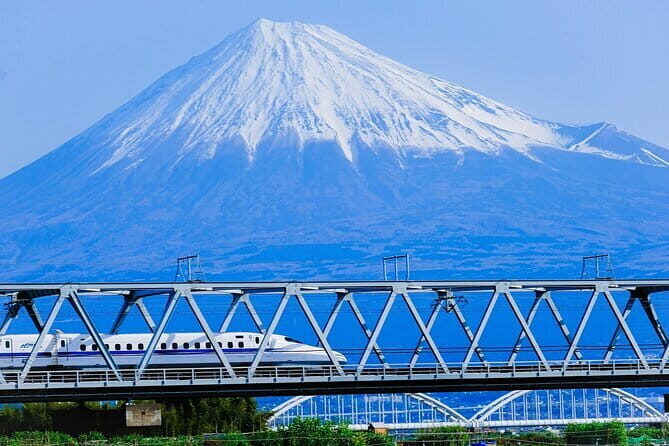
- Fuji Five Lakes highlights in one day: Chureito Pagoda, Oshino Hakkai, Lake Yamanaka, and Lake Kawaguchiko.
- Hakone aerial view plus Lake Ashi: Ropeway up top, then a scenic boat ride on the caldera lake.
- Free admission at most stops: You mainly pay for the paid Hakone transport items.
How this Mt Fuji and Hakone day stays focused (and not chaotic)
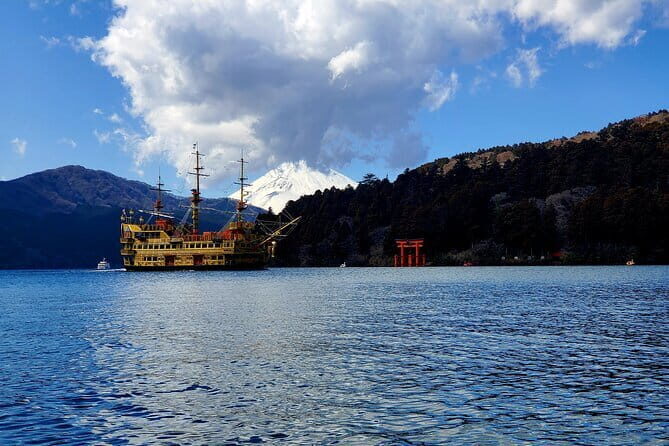
The biggest value here is the format. A private day from Tokyo usually means you’re not stuck following a slow group rhythm or sprinting between stops because someone else has a timed museum ticket. Instead, you get a guide who can steer you through the Mount Fuji area at a pace that matches your energy level.
In practice, that matters at places like Chureito Pagoda, where timing and angles are everything. It also matters at Oshino Hakkai, where part of the appeal is quietly walking around and taking in how the water behaves and where it comes from. If you like your day trip to feel like a conversation with the place (with context) instead of a race (with photos), this style fits.
The day is still busy. Expect a packed 10 hours once you add travel time from Tokyo and the time spent in each area. If you prefer slow, long meals and minimal stops, you’ll want to treat this as a one-day sprint with breaks built in.
You can also read our reviews of more private tours in Tokyo


Morning pickup from Tokyo at 8:00 am
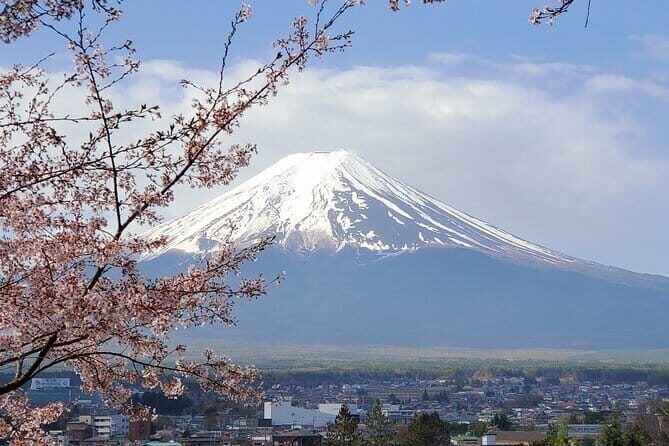
You start with hotel or apartment pickup in Tokyo, arranged in advance. The departure time is 8:00 am, and the total duration is about 10 hours including travel.
I like early starts for Fuji days because visibility can be better in the morning and you’re more likely to avoid the thickest crowds at the most famous viewpoints. Also, starting at 8:00 means you can get Hakone’s ropeway and Lake Ashi segment done before late-afternoon clouds roll in.
Bring an extra layer. Even if Tokyo feels warm, mountain and lakeside air can change fast—especially if you’ll be on a ropeway or out on deck for a boat crossing.
Chureito Pagoda: the quick Fuji postcard with real payoff
Chureito Pagoda is one of those stops you’ve probably seen in travel photos. In person, it’s still striking because the composition funnels your eye toward Mount Fuji, especially when weather cooperates.
You’ll have about an hour here, and admission is free. That hour is enough to do two things well:
- Walk around for the main view angles
- Take photos without feeling like you’re on a timer
A nice detail from the region is that Chureito Pagoda is famous in cherry blossom season, when the trees frame the pagoda and Fuji at the same time. Even if you’re not traveling during blossoms, it’s still worth going for that classic view setup.
Possible drawback: if fog or heavy cloud covers the summit, the photo payoff can drop. That’s true for any Fuji spot, but Chureito is especially famous for a clear line of sight.
Kitaguchi Hongu Fuji Sengen Jinja: where Fuji feels spiritual, not just scenic
Next you go to Kitaguchi Hongu Fuji Sengen Jinja, a shrine stop with free admission and around 30 minutes.
This is a good counterbalance after Chureito. The pagoda gives you the famous scenery view; the shrine gives you the meaning. In this area, Mount Fuji isn’t treated like a random mountain. It’s tied to belief and long-standing worship, and the red torii gates create a strong visual rhythm as you walk into the grounds.
I like that the stop is short. You get a calm cultural interlude without chewing up time that you’ll later want for the lakes and the Hakone transport.
If you’re a person who enjoys small details—architecture, symbols, and how locals move through sacred space—this 30-minute block can be one of your favorite moments of the day.
Oshino Hakkai: crystal-clear ponds fed by Fuji groundwater
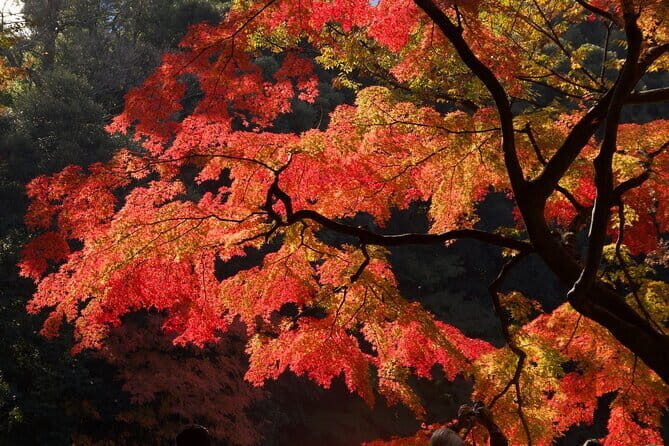
Oshino Hakkai is where the trip turns from “big view” to “small, specific beauty.” You’ll spend about an hour here, with free admission.
The ponds are fed by groundwater filtered through Mount Fuji’s volcanic lava fields. What that means when you’re standing there is simple: the water looks clean and clear in a way that makes you slow down. You’re not just snapping a photo of a pond—you’re seeing a system created by geology and time.
This is also a great stop for anyone who wants to feel the Fuji Five Lakes region in a more grounded way. The area is scenic, but it doesn’t feel like a theme park. You can walk the perimeter paths, pause where the water is most reflective, and watch how the light changes the color.
Possible drawback: it can still be crowded, especially if you’re traveling during peak seasons. But because the ponds are spread out, you can usually find breathing room at some point during the hour.






Lake Yamanaka and Lake Kawaguchiko: two lakes, two vibes
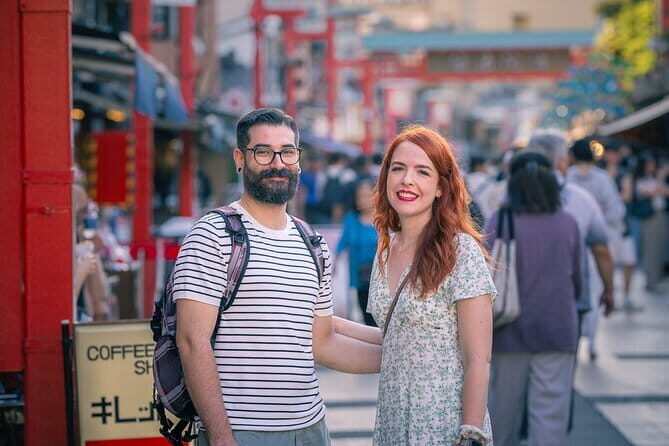
After Oshino Hakkai, you move into the Fuji Five Lakes section proper, with two lake stops: Lake Yamanaka and Lake Kawaguchiko, each around an hour.
Lake Yamanaka
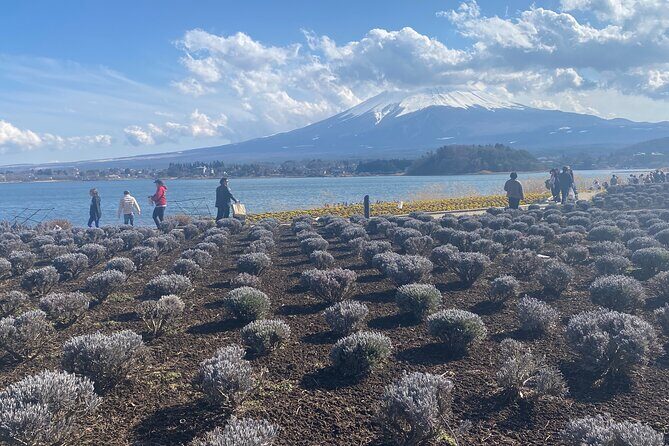
Lake Yamanaka is described as the largest of the Fuji Five Lakes and a calmer escape from city life. Expect forests and mountain surroundings, plus a feeling of space. Even if you don’t plan outdoor activities, the lake works as a slow reset.
Lake Kawaguchiko
Lake Kawaguchiko is the one many people already know as the most popular for Fuji views. It’s surrounded by scenery plus villages, and it’s the kind of lake stop where you feel more energy around you—shops, promenades, and photo points.
I like pairing these two lakes because it gives you contrast without adding more travel transfers. Yamanaka tends to feel quieter; Kawaguchiko gives you the classic “this is the main lake” energy.
Practical note: you’ll want to plan your photos based on cloud cover. If Fuji is visible, these are your best windows for the summit view. If not, you’ll still get the lake scenery, but your photo mission will be more about reflections, trees, and atmosphere.
Hakone Ropeway: pay for the view and do it when you can see
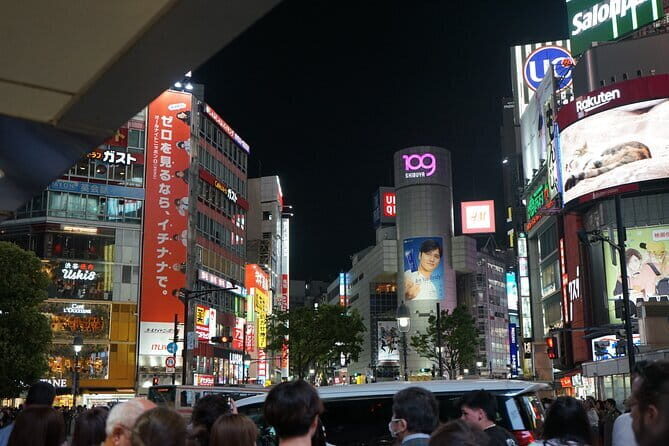
In Hakone, you’ll take the Hakone Ropeway for about an hour. Admission isn’t included, and the ropeway fee is listed as ¥3,000 per person.
This is the most expensive add-on in the day, and that usually means one thing: you’re buying height and perspective. The ropeway runs through Hakone National Park, and the promise is wide views—Mount Fuji when visible, Lake Ashi, and the volcanic scenery that defines the Hakone mood.
Is it worth it? If you care about views, yes. A guided trip makes this easier because timing and unloading points are handled for you. If visibility is poor, you might feel less thrilled about the cost. But even then, being above the valley can still offer interesting visuals.
Practical tip: the ropeway stations can involve queueing, and weather can affect comfort. Dress in layers and keep your phone or camera protected.
Lake Ashinoko: the caldera lake and the boat ride portion
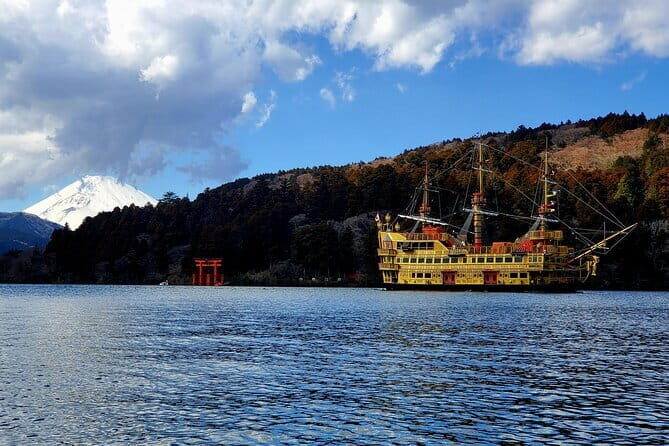
Lake Ashinoko (also spelled Lake Ashi in casual use) is the next big visual payoff. You’ll spend about an hour here, and admission is free.
This caldera lake is surrounded by forests and mountains, and it’s a classic setting for Fuji views when conditions are right. The tour also includes a scenic boat ride across the lake.
Extra fees apply for the boat option. The listed cruise ship fee is ¥3,000 per person, and the general note on transport fees includes speedboat or cruise-ship style rides. Translation for you: budget for the ride even though the lake itself is free to visit.
What makes the boat segment valuable is that it changes the day’s geometry. Roads and viewpoints give you “standing still” views. A boat gives you movement, changing angles, and a calmer pace after ropeway height.
If you’re prone to motion sensitivity, take that into account before you board. And if you’re traveling in a season with strong wind or colder mornings, plan clothing accordingly.
The Shinkansen return: help with tickets, then you go on your own
At the end of the tour, you’ll be dropped off at Odawara Station with a destination to Tokyo Station. The guide will not accompany you on the bullet train.
This part is a make-or-break for many day trips. The good news here is that you get help booking Shinkansen tickets. That means you’re less likely to show up at the station unsure of which train to take or what you need in order to board.
Still, you should expect to manage the train segment yourself. Once you’re at Odawara, you’ll rely on the ticketing and guidance provided for your specific route back.
I like this model because it keeps you from being herded on a longer train transfer with a guide walking you around. It’s a clean handoff: your day trip ends, and your Tokyo return starts.
Price and value: what you pay for, and what you still cover
The price is $295.00 per person for a private day. For Tokyo-area day trips, that’s not cheap. But you’re paying for the combination of:
- Private air-conditioned vehicle
- Professional guide
- Pickup and drop-off routing
- A full day of moving between Fuji and Hakone highlights
- Shinkansen ticket help
If you tried to recreate this on your own, you’d likely spend a lot of time coordinating transit, dealing with the timing of the ropeway and boat, and figuring out which viewpoints make sense together. Here, you’re buying time, reduced stress, and a guide who can point out what matters at each stop.
What you should budget separately:
- Hakone Ropeway: ¥3,000 per person
- Boat/cruise ship option on Lake Ashinoko: ¥3,000 per person is listed
- Lunch, drinks, and snacks are not included
My advice: plan a simple lunch strategy before you go. If you arrive hungry, you’ll be tempted to pay more. If you bring a snack stash, the day feels easier between meal breaks.
Also consider that the day depends on weather for the best Fuji summit views. Your money buys the program structure, but visibility is a shared variable for all Fuji itineraries.
Who this private tour is best for (and who should skip it)
This works especially well if you:
- Want a private format and hate big-group pacing
- Appreciate cultural context at shrines and traditional spots
- Prefer a guide to handle the “how do we do this today” parts
- Want to see both Mount Fuji area highlights and Hakone without switching plans
You might consider a different option if you:
- Want a very relaxed day with long downtime
- Hate paying extra for add-ons like the ropeway and boat ride
- Need guaranteed English guidance at every moment if your group splits across more than one vehicle
One more note from the experience patterns: guides can be a strong selling point. Names like Ryu and Malik Ali show up in the feedback tied to clear explanations, photo help, and cultural commentary. That’s a good sign that this isn’t run like a drive-by.
Should you book the Mt Fuji & Hakone Private Tour from Tokyo?
I’d book it if you want a well-structured day that keeps you moving with intention: Fuji viewpoints, the Oshino Hakkai water story, two lake moods, then Hakone’s height-and-lake combo with a boat ride. The private vehicle plus guide support is the heart of the value, especially if your goal is to see more than you could manage comfortably on your own.
I’d hesitate if you’re on a tight budget once you add ropeway and boat fees, or if your priority is a super slow, restful day. Also remember: Fuji visibility isn’t guaranteed. Still, even when the summit is shy, you’ll get meaningful stops, lakeside scenery, and a classic Hakone transport experience.
If you’re flexible, willing to pay for the view transport pieces, and you want a guide-led day without the stress, this is a strong pick.
FAQ
What time does the tour start?
It starts at 8:00 am. The total duration is about 10 hours, including travel time.
Is pickup included from Tokyo?
Yes. Pickup is offered from hotels and apartments in Tokyo based on prior agreement.
Do I need to pay extra for the Hakone Ropeway and the Lake Ashinoko boat?
Yes. The Hakone Ropeway fee is listed as ¥3,000 per person, and the Lake Ashinoko cruise/ship fee is listed as ¥3,000 per person. Lunch and drinks/snacks are also not included.
Will the guide ride the Shinkansen with me back to Tokyo?
No. The guide will drop you at Odawara Station and you’ll travel by bullet train to Tokyo Station on your own.
What if weather is bad?
The experience requires good weather. If it’s canceled due to poor weather, you’ll be offered a different date or a full refund.
Is the ticket handled digitally?
Yes. A mobile ticket is part of the experience. Confirmation is received at the time of booking.