REVIEW · TOKYO
Tokyo Asakusa : Samurai School, Become a Samurai Warrior
Book on GetYourGuide →Operated by Smile Vista Co.,Ltd. · Bookable on GetYourGuide
Samurai lessons in Tokyo can feel like a show. This one feels like training with a camera in your face. I like that you learn bowing and sword stances from a master with 25 years of professional experience, and I also like the hands-on photo/video session where you pose and move with direction. One possible drawback: the class includes swordplay practice, so it may not be comfy if you have back problems, and it’s not suitable for pregnancy.
You’ll do all this in a small group (max 6), with an English-speaking interpreter and a dojo location that’s near Tokyo Skytree—so it’s easy to pair with sightseeing on the same day. There’s also a good chance the session may run from a temporary dojo if the Asakusa location is unavailable, so check your confirmation closely.
In This Review
- Samurai School, Asakusa: the key takeaways
- Costume up near Tokyo Skytree: what your first minutes are really like
- The master-led samurai culture class: bowing and respect that aren’t just theater
- The swordplay workshop: choosing your sword and learning what to do with your body
- Optional choreographed battle: when it becomes a performance (in a safe way)
- Photos and your samurai video moment: how the camera direction changes everything
- Completion certificate: a small thing that makes it feel real
- Meeting point and arrival tips: don’t lose time hunting the dojo
- Price and value: is $90 worth 90 minutes?
- Who should book this Samurai School experience (and who should skip it)
- Should you book? My call based on what matters most
- FAQ
- Where is the meeting point for the Samurai School class?
- How long is the experience?
- How much does it cost?
- What languages do instructors/interpreters speak?
- Is the swordplay part included, and do you use practice swords?
- Do you get photos or video, or is it only a certificate?
- Is there an optional choreographed battle?
- What should I bring?
- Is it suitable for people with mobility issues or health concerns?
- What are the basic rules on-site?
Samurai School, Asakusa: the key takeaways
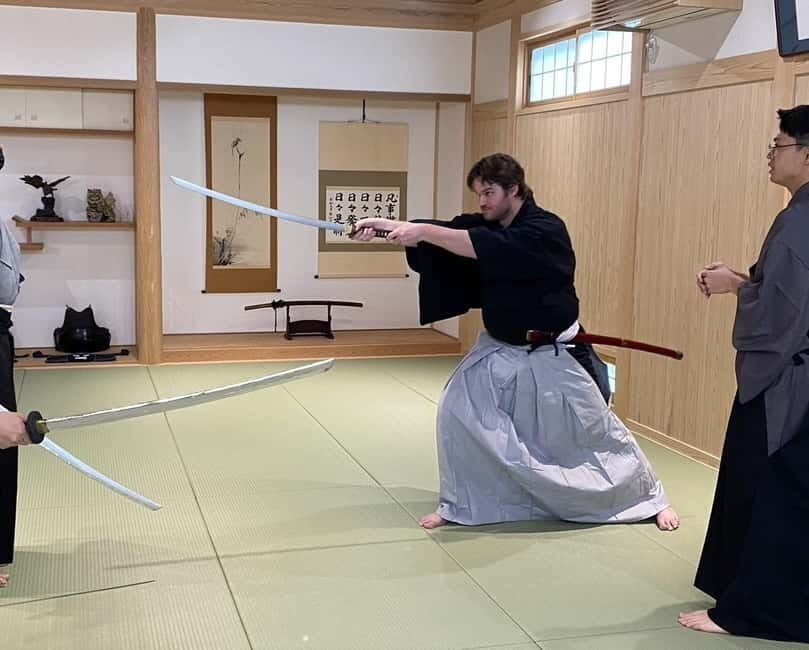
- 25-year master-led lesson focused on stances, strikes, and respectful sword etiquette
- Costume first: you dress as a samurai before you learn any moves
- Swordplay with safe props and guided technique, not free-for-all fighting
- Photo and video time with direction for posing and camera-friendly movement
- Completion certificate as an actual keepsake, not just a souvenir slip
- Optional choreographed battle in a safe, controlled setup
Costume up near Tokyo Skytree: what your first minutes are really like
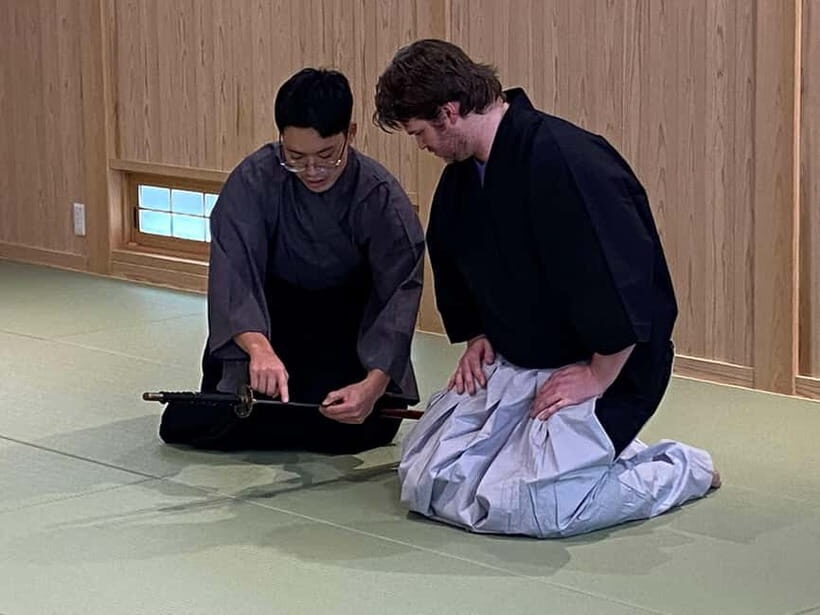
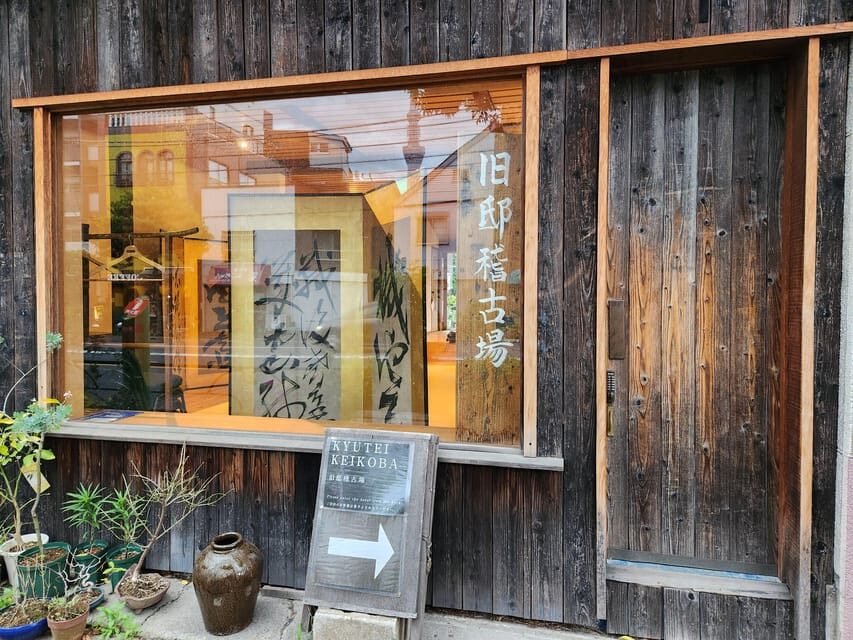
This is a 90-minute “you become a samurai” experience. You’ll start by arriving at 颯志館(Soushi-Kan / Soushi-Kan) and meeting the team at the front of the dojo. The closest access point is Shimo Station (Namboku Line), about a 6-minute walk from Exit 2, though you may want to build in extra time because the session can temporarily move to another dojo when the Asakusa one is unavailable.
Once you’re inside, the tone shifts quickly. You’ll get your samurai costume and get fitted so you can actually move, not just stand there. A big part of the fun here is psychological: you stop thinking about the costume and start acting like the role. That’s exactly why the class starts this way. When you begin the sword lesson already “in character,” you’ll remember the poses better—and you’ll look better in the photos afterward.
You’ll also meet the English-speaking interpreter, which matters more than it sounds. Swordplay lessons have a lot of quick instructions (stance names, where your weight goes, how to hold your body). With translation support, you won’t have to guess.
You can also read our reviews of more tours and experiences in Tokyo.



The master-led samurai culture class: bowing and respect that aren’t just theater
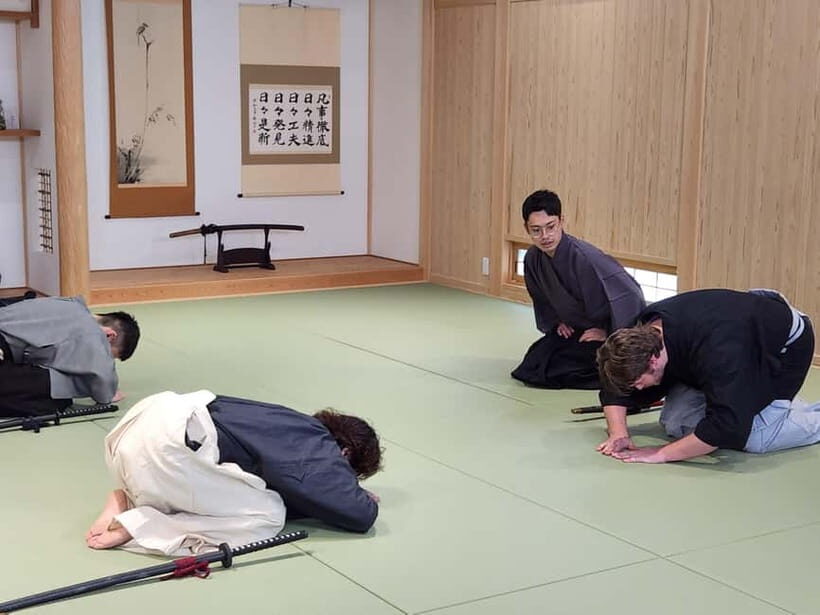
The core of the experience is a master-led samurai culture class built around the basics: bowing, stances, strikes, and respectful sword presentation. The description credits the instructor with 25 years of professional samurai action experience and notes direct training connections to the choreographer behind Kill Bill. Even if you only care about the “cool factor,” this approach still helps you learn something structured instead of random poses.
Here’s what you should expect in practice:
- You’ll learn how to bow in a way that fits the context of a sword confrontation. It’s not just “say hi with your head.” It’s posture and timing.
- You’ll get guidance on fundamental stances—how to stand so your movements look sharp and feel stable.
- You’ll learn a stylized draw (how to bring the sword up and into position) and then a controlled strike sequence.
One detail I appreciate from the completed experiences is how much attention is given to acting and camera movement. In one booking, a participant highlighted learning poses and moves along with acting and camera work. That’s a good sign you won’t feel like you’re doing stiff museum reenactment. You’ll be taught to perform the actions cleanly and on-beat.
And yes—there’s a cultural component. You’re not learning swordplay as violence. You’re learning it as a disciplined form that starts with respect toward the opponent.
The swordplay workshop: choosing your sword and learning what to do with your body
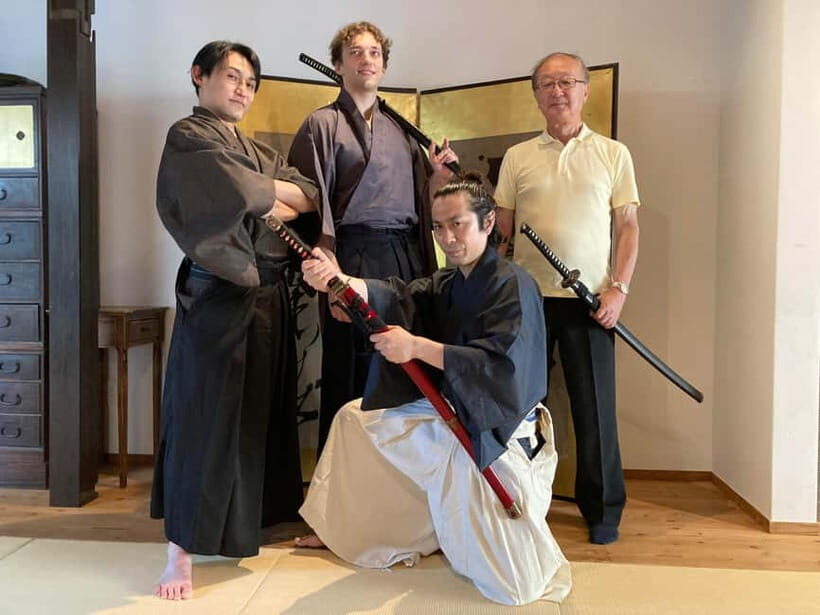
After the culture intro, you move into the hands-on portion: a swordplay workshop with practice swords. You’ll be guided by a professional stunt performer, and the lesson focuses on the fundamentals that make sword choreography look right: body angle, weight transfer, timing, and safe control.
What I like about this part for first-timers is that you don’t have to already know martial arts. The class sets you up with basic mechanics and then helps you make them “show-ready.” That’s why you’ll likely spend time on things like:
- Stance alignment: where your feet and hips should be
- Draw and strike timing: how fast and where the sword travels
- Respect cues: the moment where the sequence acknowledges the opponent
- Stylized movements: looks like samurai dueling, but built for safety
Also, you can choose your sword from a selection of options. That small choice matters. When people get to pick their “weapon identity,” they pay closer attention and get more confident faster.
If you’re sensitive to movement or pain, keep it in mind: this is still sword choreography with standing and striking. The activity isn’t listed as suitable for people with back problems, so take that seriously.
Optional choreographed battle: when it becomes a performance (in a safe way)
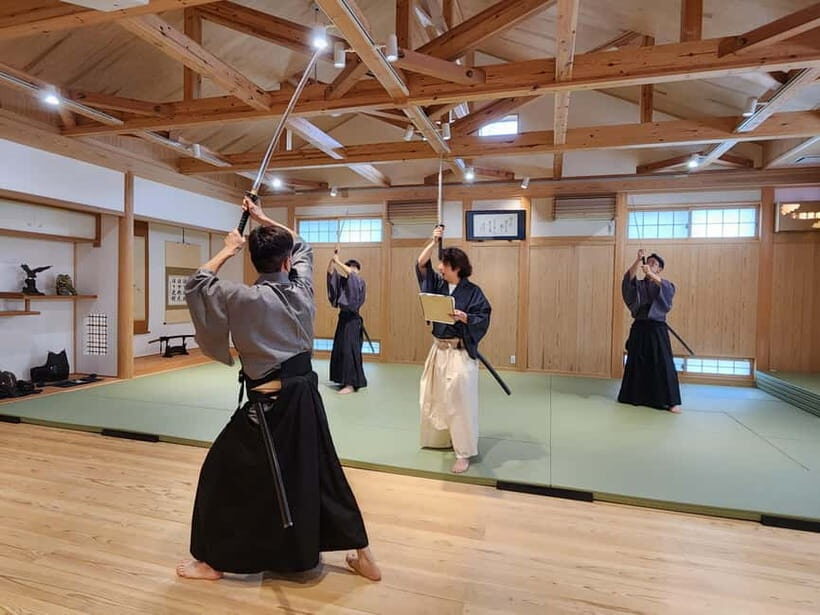
One of the more exciting elements is the optional step where you participate in a choreographed sword fight. It’s described as safe and controlled, which is exactly what you want for a class like this. The goal isn’t to spar. It’s to rehearse a sequence that looks like the intensity of historical samurai duels.
The value here is twofold:
- You learn the flow. Basics become a connected routine, so your movements stop feeling like separate tricks.
- You get shot-worthy moments. If you’re doing photos and videos, your performance needs rhythm and spacing. A choreographed battle gives you that.
If you’re the type who likes “I tried the hardest option” bragging rights, choose the optional battle. If you’re worried about comfort or nerves, you can still enjoy the rest of the class without going full duel.
Either way, the class atmosphere is built around interaction. In a few completed experiences, participants mentioned how friendly the team was and how the time went quickly—often because you’re not just watching. You’re doing.
Photos and your samurai video moment: how the camera direction changes everything
This is not a silent, hands-behind-your-back reenactment. A big part of the experience is the photo shoot, plus the chance to capture your own samurai video or photo with guidance from the master.
If you’ve ever tried to take vacation photos while wearing cosplay-style outfits, you know the problem: you look stiff. The solution here is direction. Instead of you guessing angles and posing, you’re taught how to hold yourself so the stance reads well on camera.
From completed experiences, people loved getting lots of photos and videos and said the camera work felt handled. One parent booked for a 10-year-old and noted the child’s favorite part was picking the outfit and then learning the choreography of a scene that was recorded. That’s the best way to think about it: you’re not just getting a picture. You’re creating one.
What to bring matters here too. The activity asks you to bring a towel, water, and a t-shirt. You’ll be moving, you’ll be sweating a bit in costume, and having a plan helps you stay comfortable so you can focus on performance rather than fussing.






Completion certificate: a small thing that makes it feel real
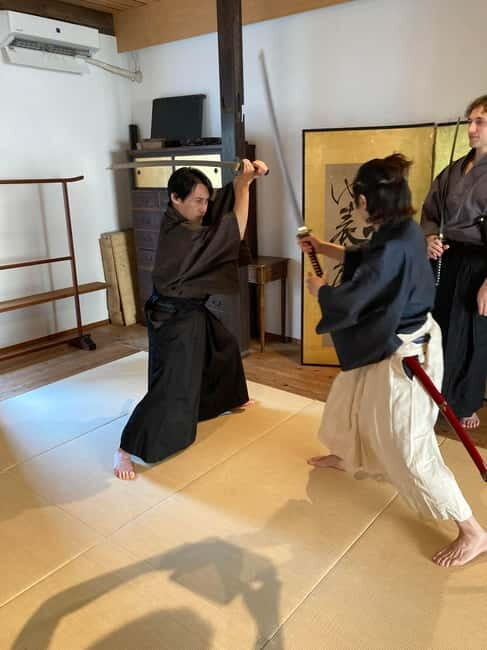
At the end, you’ll receive a completion certificate. It’s handed out after you go through the main sequence (including bowing and the sword workshop), and it’s framed as a keepsake tied to what you practiced.
Why this matters: it turns the session from entertainment into a personal accomplishment. If you’re traveling with kids, certificates also help make the experience feel earned instead of just paid-for.
And because you’ll have costumes and photo/video content, the certificate rounds it out as a physical reminder of the day.
Meeting point and arrival tips: don’t lose time hunting the dojo
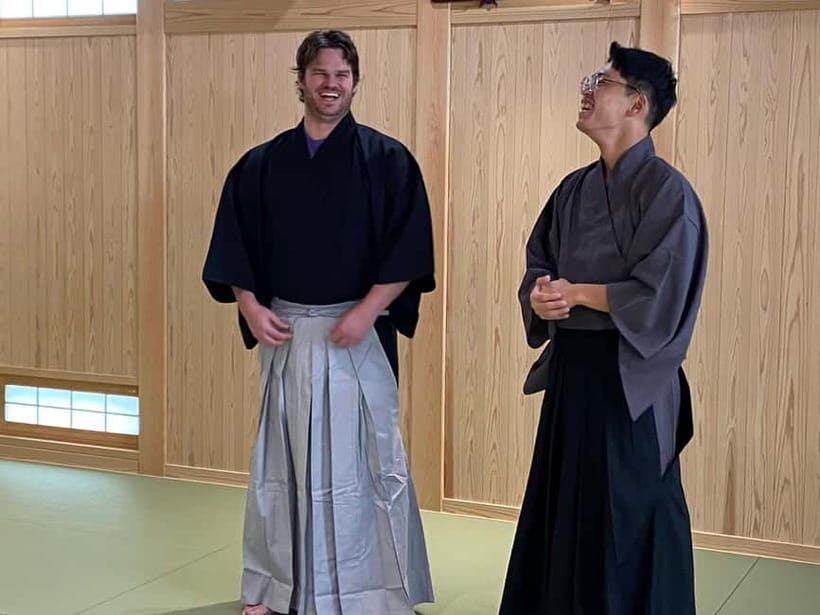
Your meeting point is set at 4-6-2 Shimo, Kita City, Tokyo 115-0042 (颯志館(Soushi-Kan)). The directions are straightforward, and the station reference is helpful.
But there’s one practical wrinkle: the Asakusa dojo can be unavailable due to maintenance, and the sessions may be held temporarily at a different dojo. Your confirmation details should tell you where to go. When I plan days around activities like this, I treat that as non-negotiable—show up where the team tells you.
A couple of small, practical tips:
- Wear comfortable shoes to the station and transit portion. You’ll be dressing at the dojo.
- Bring a small towel even if you think you won’t need it. Costume + movement adds up.
- Plan for the fact that instructions are delivered in English and Japanese, with interpretation support. You’ll do best if you listen for the key cues and then watch the master’s demonstration.
Smoking is not allowed, and food isn’t allowed during the experience. That’s another reason the towel/water request is practical.
Price and value: is $90 worth 90 minutes?
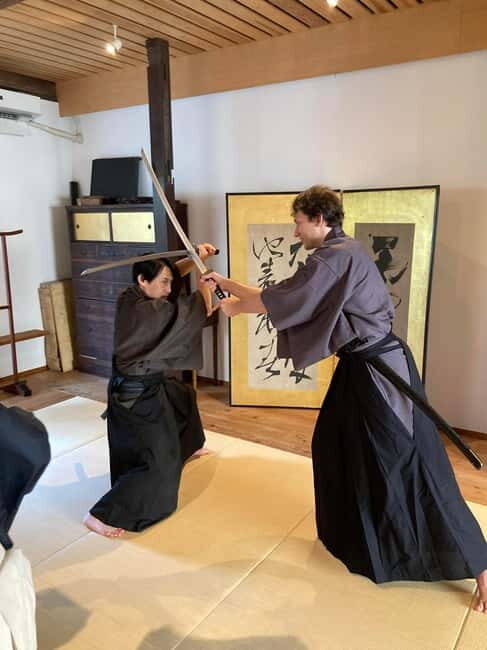
At $90 per person for a 90-minute class, you’re paying for more than entertainment. You’re paying for:
- A master-led lesson (plus stunt performer support)
- Costume use
- Practice swords
- A photo shoot
- A certificate
In other words, this is closer to a guided activity workshop than a one-off performance. The group size is limited to 6, so you’re not getting swallowed in a big crowd. And the interpreter inclusion is part of what you’re buying—you’re not left to guess during key technique explanations.
Would it be a bargain if all you got was a costume and photos? Maybe not. But the program is structured around teachable skills—bowing, stances, draw and strike, and then (optionally) a choreographed battle sequence. That’s the difference between “cool moment” and “I learned something I can show.”
Who should book this Samurai School experience (and who should skip it)
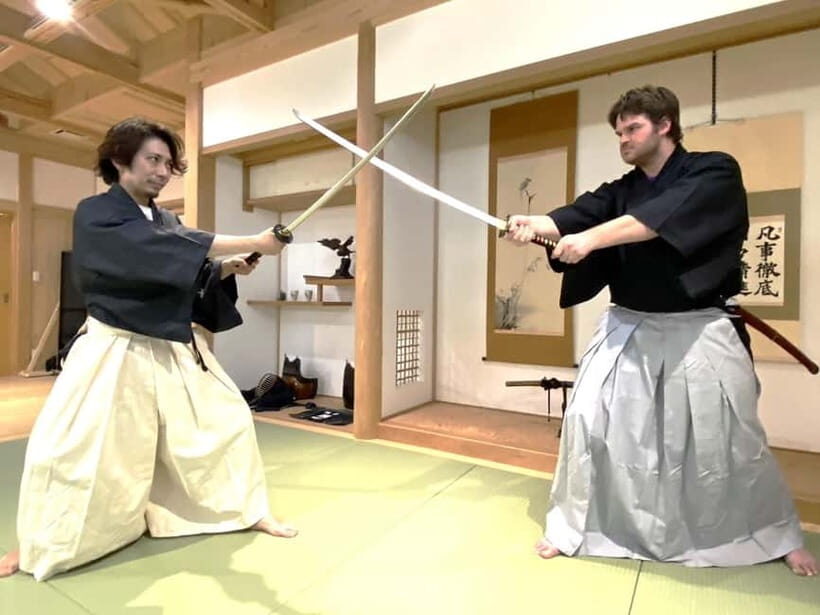
This is a strong fit if you want:
- A hands-on Tokyo experience rather than just watching history from a distance
- A chance to dress up and be directed for camera-friendly movement
- A structured sword choreography lesson focused on respect and technique
- A small-group setup where you actually interact
It’s also a great option for families who want a memorable activity with a clear end point (costume, recording, certificate). In one completed booking, a parent brought their 10-year-old, and the child had a clear favorite moment: outfit selection and learning the choreography of a recorded scene.
You should consider skipping or asking questions if:
- You’re pregnant (not suitable)
- You have back problems (not suitable)
- You want something totally passive (there’s active movement and sword choreography)
Should you book? My call based on what matters most
Book it if you want a Tokyo Asakusa samurai experience that’s not only theatrical. The lesson centers on bowing and sword technique, then adds a performance layer through photo/video direction and an optional choreographed duel. The best part is that it’s built to be fun even if you’ve never held a practice sword before.
Don’t book it if you’re not comfortable with physical movement or you fall into the listed non-suitable categories. And do check where you’re supposed to meet in case the session is temporarily moved from the Asakusa dojo.
If you’re planning your day, think of this as a highlight you can run before or after other Asakusa/Sumida sights—Skytree-area access makes it practical.
FAQ
Where is the meeting point for the Samurai School class?
The meeting point is 颯志館(Soushi-Kan), at 4-6-2 Shimo, Kita City, Tokyo 115-0042, Japan. It’s near Shimo Station (Namboku Line), about a 6-minute walk from Exit 2.
How long is the experience?
The class lasts 90 minutes.
How much does it cost?
It costs $90 per person.
What languages do instructors/interpreters speak?
The instructor support is available in English and Japanese, including a friendly English-speaking interpreter.
Is the swordplay part included, and do you use practice swords?
Yes. The workshop includes practice swords, and you’ll learn bowing, drawing, and striking with guided stylized movements.
Do you get photos or video, or is it only a certificate?
You get a photo shoot, and you can also capture your own samurai video or photo with the master. You’ll also receive a completion certificate.
Is there an optional choreographed battle?
Yes. Participating in a choreographed sword fight is listed as optional and is done in a safe and controlled environment.
What should I bring?
Bring a towel, water, and a t-shirt.
Is it suitable for people with mobility issues or health concerns?
It is listed as wheelchair accessible, but it is not suitable for pregnant women or people with back problems.
What are the basic rules on-site?
Smoking is not allowed, and food is not allowed during the experience.