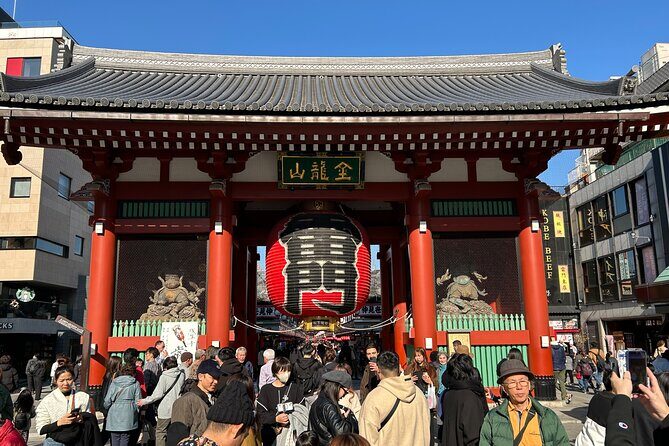
Tokyo by foot feels personal. This private East Tokyo tour lets you pick three must-visit stops from a menu, then stitch them together with stories and practical context from a local guide. You meet at Kaminarimon and head out on a walking-focused itinerary through classic neighborhoods and modern shopping zones.
I like the way the customization works in real life: you’re not stuck in someone else’s schedule, and your guide can steer the day toward Japanese culture, food, or daily life in Tokyo. I also like the guide team behind it—local experts, plus staff described as former German TV national broadcasting crew members, which translates into clear, confident storytelling (and a calm “you’re in good hands” feel).
One possible drawback: some of the big-ticket add-ons in the options cost extra (things like Tokyo Skytree observation and sit-down meals), and the day can turn into a lot of walking if you choose far-apart areas or you linger. If you’re hoping for minimal walking, you’ll want to choose your three stops carefully.
In This Review
- Key highlights you’ll care about before you go
- Building Your East Tokyo Route From Kaminarimon
- Asakusa: Senso-ji, Nakamise Street, and the street-food vibe
- Ueno Park and the shrine-power stops that Tokyo locals actually use
- Akihabara and electronics backstreets: from PC peripherals to anime energy
- Nihonbashi to Tsukiji: department-store comfort and market-to-sushi choices
- Ginza on foot: stationery icons, long walks, and Imperial Garden calm
- Finishing touches: Tsubaya knives, Soba, Kabukiza, and Tokyo Station
- Price and value for a private 2-hour to 1-day walk
- Should you book this private East Tokyo tour?
- FAQ
- Where does the tour meet?
- What’s included in the tour price?
- What costs are not included?
- Are there any free-entry stops?
- How long is the tour?
- Is this a private tour?
Key highlights you’ll care about before you go
- Three-stop flexibility: choose only what matches your pace and interests
- Start at Kaminarimon: a straightforward meeting point that anchors the day
- Food is part of the route: from high-end sukiyaki to sushi and soba options
- Craft and shopping mix well: knives, electronics, stationery, and department-store basements
- Religion and daily life are both included: shrines, power spots, festivals, and routines
- Private guide, one group only: no mixing with strangers mid-walk
Building Your East Tokyo Route From Kaminarimon
Your tour starts at Kaminari mon (Kaminarimon), specifically at 2-chōme-3-1 Asakusa, Taito City. The whole idea is simple: you get a fixed meeting point, then your guide builds a route that fits what you actually want to see.
This is a private tour, so it’s just your group. That matters in Tokyo, where walking routes can swing from “easy stroll” to “why did we pick these two ends of the city?” in a hurry. With a private guide, you can course-correct on the fly—especially if your group is more interested in snacks, shrines, shopping, or photo stops.
The tour runs on daily hours listed as 9:30 AM to 5:00 PM for the stated operating window. Duration can be as short as about 2 hours or stretch to about 1 day, depending on how you choose your three highlights and how much time you spend at each. There’s also a mobile ticket, which usually means fewer headaches when you arrive.
Physically, the tour calls for moderate fitness. That doesn’t mean “athlete only.” It just means you should wear comfortable shoes, expect walking between neighborhoods, and be ready for Tokyo stairs and sidewalks.
You can also read our reviews of more guided tours in Tokyo
Asakusa: Senso-ji, Nakamise Street, and the street-food vibe
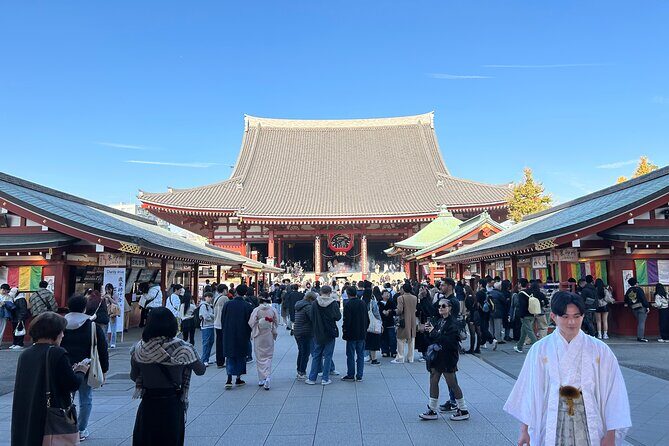
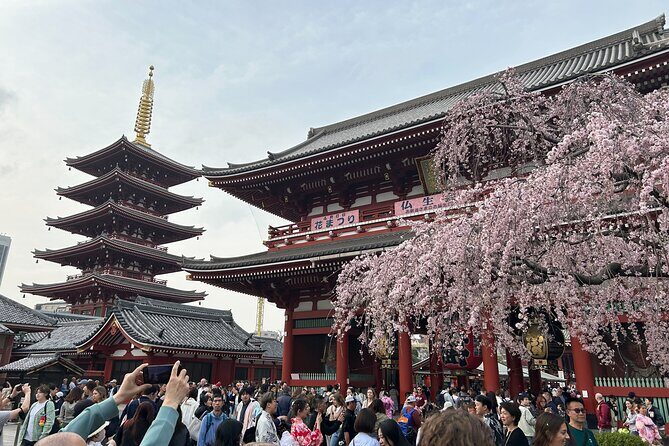
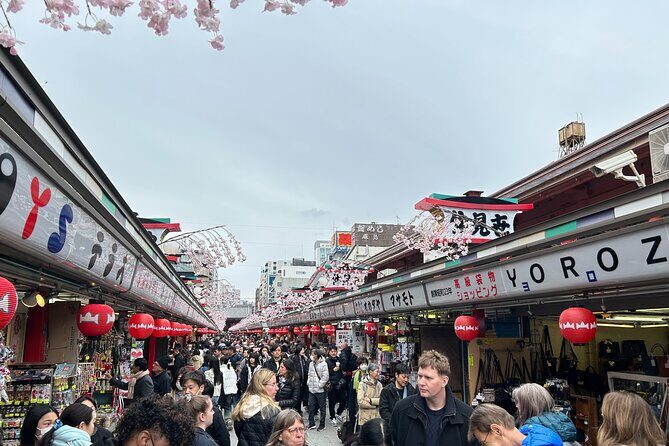
Asakusa is where the day often finds its center of gravity. Your guide’s first anchor on the options list is Senso-ji Temple. You’ll get stories tied to Asakusa and Tokyo’s development, including the origin behind the Asakusa Sanja Festival—named after two fisherman brothers who pulled up the Kannon Bodhisattva (as described in the tour notes).
Right nearby, Nakamise Shopping Street stretches along the main approach to Senso-ji. This is the kind of place where your guide can help you separate “cool to see” from “worth actually buying,” so you don’t just wander and snack randomly. Even if you don’t plan on shopping, it’s useful to learn what you’re looking at—because the street is built for people to stop, browse, and treat it like part of the temple experience.
Also in Asakusa are two options that highlight a different side of the area:
- Asakusa Shrine: free entry, and described as a guardian deity of Asakusa.
- Imado Shrine: another shrine option tied to the maneki-neko (beckoning cat), including the idea that it’s among the birthplaces of the cats seen around grounds.
If your group likes culture that shows up in everyday symbols, Asakusa-to-its-shrines can be a great pairing. If you’re mostly here for shopping, you’ll still enjoy Nakamise, but you may want to limit time so you don’t lose the rest of your day.
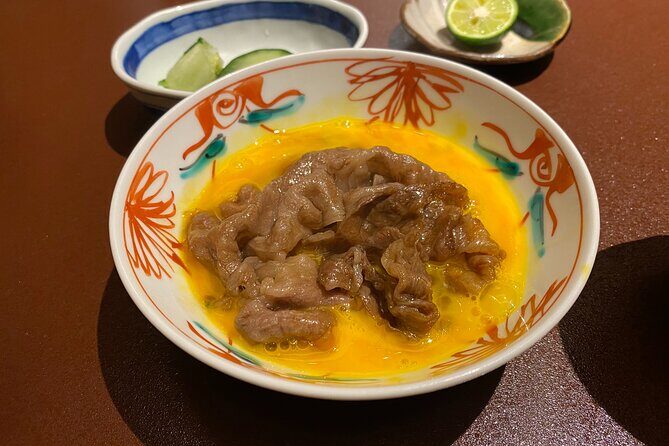
One practical note: meals are not included. If you choose Imahan Honten (すき焼き今半本店), it’s listed as an admission-free stop but the restaurant cost isn’t included. The upside is that you’re choosing a high-end, long-established meal option in a historic zone—so you’re not just traveling, you’re also eating in context.
Ueno Park and the shrine-power stops that Tokyo locals actually use
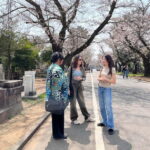
If you want a break from shopping and want Tokyo nature plus museums nearby, Ueno Park is one of the most sensible options. The tour notes it as home to major institutions like the Tokyo National Museum, the National Museum of Western Art, and Ueno Zoo (described as the first zoo in Japan). Even if you don’t go inside museums, the park gives you a calmer pace in the middle of a day that otherwise runs heavy on streets.
Sprinkled into the options list are shrines that feel targeted—less “big landmark” and more “this is why people come”:
- Yushima Tenmangu: enshrines Sugawara no Michizane, described as the god of learning. It’s famous for attracting students taking exams, with blessings extending beyond exams.
- Mimeguri Shrine: described as a power spot tied to the Sumida River Seven Lucky Gods tour theme, especially for financial luck and business.
Then there’s Imado Shrine, again useful here because it brings the maneki-neko theme to the route, including the idea that the beckoning cats are scattered throughout the grounds and are linked to good luck in match-making.
Why does this matter for you? Because these stops are not just “pretty shrines.” They give your guide a natural way to explain Tokyo’s belief patterns and rituals—why people show up, what they hope for, and how the shrines fit into routines. If you’re the kind of traveler who likes meaning behind the photos, these are excellent picks.
Drawback to consider: shrines are usually quick, but they still take time—especially if you pause for details or the guide gives contextual stories. If you only have a short window, choose one shrine-focused stop and pair it with something else instead of stacking too many.
Akihabara and electronics backstreets: from PC peripherals to anime energy
When you switch from traditional East Tokyo to modern Tokyo, Akihabara is the classic move—and it’s built into the menu in multiple ways. You may see these options grouped like layers:
- Akihabara Junk Street: a backstreet packed with stores selling PC peripherals, described as a unique lane within the electronics district.
- Yodobashi Akiba: a large consumer electronics retailer with one of the largest sales floor areas in Akihabara.
- Akihabara: the wider electronics and manga/anime area, including references to maid cafes and a large electronics store.
In practical terms, Akihabara works well for a private guide because the area can feel chaotic if you’re not sure what you want. A guide can help you aim your walk—like whether you want compact, niche peripheral shops, or whether you want bigger department-style electronics floors.
If your group is into manga and anime culture, Akihabara is the obvious choice. If you’re not, you might still appreciate it for one reason: Akihabara shows you modern consumer culture in a very concentrated way, which makes it easier to “read” the neighborhood in one pass.
One caution: electronics shopping can swallow time fast. Since the tour is built around choosing three highlights, you’ll want your guide to set a time boundary early, so you don’t end up sprinting between neighborhoods later.
Nihonbashi to Tsukiji: department-store comfort and market-to-sushi choices
To get Tokyo’s food-and-market side without turning your day into a free-for-all, the route includes two heavy-hitters in the menu:
Ameyoko Shopping Street (Ameyoko) can be a first step. It’s described as one of the most famous shopping streets in Japan, with appeal tied to good value for money and high-quality products and food available.
Then you can move into the Nihonbashi area, where the tour lists Nihombashi Mitsukoshi Main Store. The notes say it’s the location of the oldest department store in Japan, and that the basement level has over 70 shops serving Japanese, Western, and Chinese dishes plus bento boxes and sushi.
From there, you land at Tsukiji Jogai Market—specifically the Tsukiji Outer Market option. It’s described as connecting well with foreign tourists through food and sushi, and it notes that many foreign visitors come through (with a figure given in the tour info). Even if you don’t go deep into shopping, it’s a useful place for a guided “what to look for” moment.
If you choose to eat, the menu includes Sushi Dai. The tour notes mention that ingredients are carefully selected and purchased at Tsukiji Market, toppings are prepared carefully, and the rice is warm to the touch. Costs aren’t included, but you’re not guessing where to eat—you’re following the guide’s route logic.
One downside to keep in mind: market areas often work best if you go with a plan—what you want, where you want to sit, and how long your meal will take. The private setup helps here, but your choices still control the pacing.
You can also read our reviews of more private tours in Tokyo

Ginza on foot: stationery icons, long walks, and Imperial Garden calm
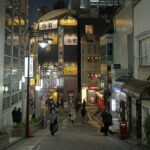
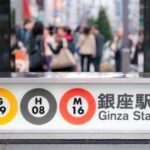
Once the tour shifts into Ginza, you’re switching styles—from market and shrine context to upscale shopping streets and polished storefronts. The menu includes:
- Ginza Itoya Hontren: a stationery specialty store founded in 1904 (Meiji 37), with a red paperclip-shaped sign. The notes mention multiple floors (main building and annex).
- Ginza: described as having a unique refined atmosphere and history, built on remains of a silver coin foundry during the Edo period.
- Unqlo Ginza: described as Uniqlo’s global flagship store, the largest store in the world, with floors from 1st to 12th.
There’s also the tour option tied to a well-known Ginza clock-tower building: the tour notes that Wako Main Building would be renamed Seiko House Ginza starting in 2022.
If you like contrast, the menu also includes a quieter nature pause near the Imperial Palace:
The East Gardens of the Imperial Palace – Edo Castle Ruin is listed as a stroll through old-and-new Tokyo, including historically significant grounds of the former Edo Castle site.
And for culture beyond shopping, you have the option of Kabukiza Theater, with the notes that kabuki has over 400 years of history and is registered as intangible cultural heritage by UNESCO. This is a strong “experience choice” if your group likes traditional performance, even if the ticket itself isn’t included.
The Ginza portion can be a dream day—or too much expensive window-shopping if you’re not careful. The private guide helps you aim your stops. If you want to keep costs predictable, pick one shopping anchor (like Ginza Itoya) and then use the rest of your time for walkable sights and free entries.
Finishing touches: Tsubaya knives, Soba, Kabukiza, and Tokyo Station
Not every highlight is “big and famous.” Some of the most interesting stops in the menu are the practical, craft-focused ones:
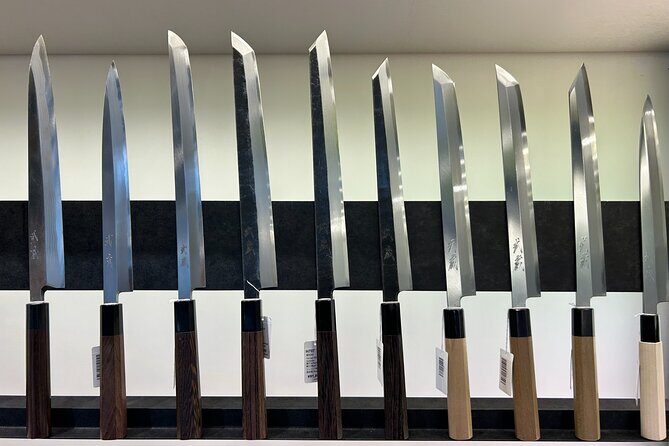
Tsubaya Knives ties to Japanese knife traditions and samurai techniques passed down to today’s knives. The tour notes explain honyaki as knives made by punching a single piece of steel out of a block, imitating the technique. If your group cares about craft, this can be a satisfying stop because it’s about making—not just consuming.
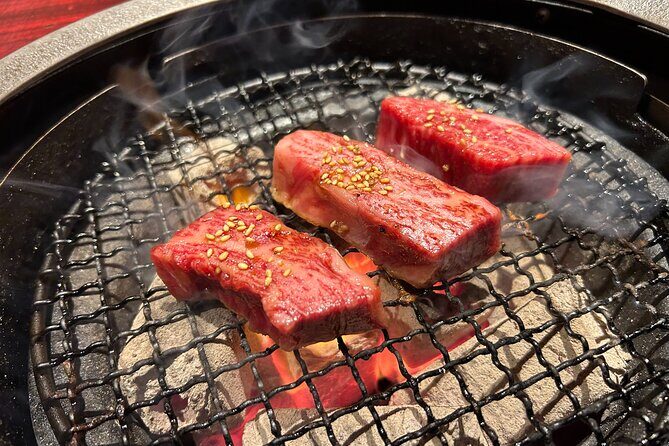
Food continues to play a role beyond sushi. The menu includes an option described around Edomae soba served in a hideaway-like space for adults, with a note that the main store has been in business since 1922, plus a soba tasting reference.
Finally, your day can end near Tokyo Station, which the tour notes describes as a huge terminal station representing Japan, with trains from various JR companies and Shinkansen. If your route ends there, it’s a convenient way to make the last leg of the day simpler—especially for planning your next train.
Where does this part fit best? If you want your day to feel like a sequence (craft → food → culture → transport), these are strong final picks. If you’re short on time, you may want to choose only one food option and skip the rest so you don’t end the tour hungry and tired.
Price and value for a private 2-hour to 1-day walk
The price is listed at $65.15 per person, and the tour is described as a private experience. Bookings average 51 days in advance, which usually means this style of guided day—especially with customization—gets snapped up when people plan their Tokyo time.
Here’s how I’d judge the value for you:
- If you want a guided day that covers a mix of Asakusa, Ueno, Akihabara, Nihonbashi, and Ginza (these are specifically noted as tour visits), you’re paying for route logic and local context—not just for walking.
- Since you choose three must-visit spots, the guide can reduce time spent figuring out logistics and help you connect neighborhoods in a way that makes sense.
What isn’t included is also important: private transportation isn’t included, nor is lunch, and you should expect entrance fees and meals (like Skytree and restaurant options) to be extra. Some stops are listed as free-entry, like Senso-ji Temple and several shrines, but not all options are.
If you’re the type who loves planning, you might already have a route. But this tour’s value shines when you want Tokyo to be more than a checklist—when you’d like stories, context, and a guide who can adjust as your interests shift.
And yes, you’ll still spend your own money when you choose shopping or pay for observation decks and meals. That’s normal in Tokyo; the trick is choosing less and enjoying more.
Should you book this private East Tokyo tour?
I’d book this if you want a private, flexible day built around three choices, and you like Tokyo that mixes old neighborhoods (shrines, temple approaches) with modern areas (electronics and department-store shopping). It’s a solid match for first-timers who want help understanding what you’re seeing, and also for returning visitors who want a route that reaches beyond the obvious.
I’d skip—or shorten your choices—if you dislike walking, or if you’re trying to keep spending very tight. The extra costs can pop up quickly with meals, observation, and paid cultural stops.
If you decide to go, pick your three stops like this: one traditional anchor (Asakusa or Ueno), one modern contrast (Akihabara or Ginza), and one meaning-driven or food-driven choice (shrines, knives, sushi, or soba). You’ll leave with a day that feels like a story, not a sprint.
FAQ
Where does the tour meet?
The tour starts at Kaminari mon (Kaminarimon) 2-chōme-3-1 Asakusa, Taito City, Tokyo 111-0032, Japan.
What’s included in the tour price?
The included items are a tour guide and a walking tour, with visits listed for Asakusa, Ueno, Akihabara, Nihonbashi, and Ginza.
What costs are not included?
Not included are private transportation, shopping costs, entrance fees for yourself, transportation fee for yourself, and lunch.
Are there any free-entry stops?
Many stops are listed with admission ticket free, including Senso-ji Temple, Asakusa Shrine, Ueno Park, Imado Shrine, Yushima Tenmangu, Ameyoko Shopping Street, and several others on the options list. Some paid options are also included in the menu, like Tokyo Skytree and certain dining and theater choices.
How long is the tour?
Duration is listed as 2 hours to 1 day (approx.), depending on the route and your chosen stops.
Is this a private tour?
Yes. It’s described as a private tour/activity, meaning only your group participates.