REVIEW · TOKYO
Tokyo Nikko Day Trip: Toshogu Shrine, Lake Chuzenji & Kegon Falls
Book on Viator →Operated by TREVOPEDIA · Bookable on Viator
Tokyo trades city noise for mountain views fast. This day trip links UNESCO-level culture with some of Japan’s most dramatic scenery, from Toshogu’s ornate glow to the drop of Kegon Falls. I really like how the pace still feels structured—big sight, short stop, then the next view comes quickly.
I also like the scenic bonus built into the route: the Irohazaka Mountain Road approach brings panoramic moments before you even reach the lake country. One drawback to plan around is the full day—9 to 10 hours including travel—so it helps to be ready for a long outing, not a slow stroll.
You’ll get round-trip transfers from a nearby meet-up point, and the day is designed for people who want both “wow” and context. With a maximum of 40 people, it’s big enough to run smoothly but not so huge that you disappear.
In This Review
- Key highlights
- The value of a $108 Nikko day trip (and what costs extra)
- The structure of your day: 9 to 10 hours with scenic momentum
- Toshogu Shrine: Tokugawa Ieyasu’s UNESCO-world-famous stop
- Irohazaka Mountain Road: the drive that counts
- Akechidaira Ropeway: fast elevation and wide views
- Lake Chuzenji: calm alpine water with volcanic roots
- Kegon Falls: the 97-meter showstopper
- Transportation and group size: what it feels like on the ground
- Who this Nikko day trip is best for
- What impressed me most: the day’s contrast
- Should you book this tour?
- FAQ
- How long is the Tokyo Nikko day trip?
- What does the tour cost?
- Is Toshogu Shrine admission included in the price?
- Are tickets included for the ropeway, Lake Chuzenji, and Kegon Falls?
- What stops are included on the day?
- Is transportation provided?
- What is the maximum group size?
- Is there a minimum number of participants?
- Is the meet-up location near public transportation?
- Is it possible to cancel for a refund?
- FAQ
- Who can participate in this tour?
- How do I confirm my booking?
- What happens if the tour date doesn’t meet the minimum participants?
- Are there any admission fees during the day besides Toshogu?
- Is the itinerary focused on nature or culture?
- How long do I stay at each main stop?
Key highlights
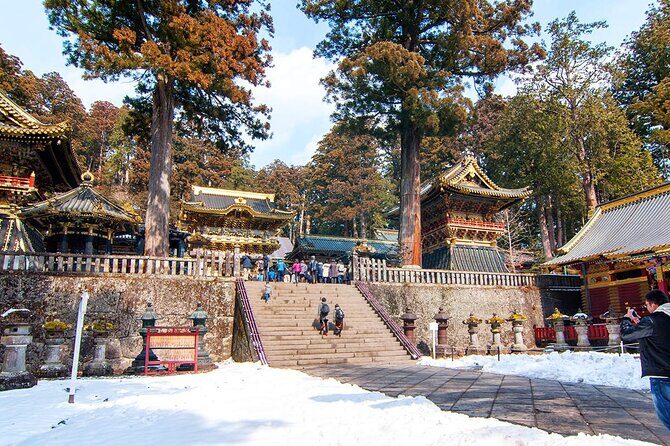
- Toshogu Shrine’s Tokugawa Ieyasu legacy in UNESCO form, with famous ornate carvings and vivid decoration
- Akechidaira Ropeway giving wide views over Irohazaka Mountain Road, Lake Chuzenji, and Kegon Falls
- Lake Chuzenji at 1,269 meters—a high, volcanic lake with a quiet alpine feel
- Kegon Falls at 97 meters with a dramatic, photo-friendly drop from the lake
- Irohazaka Mountain Road scenery built into the drive for curve-and-panorama moments
- Simple ticketing mix where most stops are free but Toshogu admission costs extra
The value of a $108 Nikko day trip (and what costs extra)
At $108 per person, this tour is mostly about convenience: you’re paying for a managed day outside Tokyo, with round-trip transfers and a tight sightseeing loop. For a destination like Nikko, that convenience matters—especially when you want multiple landmarks in one shot without stitching buses and trains all day.
What’s included on paper is strong: you have transport to and from your meet-up point, and the tour’s listed stops carry no admission ticket requirement for the ropeway, Lake Chuzenji, and Kegon Falls. The main catch is Toshogu Shrine admission is not included—it’s ¥1,600 per person. So when you budget, think of the total as $108 plus the shrine fee rather than $108 as the whole package.
Given the amount of ground covered, I think this is good value if you prefer an organized plan. If you’re the DIY type who already knows how to get to Nikko smoothly, you might find cheaper transport. But if you want a full day that runs like a clock—culture first, then scenery—this pays off.
A few more Tokyo tours and experiences worth a look



The structure of your day: 9 to 10 hours with scenic momentum
This trip is long enough that you’ll feel it by the end, even if the sightseeing is satisfying. The good news is that the timing is built around short, purposeful stops: a long-feeling cultural visit, then quick lift/views, then lake calm, then waterfall impact.
Also, the tour duration includes transportation time. That’s a big deal. You’re not just spending time “on site.” You’re spending time moving between them, which is normal for Nikko. Plan your day so you’re not rushing dinner plans right after.
With a maximum group size of 40, you’ll likely get the best of both worlds: enough people for the tour to stay lively, but not so many that every stop becomes a stampede.
Toshogu Shrine: Tokugawa Ieyasu’s UNESCO-world-famous stop
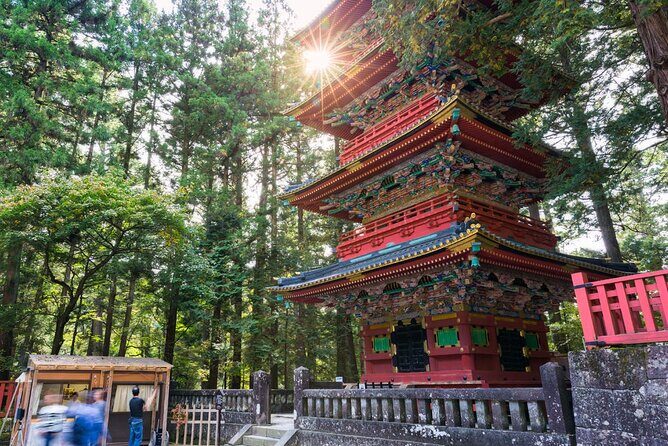
Toshogu Shrine is the cultural anchor of the day. This is a UNESCO World Heritage-listed site dedicated to Tokugawa Ieyasu, founder of the Tokugawa shogunate. If you’ve ever wondered why Japanese heritage sites can look more like art museums than temples, this is why.
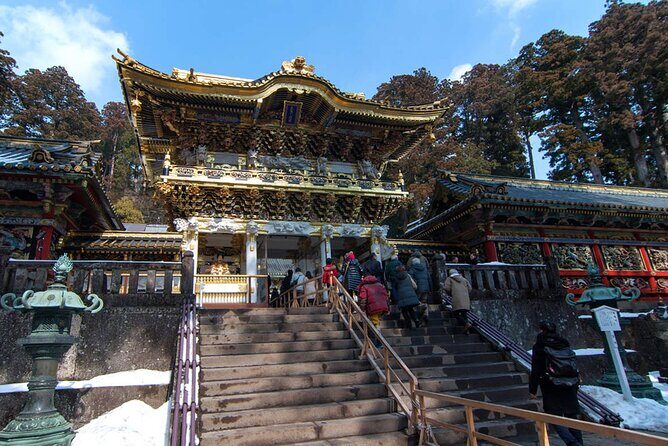
What you’re looking at is ornate architecture—carved details, bright color work, and the kind of decorative intensity that makes you slow down whether you mean to or not. Toshogu is famous for its visual storytelling. You’re not just seeing a building. You’re seeing a political and spiritual statement made in wood, color, and craft.
A practical consideration: Toshogu admission isn’t included in the tour price. It’s ¥1,600 per person, so if you’re traveling on a tight budget, account for that up front. On the flip side, the shrine is the reason many people choose Nikko in the first place—so paying for entry here feels normal, not like a surprise.
If you love photography, you’ll find plenty of angles where the carvings look best when light hits the surfaces. The trick is to keep your eyes moving: don’t get stuck on one “pretty” spot. Look for how the shrine layers detail across the whole space.
Irohazaka Mountain Road: the drive that counts
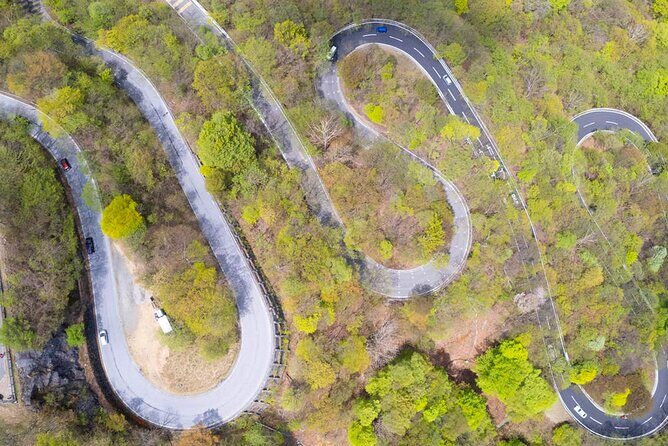
Even before the big stops, the day gives you a scenic ride along Irohazaka Mountain Road. This road is known for famous curves and panoramic views. In other words, it’s not a boring transfer day.
Why this matters for you: when a day trip is packed, the drive can feel like wasted time. Here, the route itself is part of the experience. You’ll get those “wait, stop the bus for a second” moments—without having to plan your own viewing pull-offs.
If you tend to get carsick, this is worth noting because mountain curves are mountain curves. The tour is a day trip that includes transportation time, so build in the usual comfort tools: sit where you feel most stable, and if needed, bring your usual motion-sickness plan.
Akechidaira Ropeway: fast elevation and wide views
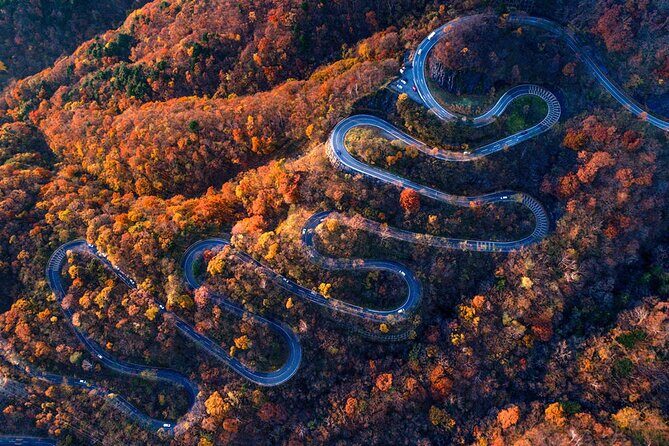
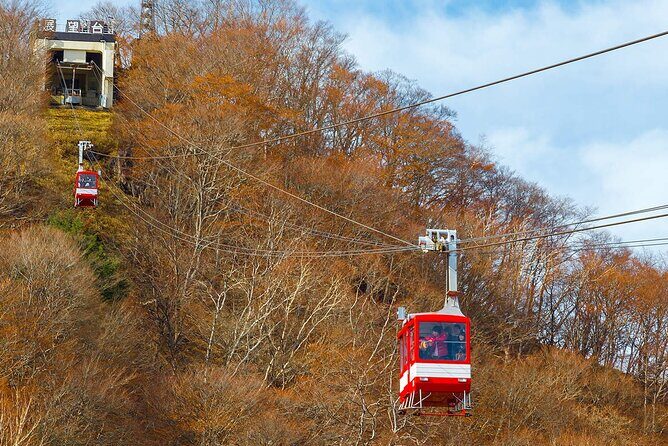
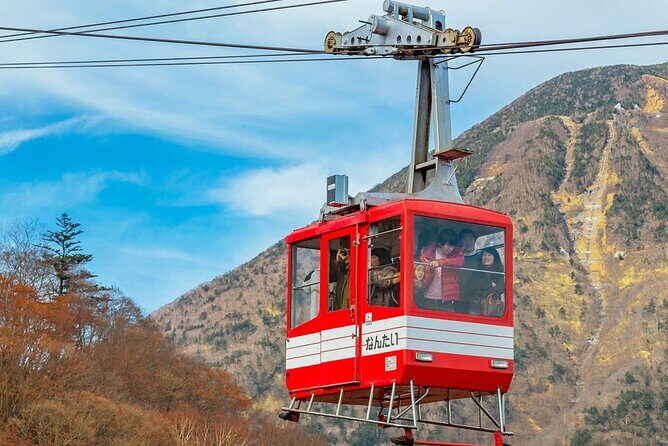
Next up is the Akechidaira Ropeway, a short aerial lift that trades walking for perspective. This is the kind of stop I love on a day trip because it changes what you can see right away.
From the ropeway, you get panoramic views of the surrounding mountains, and the scenery you came for becomes easier to understand. You can spot how Irohazaka Mountain Road threads through the landscape and how Lake Chuzenji and Kegon Falls fit into the bigger picture. It’s a “map in the air” moment.
The tour lists ropeway admission as free, which is a nice value perk. A quick note for comfort: if the ropeway ride feels cooler up there (common in mountain regions), bring a light layer. You don’t need winter gear, but you’ll be glad you thought ahead.
This is also a great spot for your camera. When you shoot waterfalls from ground level, you often rely on distance or angles. From above, the scene reads clearer—even in less-than-perfect weather.






Lake Chuzenji: calm alpine water with volcanic roots
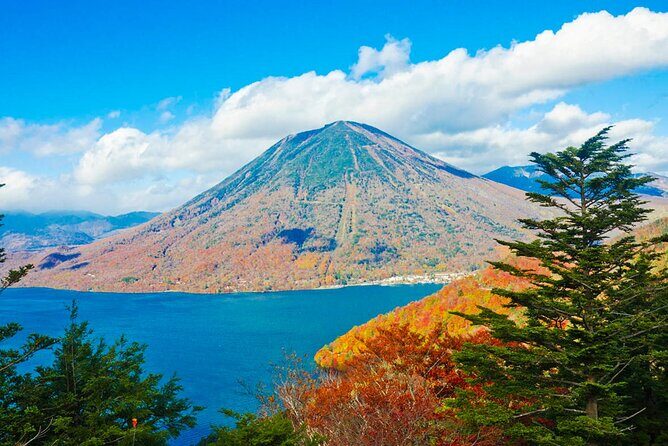
Then you move into the quieter side of Nikko at Lake Chuzenji. This is in Nikko National Park and sits at an elevation of 1,269 meters, which is part of why the atmosphere feels different from lower Tokyo valleys.
The lake was formed by a volcanic eruption of Mount Nantai around 20,000 years ago. That volcanic origin adds a little extra weight to what you’re seeing. You’re not just looking at a pretty lake—you’re looking at a landscape shaped by deep time.
You’ll have about 40 minutes here. That time feels right for a lake stop on a full day: enough to breathe, to walk a bit at your pace, and to take photos, without turning the day into a long slog.
What I like about including Lake Chuzenji between shrine and waterfall: it resets your senses. You get a cultural burst, then a scenic boost, then a calmer pause. Even if your feet are tired, you’ll feel like you’re still progressing through the story of the region.
Kegon Falls: the 97-meter showstopper
Finally, you land at Kegon Falls, one of Nikko’s signature sights. The waterfall is 97 meters high and flows from Lake Chuzenji. That detail matters because it explains the system: the lake feeds the falls, so your earlier stop isn’t separate—it’s part of the same natural sequence.
You’ll spend around 1 hour here. That’s a good amount of time for a waterfall because it gives you options: you can focus on the dramatic drop, then adjust your angle for a wider view of the surrounding area. Waterfalls can be noisy, so expect a sensory overload—in a good way.
The falls are known for their dramatic drop and beautiful surroundings. They’re especially impressive during autumn foliage, but even outside peak color, the height and power do the job.
One practical tip: bring something to protect your phone/camera from mist. It’s not always spraying constantly, but around waterfalls, moisture can end up where you don’t want it.
Transportation and group size: what it feels like on the ground
This tour runs with round-trip transfers to and from your meet-up location. The meet-up point is described as near public transportation, which usually means getting there is easier than dealing with a random address in the middle of nowhere.
The day caps at 40 travelers. That’s large enough to keep operations efficient, but small enough that you shouldn’t feel totally lost. Expect you’ll follow the group closely, especially at the stops where crowds can gather.
The tour also notes that most travelers can participate, but there’s an extra rule for seniors: people aged 70+ should present a medical certificate before participating. If that applies to you, don’t wait until day-of.
And if you’re picky about timing, be aware the experience requires a minimum number of participants (4). If that minimum isn’t met, the provider offers an alternative date or a full refund. It’s the kind of clause that matters when you’re booking near holidays.
Who this Nikko day trip is best for
This is a strong fit if you want:
- A single day that hits both major heritage and major nature
- Photography opportunities from multiple angles (ropeway and falls)
- A day with structured stops so you’re not researching transit during your trip
- A route that includes Irohazaka Mountain Road, not just “arrive, walk, leave”
It’s also a good choice for culture-and-nature travelers who don’t want to trade one for the other. The shrine gives you the historical weight; the lake and falls give you the sensory payoff.
If you hate long days or you need lots of downtime, this might feel like too much. Nine to ten hours will test your patience even when the scenery is great.
What impressed me most: the day’s contrast
The best part of this tour is the contrast. You go from Tokugawa Ieyasu’s ornate shrine world to a mountaintop ropeway view, then down to the quiet alpine lake, then up to the thunderous scale of Kegon Falls.
That contrast keeps attention locked. If you’ve ever done one-day trips where everything blurs into similar “tour stops,” this doesn’t. The shrine is all craft and symbolism. The ropeway is pure viewpoint change. The lake is atmosphere. The falls are impact.
And the tour’s short-review feedback you can take seriously here is simple: the guiding style gets called out as engaging and professional, with stories that make the places more than postcards. Even without naming anyone here, the pattern matters. A good guide helps you see details you’d otherwise walk past.
Should you book this tour?
Book it if you want a high-satisfaction Nikko day without the hassle of planning transport between multiple landmarks. It’s priced fairly for the convenience and for the fact that the ropeway and nature stops don’t require extra ticket payments.
Skip or rethink it if:
- you strongly prefer to self-guide and you’re confident navigating Nikko on your own
- you can’t handle long days or you’re sensitive to mountain-curve driving
- you’re traveling with strict budget limits and the extra ¥1,600 Toshogu admission would hurt
If your goal is to leave Tokyo and come back with both cultural depth and big nature moments, this tour is a solid choice. You’ll see the headline sights, yes—but more importantly, you’ll see how they connect, from shrine heritage to mountain water power.
FAQ
How long is the Tokyo Nikko day trip?
The tour runs about 9 to 10 hours, including transportation time.
What does the tour cost?
The price is $108.00 per person.
Is Toshogu Shrine admission included in the price?
No. Toshogu Shrine admission is ¥1,600.00 per person.
Are tickets included for the ropeway, Lake Chuzenji, and Kegon Falls?
The tour lists those stops as Admission Ticket Free.
What stops are included on the day?
You visit Toshogu Shrine, Akechidaira Ropeway, Lake Chuzenji, and Kegon Falls.
Is transportation provided?
Yes. Round-trip transfers to and from the meet-up location are included.
What is the maximum group size?
The tour has a maximum of 40 travelers.
Is there a minimum number of participants?
Yes. The experience requires at least 4 participants. If the minimum isn’t met, you can book another date or request a full refund.
Is the meet-up location near public transportation?
Yes, the meet-up point is described as near public transportation.
Is it possible to cancel for a refund?
Yes. Cancellation is free up to 24 hours in advance for a full refund.
FAQ
Who can participate in this tour?
Most travelers can participate, but seniors aged 70+ should present a medical certificate before participating.
How do I confirm my booking?
Confirmation is received at the time of booking.
What happens if the tour date doesn’t meet the minimum participants?
If the minimum number of participants is not met, you can book an alternative date or request a full refund.
Are there any admission fees during the day besides Toshogu?
The provided details only list an admission fee for Toshogu Shrine. Other listed stops are shown as free of admission ticket cost.
Is the itinerary focused on nature or culture?
It’s both. You get a major UNESCO cultural site plus mountain, lake, and waterfall scenery.
How long do I stay at each main stop?
Toshogu Shrine is about 3 hours, Akechidaira Ropeway about 30 minutes, Lake Chuzenji about 40 minutes, and Kegon Falls about 1 hour.