REVIEW · KYOTO
Traditional Tea Ceremony Experience in Kyoto
Book on GetYourGuide →Operated by B.B.Advisors Inc. AN KYOTO · Bookable on GetYourGuide
Tea culture has a quiet power.
In this Kyoto experience, you’re guided through OTE-MAE with a tasting of single-origin matcha, plus classic OHIGASHI(Japanese dried sweets). I like that you’re not just watching either, you’re learning the movements and meaning behind the steps. One possible drawback: it’s short, and the amount of English can vary, so if you want a deep history lesson, you may need to ask follow-up questions during the session.
You also sit at tables and chairs, which keeps things comfortable and makes it easier to focus on the ritual. The instructor is Japanese, and English translation is provided as much as possible, if you request it. That setup is great for first-timers, but the class can feel a bit crowded, and hearing the guide may take a lucky seat.
In This Review
- Key things to know before you go
- Kyoto OTE-MAE Tea Ceremony: What You’re Actually Learning
- Single-Origin Matcha and OHIGASHI: The 30-Minute Tasting Flow
- Seating at Tables and Chairs: Comfort, Focus, and One Real Trade-Off
- Where You Meet in Kyoto: Gojo Station to the Door
- Instructor Guidance, Language, and What to Ask For
- Duration and Group Timing: Short, Structured, and Easy to Slot
- Price and Extras: When $7 Is a Real Deal
- Who Should Book This Tea Ceremony in Kyoto
- Should You Book This Traditional Tea Ceremony in Kyoto?
- FAQ
- How long is the Kyoto traditional tea ceremony experience?
- What is included in the experience?
- Where do I meet for the activity?
- Is English translation available?
- Are there any extra costs like a certificate?
- Is the venue wheelchair accessible?
Key things to know before you go
- Single-origin matcha tasting with an explanation tied to the tea-making process
- OHIGASHI(Japanese dried sweets) served alongside your matcha experience
- OTE-MAE taught step-by-step, with attention to the purpose of utensils and movements
- Tables and chairs seating, not tatami-only formality
- English support is limited and variable, so bring a few specific questions
Kyoto OTE-MAE Tea Ceremony: What You’re Actually Learning
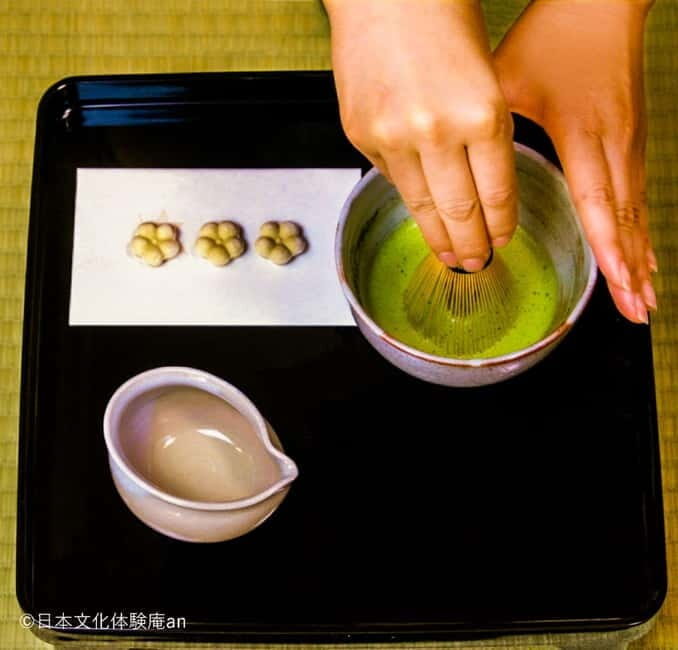
This isn’t a long show. The point is practice and understanding. You’ll join a traditional Japanese tea ceremony experience centered on OTE-MAE, the kind of structured flow where every movement has a reason. Even in 30 minutes, you get the core idea: tea as a careful sequence, not just a drink.
What I like about the way this experience is framed is that it explains significance, not only mechanics. You’re guided through every step, including what utensils are for and what the ceremony is trying to communicate. That matters because most first-time visitors only remember the taste and the look of the ceremony. Here, you’ll leave knowing why people treat the process with such attention.
You’ll also get a demonstration of how the tea becomes matcha tea. That little piece is valuable. It turns matcha from a green powder you buy in a shop into something with a clear chain from start to finish. And once you understand that, the taste makes more sense on your tongue.
If you’re the type who likes culture you can use right away, this format is a good fit. You won’t get stuck trying to memorize a lecture. You’ll get a ritual you can remember and repeat in spirit when you order matcha later.
You can also read our reviews of more tours and experiences in Kyoto.


Single-Origin Matcha and OHIGASHI: The 30-Minute Tasting Flow
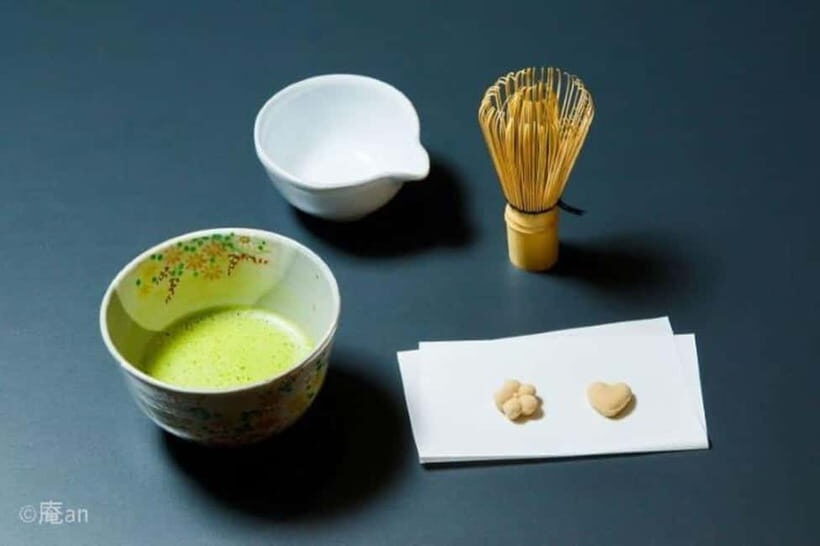
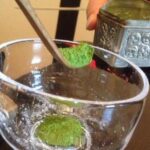
The centerpiece is a cup of matcha—specifically single-origin matcha—served during your session. Since it’s single-origin, you’re tasting matcha as something more specific than a generic blend. You’ll be able to notice character more easily, like how smooth or intense it feels.
Before you sip, you’ll see a demonstration of how matcha tea is made into the powder form. The ceremony isn’t pretending this is mysterious magic. It’s giving you the basic pathway, so you can connect the process to the flavor you’re about to drink.
Along with matcha, you’ll be served OHIGASHI(Japanese dried sweets). That pairing is important for the experience. Matcha is a tea with strong personality—often grassy, sometimes bitter, sometimes rich. A small sweet like OHIGASHI isn’t just a snack. It helps balance the tea and gives you a more complete sense of how the ceremony is meant to be experienced: taste, pause, then taste again.
And in short sessions like this, the order matters. You’re likely to get an explanation, then a sip, then a follow-up. Plan to slow down during that first tasting. If you rush, you’ll miss the whole point of why the ceremony is calming for many people.
Seating at Tables and Chairs: Comfort, Focus, and One Real Trade-Off
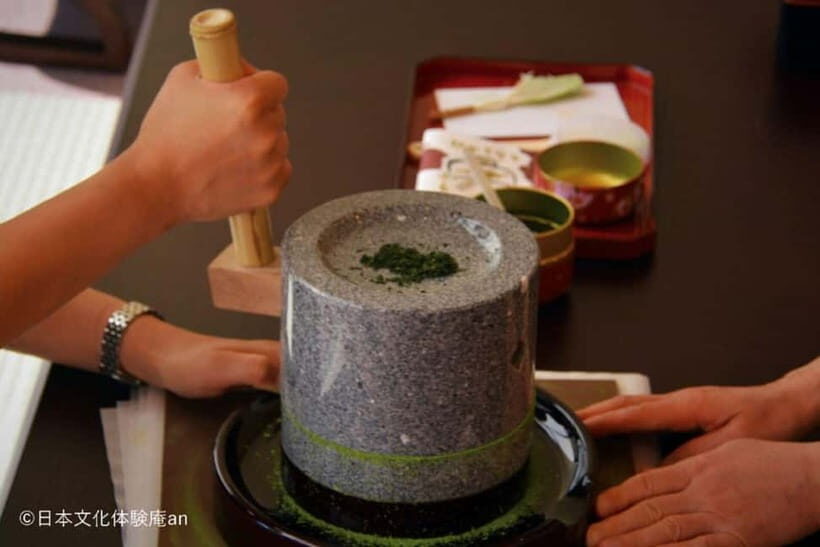
One practical detail that changes everything: you sit at tables and chairs. Traditional tea ceremonies often feel intimidating if you’re not used to kneeling. Here, the setup supports comfort. You can focus on the procedure and the meaning of each step rather than thinking about posture.
That also tends to make the experience easier for people who want culture without pain. Your attention stays on the tea and the gestures, not on whether you can comfortably hold a certain position.
The trade-off is group energy. A couple of factors can affect how much you take in. First, the sessions can be crowded. Second, short sessions don’t leave much time to re-figure your hearing if you’re seated in a tough spot. One person found it difficult to hear the guide, and another felt the guidance leaned more toward basic instructions with limited time spent on wider history and cultural context.
So here’s my practical advice: arrive a little early, and if seating choices exist, pick a spot that faces the instructor cleanly. In a ceremony, you’re not competing for attention with a big show. Your best move is making sure you can actually hear the explanation.
Where You Meet in Kyoto: Gojo Station to the Door
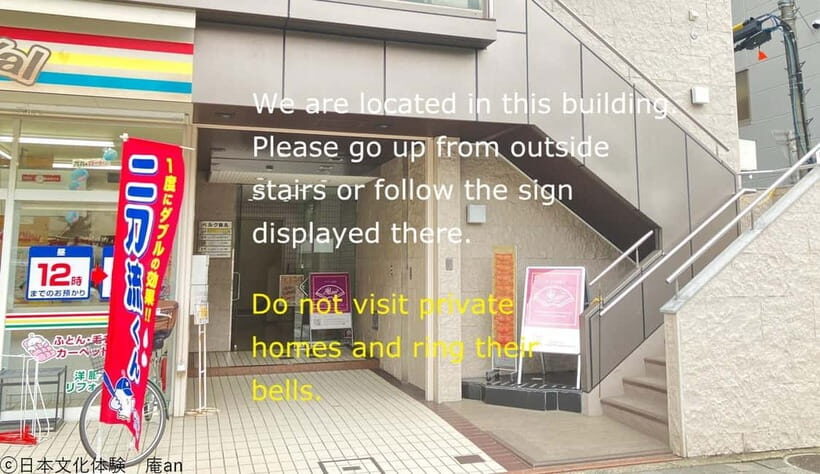
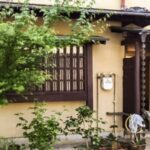
The meeting point is easy to find. You’ll be about a one-minute walk from Exit 1 of the Subway Karasuma Line Gojo Station. The store entrance faces Gojo-dori, so you’re not hunting down a hidden alley for long.
If you like to keep your trip efficient, this location helps. Kyoto is full of experiences that require extra time for navigation, but this one is built for a quick stop: jump off the subway, walk straight in, and you’re in the ritual.
The coordinates are listed as 34.99642916810299, 135.76176672966227, which is helpful if you’re checking your route on a map app. And since the venue is near a major station, you can pair this with other central activities without planning a long commute.
One caution that matters for planning: there is no elevator in the building, and you’ll need to take stairs to reach each venue. So if you’re carrying bags, managing mobility limits, or simply want to conserve energy, factor in the stairs. It’s not a show-stopper, but it’s worth knowing before you commit.
Instructor Guidance, Language, and What to Ask For
The instructor is Japanese. English translation is provided as much as possible. That phrasing is key: you shouldn’t assume a full, uninterrupted explanation in English for every moment.
In real-world terms, that means you’ll get the essentials even if your Japanese is limited, because the ceremony itself is visual and step-based. You’ll see what’s happening, you’ll taste the result, and you’ll learn by watching and listening where you can.
But if you’re specifically after cultural background—like when matcha is usually drunk, or who traditionally drinks it—be ready that the focus may skew toward procedure. One experience reflection found the information quite basic and wished for more historical and cultural context. On the other hand, another person loved the history of matcha and the do’s and don’ts, so the takeaway is: the best outcome depends on how much time the instructor can allocate to explanation in your language.
So I’d come with questions you care about. Examples:
- What is the do’s and don’ts emphasis you’d want visitors to remember?
- What ingredient or step most affects the flavor of matcha?
- If matcha taste can be intense, what should I watch for when I order later?
When you ask smart questions, a short ceremony becomes far more than a quick drink.

Duration and Group Timing: Short, Structured, and Easy to Slot
The ceremony is listed as 30 minutes. In practice, a short experience like this is designed to be tightly structured: arrive, explanation, demonstration, tea preparation discussion, tasting, and then you’re done.
That short duration is part of the value. You’re getting a real cultural activity without losing half a day. It’s a good option if your Kyoto schedule is packed or if you want one calming break from shrines and temples.
One note: the session runs from 10:00 to 17:00. If you book a time that starts after 17:00, it’s processed the next day. Also, the event can’t be held to accommodate delays. So keep buffer time for transit from other spots. Kyoto is easy to walk, but it’s still easy to get caught at a crosswalk or in a crowd.
Because the experience is only 30 minutes, late arrival doesn’t give you room to catch up. If you hate rushing, schedule this earlier rather than later in the day.
Price and Extras: When $7 Is a Real Deal
At about $7 per person, this is priced for accessibility. For that money, you’re not paying for a multi-hour cultural class. You’re paying for a structured introduction: OTE-MAE instruction, a single-origin matcha tasting, and OHIGASHI sweets.
That’s why the value works if you go in with the right expectations. You’re buying a well-organized taste-and-procedure experience. You’re not buying a certificate program that spends extra time on formal history or extended practice.
There is one optional extra to be aware of: the completion certificate costs 300 JPY and is not included. If you like souvenirs you can keep, it’s worth deciding in advance so you aren’t surprised at the end. If you don’t care about certificates, you can ignore it completely.
Also, the experience language is Japanese. Even with English support as much as possible, the ceremony remains mostly visual. That helps you get your money’s worth even with limited language.
All told, at $7, this is one of the easier cultural add-ons you can fit into Kyoto—especially if you choose a time when you’re not rushing and you sit in a spot where you can hear.
Who Should Book This Tea Ceremony in Kyoto
This ceremony fits best if you want:
- A short, structured intro to OTE-MAE without needing long training
- A guided matcha tasting with OHIGASHI rather than a DIY cafe stop
- A comfortable setting with tables and chairs
- A calm activity near a major transit hub like Gojo Station
It’s also a good match for travelers who don’t want to commit to a full-day tour but still want something authentic and Japan-specific. Tea ceremony experiences can be a little intimidating because they look formal. Here, the structure plus comfortable seating makes it easier to relax.
If you’re the type who wants a deep lecture on cultural history, you might find the time is tight. The best approach is to treat this as a “taste + process” lesson. Then, if you want more history, follow up on your own with a book, a museum, or another short cultural walk afterward.
Should You Book This Traditional Tea Ceremony in Kyoto?
Yes, if you want a straightforward matcha ritual you can fit into a busy Kyoto day. The combination of single-origin matcha, OHIGASHI sweets, and OTE-MAE step guidance at a low price makes it a smart use of time.
Book it if:
- You like hands-on cultural experiences, even when they’re short
- You want a calm break with something Japan-specific
- You appreciate seating that doesn’t require floor kneeling
Skip it or plan differently if:
- You need long English explanations and deep history in one sitting
- You strongly prefer quiet rooms where the instructor is easy to hear
- You’re sensitive to stairs, since there’s no elevator in the building
If you go in with a relaxed mindset and a couple of questions, you’ll leave with a clearer sense of what matcha ceremony is really about—how the steps connect to the taste.
FAQ
How long is the Kyoto traditional tea ceremony experience?
It lasts about 30 minutes.
What is included in the experience?
You get the OTE-MAE (Japanese tea ceremony) set experience, including single-origin matcha tea and OHIGASHI(Japanese dried sweets).
Where do I meet for the activity?
Meet about a one-minute walk from Exit 1 of the Subway Karasuma Line Gojo Station. The store entrance faces Gojo-dori.
Is English translation available?
English translation is provided as much as possible. If you want it added, you should contact them.
Are there any extra costs like a certificate?
A completion certificate is not included and costs 300 JPY.
Is the venue wheelchair accessible?
The activity is wheelchair accessible, but there is no elevator and you need to take stairs to reach each venue.